 Jordan Pascale
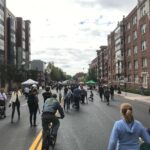
The District Department of Transportation has laid out seven stretches of road for its “Slow Streets” initiative, which will give residents more space to social distance while moving around outside.
But the 5.5 miles of roads so far, with a target goal of 20 miles total in the next three months, is far below what other cities have accomplished.
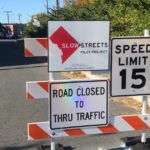
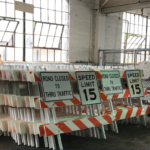
Partial barriers and signs will block off the streets to local traffic only, which will be limited to 15 mph. The hope is that the changes will encourage neighbors to use the street while walking, running or cycling.
Drivers should only use a designated Slow Street if their destination is within two blocks of that street, the District said in a release. Residents, emergency vehicles, deliveries and trash collection vehicles still have access to those areas.
“(This) is one way we can reimagine public space to make it easier to enjoy the outdoors and stop the spread of COVID-19,” Mayor Muriel Bowser said in a statement. “We want people to be able to move around and be outside, but it is important, as we continue through Phase One and into the summer months, to remember the importance of social distancing, face masks, and frequent handwashing.”
Here’s where the first 5.5 miles of Slow Streets will be, starting later this week:
- Wards 1 and 2: 19th Street NW (between Dupont Circle and Biltmore Street NW; plus most of Biltmore and Cliffbourne)
- Ward 3: 36th Street NW (between Connecticut Avenue and Reno Avenue/Warren Street NW)
- Ward 4: 8th Street NW (between Piney Branch/Whittier Street and Missouri Avenue NW)
- Ward 5: Newton Street NE (between 12th Street and South Dakota Avenue NE)
- Ward 6: 12th Street NE (from East Capitol Street to K Street NE)
- Ward 7: Grant Street NE (between Minnesota Avenue and 46th Street NE)
- Ward 8: 15th Street SE (from Mississippi Avenue to Savanah Street SE) and 15th Place SE (from Alabama Avenue to Bruce Place SE)
DDOT aims to install 20 miles of Slow Streets total in the next three months but is not taking resident suggestions on where to put them. The department, instead, is consulting with local Advisory Neighborhood Commissions on the placement.
Some critics online have said the plan doesn’t go far enough, citing cities like Oakland, California — which designed 74 miles of slow streets weeks ago. Still, others have welcomed the initiative in their neighborhoods.
On the last weekend of May, a group of residents put up barriers for an unofficial “slow streets” program across the District, but some were shut down by police for not getting prior authorization.
Bowser announced the slow streets initiative at the end of May, as the District moved into Phase One of the city’s COVID-19 response and recovery. The plan involved a citywide 20 mph speed limit for local streets and a buildout of outdoor dining spaces in streets, alleys and sidewalks known as “streateries.” The District has also expanded some sidewalks near busy businesses during the course of the pandemic.