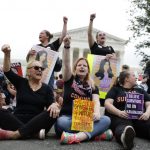
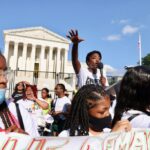
By 4 p.m. Monday, Black Lives Matter Plaza was less crowded than it has been since it got its new name Friday. After a surge of demonstrators over the weekend, it seemed like the 11th consecutive day of protests in D.C. proved to be one too many for some, or a day when job duties beckoned. There was also a noticeably lighter presence of law enforcement officials compared to the previous 10 days.
But dedication and energy remained strong for the hundreds of protesters who did come out, and some people said they plan on continuing all summer long if they have to.
Layla Zibr, 18, had been at the protests for eight days and said that though it’s physically exhausting, that won’t stop her from showing up. “My legs hurt,” she said, “but I have the same energy as the first day.”
Zibr was disappointed by the afternoon crowd, saying, “It’s very thin, very skinny. I’m not happy at all. I just posted on every social media site to tell everybody to get your ass out here,” she said. “I understand it’s a Monday, but it’s only been a week and a half. Come on, y’all aren’t gonna let it die too fast.” For her part, she plans to quit her job — which has furloughed her until August anyway — to focus on school work and protesting police brutality and systemic racism.
Much like Zibr, the other people who were at the protest — though smaller in number than other days — were devoted to the cause, and committed to keeping the protests alive. Some were chalking the sidewalks and pavement; others were setting up free food stands to keep protesters fed and energized; and organizers were starting to capitalize on the groundswell of activism.
Jim Williams, an organizing director at the International Union of Painters and Allied Trades (IUPAT), helped his organization set up a table outside the AFL-CIO building since they’re members of the national labor union. “We decided because of the significance of the labor movement’s building being right here at the center for everything,” he said of the AFL-CIO building, which was set ablaze by protesters last week, “that we should be out here supporting the movement for racial justice in this country.” He, like many others, said that he plans to show up “until there’s real change in this country.” If that means a whole summer of protesting, he said he’s up for it.
The crowd started growing after 5 p.m., presumably because the 9-to-5 workers were off the clock and started joining. And the mood was similar to the weekend. Food and ice cream trucks were out, people were playing music, and bands performed for the crowd.
D.C.’s The Experience Band and Show started playing at 16th and K Street NW to keep everyone energized. “We’re here to show support for our city,” Travis Gardner, also known as Travis the Trombone King, said. “I want to support my cause, my people.”

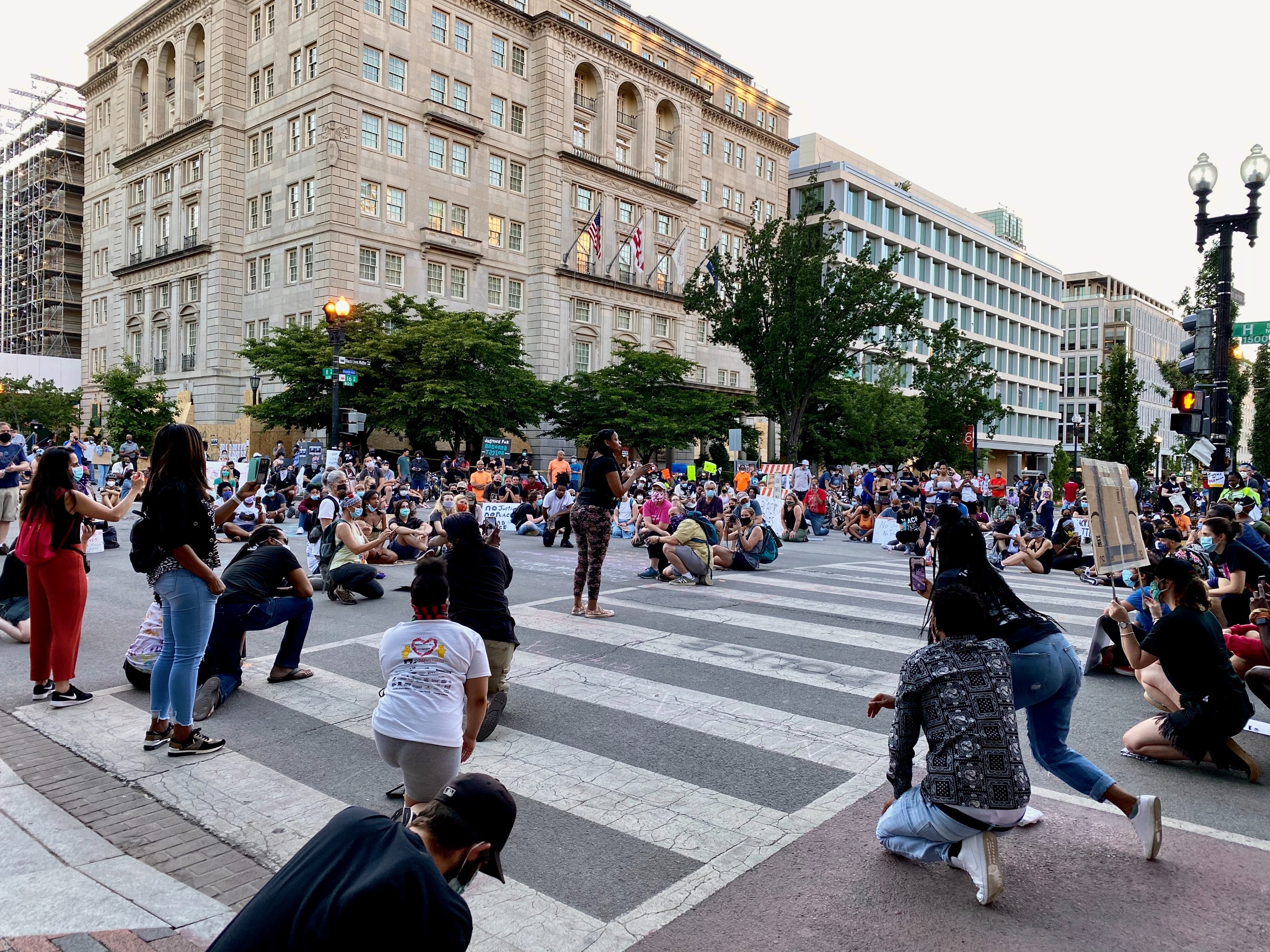
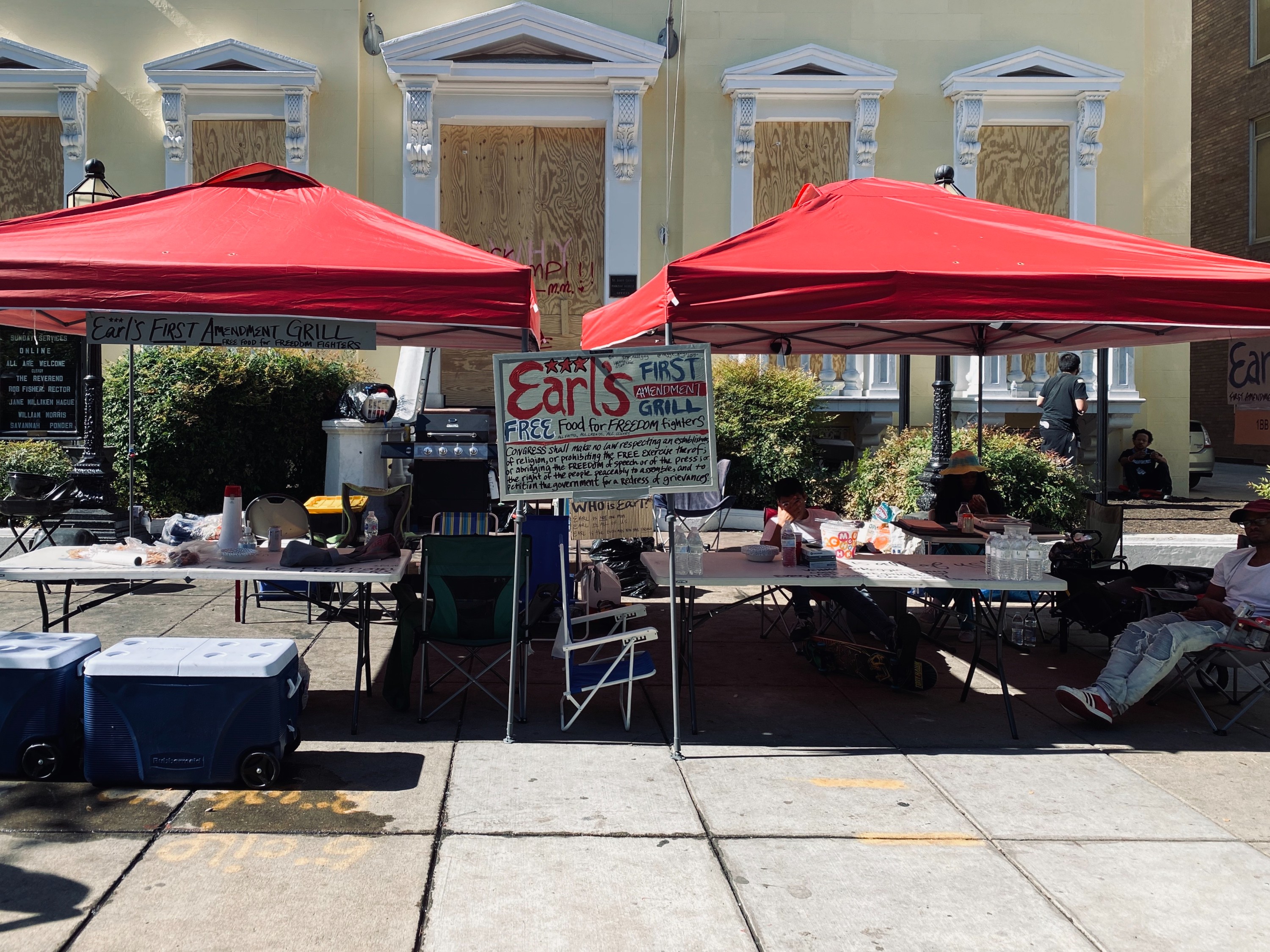
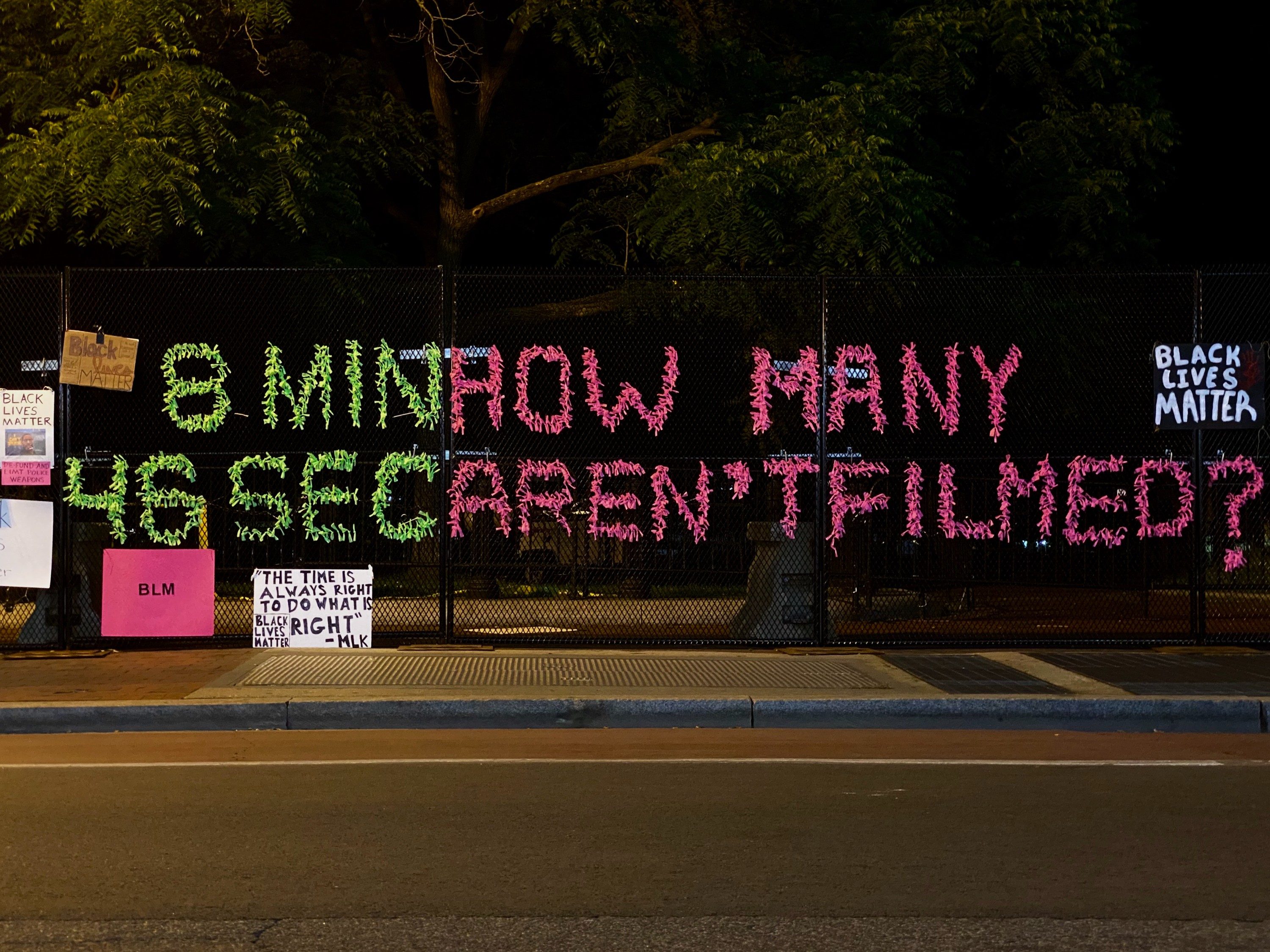
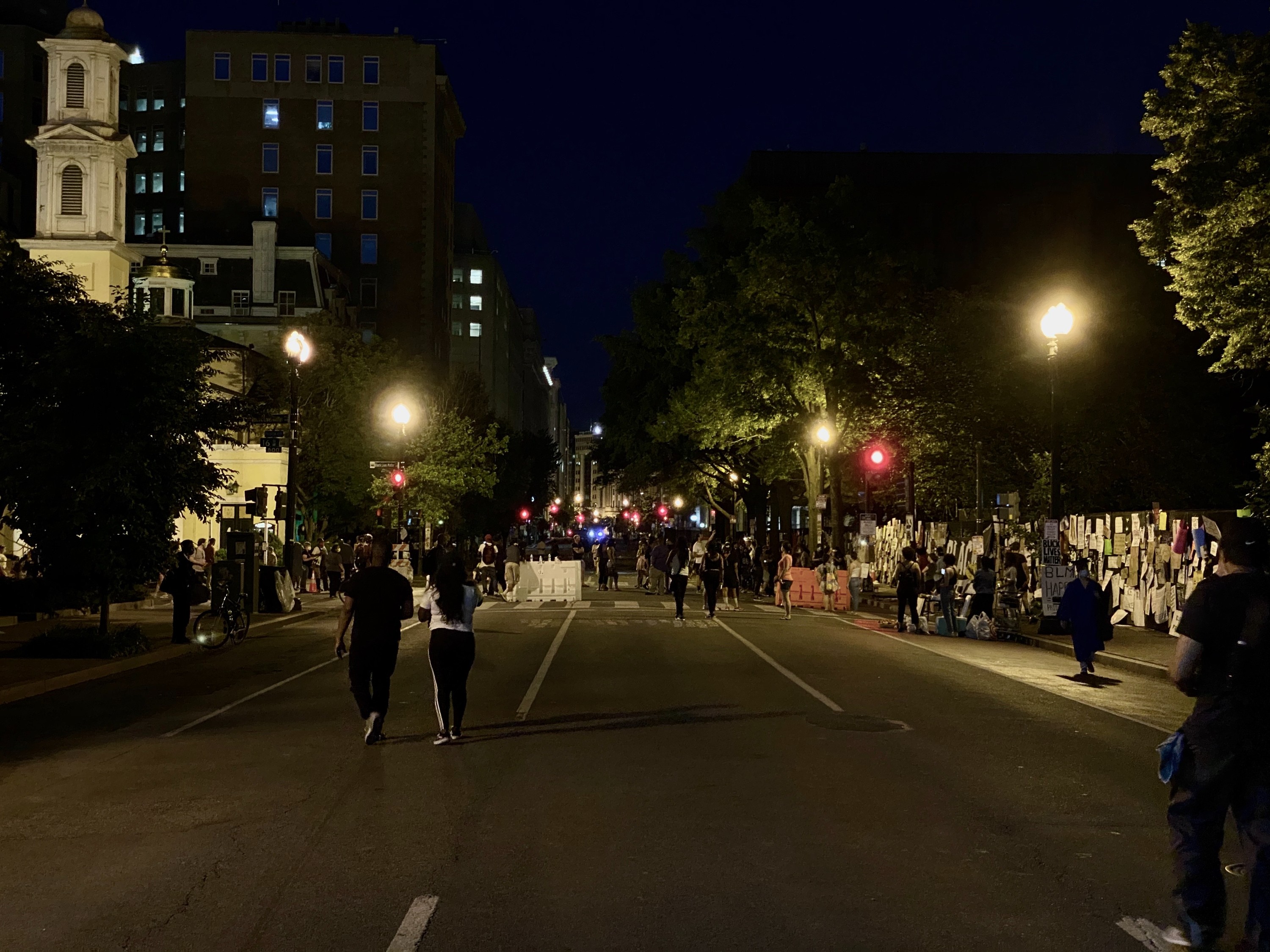
The demonstrations aren’t centrally organized, and that has some supporters concerned that people might lose focus. “I think the mayor’s actions [renaming the street Black Lives Matter Plaza and allowing vendors to cater the demonstration] took away the momentum of people who were actually trying to make change and turned it into a carnival,” Jeff Canady, an educator in the District, said. “You have vendors, it’s a carnival. It’s unfortunate. It’s taking the focus away.”
Twenty-one-year-old Micah Scott, one of the people who were arrested at 15th and Swann last Monday night for violating the curfew, took the megaphone, and told the crowd, “Even though I got arrested — it’s now on my permanent record — I came back out and kept protesting.” He has since joined the group Concerned Citizens, who he was representing, and they marched to the Capitol from Lafayette Square.
And even though the crowd was smaller Monday, there were still newcomers. “This is my first time being at a protest,” Gabby Richmond, 25, said. “I mean, to see people and kids — high school kids — of other ethnicities be passionate about the struggles of black people, just to see that makes me really believe this is really gonna change the world, this movement going on right here right now, that I’m living in. It’s a monumental time.” This was also a first protest for Victor Simon, 23. He said he doesn’t plan on coming every day, because of his work schedule, but said that he’ll return, even if people are still protesting weeks from now.
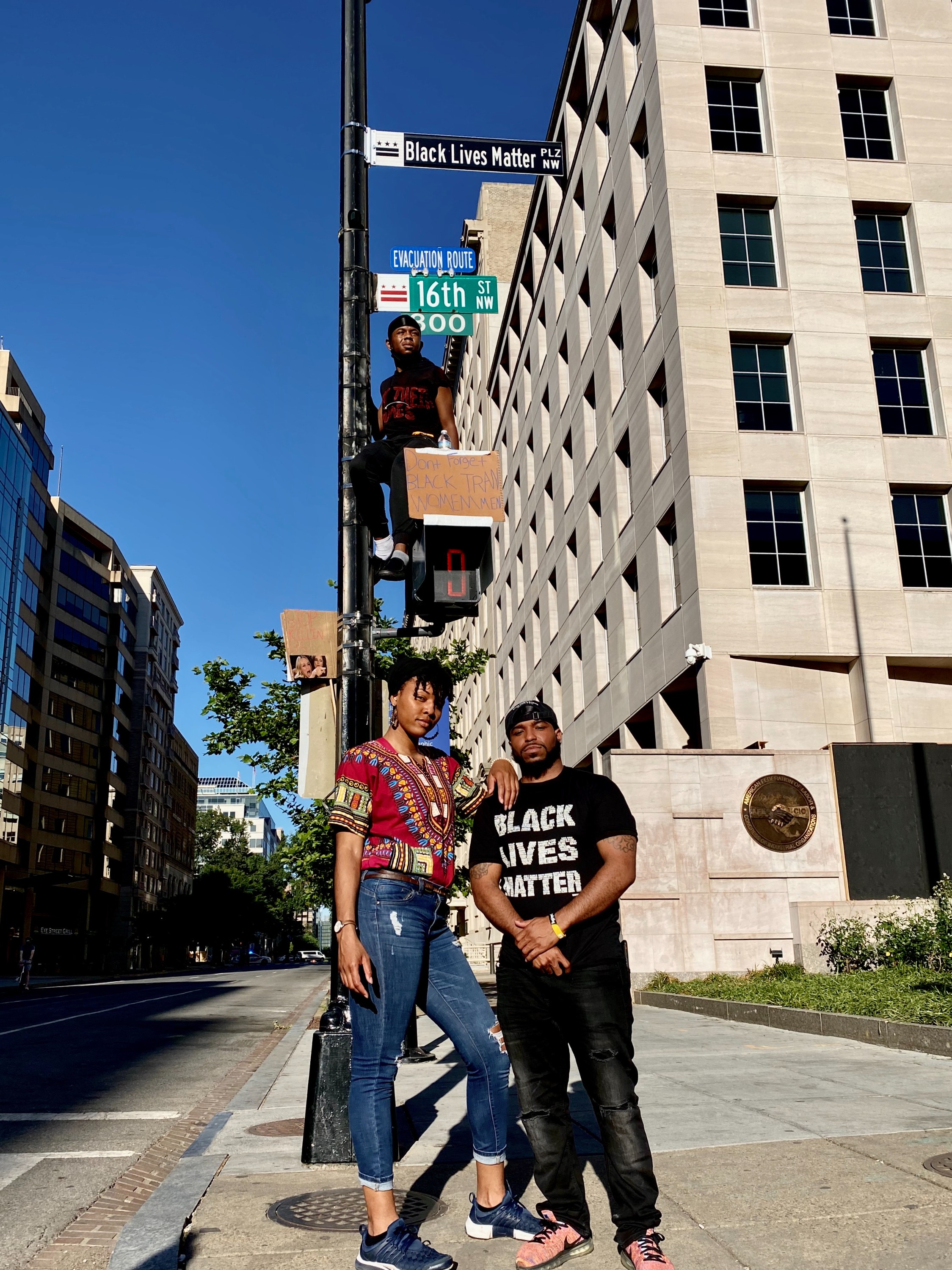
Even as attendance was lower than during the weekend, people like Katea Stitt said the protest would not end anytime soon, and the focus is still there. “We’re here because people have been killed. Because black lives haven’t mattered,” Stitt, 55, said. She said that she’ll keep coming out “all day, every day. As long as it takes. We need real systemic change.”
That change, Stitt said, includes improvements to education and health facilities. “There have been schools closed in predominantly poor, black communities. Black lives don’t matter when you do that.” she said. “Black lives don’t matter when the one hospital that was here in D.C. that was across the river that was supposed to service Southeast is closed. Black lives matter when you have access to quality to health care, access not to just a school building but a quality education like Potomac or Bethesda.“
Stitt felt compelled to speak to the protesters who gathered around her to encourage them to come back the next day and the many days after that. “We can’t stop coming here just because they renamed this street Black Lives Matter Plaza,” she told them, echoing a sentiment many other activists have expressed since Mayor Bowser renamed that section of 16th Street NW.
The crowd outside Lafayette Square petered out by around 9:30 p.m. But Stitt said it’s all part of the movement. “We have to lean on each other,” Stitt said. “Some of us get tired, others pick up the slack. That is how a movement sustains itself.”