 Jenny Gathright
Update June 10, 10:28 p.m.: Lafayette Park will reopen to the public on Thursday, according to the latest update from the National Park Service.
Spokeswoman Katie Liming wrote in an email Wednesday evening that the Secret Service was “continuing to remove the temporary fencing around Lafayette Park, and the public will have access to Lafayette Park beginning on June 11.” Liming added that some temporary fencing would remain around areas that have been damaged, such as the Lafayette Lodge House, in order to accommodate repairs.
The timeline for the removal of parts of the fenced perimeter around the White House, which expanded dramatically in the last week as protests over the police killing of George Floyd continued, has been in flux in recent days.
NPS had previously said most of the area around the White House, including parts of Lafayette Square, would open by Wednesday. Then, on Tuesday, Liming said that while fencing along the south side of the White House, including the Ellipse, would come down “by or about” this Wednesday, the Secret Service was in “continuing discussions with the US Park Police regarding the temporary security fencing in and around Lafayette Park.”
The Ellipse and Lafayette Square had been completely off-limits, and some roads have been closed to cars and pedestrians.
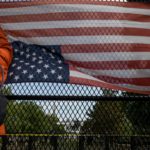
At the direction of the Secret Service, NPS erected the new, approximately eight-foot-tall metal fencing around the White House last week. Crews first got to work shortly after law enforcement aggressively cleared peaceful protesters from Lafayette Square on Monday night so the president could walk across the street to pose for pictures at St. John’s Church.
By Thursday, crews had installed fencing and concrete barricades that blocked off typically public spaces around the White House, which previously welcomed tourists and First Amendment protesters for decades. By last Saturday afternoon, 1.7 miles of fence surrounded the people’s house, according to the Washington Post.
This intense level of physical separation is without precedent, though the White House has become less accessible over time.
Local and federal officials have criticized the move to restrict public access to Lafayette Square and the space surrounding the White House.
Speaker of the House Nancy Pelosi (D-Calif.) and Senate Minority Leader Chuck Schumer (D-NY) sent a letter on Monday demanding President Trump reopen Lafayette Square, calling it a “place which has long been a venue where Americans can gather to freely exercise their constitutional rights in close proximity to the White House.”
Lafayette Square itself had been a focal point of demonstrations in D.C. until the barricades went up. Crowds continue to gather on the newly christened Black Lives Matter Plaza, a two-block stretch on 16th Street NW that leads right to the White House.
Over the last few days, protesters have sought to reclaim that fence, covering it with signs and art that proclaim messages like, “Black Lives Matter,” and “My body is not a target.” There are calls to action like “Defund the police,” and “Police-free schools,” and even some messages meant solely for the president, like a sign that reads, “More people than your inauguration.”
Since NPS announced plans to take the fencing down, activists have worked to transfer the artwork to nearby streets. Curators from the African American History and Culture Museum, American History Museum, and Anacostia Museum are also looking to collect some of the protest signs and art to feature in future exhibitions.
This story has been updated with new information from the National Park Service.