Maya Sapiurka returned to her downtown D.C. office for the first time in three months in mid-May. A scientific policy and training associate at a local nonprofit, she had to pick up some items she’d left when the company moved operations offsite as the coronavirus rolled into the District.
When Sapiurka, who has been working there for three-and-a-half years, arrived at the building on 14th Street NW near Thomas Circle, the building’s custodial and security staff were on site, but her office was dark and quiet, with no trace of her coworkers and their workspaces empty.
“It was very strange,” she says. “It was very quiet, and it was a very surreal experience.”
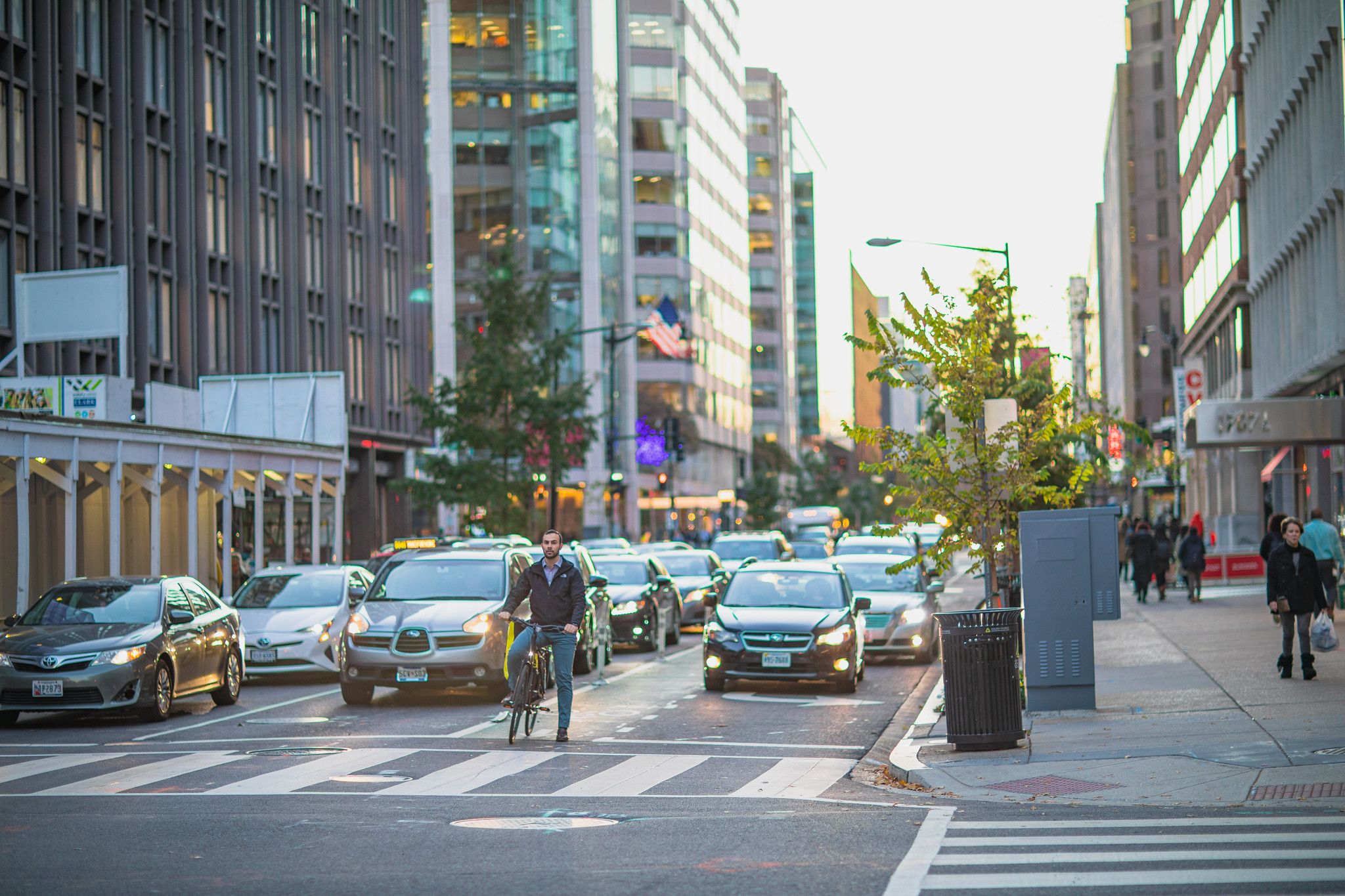
But Sapiurka has no plans to go back again anytime soon. Even as D.C. has begun to reopen, she is among a number of Washingtonians whose downtown offices have opted to work from home indefinitely, which could result in more unused office space and a slow return to the weekday hustle the area was known for.
Sapiurka’s bosses already extended her remote-work order twice before declaring last month that the office would work from home indefinitely, though they said they would give employees 30 days of notice whenever they decide to reopen.
Late last month, the Centers for Disease Control and Prevention issued guidance for American employers as citizens return to office buildings, including wearing face coverings, maintaining social distancing, erecting transparent shields between desks, and removing “high-touch communal items” like coffee pots and, yes, water coolers.
The CDC also recommends that employers urge staff to drive, bike, or walk, rather than taking public transportation like the Metro or the bus, which Sapiurka used to ride each day from Arlington.
She says those extra steps are “a little bit more than we want to deal with right now, particularly when we’re doing well with the telework situation.”
Other locals just don’t yet feel safe returning to the office.
Aaron DeNu is a senior consultant at at TiER1 Performance, which operated out of WeWork’s Metropolitan Square location. He and his colleagues have been working remotely since late February, and discuss possible timelines for returning to the office every week, but have concluded as a group that they aren’t ready.
The team of roughly 10 people in the D.C are wary of returning without a vaccine. given their close quarters, he says. “We’re not interested in doing that.”
Three local WeWork members told DCist in April that the company was still charging them fees during the pandemic, as most workers were being urged to stay at home, and a number filed complaints through the D.C. attorney general’s office.
A spokesperson for WeWork told DCist at the time that the company was “committed to speaking with our members individually and working to find solutions that support them during this time.”
DeNu, however, says his office had a monthly contract and was able to easily pull the plug after the crisis hit. “Having a month-to-month contract seems like it will be even more important going forward for many companies reassessing when and where to open shop again downtown,” he says.
Athena Fulay, an outreach and recruitment manager for an education nonprofit at 14th and K streets NW, who has been working from home since mid-March, echoes that sentiment. She thinks that, for many companies and employees with 9-to-5 office jobs, the shutdown will have a lasting impact.
“I think a long-term effect to this will be companies or organizations probably divesting in brick-and-mortar locations,” she says, “because people, to an extent at least, have been able to demonstrate that a lot of what we do can be done remotely. And companies are always looking for ways to cut spending and maximize efficiency in distribution of resources.”
If that proves true, it could exacerbate the long-standing glut of office space downtown. Office vacancies hit a new record high in late 2019, with around 7.7 million square feet of office space sitting empty, according to a recent report from the Downtown D.C. Business Improvement District.
That rate is the highest since 1993, and surpassed the previous record of 6.8 million square feet in 2018. The problem is caused in part by new construction and tenants vacating far more space than they leased, meaning landlords “have retained and/or attracted tenants with near record concessions,” according to the report.
Downsizing at private companies and federal agencies has been one factor driving the increase, including the latter’s primary civilian real estate arm, the General Services Administration, and some employers have moved to other areas like NoMa or Rosslyn.
The downtown BID has attempted to address the issue in various ways, partly by advocating for tax breaks for owners who convert office buildings into other uses.
While the pandemic has put an increased strain on many businesses and landlords, that doesn’t mean demand for office space downtown has stopped entirely.
Morgan Monroe, an associate in commercial real estate advisory firm Newmark Knight Frank’s D.C. office says the crisis has undoubtedly taken a toll on business. “I’ve definitely had busier springs,” she says.
Still, Monroe adds that for the most part, clients are still touring spaces and negotiating leases. “As [is] typical, you have your ups, you know, you have your down weeks, but tenants are still in the market looking for space,” she says.
Monroe says that, in some cases, tenants looking for larger spaces that may be early in the process have put their plans on hold, unless they are looking at a “top-quality” space that might not be available if they wait.
Monroe believes many tenants will be looking for increased flexibility in the coming months, and foresees that spec suites (spaces that landlords have already spent construction money on to get them move-in ready) and subleasing will be increasingly popular options, which can both provide the benefit of short-term commitments.
She adds that going forward, while there may some increased flexibility regarding remote work in addition to other changes to ensure worker safety, she believes traditional office environments are here to stay.
“I think the need for office space is vitally important for culture, for an onboarding process, for employees to be able to learn from one another,” Monroe says. “There’s only so many things you can do remotely without feeling completely isolated and not a part of a team.”
Some local food and retail operations are banking on that return. With fewer workers in offices downtown, many businesses that depend on foot traffic during the workday have been hit by a harsh ripple effect.
Giuseppe Lanzone, co-owner of Peruvian Brothers, operates three food trucks in addition to the business’s newer brick-and-morter spaces at La Cosecha and at The Stand in Arlington.
Before, Lanzone says the trucks would frequent downtown spots like L’Enfant Plaza and Farragut Square, where hungry locals flocked for empanadas on their lunch breaks.
But after downtown emptied out and the trucks saw a day of losses at those same locations, the company gave up on its old haunts.
Lanzone says business dropped 70 percent across his businesses within days. He has since cut back to operating one to two trucks a day, and the company has changed its strategy: Now, it primarily partners with condo buildings across the region to park outside for lunch or dinner and offers its services at private parties.
Lanzone initially cut hours for some of his employees, but has been able to get everyone working full-time or close to it again, and hire two new staffers. Still, the changes have been tough. “Overall, everything has come down,” he says. “But the times that we’re going out [with the trucks], they count.”
Downtown has seen a recent uptick in foot traffic in June, as large-scale protests following the death of George Floyd have swept the city, and food and ice cream trucks have been showing up to provide sustenance. However, most of the brick-and-mortar businesses have been boarded up since last week.
Lanzone says, though, if workers don’t return to downtown, he’d consider changing the trucks’ routes permanently. “We have a minimum that we have to hit at the food trucks in order for us to take them out, and if we can’t reach those minimums, then we need to find a different way to keep going,” he says.
DeNu misses that element of working downtown: grabbing lunch at District Taco, running into friends, even taking the Red Line from his home in Northeast D.C.
“Downtown life, office life, and everything that brings with it is going through a major disruption right now,” he says. “And maybe we’ll see some creative innovations come out of that.”