Colleen Grablick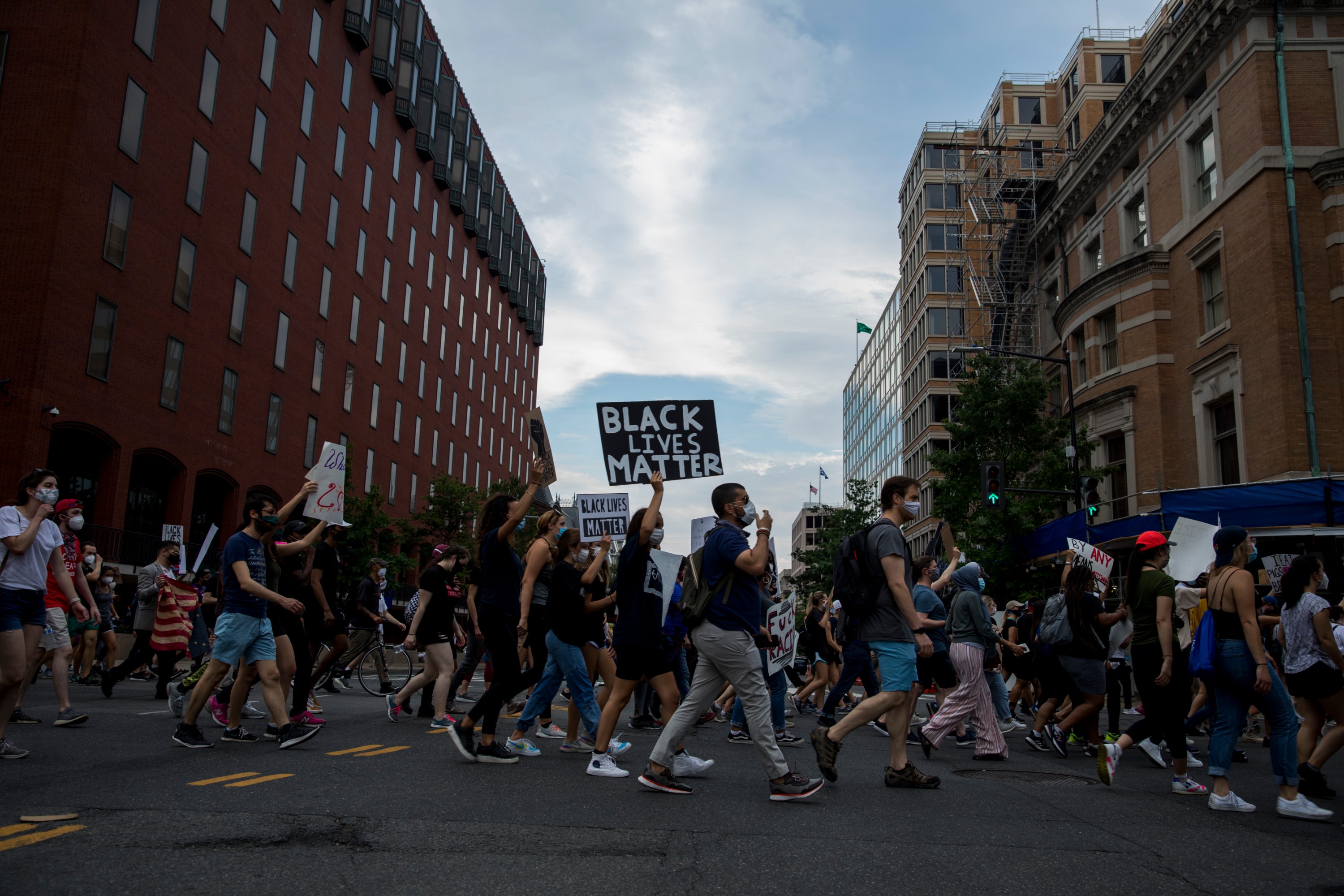
Two years after 22-year-old D.C. resident Marqueese Alston was shot and killed by D.C. police, Georgetown Law’s Civil Rights Clinic has filed a wrongful death lawsuit against the District of Columbia and the individual officers involved in Alston’s death.
The $100 million suit, filed in the District Court of D.C. on behalf of Alston’s mother Kenithia Alston, follows the mother’s years-long search for answers from the city regarding her son’s death. The complaint includes claims of negligence by MPD leading to and following Marqueese Alston’s death, and emotional distress caused to Kenithia Alston by the city’s alleged lack of transparency around the investigation into Marqueese Alston’s killing.
“It’s been two years since police killed my son and they still haven’t publicly released the body-cam footage or got their story straight about what happened that night,” Kenithia Alston says in a statement released by Georgetown Law. “Nothing they have told me adds up. They can’t just get away with killing Marqueese by refusing to release evidence.”
Marqueese Alston was shot on June 12, 2018 in Southeast D.C. by two MPD officers. The lawsuit claims that officers approached him and a group of men in a residential Ward 8 neighborhood, under the suspicion that men in the group carried illegal firearms. According to the suit, Marqueese Alston fled from the police, and after stopping to face the officers, was shot between 12 and 18 times. It also claims that emergency responders did not arrive until about an hour after the shooting, and he was pronounced dead on their arrival.
But the details of Marqueese Alston’s death have remained murky in the two years following the shooting, as his mother has sought for publicly-released body camera footage and the names of the officers involved. The lawsuit alleges that MPD’s own account of the incident changed in the days following Marqueese Alston’s death, including their statements on why officers approached him initially.
In a statement by MPD the day following the incident, officers patrolling the neighborhood approached Marqueese Alston believing he had a firearm. The statement claims he then fled into an alley, and fired at officers during a foot-chase, before being shot. MPD reported recovering a gun from the scene, and D.C. police chief Peter Newsham also claimed that the body camera footage showed that Marqueese Alston had fired on police before being killed.
That footage has not been released to the public, and the lawsuit alleges that Kenithia Alston was permitted to view manipulated footage of the incident that did not appear to support the claim that her son shot at officers.
“All I saw was my son running from the police,” Kenithia Alston says. “It’s obvious to me they’re covering up what really happened.”
Under current D.C. Council rules, any individual caught on camera or who files a complaint against an officer may request to view the footage at the police station or file an open-records request. But when footage is being used in an investigation, MPD has the ability to edit a video to protect privacy.
Marqueese Alston’s name has been among the dozens of victims of police brutality that have been remembered at protests across D.C. in recent weeks, following the killing of George Floyd by Minneapolis police. When Mayor Muriel Bowser unveiled the Black Lives Matter mural near Lafayette Square Park, advocates on social media, including Black Lives Matter DC, criticized Bowser for the reported silence around Marqueese Alston’s death.
In response to advocates’ calls for police reform, the D.C. Council passed emergency legislation this week requiring body-camera footage and officers’ names to be released with 72 hours of an incident. But Kenithia Alston’s lawyers say they are concerned that MPD may claim qualified immunity, a judicial term that shields government officials from being held liable in constitutional violations.
According to the lawsuit, Marqueese Alston was a devoted father to his two-year-old daughter, an active member of the Ward 8 community, and an assistant for a youth football league.
“We got Black Lives spray-painted across Lafayette Square. Do Black lives really matter?” Kenithia Alston said in the suit. “If your accounts are true about what you said my son did – release the body-cam.”