Matt Blitz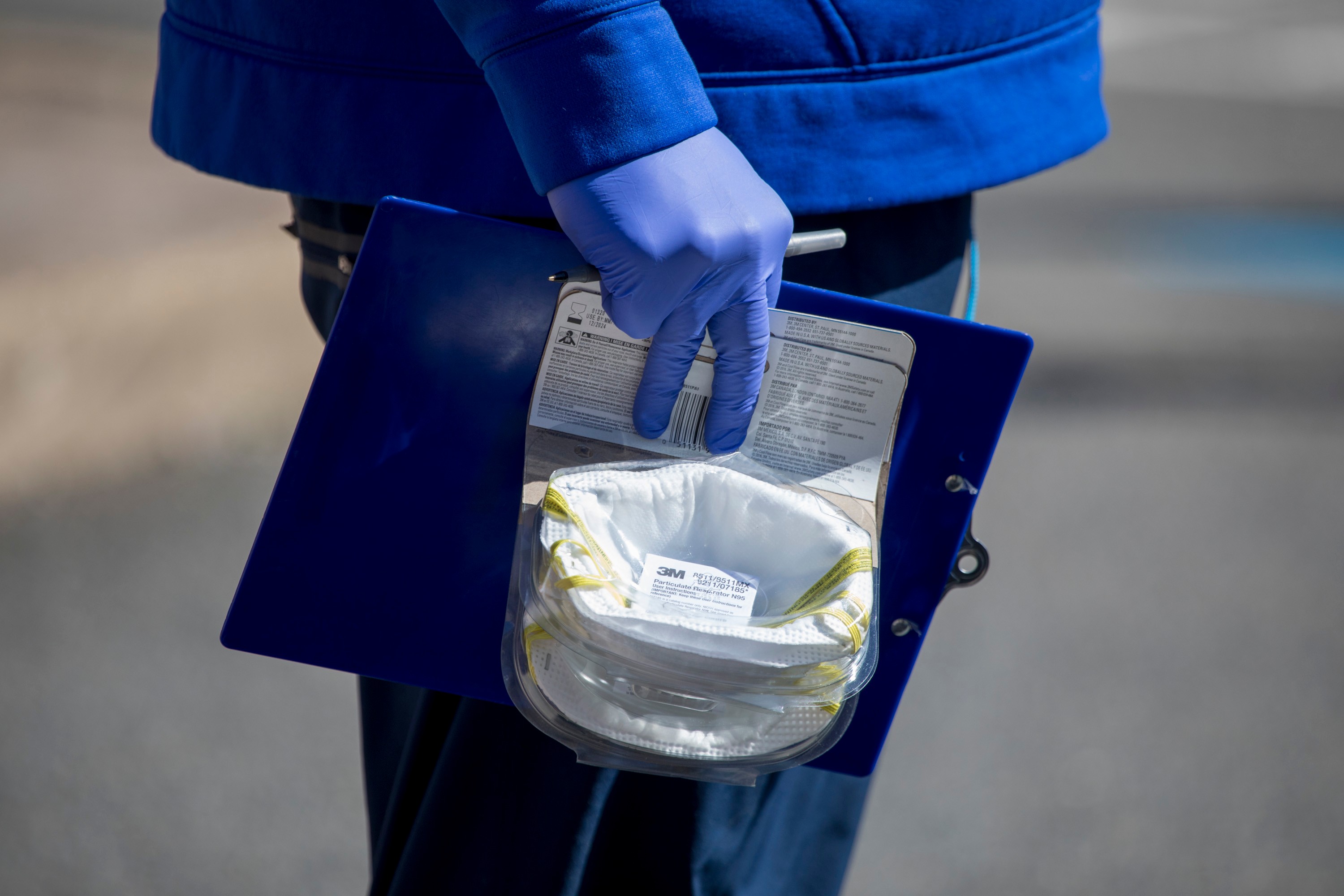
For a period of 45 days, primarily in April and May, state-funded “go teams” conducted in-home coronavirus testing for some of Montgomery County’s most vulnerable residents.
But now the county is admitting that a portion of those results were lost, meaning they were never communicated to the patients. This was publicly addressed at the June 11 Montgomery County Health and Human Services hearing.
It’s still not clear who is to blame for the lost results, though it’s apparent that missing steps in a quickly-put-together process undermined the mission of the program: To test for COVID-19 and provide accurate, timely results to some of the county’s most underserved communities.
DCist spoke with a number of county and state officials involved, as well as the non-profit Impact Silver Spring, which acted as the go-between for patients and the “go teams,” which were teams of personnel dispatched to do home testing. DCist also reached out to Ready Responders, the company contracted to form these teams and perform the tests.
An unknown number of county residents living in some of the lower-income ZIP codes of Montgomery County were left in the dark about whether they tested positive or negative for COVID-19 during a period of time when cases were quickly rising across the county and state.
This left many not knowing if they were sick, if they should go to work, or if they should isolate themselves from family.
“There are ramifications from not having test results,” Jayne Park, Executive Director of Impact Silver Spring, tells DCist, who personally worked with a number of families to get tested. “If they don’t know, they are not isolating, and risking spreading the virus.”
On April 24, the Maryland Health Department launched the Vulnerable Population Taskforce — or “go teams,” as the county has called them — to assist local health departments in the most heavily impacted jurisdictions of Montgomery County, Prince George’s County, Baltimore County, and Baltimore City in testing at-risk populations. This included providing on-site coronavirus testing in homeless shelters and other congregate settings as well as in-home testing for individuals who were in significant need. The state contracted with a Louisiana-based company called Ready Responders to do this initially for 45 days, up through June 3.
“It was a model that had a lot of potential. We were very excited when we first heard about it,” says Maryland Delegate Lorig Charkoudian, who represents District 20, which includes parts of Silver Spring and White Oak in Montgomery County. “We had people who don’t have cars, didn’t have primary care physicians, were very sick, and shouldn’t be leaving their houses.”
Park agrees. “Generally, the model was a good one. It provided accessibility [to testing] to send teams into homes… who couldn’t get to testing sites for a number of reasons.” he says.
Impact Silver Spring coordinated with the go teams and patients to arrange testing. According to numbers provided at the hearing, the nonprofit helped administer 252 tests (156 adults and 96 children) in the county’s lower-income ZIP codes. 20902 and 20906, zip codes that cover parts of Silver Spring, Wheaton, Glenmont and Aspen Hill with median earnings well below the county average, had the highest test numbers through the program.
There were also a large number of tests conducted by the go teams in county homeless shelters and other concrete settings. “Ready Responders also tested a number of assisted living facilities… to be able to help us mount a response in those areas,” Dr. Travis Gayles, the county’s health officer and Chief of Public Health Services, tells DCist. “So, we are talking hundreds of tests beyond the ones specifically gathered from the [Impact Silver Spring] referrals.”
According to Gayles, after tests were completed, they were dropped off at the Dennis Avenue Health Center, and then shipped to a state lab for analysis. However, says Gayles, some of those tests didn’t have certain information attached to them — like an order provider or a primary health care physician — that would be the point of contact when the results were known. “There was confusion over who was assigned in terms of an order provider, so that we could track the results in the system. It made it challenging to look in the system and find those results.”
It isn’t immediately clear whose responsibility it was to input this information and Gayles wouldn’t lay the blame at any one agency or organization’s feet.
But he did say that Montgomery County wasn’t the only jurisdiction that encountered this challenge of inputting an order provider. “This was not specific to Montgomery County. This was an issue with the other [Maryland] jurisdictions.”
When the issue was discovered, says Gayles, there was a backlog of results from early in the 45-day period that had not been reported to patients. “I’d say 10 to 15 percent… we had to go back, manually track, and follow up by calling those folks [who were awaiting results].” Gayles said he personally called a handful of families himself.
In some circumstances, where test results were either completely lost or out of date, patients had to be retested.
As of publication, the county was unable to provide exact data or numbers about how many tests were impacted by this error. Impact Silver Spring also couldn’t provide numbers but did say they became aware of the situation only when they started receiving calls from people about not receiving their results, some for up to 20 days.
In a statement to DCist, the Maryland Health Department seemed to put the onus on the county, saying, “Test results from the state lab were returned to local health departments, who reported the results to the citizens.”
Ready Responders also said their responsibilities didn’t include these steps, “Ready Responders was proud to partner with the state and county to administer COVID tests to vulnerable residents in Maryland. We were not involved in transporting test samples to the state lab, analyzing samples, or notifying patients of results. Our Responders followed the processes set by our partners to provide tests and medical treatment for these at-risk patients.” In all, the company says they tested nearly 1,100 patients under the contract with the state.
While Gayles says the situation was rectified as quickly as possible when it was discovered, Park said it left scars on the communities her organization works with.
“The level of emotional anxiety it created for people who thought they had COVID but had to wait to get a result was really difficult,” Park said at the June 11 hearing. She also noted that Impact Silver Spring often works with are immigrant families, who may already be skeptical and fearful of interacting with government officials. “I want to point out how much this has eroded community trust in the government,” Park said. “It’s frustrating and heartbreaking at the same time.”
Gayles recognizes this. “We apologize for missed opportunities. We apologized to the families and the community,” he says.
The “go team” program ended on June 3 having completed its 45-day deployment. The contract with the Ready Responders was not renewed, Maryland’s Department of Health confirmed.
At the moment, even as testing overall has risen, there are no state or county-funded in-home coronavirus testing being done in Montgomery County. While the program didn’t work the way it was supposed to at least initially, it was a better alternative than what is currently happening, says Delegate Charkoudian. “What we have right now is not okay. It’s nothing and there isn’t a plan on paper.”
Park says that over the last several weeks, there haven’t been enough testing options. “In terms of model and concept, the go teams were better than what’s available right now,” she says.
“We’ve increased access to testing in a number of areas,” says Gayles. “But, as it specifically relates to the work Ready Responders did, yes, there has been a gap in that type of that service being offered.”
However, he’s confident that this will be fixed with the advent of mobile testing sites, which he says will happen by next week. This something that Gayles brought up earlier this month to DCist when he said, at that time, that would be implemented within that week.
This means pop-up walk-through testing sites in high-volume ZIP codes as well as in-home coronavirus testing for the most vulnerable, as well as other variations.
The Ready Responders are also contracted to provide services in relation to D.C.’s nurse triage line, both the company and D.C. Fire and Emergency Medical Services confirmed. They are not partnering with D.C. FEMS to provide in-home coronavirus testing.
Gayles says he’d be willing to work with Ready Responders again. “The county has expressed an interest in terms of continuing to potentially work with the Ready Responders,” Gayles says. “They tested hundreds of folks and were very effective in terms of getting the test done and completed.”
The state-funded go teams were supposed to provide crucial testing capacity for some of Montgomery County’s most vulnerable. The fact that it didn’t completely fulfill its mission isn’t surprising to Charkoudian.
“Even the systems that we build in response to crises in our healthcare system, [we are learning] how badly inequitable they are and how much they don’t serve the most vulnerable communities,” she says.
This story was updated to reflect that the test results were added into the state’s data and with a statement from Ready Responders.