Jacob Fenston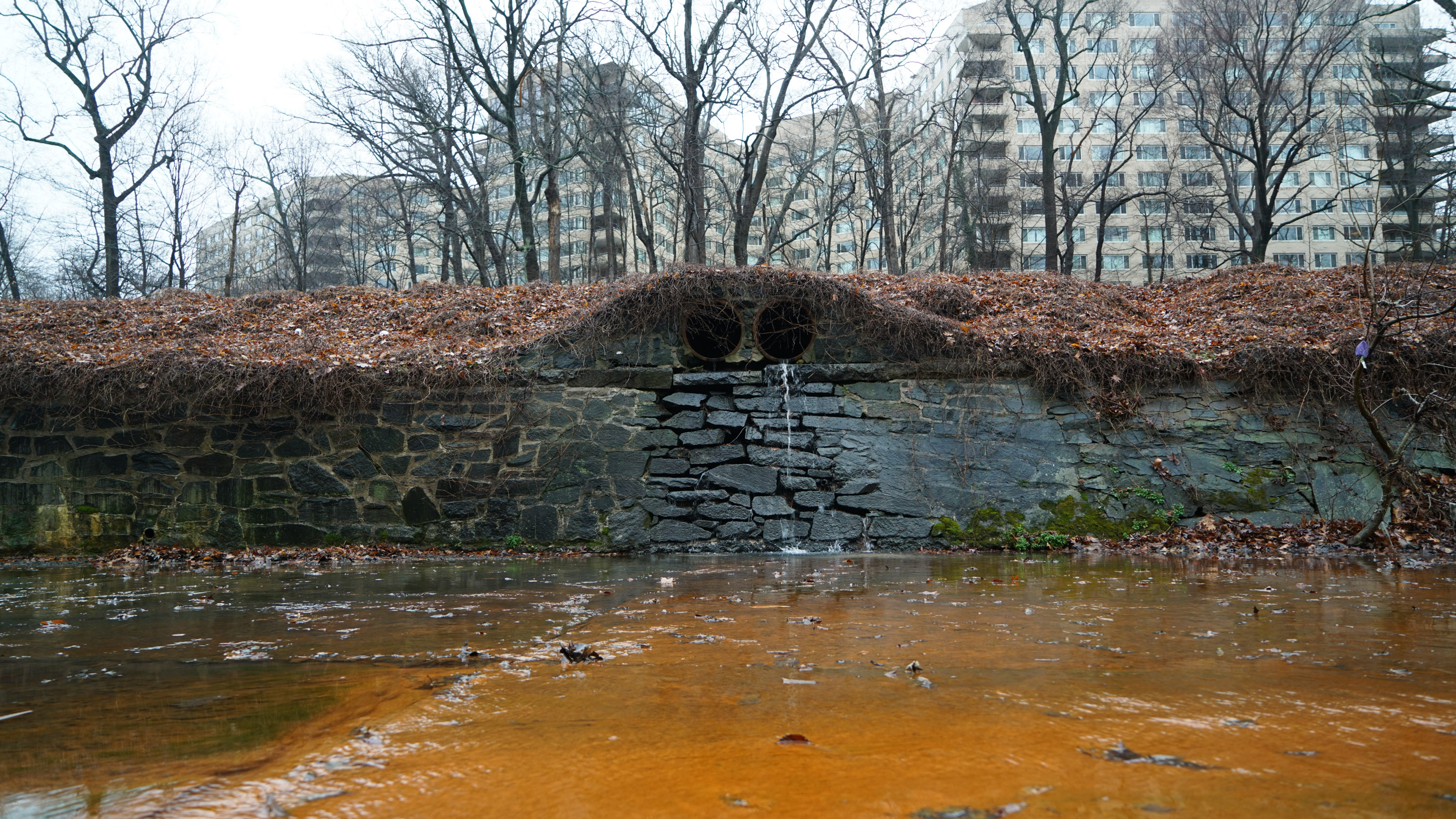
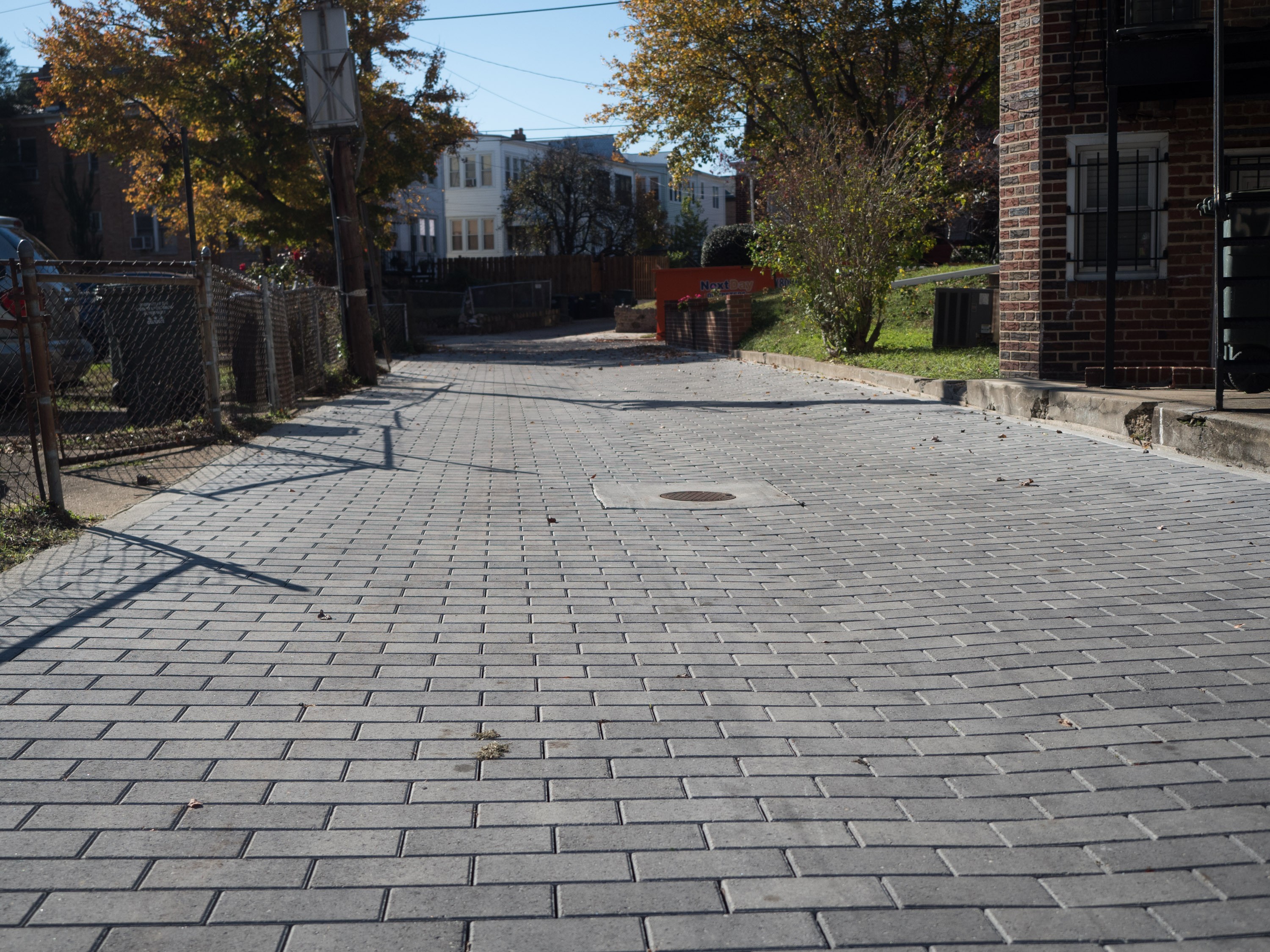
You may have noticed green infrastructure appearing in neighborhoods around D.C. lately — rain gardens next to the sidewalk, permeable pavers in alleys and parking lanes.
These projects are designed to absorb stormwater so the rain doesn’t fill up the city’s antiquated sewers and cause them to overflow into the Anacostia, Potomac or Rock Creek. But green infrastructure is too expensive in a densely built-up city like D.C. to be used on a large scale, according to a new assessment by DC Water.
The water and sewer authority now plans to scale back its green infrastructure projects in the Rock Creek watershed, and instead build a 4.2 million-gallon concrete tunnel — “grey infrastructure” — to capture stormwater until it can be treated.
“When we projected what a 30-year cost would look like, green infrastructure was almost twice as expensive as grey infrastructure,” says DC Water spokesman Vince Morris.
DC Water is in the middle of a $2.7 billion, court-mandated project to end sewage overflows in all three waterways. On the Anacostia and Potomac, the project involves massive tunnels 100 feet underground. But for the much smaller Rock Creek, DC Water was trying something different: 365 acres of green infrastructure, squeezed into D.C.’s dense urban landscape. This is enough to keep nearly 40 million gallons of sewage from overflowing into Rock Creek each year.
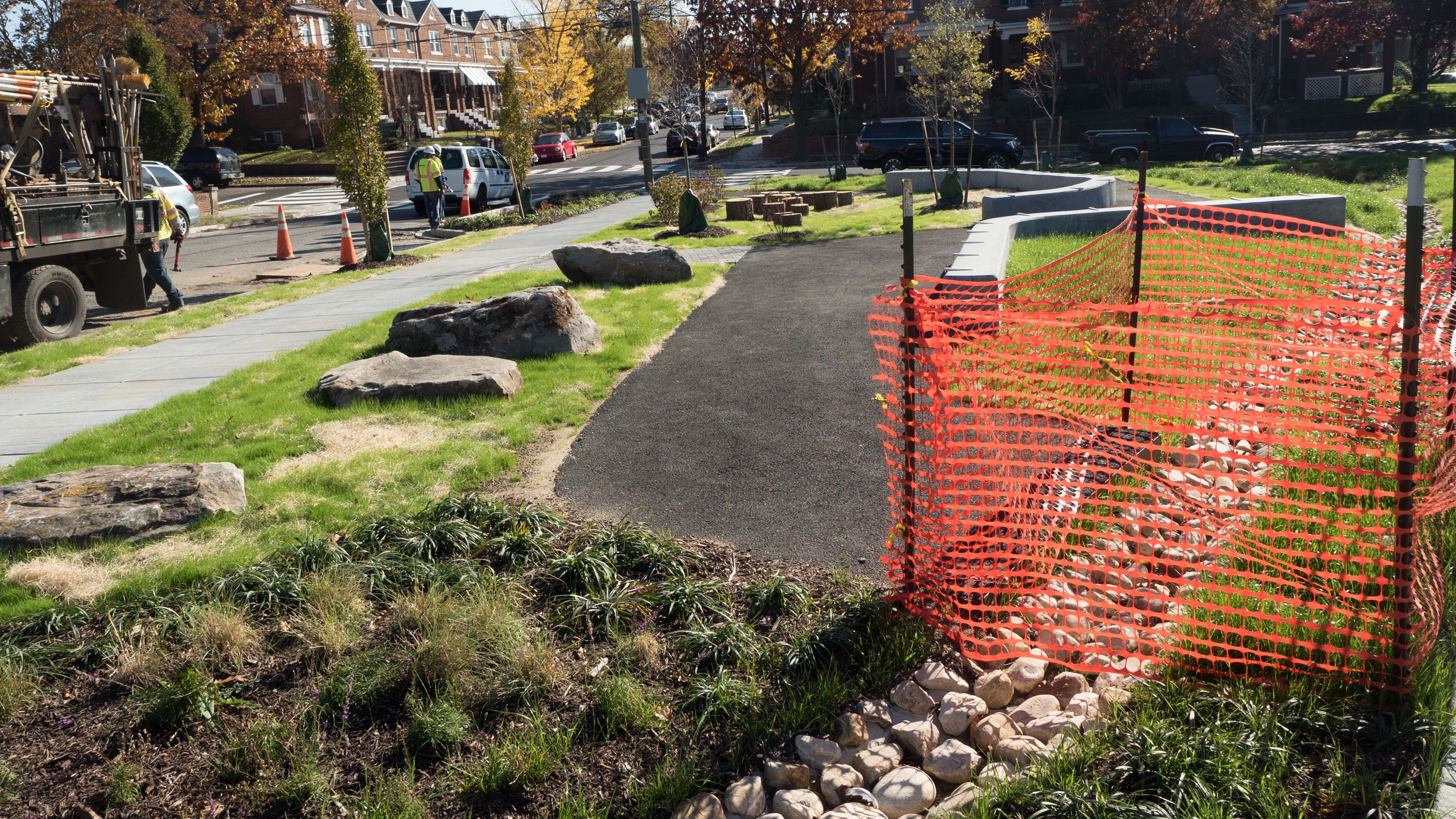
The initial installation cost of all this green infrastructure would be similar to building an “all grey” project, according to DC Water’s assessment. An “all green” project would cost $208 million to build, compared to $185 million for an “all grey” project.
But over the years, maintenance and operation costs of green infrastructure add up — crews have to regularly clean trash from rain gardens and clear debris from permeable pavement to keep them in working order. When you add in operation and maintenance for 30 years, the cost of an “all green” project for Rock Creek balloons to $407 million, compared to $211 million for an “all grey” project.
DC Water also found that some of the green infrastructure built so far was underperforming expectations — reducing stormwater flow into the sewers by only18%, rather than the predicted 30%.
DC Water is now proposing a hybrid plan — half green and half grey. But proponents of green infrastructure say it does a lot more than just prevent sewer overflows.
“We’re big fans of green infrastructure because it offers so many co-benefits to communities,” says Jeanne Braha, executive director of Rock Creek Conservancy. “So you’re not just getting clean water. You’re also getting cooling and clean air, property value increases.”
Green infrastructure also provides longterm local employment — that’s why the maintenance costs are so high year after year. Grey infrastructure, on the other hand, tends to require workers with specialized skills, who are often brought in from outside the region.
DC Water hired an outside consultant to put a price-tag on the co-benefits of green infrastructure — from property value increases to reduction of air pollution. The report found the green infrastructure co-benefits in a hybrid plan would be worth as much as $25 million.
“We’re really glad that they’re not going ‘all grey’ with this plan,” says Braha.
Two decades ago, DC Water originally proposed an “all grey” project for Rock Creek — a 9.5 million gallon storage tunnel. But DC Water’s former general manager, George Hawkins, embraced green infrastructure and won Environmental Protection Agency approval to alter the plan.
The utility’s current general manager, David Gadis, has focused on cutting costs, facing anger from some ratepayers over the cost of the project. D.C. residents currently pay on average $21 a month on their water bills toward the project. Some churches, cemeteries, and other owners of large properties have faced fees for the project of more than $10,000 a month.
The new hybrid plan is subject to EPA approval. The project must be completed by March 23, 2030.