Matt Blitz
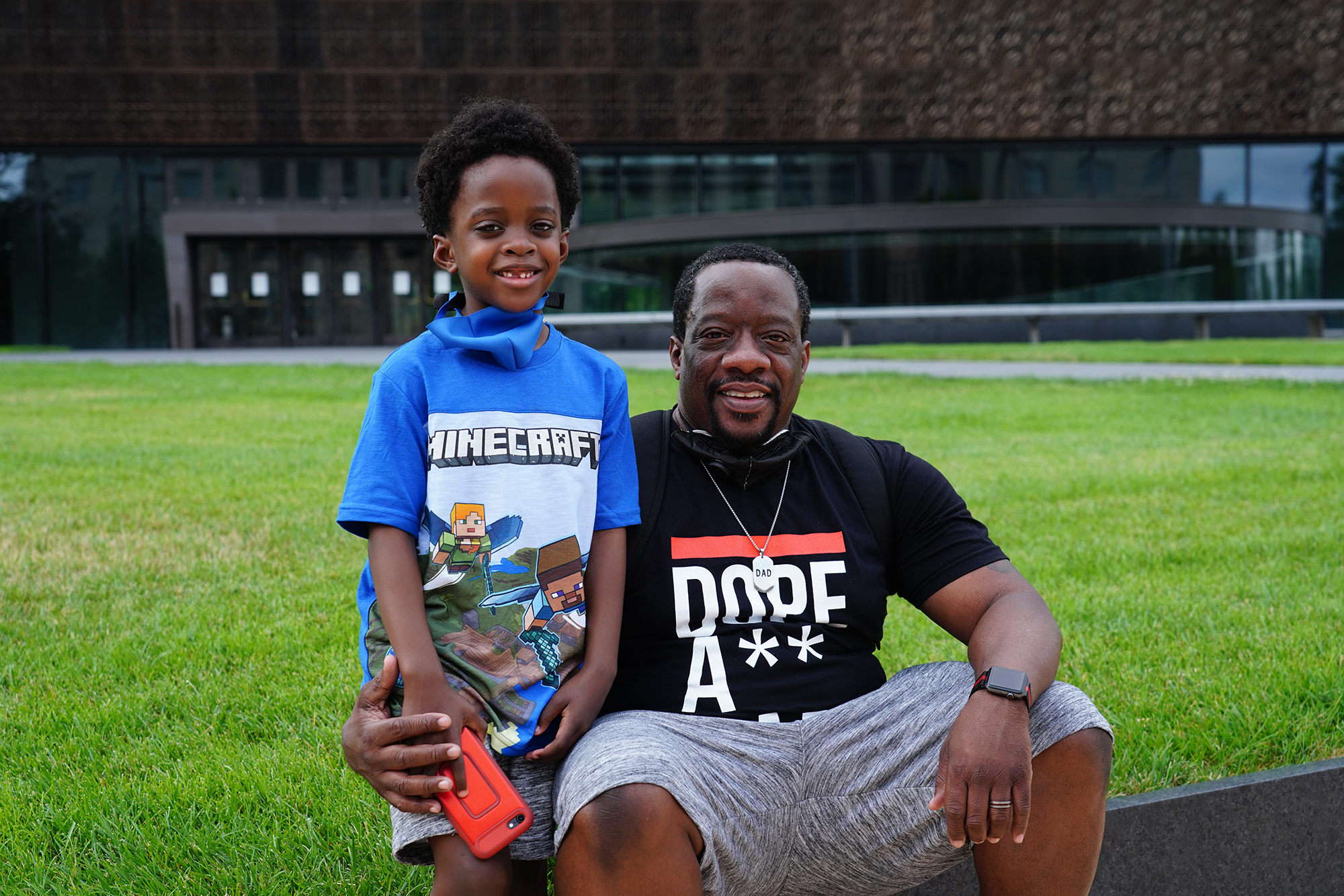
Father’s Day has taken on a new meaning for Corey Gibson and his 8-year-old son AJ of Southeast D.C.
The two didn’t have to travel far Sunday to participate in the inaugural March of Dads, an event which celebrates Black dads, stands in solidarity against racial injustice, and honors dads who never made it home.
“It definitely hasn’t been easy,” Gibson said of discussions he’s had with his son about the killing of George Floyd at the hands of police. “The first thing I had to do… was understand how I felt and deal with my feelings. I think I wasted some time trying to shield him.”
AJ may be young, but his dad says it’s important for him to understand what this moment means and why people have been protesting in D.C. streets ever since.
“I have to be honest with him. I don’t have all the answers to these questions,” Gibson said. “It’s scary for me, even as a grown-up. Together, we can make it feel better for the both of us.”
When asked why he came out to march with his dad on Father’s Day, AJ’s answer is simple, but like a lot of what kids say, reflects a greater truth. “I want to see my dad happy,” AJ said peering over at his father smiling. “This is important to him.”

About 200 people marched from the National Museum of African American History and Culture to newly-christened Black Lives Matter Plaza north of the White House for D.C.’s first-ever March of Dads.
Organized by the Dad Gang, a group of Black fathers who aim to “defy stereotypes, shatter myths and celebrate Black fatherhood everyday,” this year’s march happened concurrently with ones in Atlanta and Toronto.
Sean Williams of New York started the Dad Gang Instagram page showing positive images of himself and other Black fathers cooking, playing, exercising, dressing up, and, more recently, protesting with their kids. He created the page after a white woman approached his family at a grocery store and commended him for “sticking around.”
“I wanted to showcase the reality of Black fatherhood and rewrite the narrative,” Williams told the Washington Post.
Statistics show a different picture than stereotypes. Most Black fathers live with their children, according to a 2013 report from the National Center of Health Statistics. More than 70% of Black dads bathe, dress, diaper, or help their child use the toilet every day, which outpaces both white and Hispanic fathers, data shows. Additionally, a higher percentage of Black fathers take or pick-up their children from their daily activities than white fathers.
In recent years, Williams has sought to create in-person opportunities for Black dads to gather and share experiences. In June 2019, he organized a walk in New York City, and, last September, he attempted to do something similar in D.C. but that was rained out, Williams tells DCist.

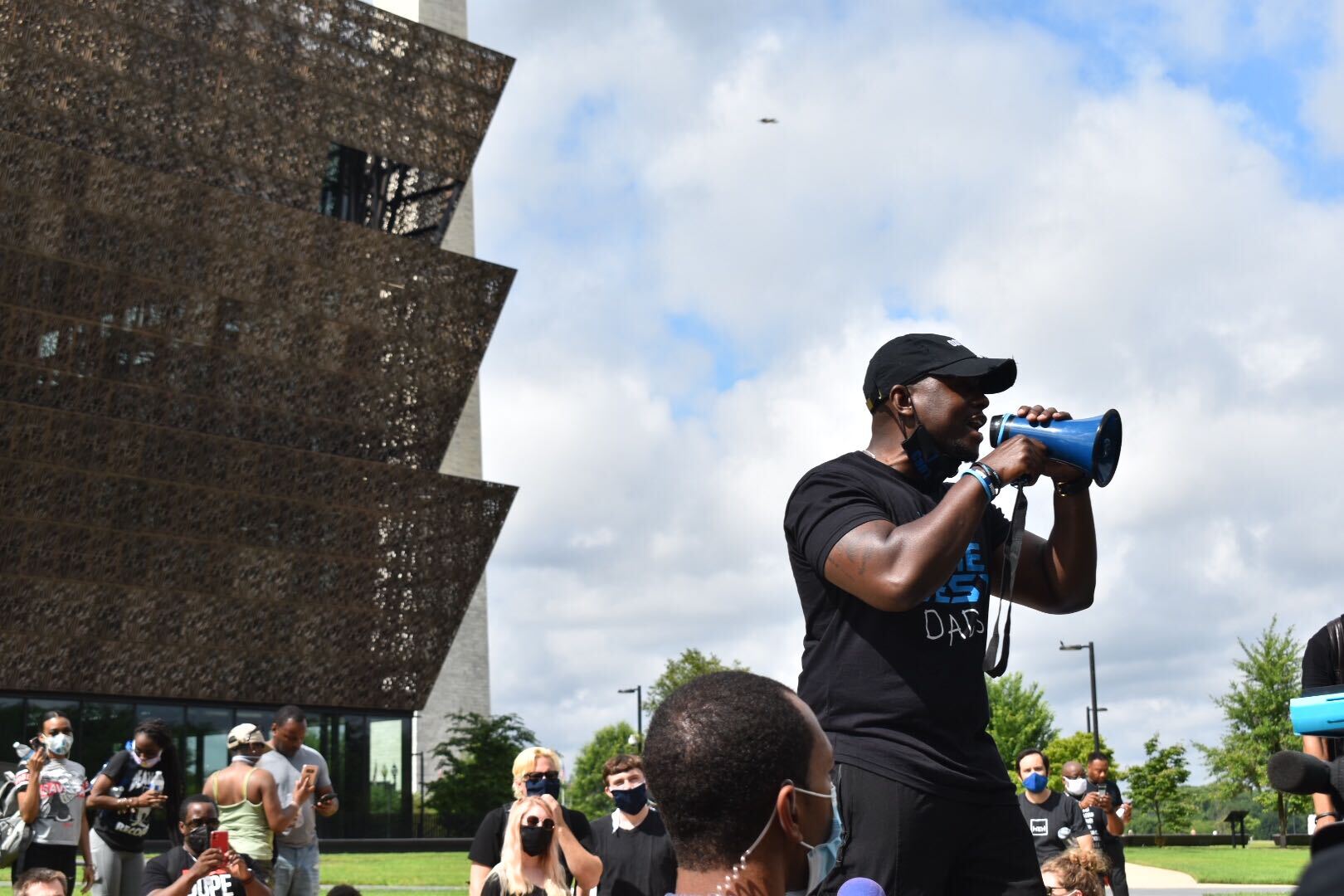
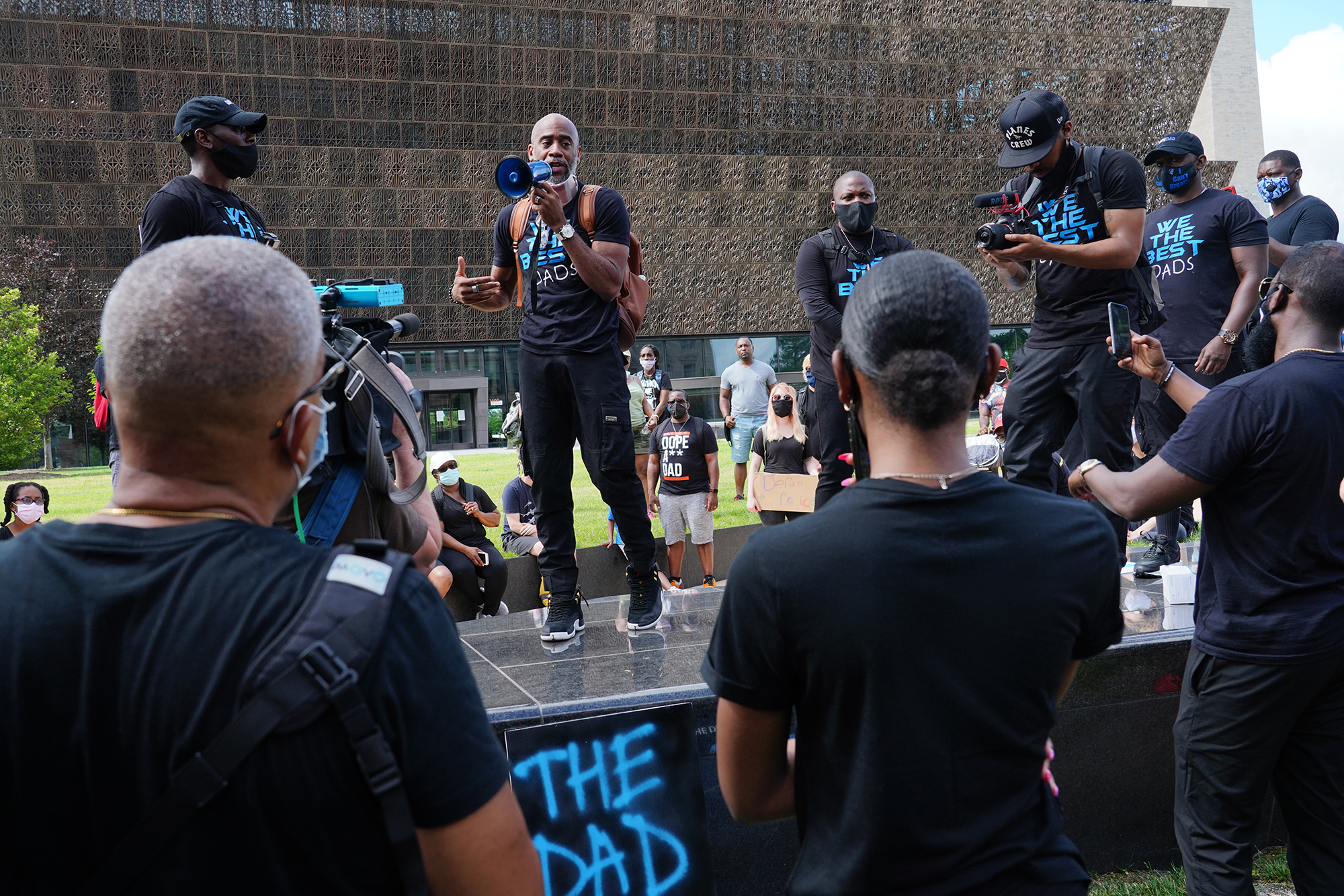
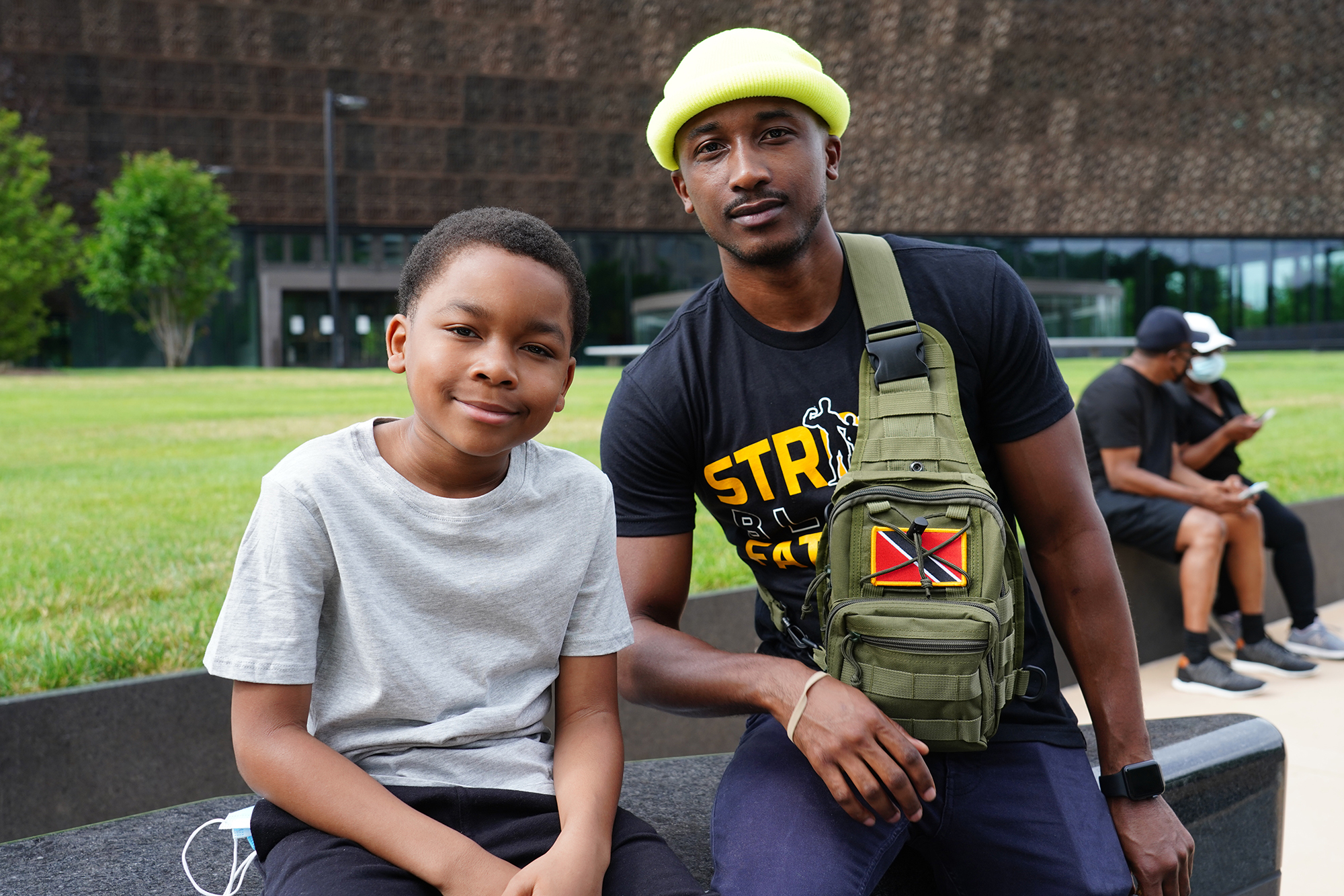
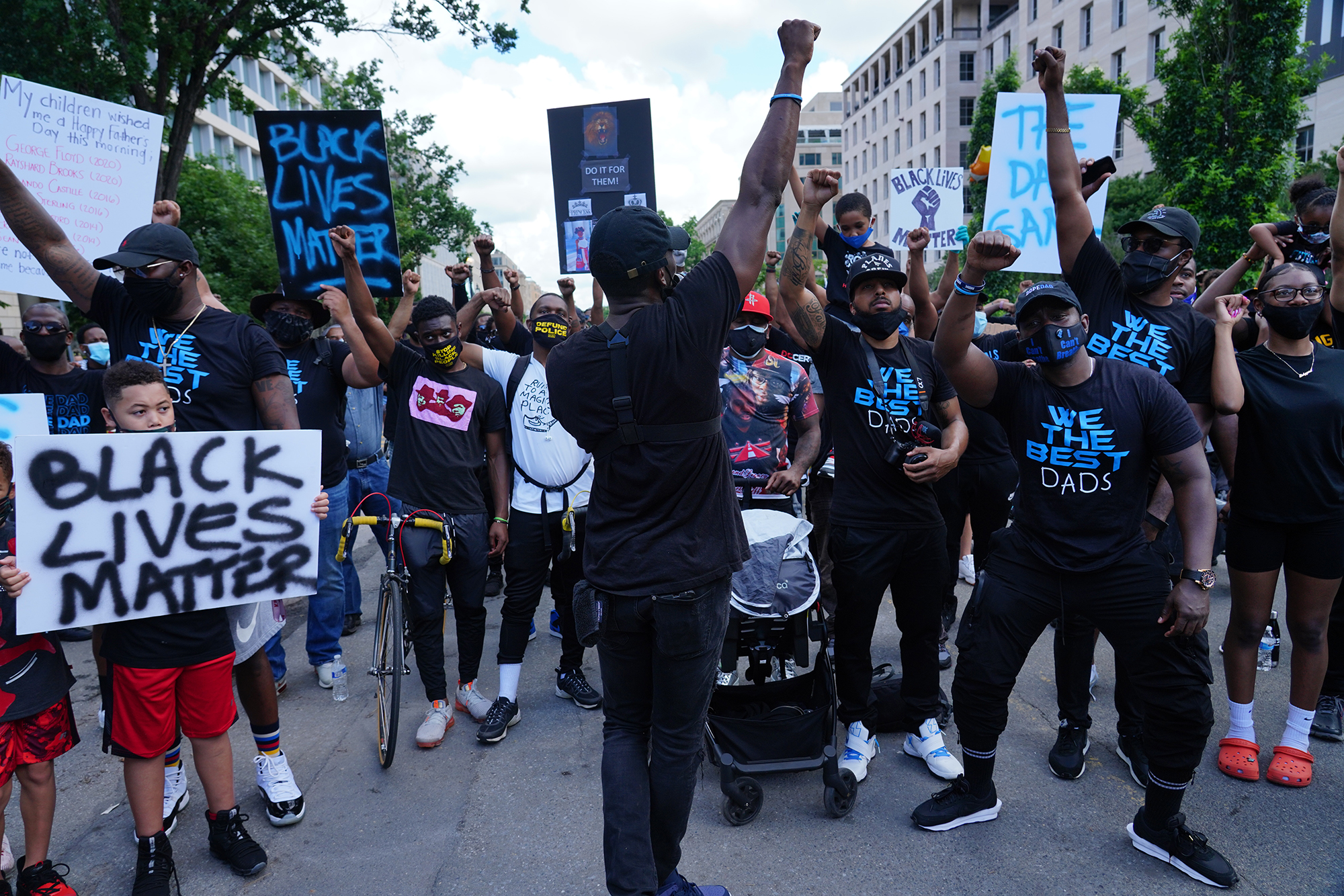
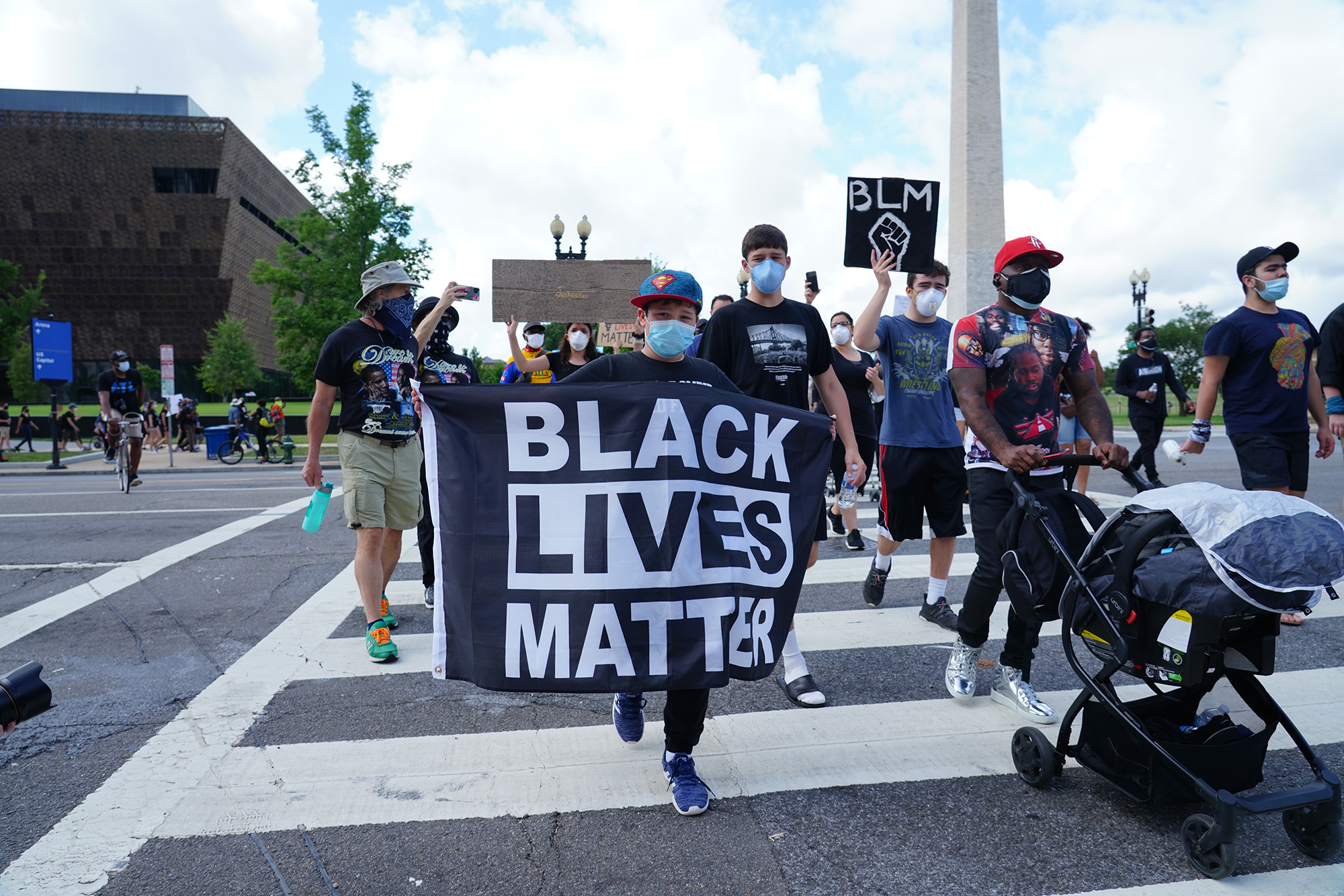
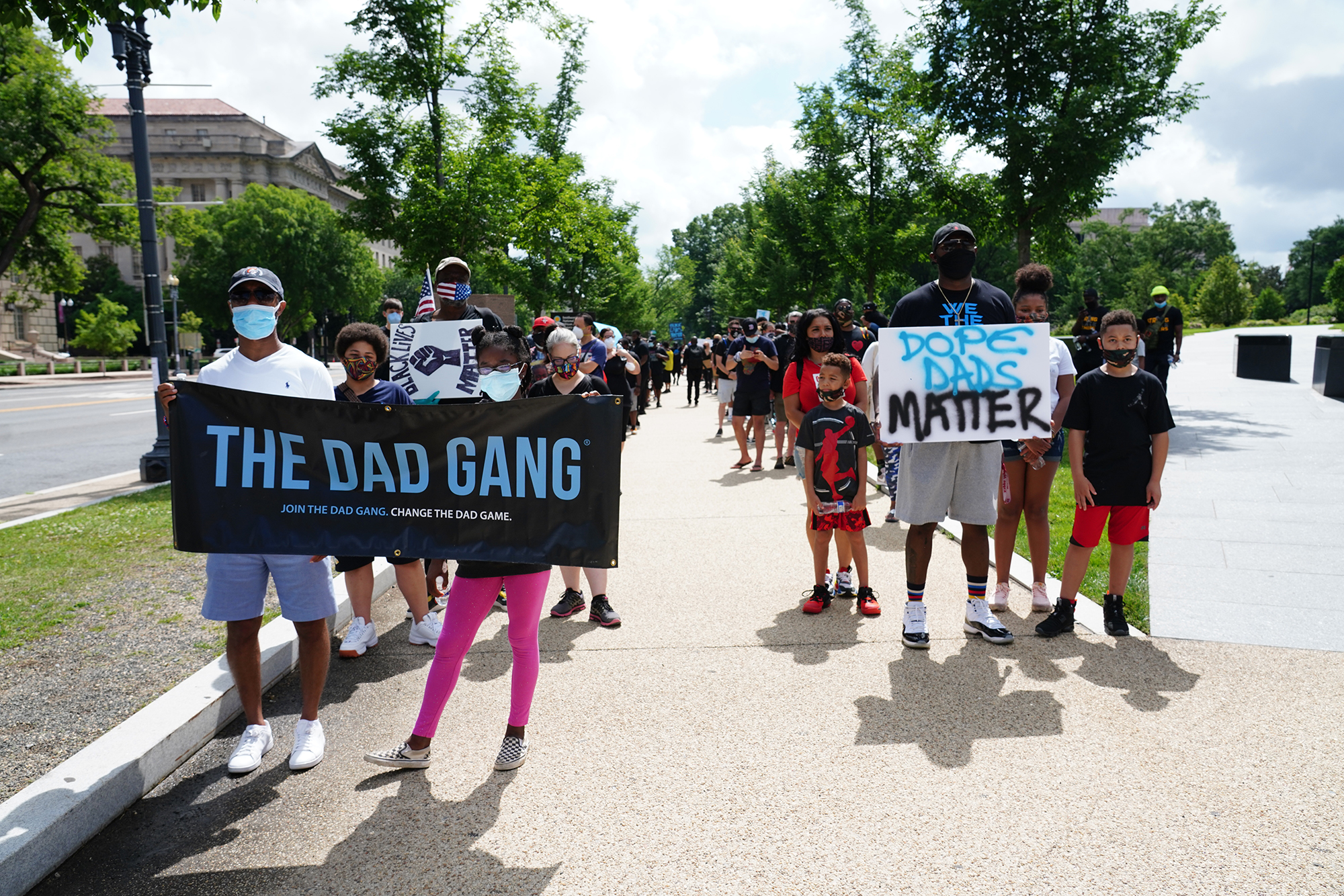
March of Dads may have been several years in the making, but in 2020 there’s even more urgency. With the murder of George Floyd, the ongoing protests against police brutality and racial injustice, Williams said he’s had to have tough conversations with his three kids about racism in America. But he knows that other dads are doing the same.
“That’s something we in the Dad Gang have been discussing. It’s a learning process for all of us,” Williams told DCist.” How do we speak to our kids about this? What tips are we using? What are we saying?”
The march is also about honoring those dads that couldn’t see their kids grow up, Williams said. Dads like George Floyd and Rashad Brooks.
He hopes to make the March of Dads an annual tradition in D.C. every Father’s Day.
“Our mission has always been to change the way the world views Black fatherhood,” said Williams.
Some dads, like Ronald Hunter, are just starting out on the fatherhood journey. He drove four hours from Virginia Beach with his son Christian. He marched with the 1-year-old strapped to his chest.
When he saw the event on social media, Ronald said he knew he had to be here.
“I’m a first-time father… I just want to expose him to environments that are going to empower him,” Hunter said. “If I can change his views, maybe he can change someone else’s views.
“And that’s how it starts when it comes down to changing the world.”
He hopes his son looks back on this day years from now and thinks, “Your father didn’t stay silent. He was part of the movement and he cared not only about his community, but his people. Hopefully, he [says], ‘Dad, I’m proud of you for doing that.'”