 Jordan Pascale
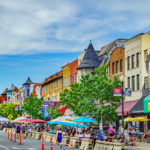
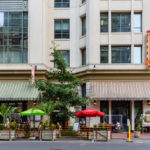
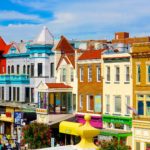
D.C.’s first streatery pilot along 18th Street in Adams Morgan appeared to be popular over the weekend.
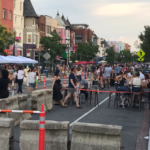
Photos posted on Twitter showed plenty of crowds on Friday and Saturday night, and at times, not much social distancing or mask-wearing. The morning and afternoon crowds seemed to be thinner.
https://twitter.com/kgrina/status/1277612271573893125
But some businesses and patrons praised the pilot program and say they want to see more of it.
Dave Delaplaine, general manager of Roofer’s Union, says the 10 extra tables they set up have been great for the business and a chance to bring back more staff. But he says it was challenging to adapt to a new concept on the fly.
“Structurally, we’re suddenly serving a space that is not set up … we don’t have handhelds (point of sale systems) or anything, so we’re having to figure out,” Delaplaine said. “We’re running in, running out, doing all that troubleshooting. (We wanted) to serve our guests and make sure they still have a great experience, but at the same time, putting safety first and trying to be efficient with it.” He said it felt much safer to be serving people outside, rather than indoors.
The District Department of Transportation used barriers and vehicles to block off the main road of Adams Morgan — 18th Street from Columbia Road to Kalorama Road, allowing restaurants to put tables in the streets.
Concrete barriers, which people often used as seats, blocked off the middle part of the road so emergency vehicles could travel through the area if needed. The roads were reopened at 11 p.m. Under the District’s Phase Two guidelines, bars and restaurants that serve alcohol have to close by midnight.
Kristen Barden, head of the Adams Morgan Business Improvement District, said the businesses on 18th Street started to wrap up around 11 p.m. and had to be fully cleaned up by midnight.
There were a number of people still out when cars began rolling down the street.
DDOT officials released a statement saying, ”The past weekend was a beautiful one to see Washingtonians enjoying more space to dine, shop, and socialize with neighbors and friends.” They said they’ll work with retailers and restaurants in Adams Morgan to make adjustments as necessary. They did not respond to other questions.
John Falcicchio, interim Deputy Mayor for Planning and Economic Development, said two things were on his radar: “Everyone needs to wear a mask to protect others, and to go alcohol should not be for public consumption.”
Delaplaine said he’d like to see more people wear masks while not eating. They are asking guests to put their masks on when a server comes to the table.
After months of staying at home, any sort of crowd gave some pause. Some people responding to PoPville’s tweet about how the pilot went were cautious saying, “Even with masks, large gatherings are not a good idea.” Another said the street was a “petri dish” with few masks, lax social distancing, and crowds.
One commenter on the PoPville blog said, “Seems like everyone is trying to get back to ‘normal’ without realizing that there’s a new normal.”
Many others responded with “make it permanent!”
Devin Boyer responded: “Was there a bit Saturday night and it was pretty crowded — made me a little nervous. They also re-opened the street at 11 PM while lots of people were still out. That seemed like a miss. Overall, (thumbs up) to closing streets for more space though.”
Some are advocating for creating spaces like this all over D.C. to minimize crowding at one spot like Adams Morgan.
Kristen Barden, head of the Adams Morgan Business Improvement District, said people were generally respectful.
“It was a nice uptick from business activity before the street closure, which was pretty limited to pick up and drop off,” she said.
But she would like to see more help from the city in educating or enforcing mask policies.
She said the BID has limited staff and had one safety ambassador handing out cards about safety measures and reminding people to wear masks.
“He’s one person so we’re gonna need the help of DC Health to give that message,” she said.
Businesses were only allowed to open until midnight under Phase Two and had to wrap things up and clean by then.
DDOT reopened the road to traffic around 11 p.m., and there were still a number of people out when cars started rolling down the street.
Bethesda Has Learned From Three Weeks Of Streateries
Streets in Bethesda’s downtown have been closed for nearly three weeks for street dining.
Stephanie Coppula is the director of marketing and communications for Bethesda Urban Partnership, which maintains and markets downtown areas like Bethesda Row. She said they’ve provided extra tables and chairs where anyone can sit. Most people get takeout from nearby restaurants.
Bethesda has spaced out its tables by about 10 feet or more.
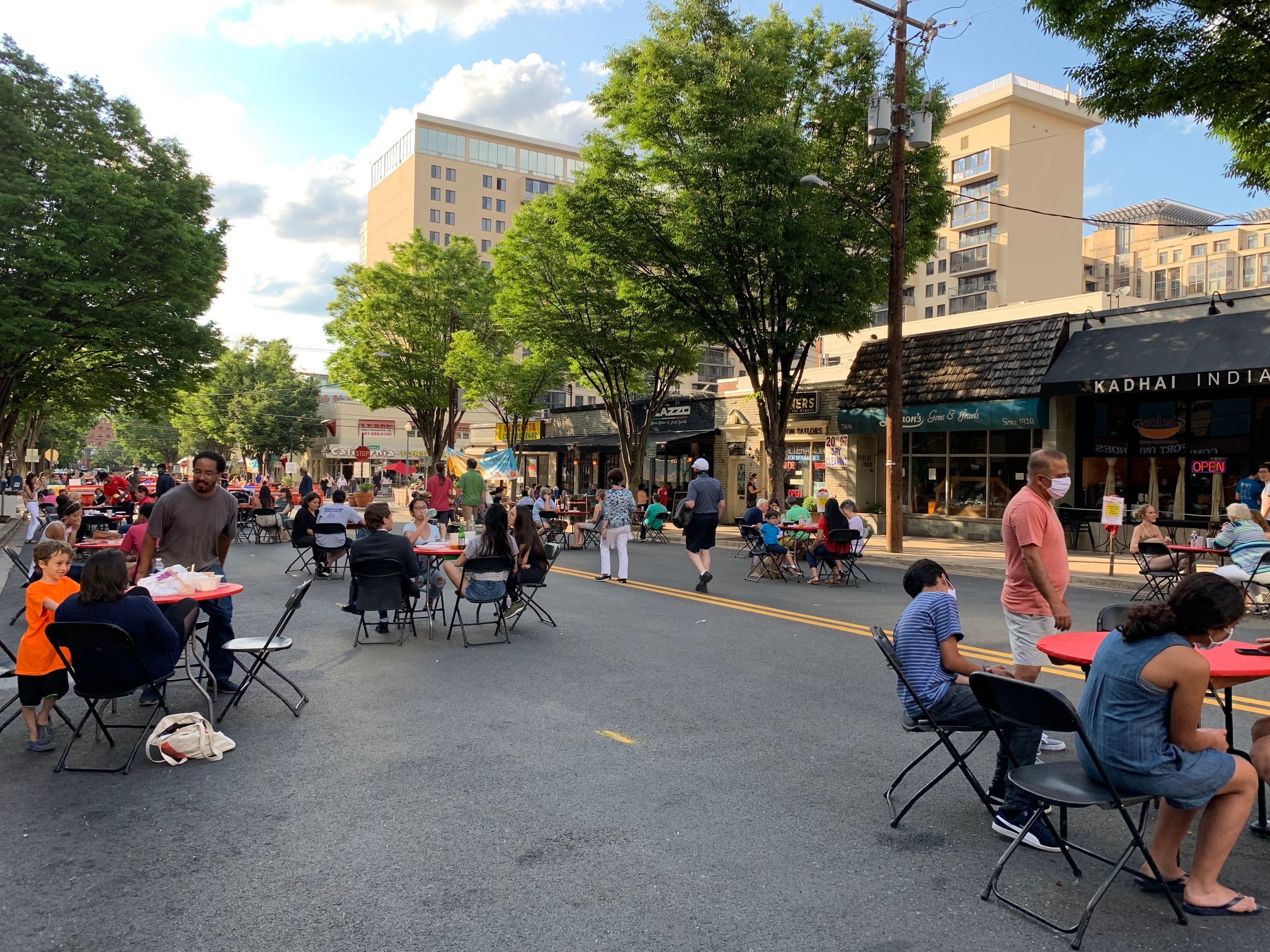
“It helps that restaurants are at 50% capacity, so the crowd is at a point where it’s just right,” Coppula said. “Not overcrowded, not underutilized. Evenings are busy for dinner, but there’s also a weekend morning crowd for coffee and brunch places.”
The Partnership provides the tables and staff to clean and sanitize them after use.
“[We do that] because we want to see restaurants do well and want people to feel safe when they come out,” she said.
Coppula says Bethesda hopes to continue its streatery program through the nice weather. The District is also planning for more streateries, but has not announced where and when yet.