 Daniella Cheslow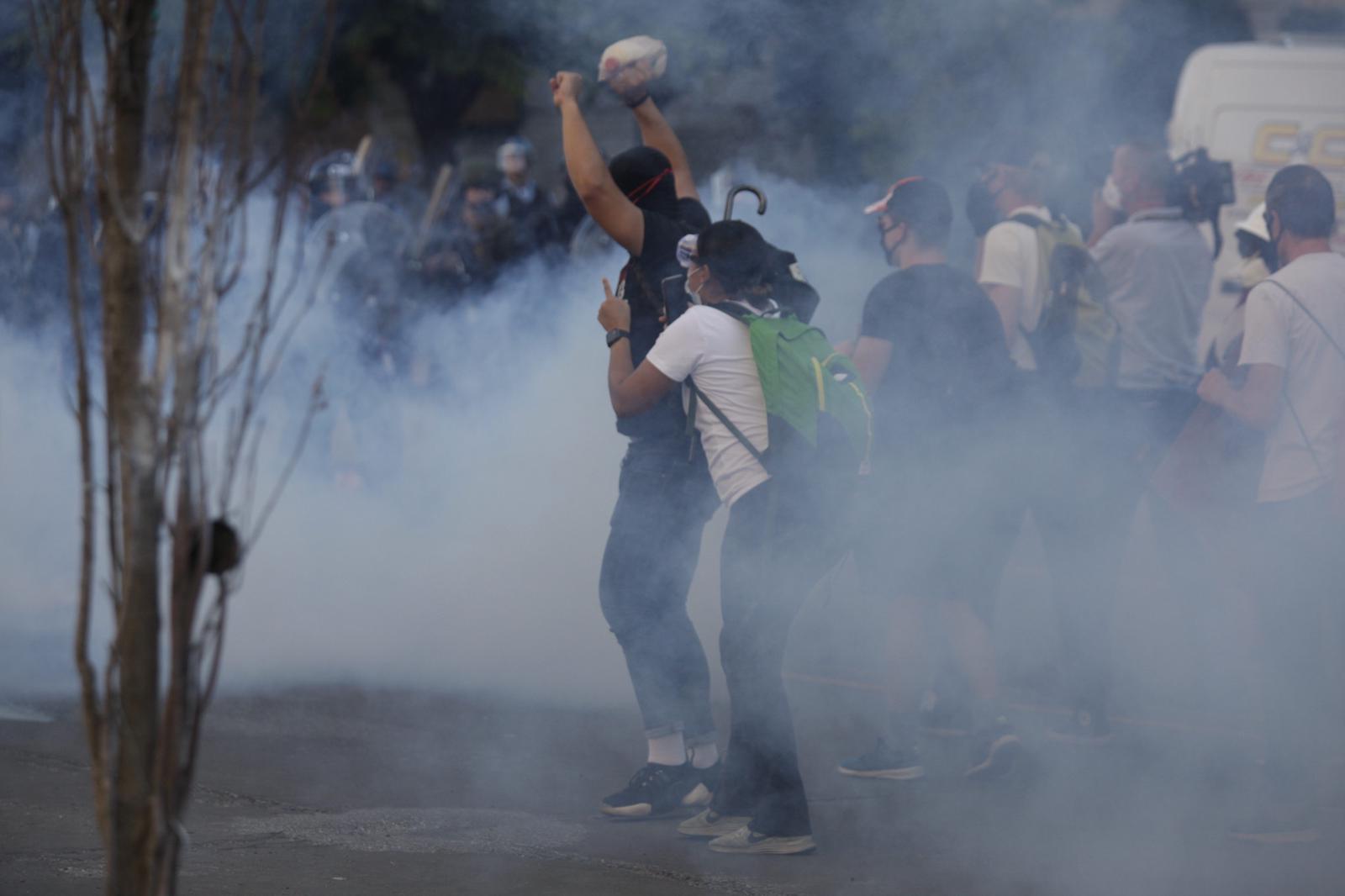
A judge in Richmond rejected a lawsuit Tuesday from the ACLU of Virginia that sought an injunction barring the use of tear gas at protests.
Richmond Circuit Court Judge Beverly Snukals also declined to order police to limit the use of crowd control measures in the future, writing that it “unnecessarily burdens the police and puts them and the public at risk.”
The ACLU represented the Virginia Student Power Network, which filed a request on June 26 for an injunction following what they said was a misuse of crowd control weapons.
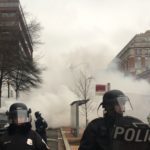
They pointed to a “teach-in” protesters held in front of City Hall on June 22. “Without cause, police declared the event an unlawful assembly after midnight and attacked the group using tear gas, pepper spray, flash grenades and rubber bullets,” the ACLU wrote.
In their complaint, the students asked the court to declare the police use of force unlawful and to issue an injunction barring the police from issuing future declarations of unlawful assembly.
Snukals rejected the requests.
“Plaintiffs admitted that 150 people set up an encampment, blocked the city streets, and interfered with traffic, which provides a legal basis for a declaration of unlawful assembly,” Snukals wrote.
The ACLU of Virginia wrote Tuesday that it was disappointed with the court decision: “Now is the time to divest from police and reinvest in solution-oriented community programs rather than continuing to use unjustified force to curtail protesters’ constitutional rights.”
Police interactions with protesters in Richmond have shaken the city.
Gov. Ralph Northam (D) signed an executive order Monday to extend a state of emergency declaration in Richmond. This was in response to a request from Richmond’s Democratic Mayor Levar Stoney, who said his city had neither money nor personnel to handle demonstrations on its own, according to the Richmond Times-Dispatch.
Stoney named a third police chief in three weeks on Friday. Earlier in June, he forced the resignation of former chief William Smith over police treatment of demonstrators, including a police SUV that drove into a crowd that was blocking its path. William Blackwell succeeded Smith, but lasted only 11 days before he resigned amid questions surrounding his involvement in a 2002 fatal shooting and his handling of current protests, the Richmond Times-Dispatch reported.