 Rachel Sadon
 Daniella Cheslow
 Jenny Gathright
 Elliot C. Williams
 Debbie Truong
 Martin Austermuhle
This story was last updated on July 5 at 4:12 a.m.
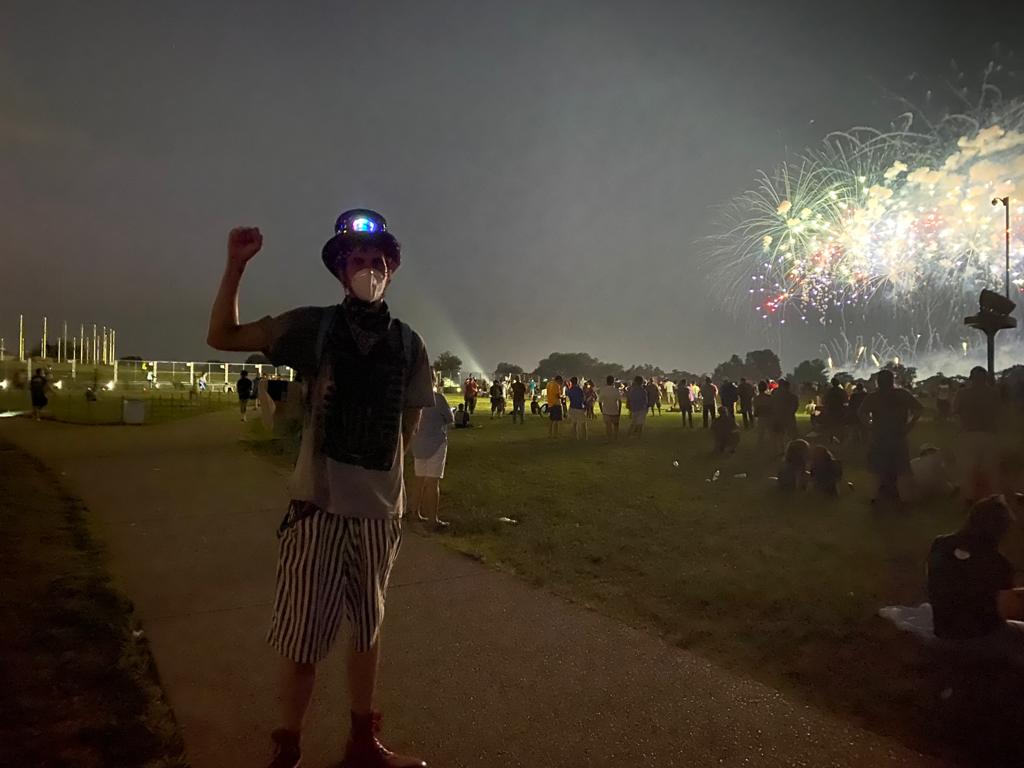
D.C. marinated in broiler-like temperatures and soupy humidity. Firecrackers sparkled over the National Mall and boomed over residential neighborhoods. And, well, pretty much everything else was different on July 4, 2020.
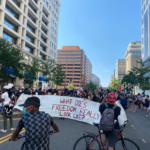
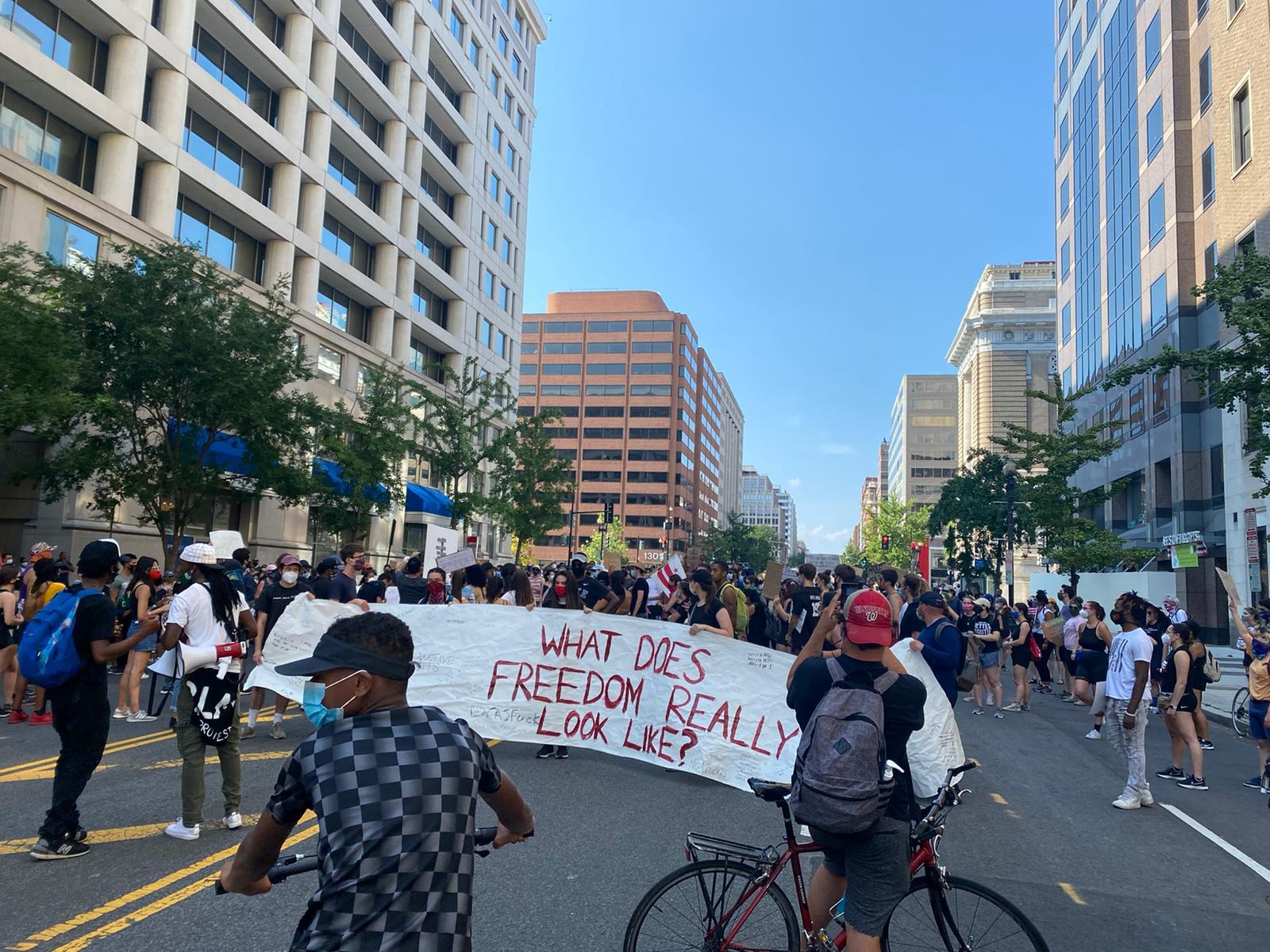
The usual parades and concerts were nowhere to be found, replaced by demonstrations against racism and police brutality. At the front of one march, protesters carried a sign that asked: “What does freedom really look like?”
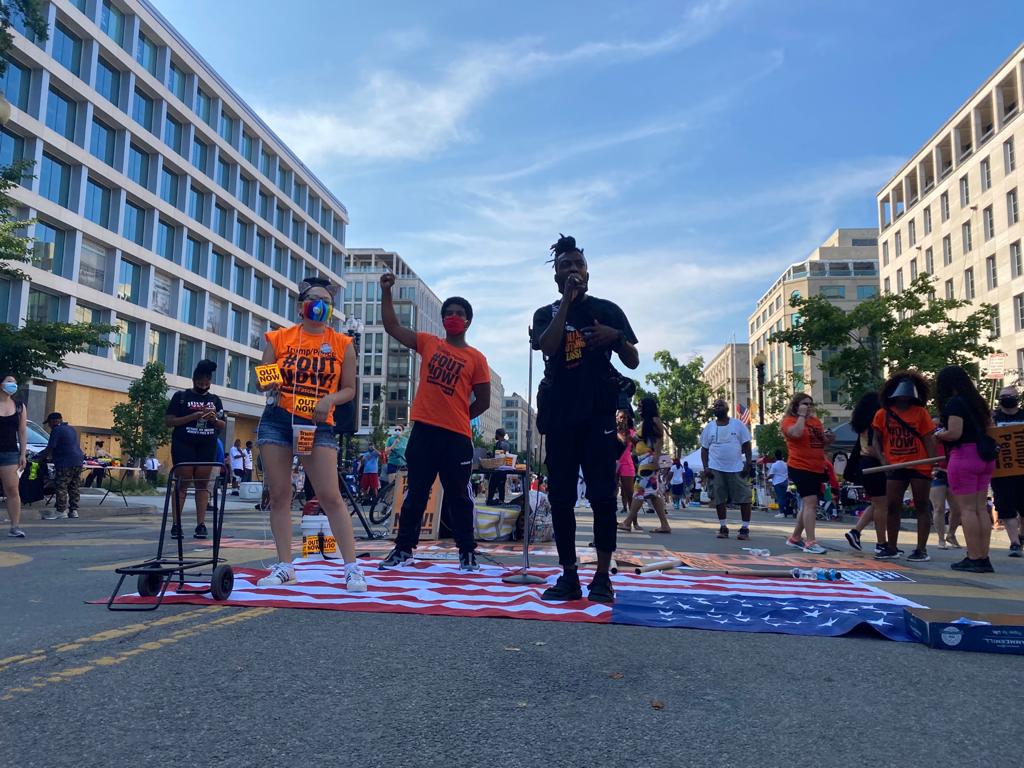
Speaking on 15th Street NW near the White House, Aliyah Graves-Brown said this year, in particular, has involved a reckoning.
“On this July 4, in particular, we’re realizing that the Fourth of July, in fact, has nothing to do with freedom and everything to do with celebrating white supremacy and the independence of a certain group of people,” the 25-year-old D.C. resident said. “This day is a reminder of, for people who look like us at least, our lack of freedom.”
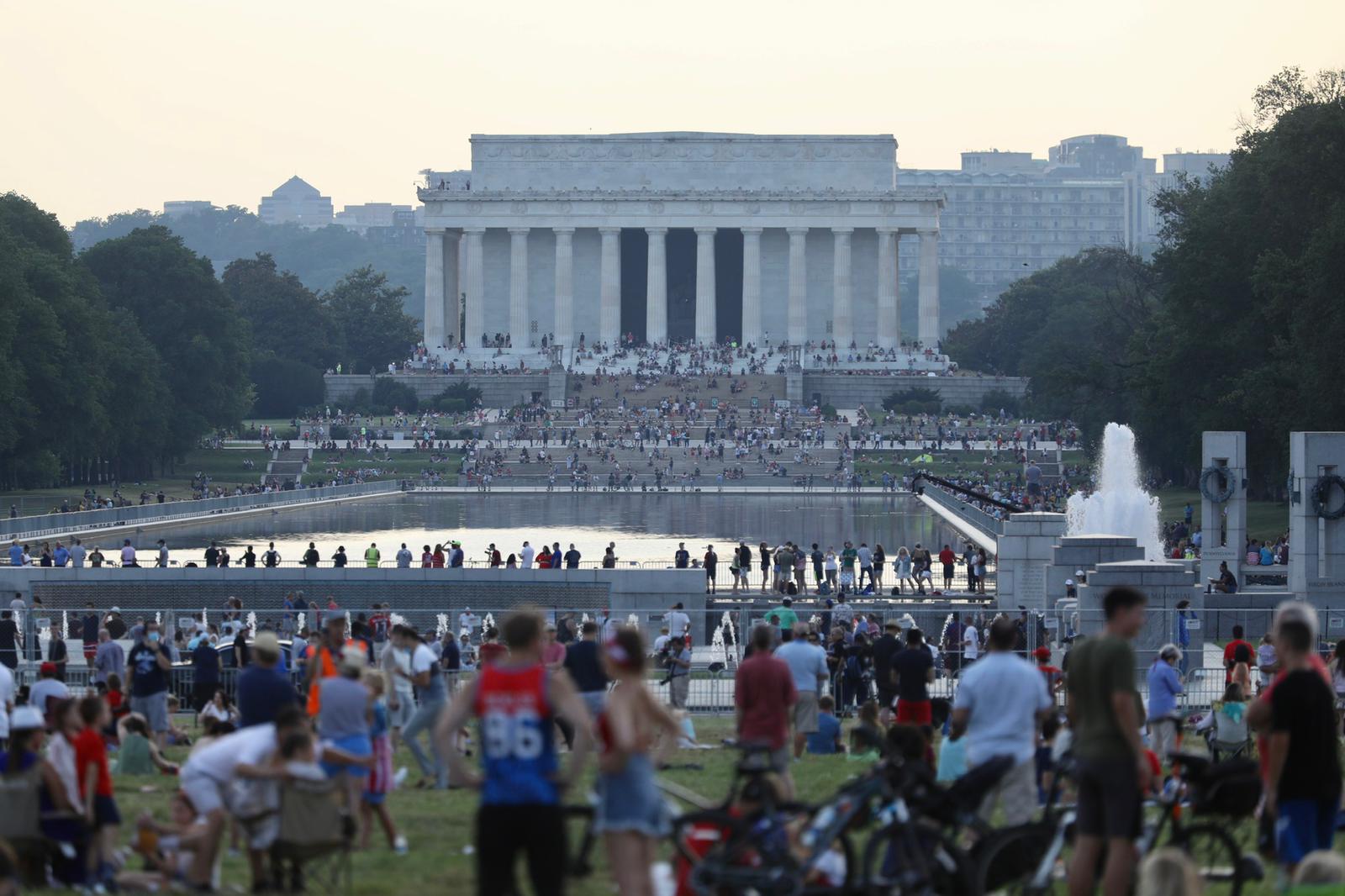
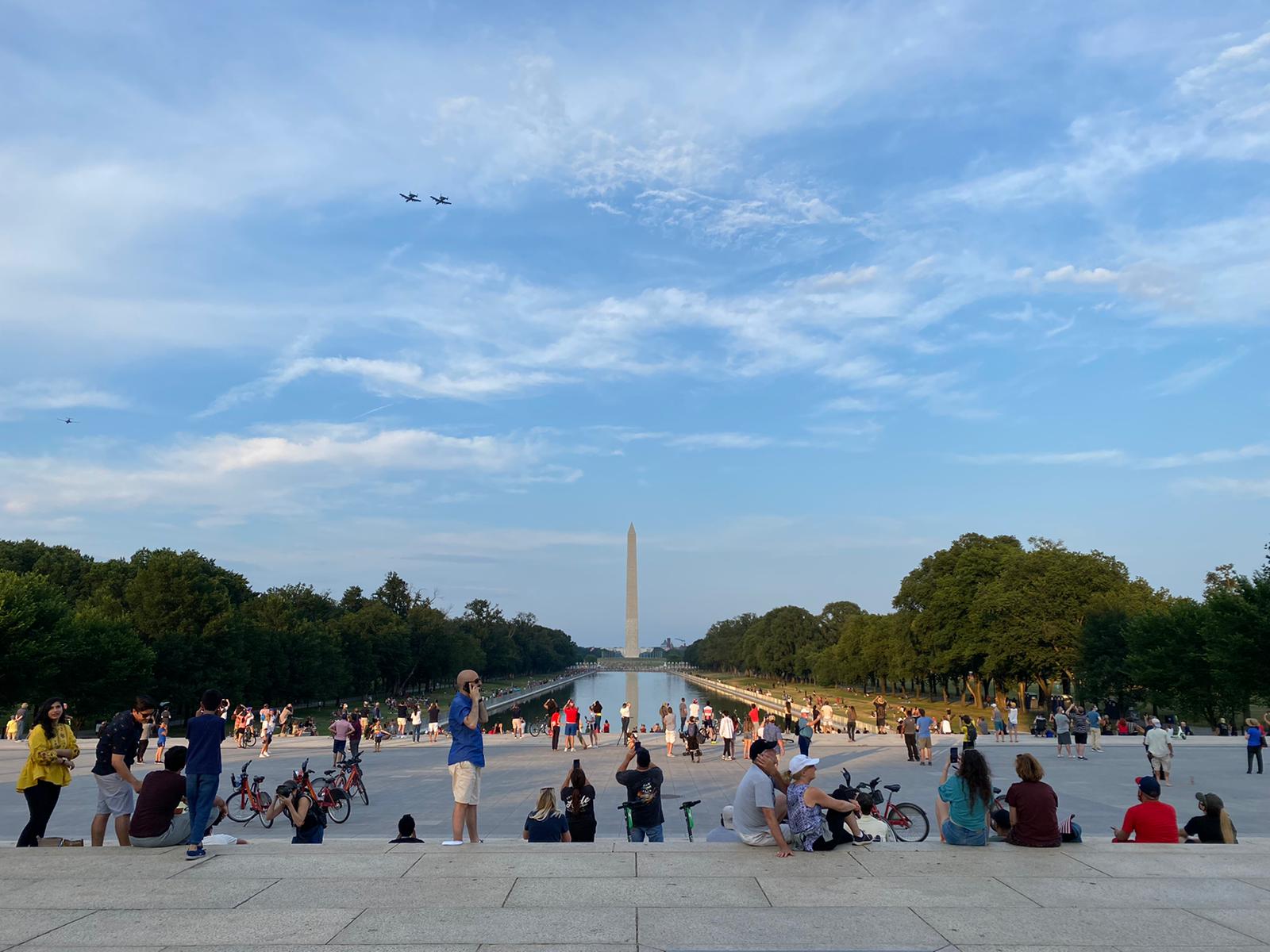
And while the fireworks went on per usual, far fewer people headed to the National Mall or other popular spots than a typical year, as many appeared to heed the advice of local officials to stay home amid the ongoing coronavirus pandemic.
“I was surprised at how dead the streets were. There’s hardly anyone out and about other than the Fourth of July,” said Jenny Cudd, a 36-year-old who flew in from Midland-Odessa, Texas, to enthusiastically celebrate the holiday.
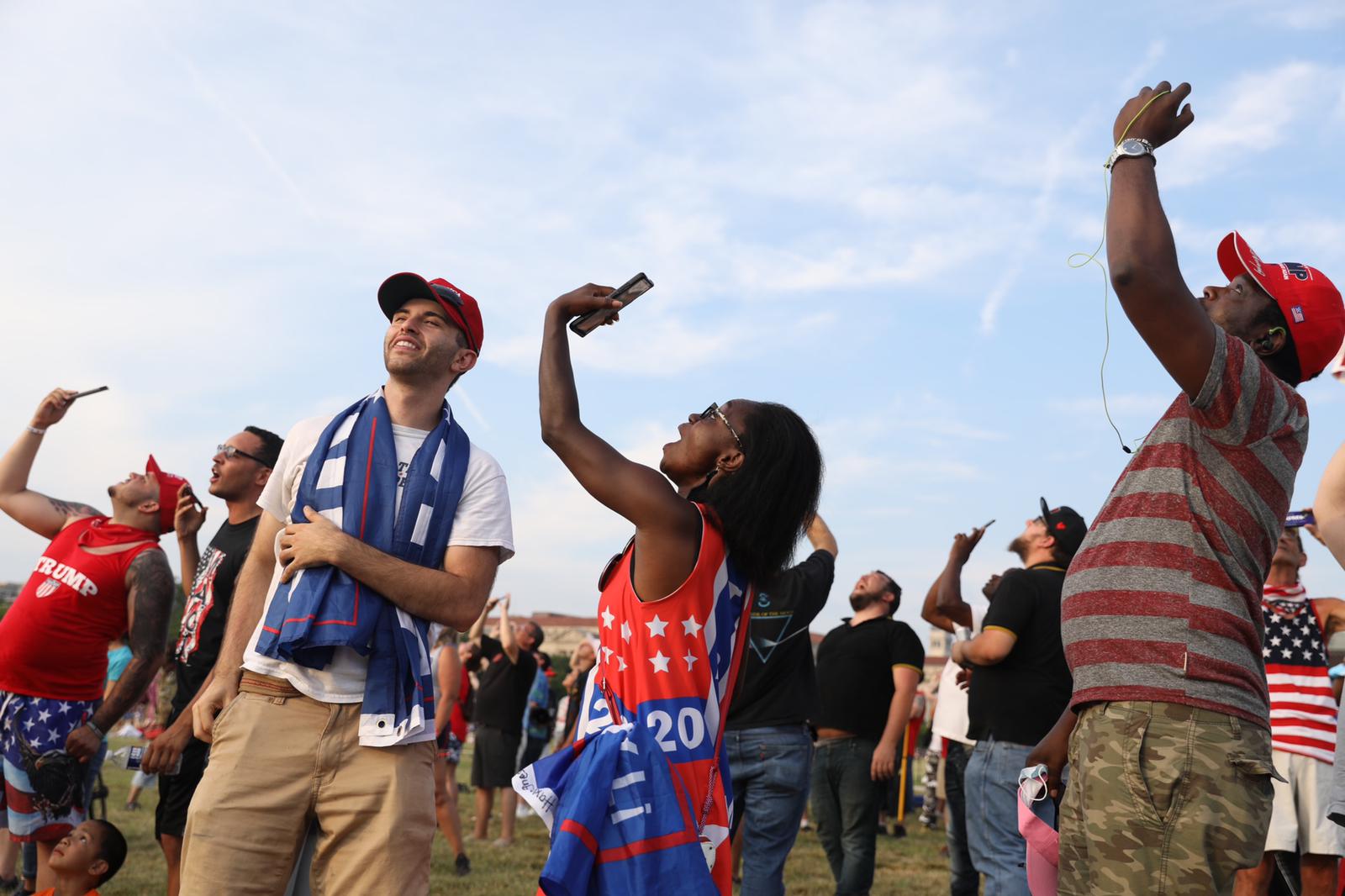
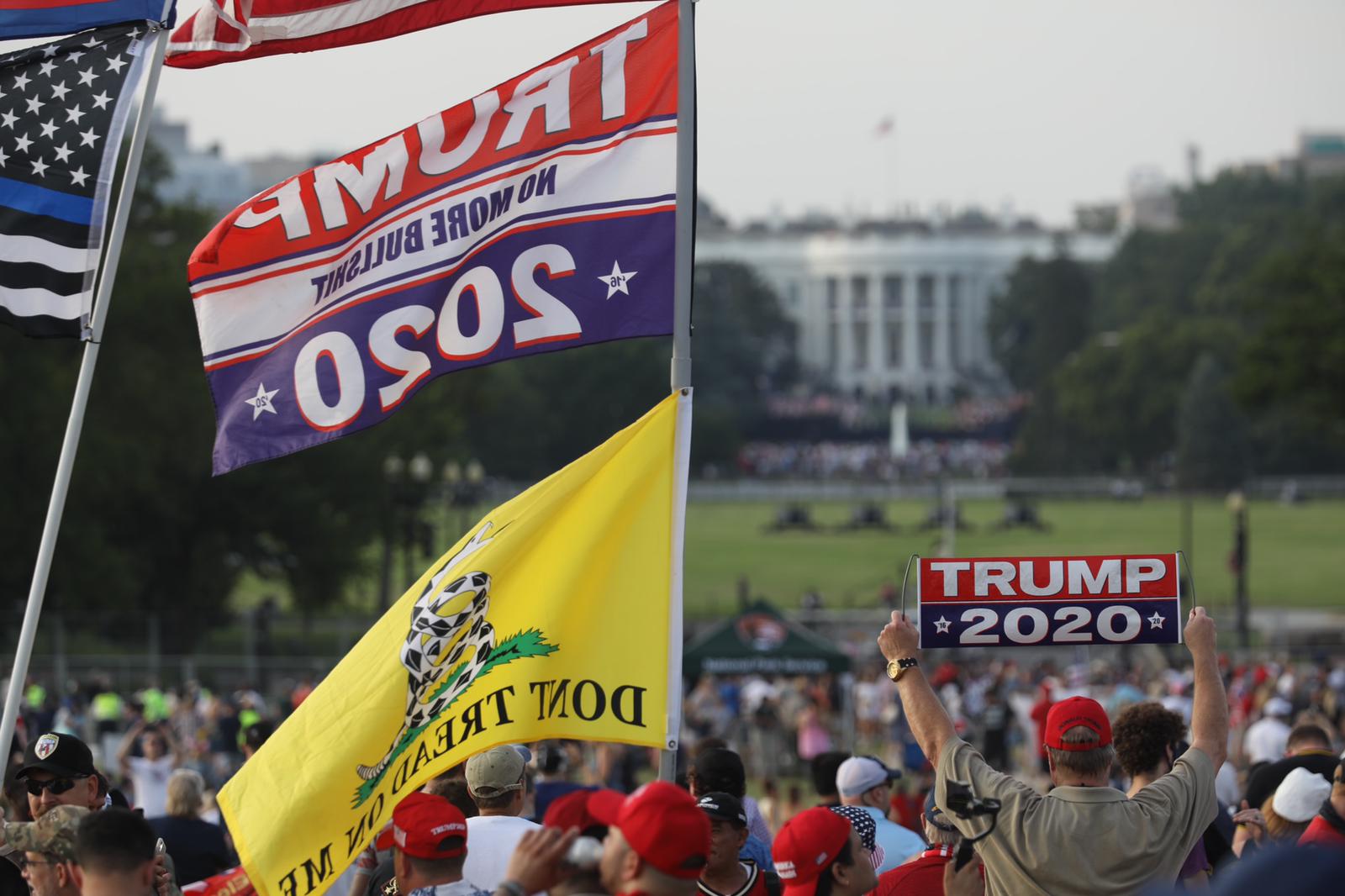
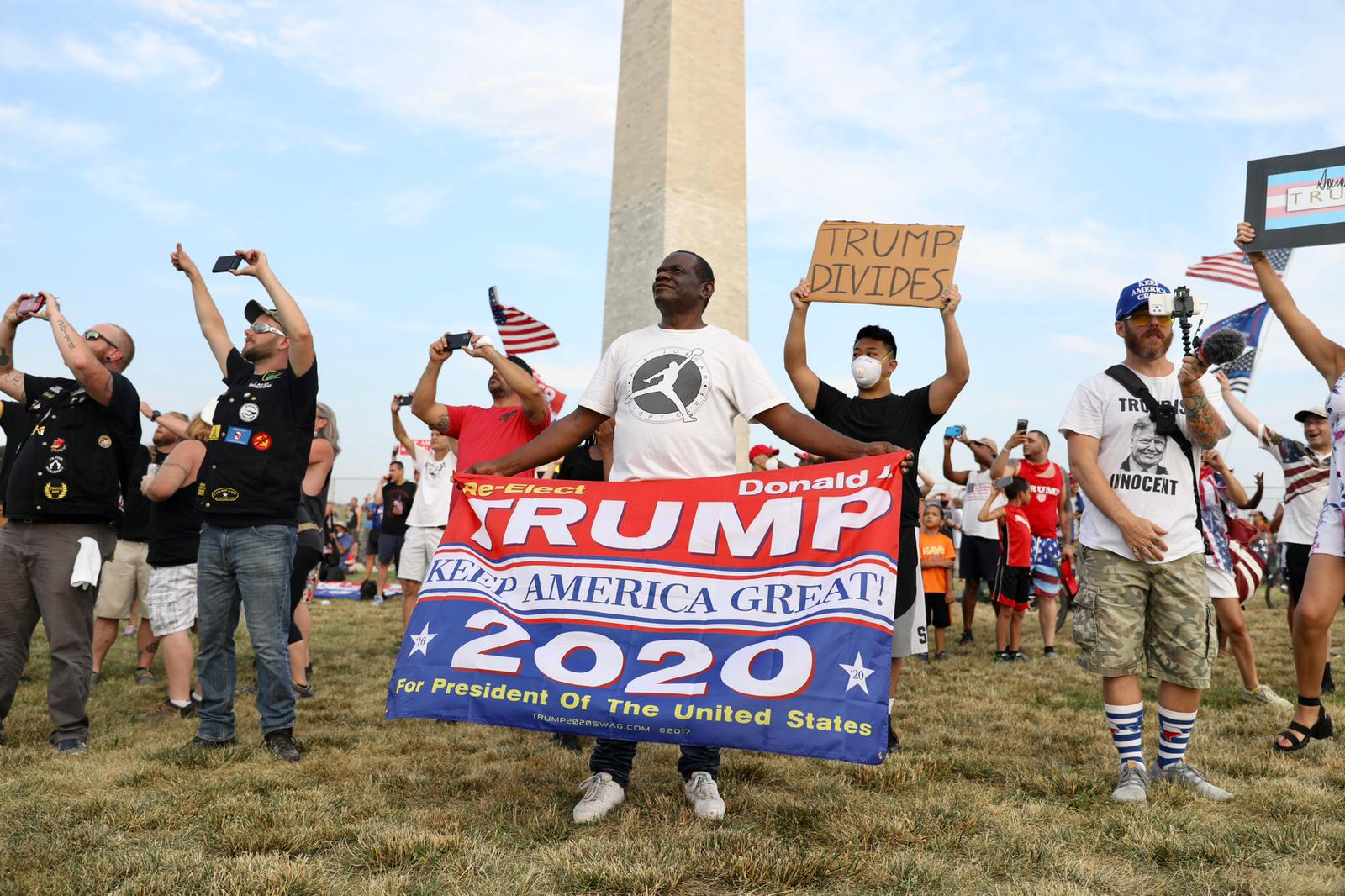
Bedecked in a Trump shirt, Trump 2020 earrings, and a Make America Great Again hat, Cudd was among the biggest crowd of the president’s supporters that this city has seen in months.
“I’m really glad the president decided to overrule the local mayor who wanted to shut down the Independence Day celebration because we the people own the federal parks,” she said.
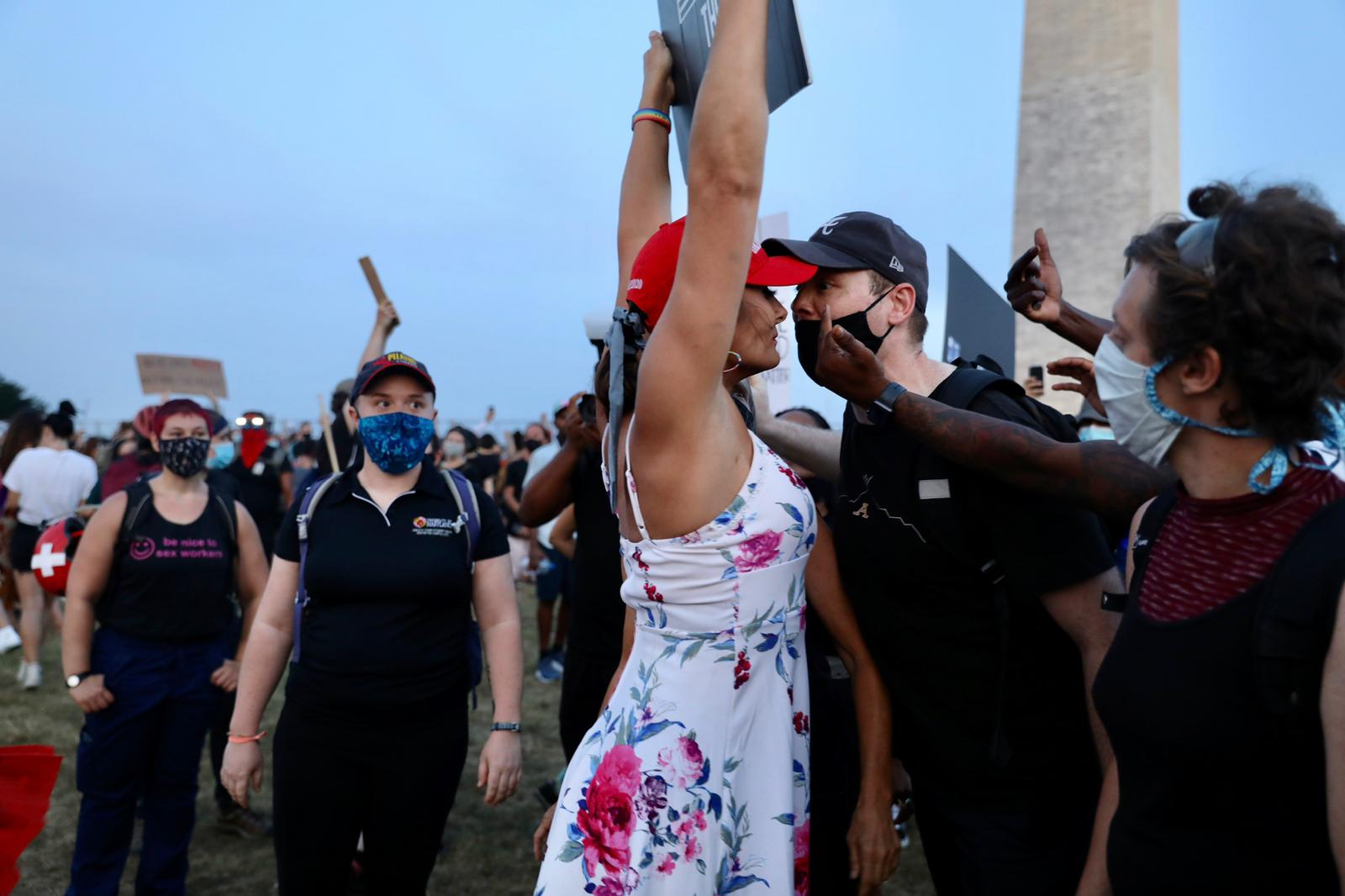
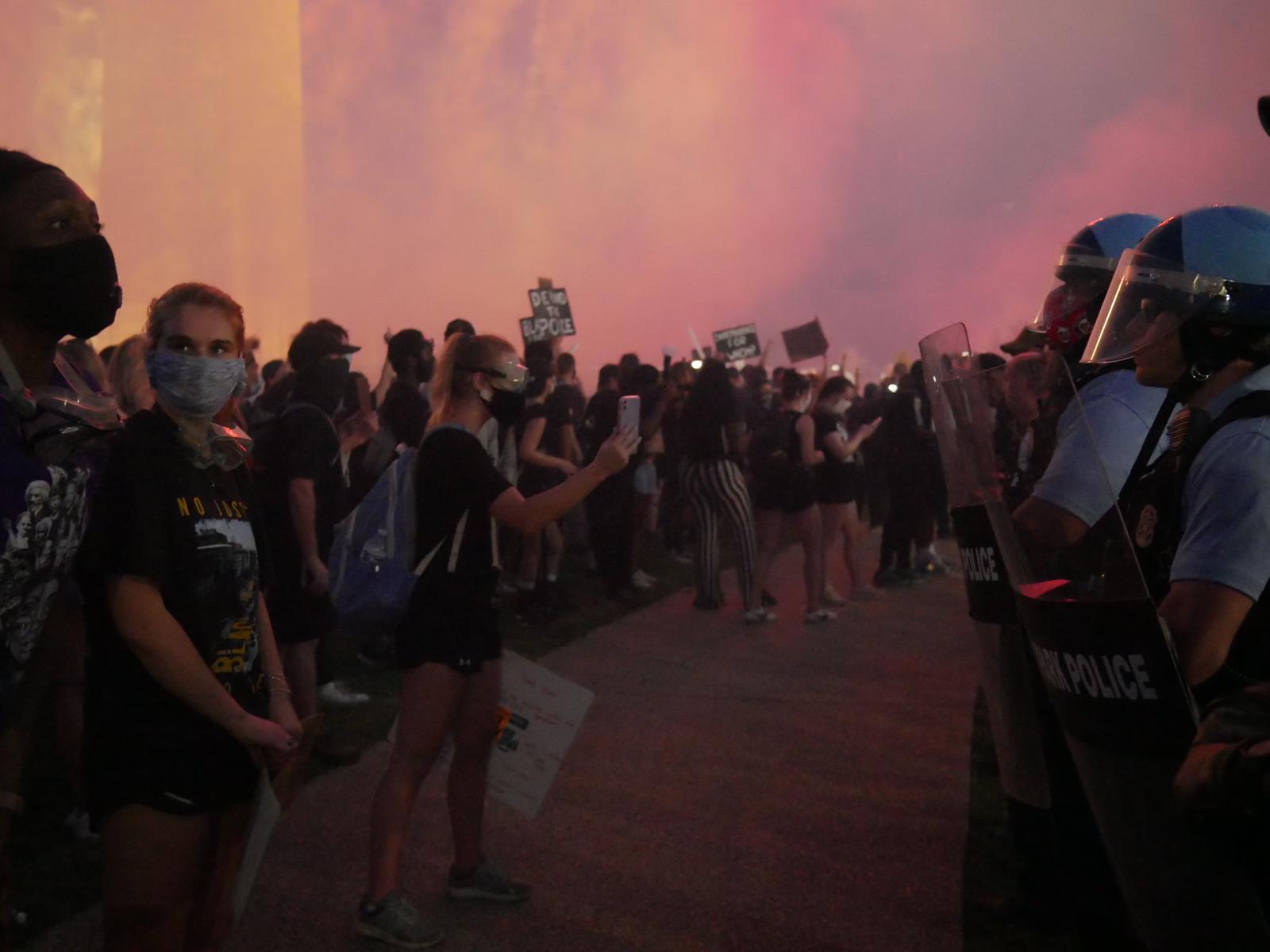
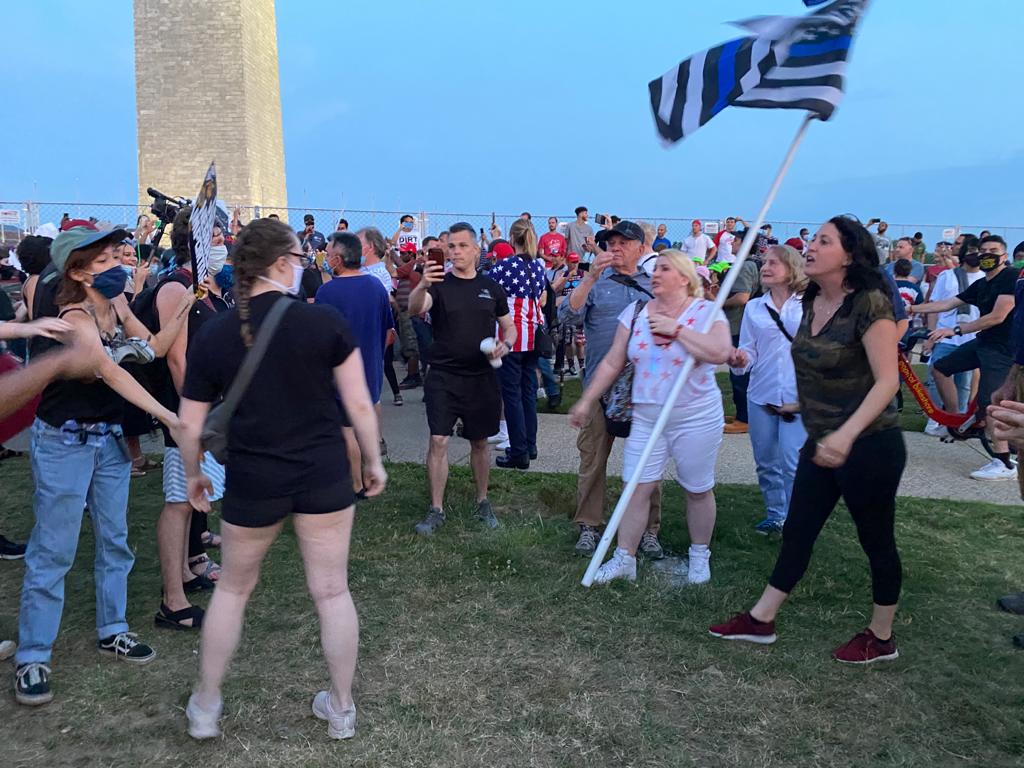
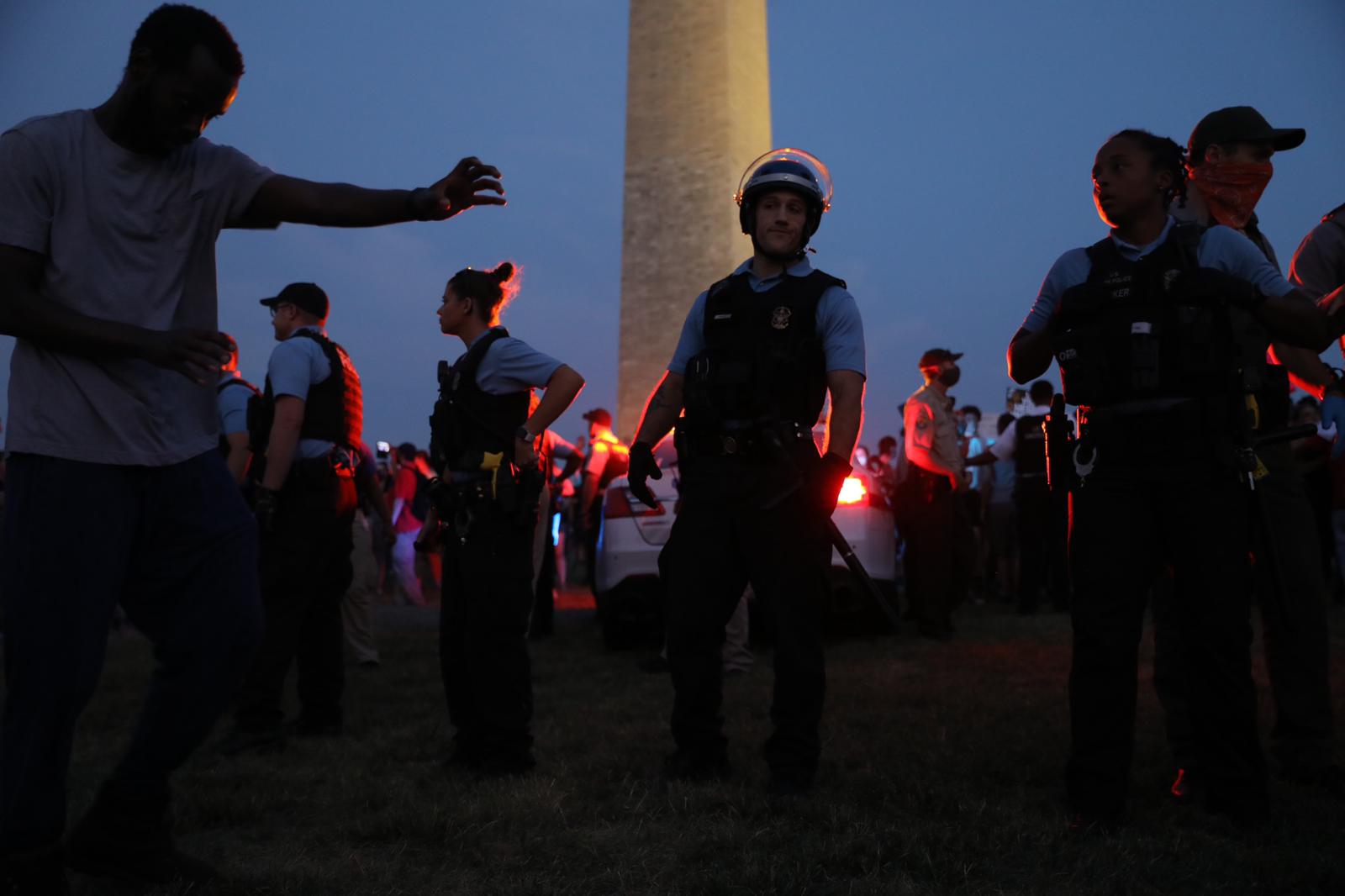
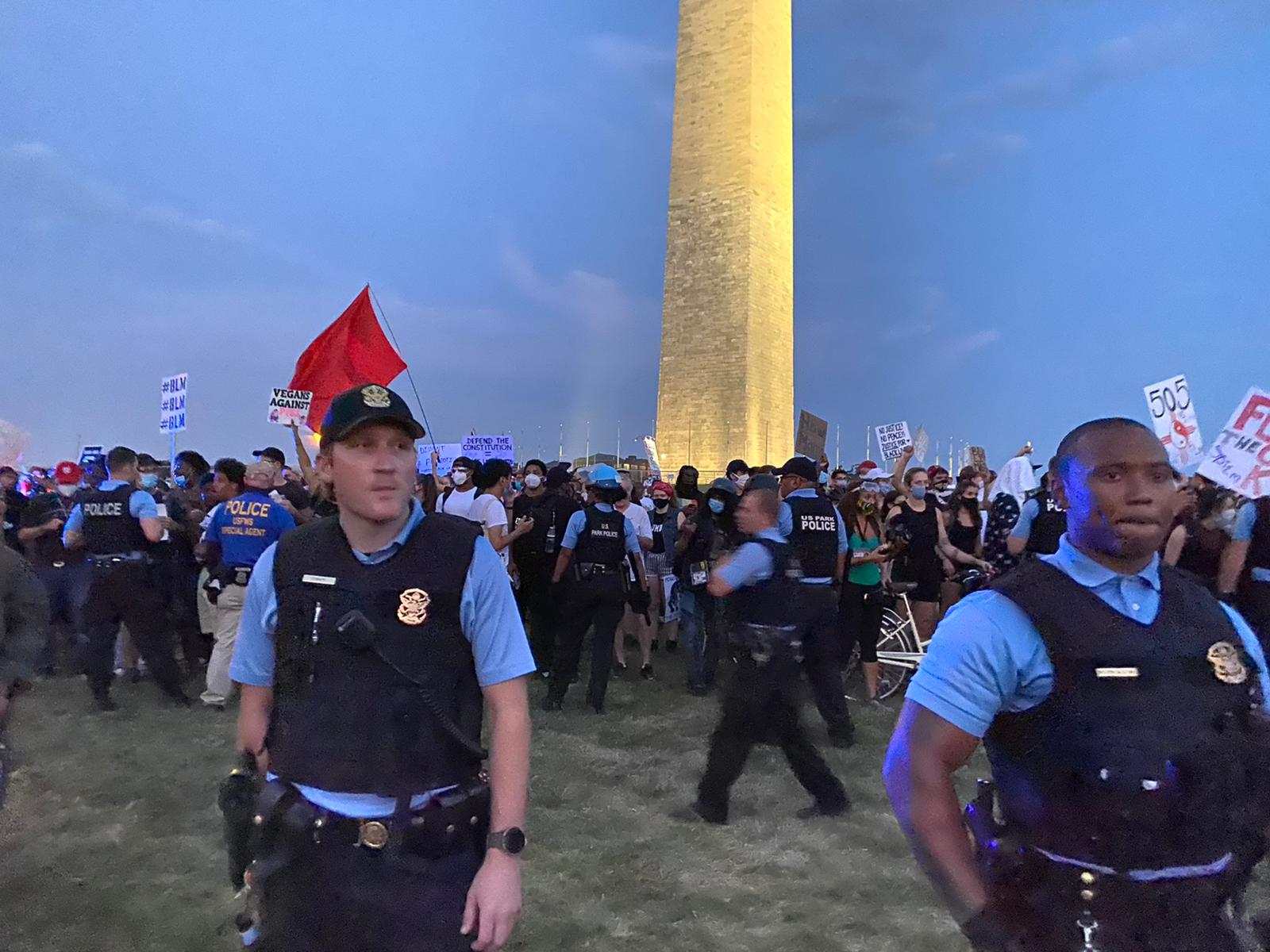
Shortly before the fireworks began, the confluence of Trump backers and demonstrators against police brutality made for a brief but cinematic confrontation at the Washington Monument.
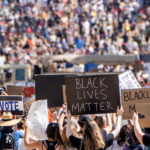
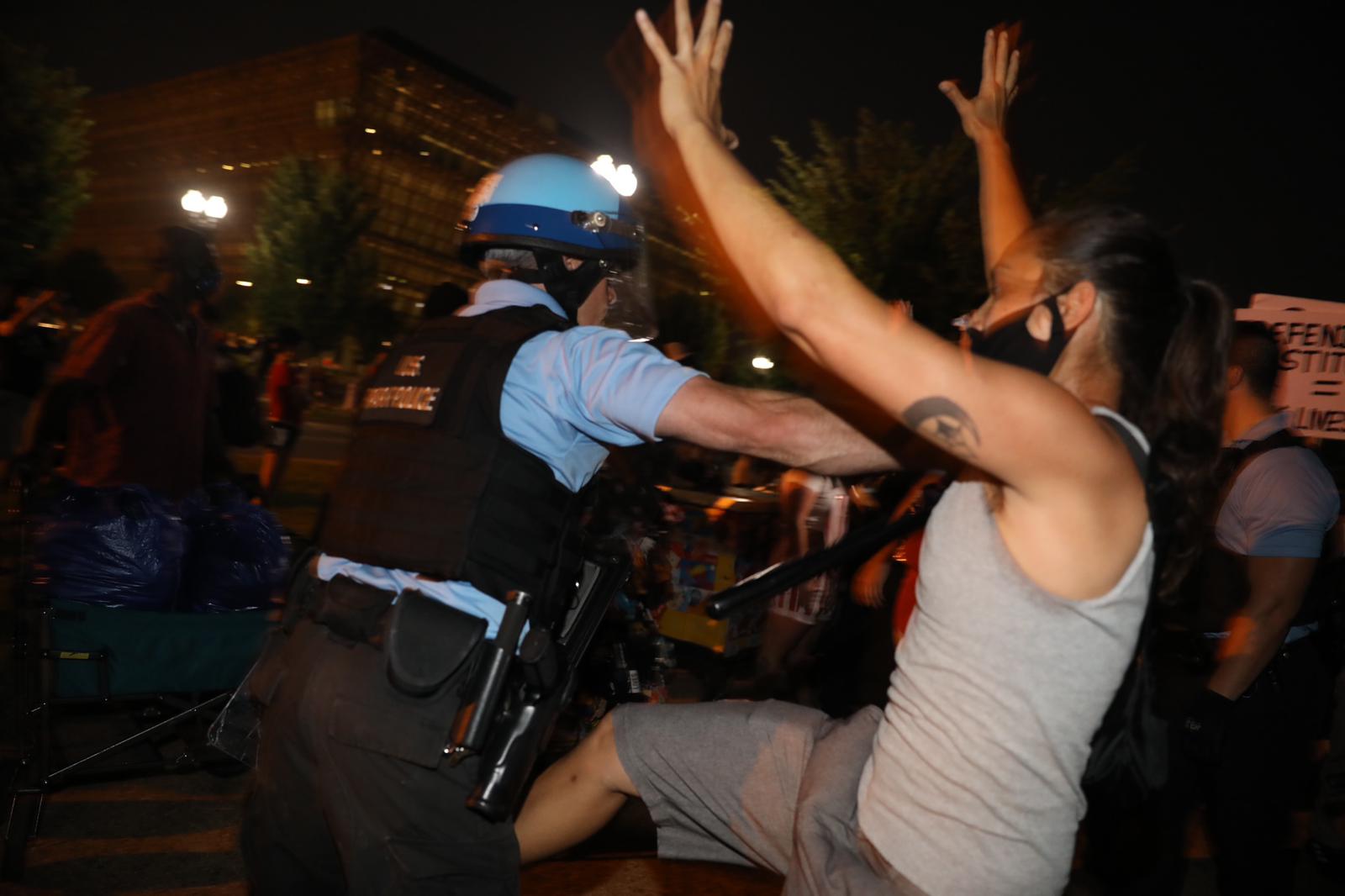
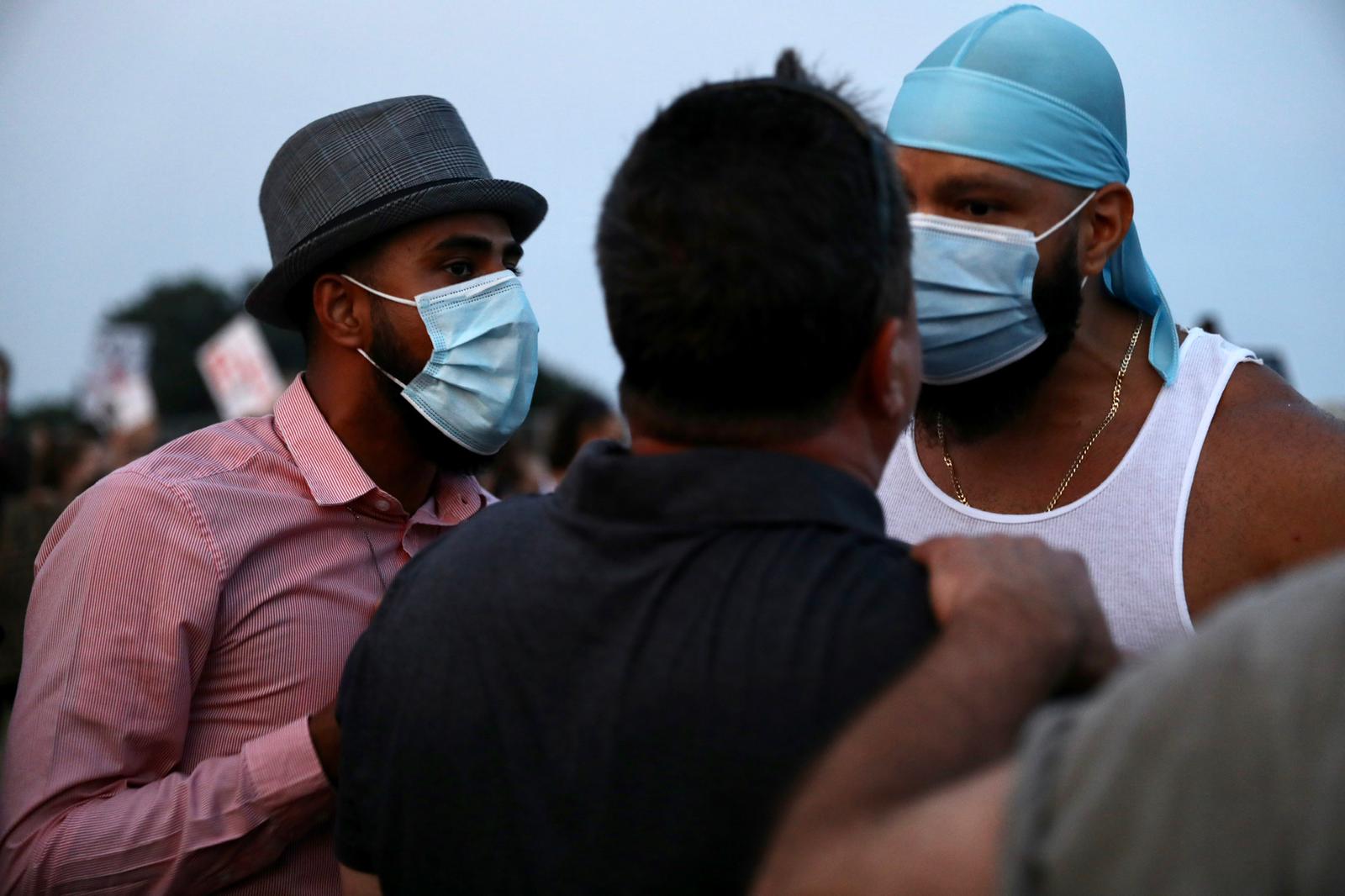
Individuals on both sides got into heated, pointed confrontations — some of them physical — with one another as a chorus of competing chants of “U.S.A., U.S.A.” and “Black lives matter” broke out.
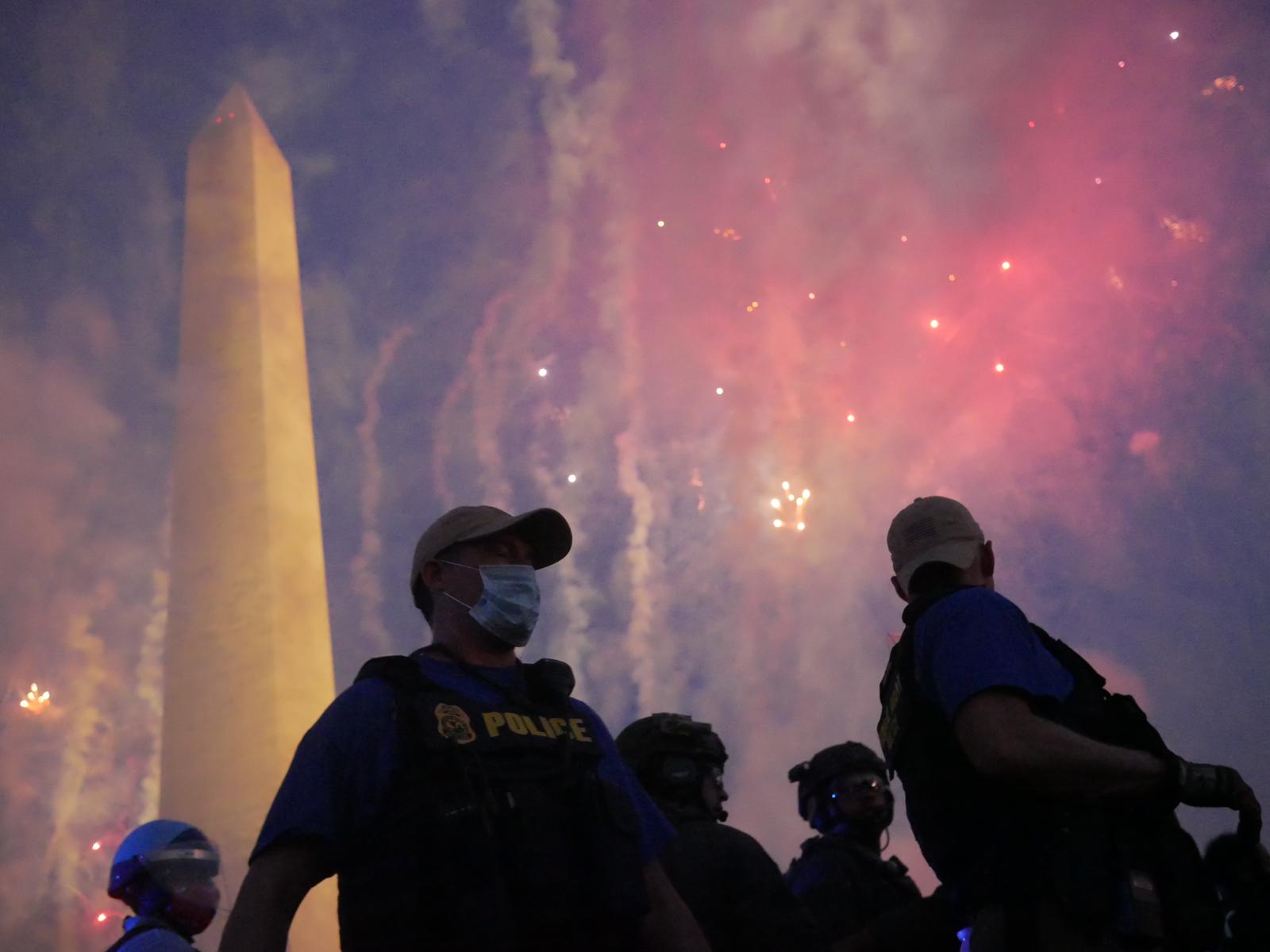
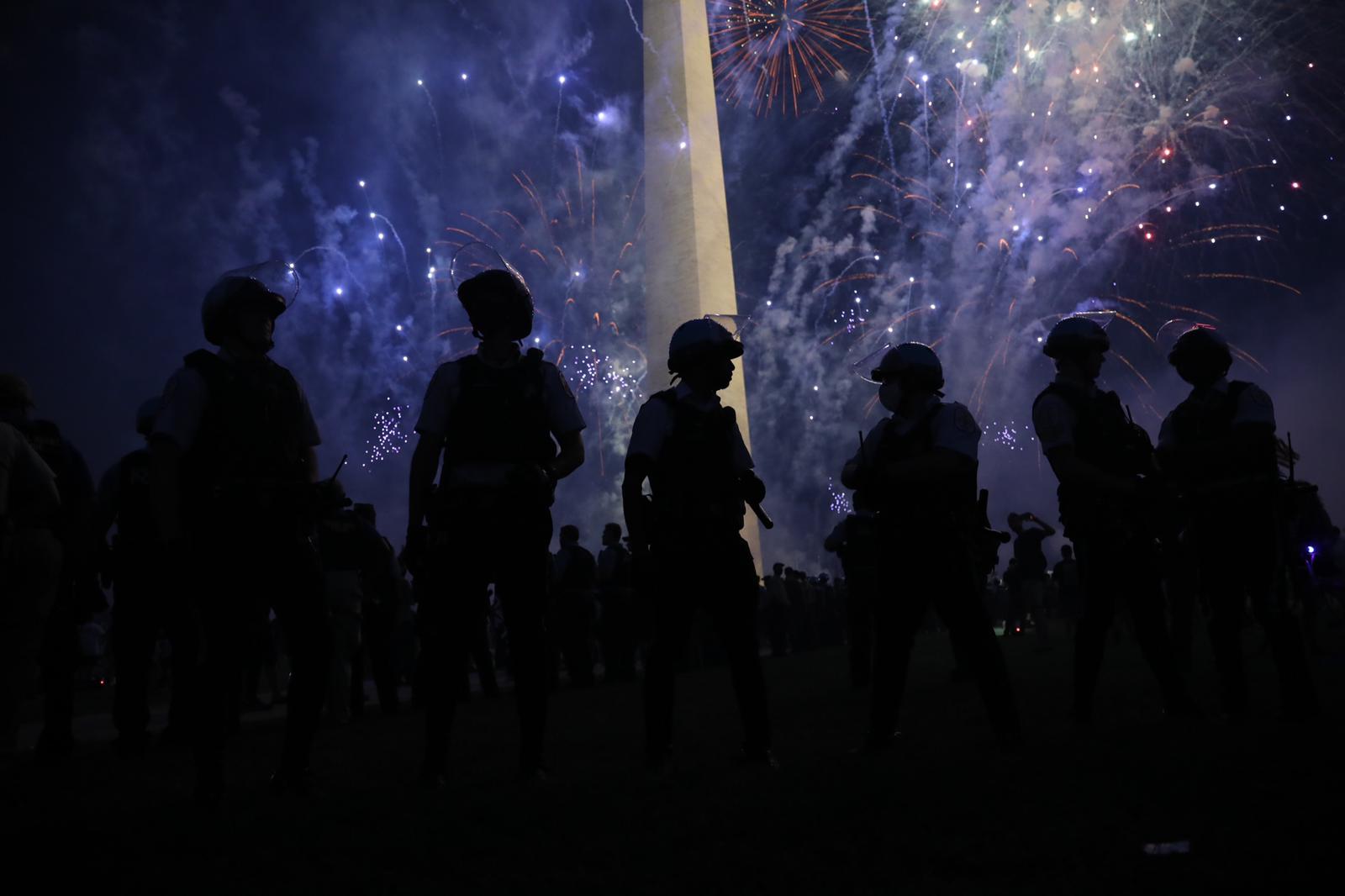
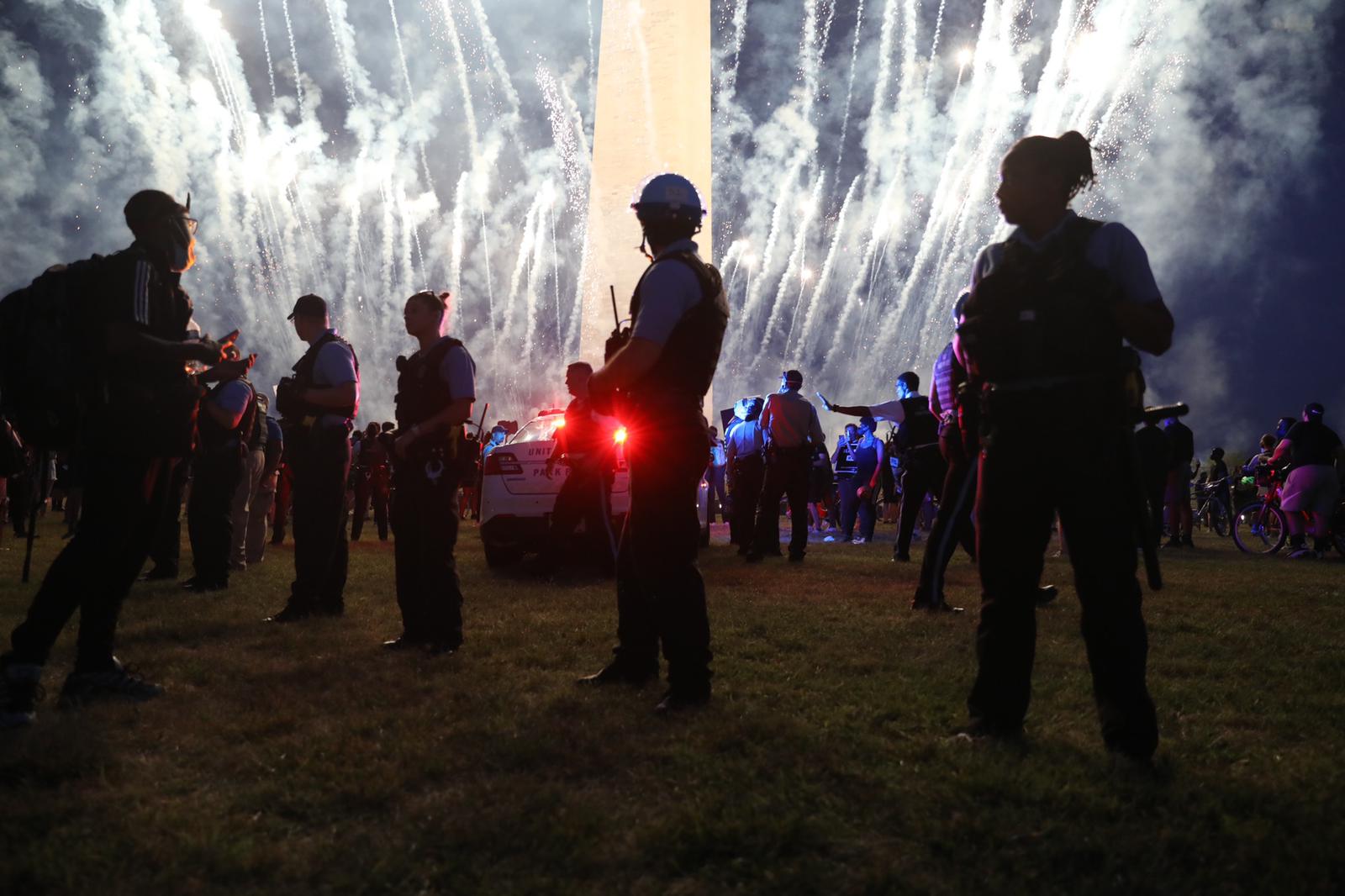
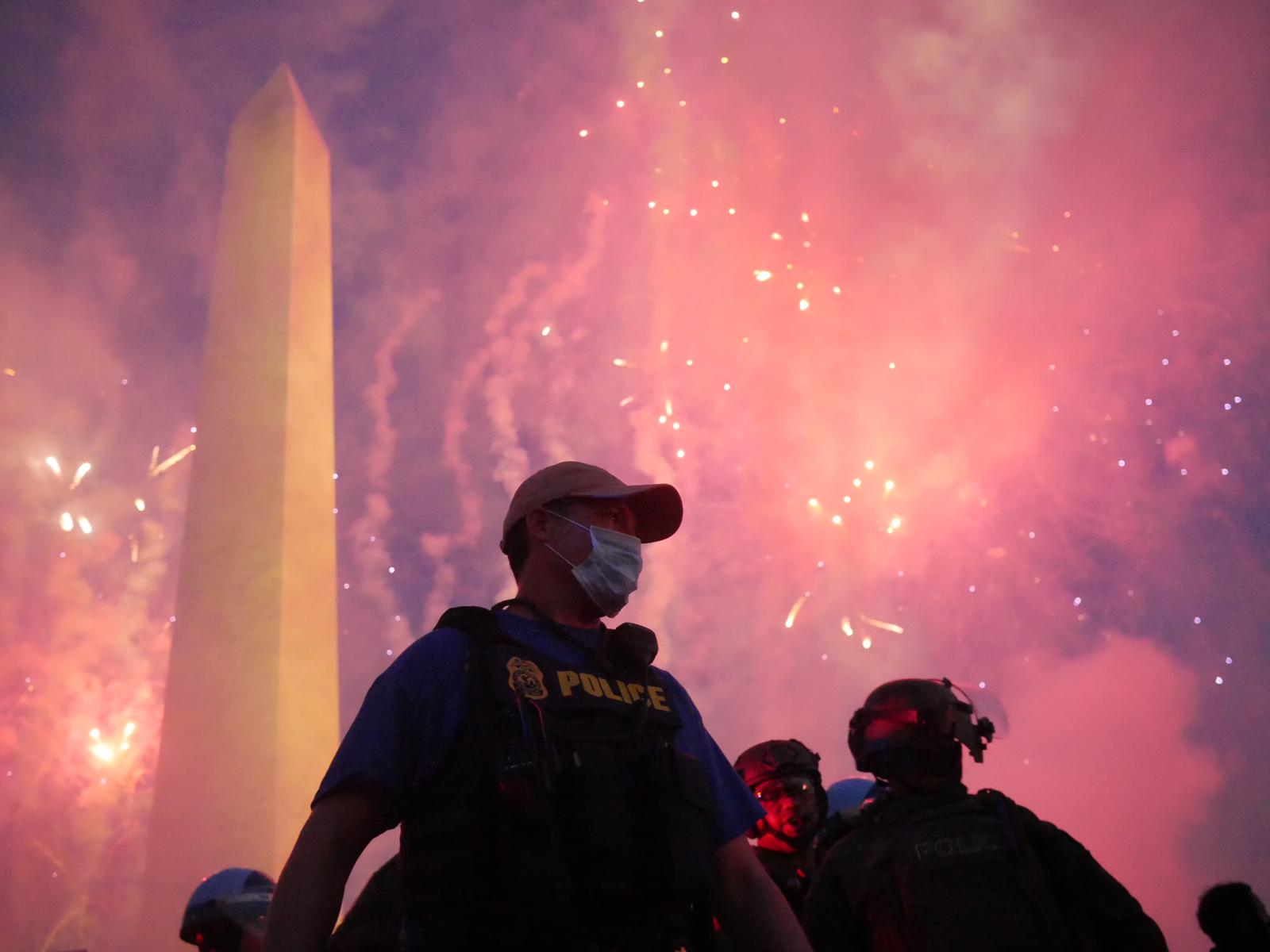
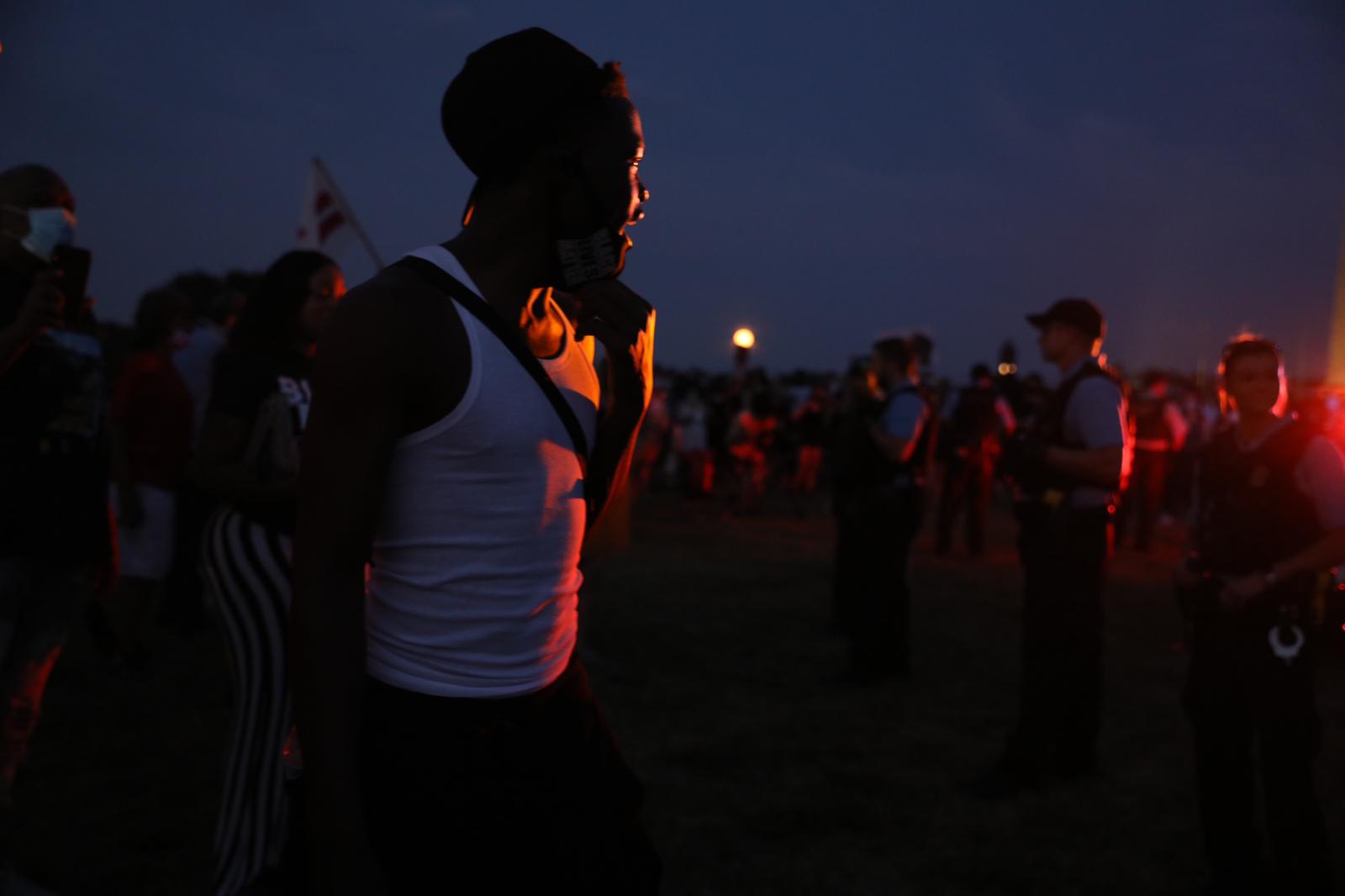
U.S. Park Police arrived within minutes, and dozens of officers fanned out to separate the groups. As they moved Trump supporters to one side and Black Lives Matter protesters to another, fireworks exploded overhead, and quick flashes of red, white, and blue glinted off riot shields.
It was as fitting an image of July 4, 2020 as they come.



A smaller, divided Fourth
In a different world, the one that we inhabited as recently as two years ago, the National Mall would be filled with a crush of people jockeying for a decent patch of grass to lay a picnic blanket on.
But if last year’s Salute for America — which cost roughly double the usual festivities — made for surreal scenes of tanks rolling through town and an inflatable Trump baby balloon floating above protesters on the National Mall, the circumstances of this year’s Independence Day made for something almost as unusual: room to stretch out on the Mall on the Fourth of July.
Large swaths of green space lay unclaimed for most of the day. As the show time for fireworks grew closer, more spectators showed up and people sprawled on the ground or sat in camping chairs in small groups, with plenty of room in between.
A number of federal lawmakers had urged the president to forgo the traditional celebrations, and D.C. Mayor Muriel Bowser and other local officials expressed concern that large-scale gatherings on the National Mall would violate both local and federal guidelines on crowds during the COVID-19 pandemic.
Bowser implored residents to stay home in a series of press conferences and social media posts. (The mayor also didn’t waste the opportunity to get in a few jabs on Twitter, too, writing things like “Just because someone invites you to a party doesn’t mean you have to go.”)
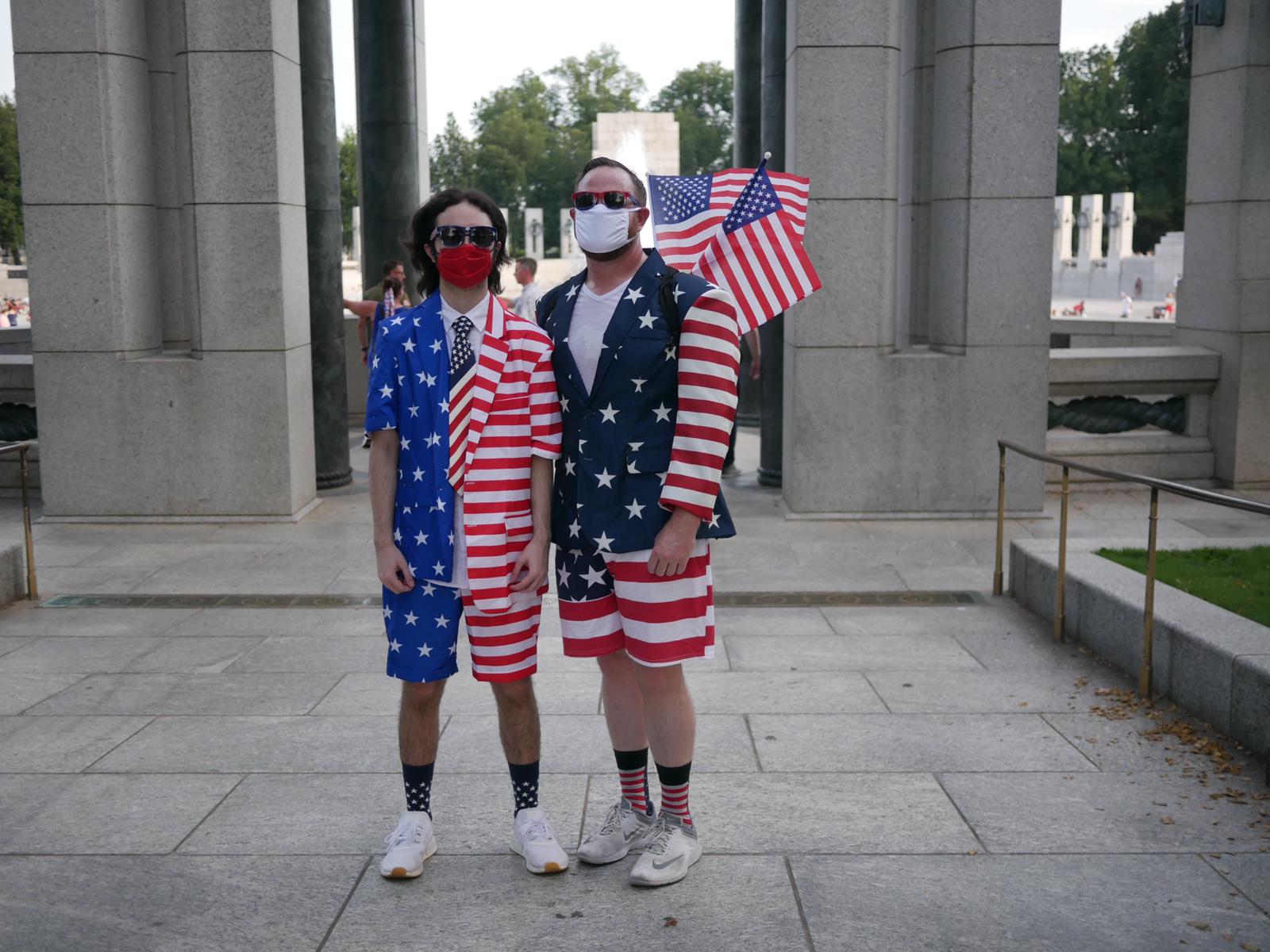
While many people appeared to have listened, thousands of people still came out, both for Trump’s modified “Salute to America,” which took place at the White House rather than the Lincoln Memorial, and to participate in a number of demonstrations against racism and police brutality throughout the day.
And despite the pandemic, people traveled from afar to attend both.
John Turano and his daughter Bianca came from Los Angeles to catch the fireworks.
“This day, at least I can stand for what I believe in,” Bianca said. “And we can be out here and enjoy the celebration, even though there’s not a lot of people out here. It’s nice to be out here and able to be who I am and not be judged for it”
Meanwhile, Ralph Clayton, 58, drove nine hours from Athens, Georgia, to support protesters.
“We’ve been done wrong a long time,” he said. “This new generation of kids is coming up … I stand behind them.”
Beads of sweat sticking to his face, Clayton said he had waited his entire life for racial justice and planned to spend the next two days waving his “Black Lives Matter” flags in the D.C. streets.
“It’s nothing to celebrate”
Among the protesters who came out to Black Lives Matter Plaza and a series of other rallies, many reflected on the holiday’s themes of independence and freedom.
“Our ancestors weren’t necessarily free,” said Lacresha Millner, who brought her four nieces to the plaza. Millner, who lives in Upper Marlboro, Maryland, added that her family celebrated Juneteenth, the day enslaved Black people in Texas were told they were free, with a family barbecue and firecrackers. “The U.S. is celebrating our independence but yet there were still people who had no independence.
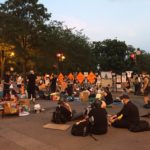
A protester who had spent the night at Black Lives Matter Plaza and only identified himself as “Sleez” put it plainly:
“It was independence for white, land-owning men,” he said. “Women weren’t free. Black people damn sure weren’t free. Native Americans weren’t free. It’s nothing to celebrate.”
Austin Riddick, a 22-year-old D.C. resident, said his family never participates in July Fourth festivities. “This year, like every year, freedom is an idea and something to strive for,” he said. “It’s not a reality and it never has been.”
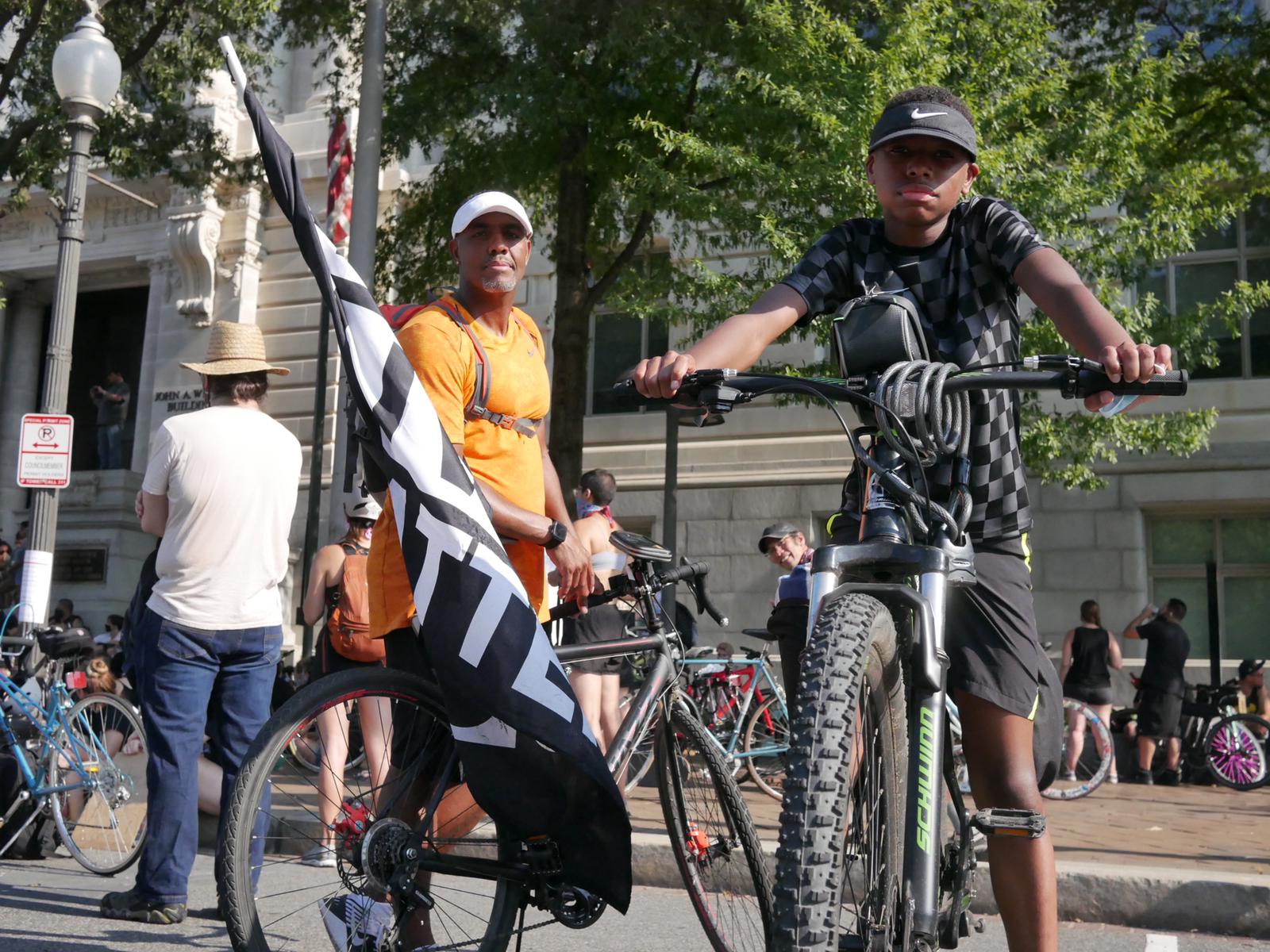
As Derrick Walker participated in one roving protest with his 12-year-old son at 15th and Pennsylvania, he reflected on how his perception of the holiday has changed.
“The Fourth of July used to mean independence and freedom. However, given the circumstances of society at this point, it’s really just another day,” said Walker, a 47-year-old from Stafford, Virginia. “If it was independence, we wouldn’t really be marching. If it spelled freedom, where people weren’t being killed, no matter what the cause, we wouldn’t be out here.”
He said he fears for his kids, including a 17-year-old son who is getting ready to go to college and his tween boy, who likes to ride his bike around town.
“Now I’m actually afraid to let him,” Walker said. “I don’t want him to grow with fear. But he already has it. We were riding through one of the neighborhoods here in D.C., and he said to me, ‘Dad, we could be shot for being here.’ My 12-year-old said that. And that broke my heart.”

Skirmishes around the National Mall
The day of protest and reckoning got its start with a number of disparate demonstrations throughout the city, including a sit-in at the Supreme Court, a march of veterans, and the unveiling of a “human Pan-African flag” on the Mall. (Protesters were given red, black, and green banners to create the flag, which was designed to represent people of the African Diaspora.)
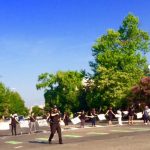
But in addition to rallies against racism, a group of a few dozen Trump supporters marched past the National Museum of African American History and Culture in the early afternoon, some flashing a hand sign known to symbolize white power, flanked by a group of Metropolitan Police Department officers on bicycles.
Some members of the group carried an insignia associated with the Proud Boys, a Southern Poverty Law Center-designated hate group affiliated with white nationalist and alt-right extremist views.
Throughout the day, there were occasional clashes between supporters of the president and protesters with the Black Lives Matter movement, though perhaps none quite so dramatic as the scene near the Washington Monument around 9 p.m. In addition to a battle of chants and heated arguments, there were also some physical confrontations.
In Garret Dufresne’s telling, Trump supporters were “taking video and harassing peaceful protesters.”
The 25-year-old former grocery store worker said he drove 36 hours from Seattle to be in the nation’s capital, his voice hoarse from “yelling all day.”
“I came here to protest police injustice. I drove all the way across America to protest,” Dufresne said. “I felt like Independence Day, it’s the best opportunity to try to take back our rights as Americans. We were founded on freedom, but it was actually freedom supported by slaves. So we need to make reparations for all the harm that we have done.”
Meanwhile, Diane Atkins, a municipal worker from Brooklyn, New York, said she came to celebrate the holiday with “fellow patriots” and to support the president. She dismissed the demonstrators as “Marxists.”
“This is not about racial equality, this is not about justice. This is about people that want anarchy. We can’t allow it. We’re a country of law and order,” said Atkins, shortly after pepper spraying several protesters. She alleged they tried to rip her phone out of her hands.
“The Fourth of July is a beautiful celebration to remember that we are all born free and we are all Americans and I wish that everybody would come together under the American flag,” Atkins added.
After the U.S. Park Police broke up the groups and the fireworks drowned out the chanting, the conflagration fizzled relatively quickly.
At BLM Plaza, both unity and debate over tactics
Meanwhile, over at Black Lives Matter Plaza as the fireworks began, some people offered a counter narrative in the form of Lift Every Voice and Sing, the Black national anthem. Others opted instead to chant “fuck your fireworks.”
The plaza largely hosted tension-free protests, but a series of small confrontations played out throughout the day, a microcosm of ongoing debate about the right tactics to confront white supremacy.
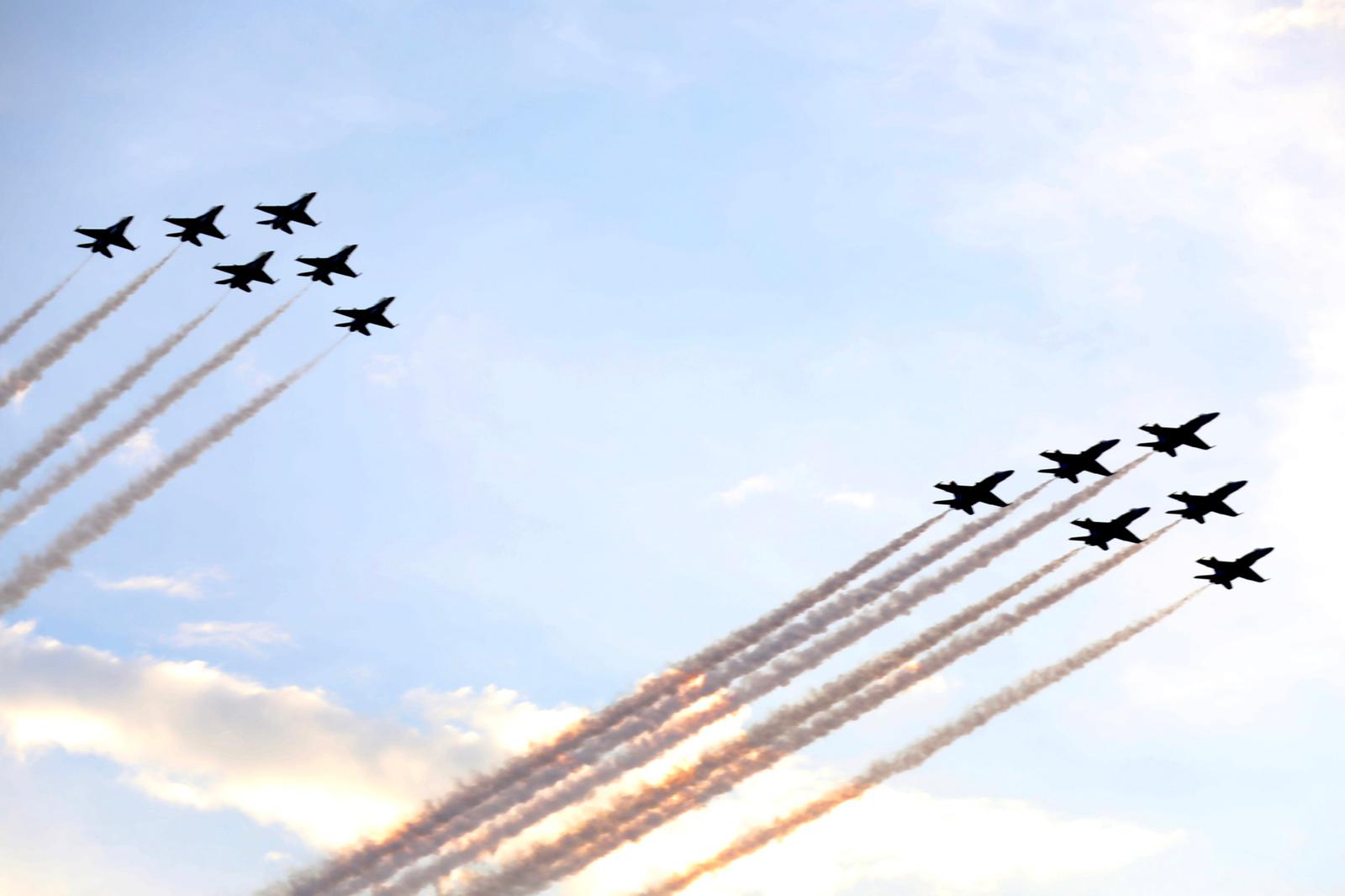
Just before the official Fourth of July military flyovers began, a small group of protesters gathered for a “Flag-Burning Challenge,” where they set small U.S. flags alight before eventually torching a larger flag that was laying on the ground. The event sparked a brief scuffle, as other protesters tried to stop the flag-burning from happening.
“This is what they want, don’t give it to them,” said one person, alluding to how the act could generate negative coverage of the movement. (Stories about the flag-burning quickly started circulating in right-wing media.)
But for Jamel Mims of the New York City Revolution Club, burning the U.S. flag was justifiable.
“[Trump has] fucking called us terrorists, and called those people, that lynch mob that he’s enabled, ‘fine people.’ And so those fireworks represent a fucking disgrace, and that flag represents the ugly history of that country and its ugly present,” he said. “And there’s only one way to properly display it: fucking on fire.”
(A group, which included the man whose Supreme Court case enshrined the right to burn the flag, also lit the star spangled banner on fire last year on July 4.)
A while later, protesters confronted a group of what appeared to be Black Israelites, accusing them of homophobia and transphobia.
“If all Black lives matter, that includes gay people, that includes trans people. It doesn’t matter who you are,” said Carleen Donawa. “You can’t sit here and spread hate.”
And around 10:40 p.m., a group of Trump supporters walked through Black Lives Matter Plaza, only for protesters to escort them out. When another person walked through, a protester threw his red hat over a fence.
Some wanted to get more physical with the president’s supporters, while others just wanted to help facilitate their exit. (Police eventually formed a line to prevent the Trump supporters from reentering the plaza on Vermont Avenue.)
Meanwhile, a group of demonstrators ended the night united in one tactic: jointly occupying 16th Street, which has been aggressively cleared by police in recent days. They set up around 20 tents the area around St. John’s Church, with plans to remain there indefinitely.
“One giant protest is awesome, but after that day everyone goes back to their regular shit and they feel like they have the power to do exactly what they did all over again,” said Eugene Kinlow, who pledged to stick with the encampment. “Consistency is what’s going to make them — the government, the police, the mayor — understand that we are unhappy with the system.”