Thousands of poultry workers in the Delmarva peninsula have tested positive for COVID-19 in recent months revealing problematic working conditions that some are hopeful will be resolved through mandatory workplace protocols put in place by state governments.
Virginia is poised to create the first pandemic workplace safety mandates in the country, but workers say they need protocols in place to protect them now.
Virginia Gov. Ralph Northam’s office said the regulations, which would mandate sanitation, disinfection, hand-washing, and physical distancing and prevent sick workers from returning too soon, were motivated by the lack of enforcement from the federal Occupational Safety and Health Administration.
In the peninsula region, which includes much of Delaware and the Eastern Shores of Maryland and Virginia, more than 20,000 people work in the poultry industry. At least 2,215 of those people have contracted the coronavirus and 17 have died, according to recent data compiled by the Washington Post.
“There are numbers on the Shore that are in the top numbers nationally, and that can be tracked back to poultry plants,” said Jason Yarashes, attorney and program coordinator at the Legal Aid Justice Center.
In the 23 states with COVID-19 outbreaks in meat and poultry processing facilities, the CDC recently reported 16,233 cases in 239 facilities — including 86 deaths. (Their reporting, which only tracked cases from April to May, included both Maryland and Virginia, but not Delaware.)
The peninsula is home to one of the highest concentrations of poultry production in the country, with more than 5,000 chicken houses. The operation has become “more factory than farm,” said Abel Russ, senior attorney at the nonprofit Environmental Integrity Project. For example, poultry houses built to hold 145 million chickens instead held 609 million chickens last year, according to the Delmarva Poultry Industry.
Anonymous testimonies provided to DCist/WAMU by Virginia poultry workers reflect that the industrial model, which values speed and efficiency — and has been declared essential by President Donald Trump — often compromises workers’ safety.
The poultry workers quoted in this story were provided anonymity due to fear of retaliation from their employer.
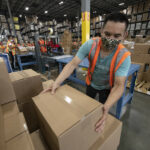
“They give us masks at work every day, but there is no enforcement to use the masks … some just use the mask to cover their mouth, but not their nose. Some people just leave the mask around their neck.”
“People are still working too closely at work. They say that they are trying to practice social distancing, but we had to stay until the night shift to complete orders, and so we were overlapping with the night shift workers.”
“When someone tests positive for the virus, the company calls them to come back to work in three days if they aren’t showing symptoms. People have tested positive and are back in a week.”
“I tested positive and they sent me home for two weeks. My children got the virus from me as well, and so I had to be out of work longer. But my job kept calling and calling me, telling me to come back. It was only because my family doctor gave me a note that I could stay out longer. I did not receive paid sick leave from my work.”
DCist/WAMU reached out to three major poultry companies operating in the Washington region, requesting information on safety protocols.
In an email, Delaware-based company Mountaire Farms highlighted steps the company has made to ensure cleanliness and safety, including mandatory face masks and face shields. The company also mentions it implemented a “Special Hourly Sick Pay program that encouraged employees who are sick to stay home.”
Tyson Foods did not respond to requests for comment. Perdue Farms provided the following statement:
“Perdue responded swiftly to the threat of COVID-19 and we have been closely following and implementing current CDC guidance since the first reports of cases in the U.S. Even before public health officials provided guidance on workplace safety for meat and poultry companies, we instituted extensive incremental safety measures like additional sanitization, enforcement of social distancing, and temperature checks and mask wearing for everyone entering our buildings, and we added to these measures over time as we learned more and guidance from health experts evolved.”
While plants have been provided guidance from the CDC, Yarashes said, the extent to which safety measures are enforced varies.
“We need enforceable regulations to be able to put folks in a good position,” Yarashes said on the Kojo Nnamdi Show Wednesday. “Still today, there’s only guidelines and recommendations.”
He continues, “What we’re talking about is states like Virginia stepping in to fill the void.”