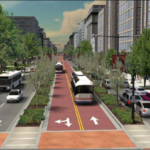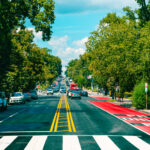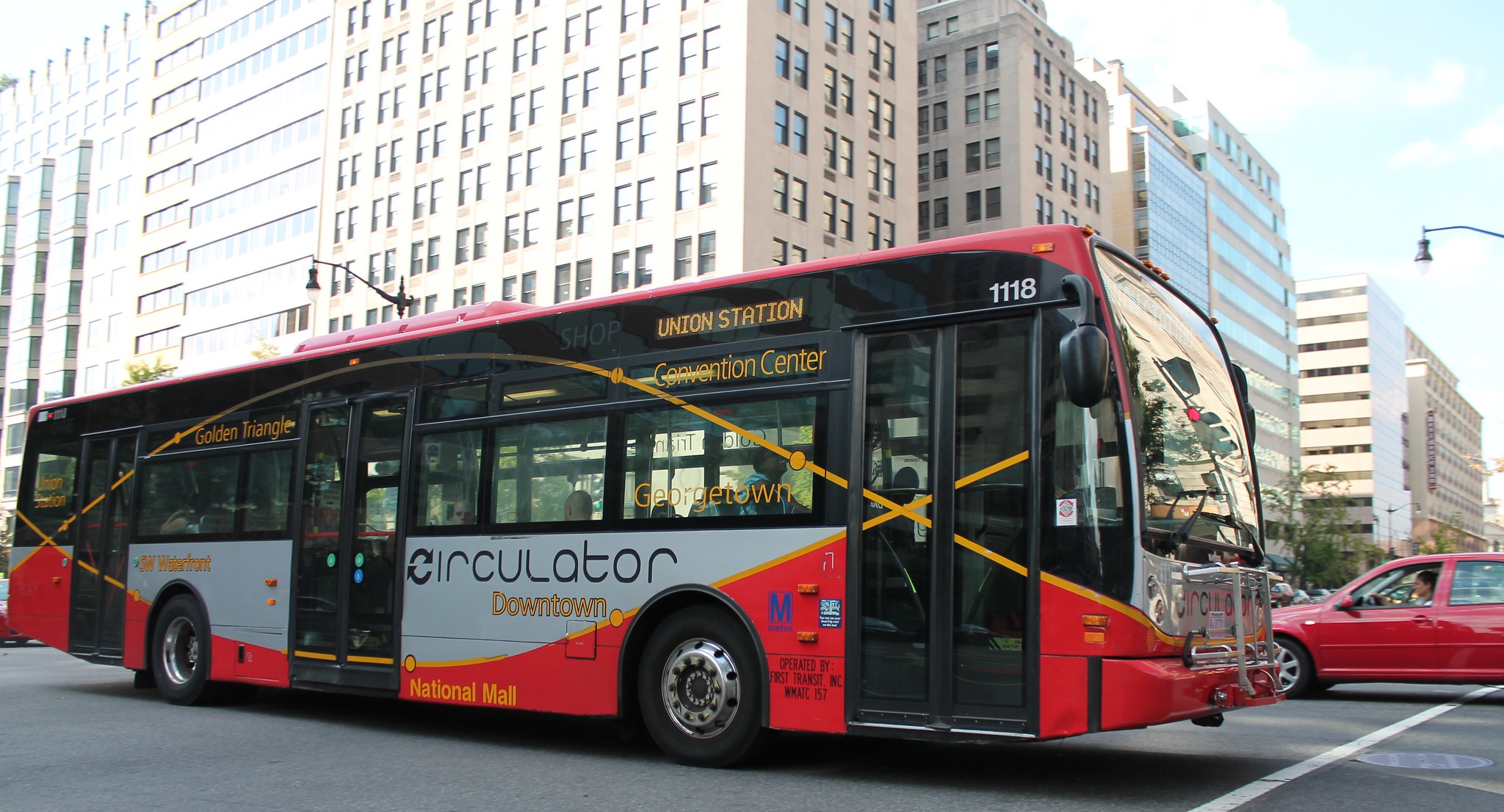
D.C. is getting more bus dedicated lanes as soon as later this month. One will drastically change flow in a popular and traffic-dense area in Chinatown.
Mayor Muriel Bowser and the D.C. Department of Transportation announced the addition of “Car Free Lanes” for buses and bicycles in three high-traffic spots throughout the city on Thursday.
“We know that dedicated bus lanes make public transportation more efficient and reliable. As we continue reimagining public spaces, these lanes will help us encourage bus and bicycle travel, reduce traffic, and build a greener D.C.,” Bowser said in a press release.
The lanes will be marked by red paint at the following locations:
- 7th Street NW between Massachusetts and Pennsylvania Avenues NW. This is the most drastic change. Cars will not be allowed to go down the busy 7th Street in Chinatown. Lanes will only be open to buses, bicycles, and trucks 24/7.
- Martin Luther King Jr. Avenue SE between W Street SE and St. Elizabeth’s East Campus. This will be a northbound bus lane during rush hours between 7:00 and 9:30 a.m. and a southbound bus lane from 4:00 and 6:30 p.m. It doesn’t require parking to be removed since there were already rush hour restrictions.
- M Street SE between 10th and Half Streets SE. Bus lanes at this location will operate in both directions also during rush hours from 7:00 a.m. to 9:30 a.m. and from 4:00 p.m. and 6:30 p.m. It doesn’t require parking to be removed since there were already rush hour restrictions.
“Improving bus transit and creating bike facilities are critical to achieving Mayor Bowser’s sustainable transportation goals,” DDOT director Jeff Marootian said in the release. “The Car Free Lanes improve the reliability of D.C. Circulator and Metrobus service and create space for cyclists to safely traverse some of the District’s busiest corridors.”
According to DDOT’s website, the lanes will also help reduce crowding on buses, allowing for social distancing.
The popular 70 and 79 WMATA buses use the 7th Street corridor. The 90, 92, P6, A9, and Circulator buses use the M Street route. The A2, A4, A6, A8, A9 and Circulator buses use the Martin Luther King Jr. corridor.
DDOT says initially the no-car policy will be enforced through the red-painted lane designation only. Cities like New York and San Francisco have used cameras on buses to capture license plates of vehicles that illegally use the lane. Tickets are then mailed to those vehicle owners, similar to how red light and speed cameras work in the District.
New York cameras captured about 150 vehicles a day that used the bus lanes.
DDOT says it is working with other agencies to see if those cameras can be used on these lanes.
The announcement comes after the city began construction on a new set of bus lanes along 14th Street NW last month, where officials will study the impact on traffic for a year. Last summer, the department opted to make a similar pilot project on H and I Streets permanent, after it found that the lanes, which were active during rush hours, increased speed by 4% compared to 2018. However, those lanes are porous — vehicles sometimes idle, park, or use the lanes to get around traffic.
The city also has plans to add bus lanes to 16th Street NW later this summer, which DDOT previously said could shave travel times along the corridor by two to three minutes.
Bus-only lanes are a large part of the Bus Transformation Plan, which was created by consultants for WMATA, to improve bus service.
“Buses move more people than cars, but are stuck in the same traffic,” the report says. This results in worse performance for riders and providers. “Buses lack priority on roadways. This leads to slower, less reliable and more costly service. Without signal priority or bus lanes, adding more buses on busy corridors will not improve service.”