 Jordan Pascale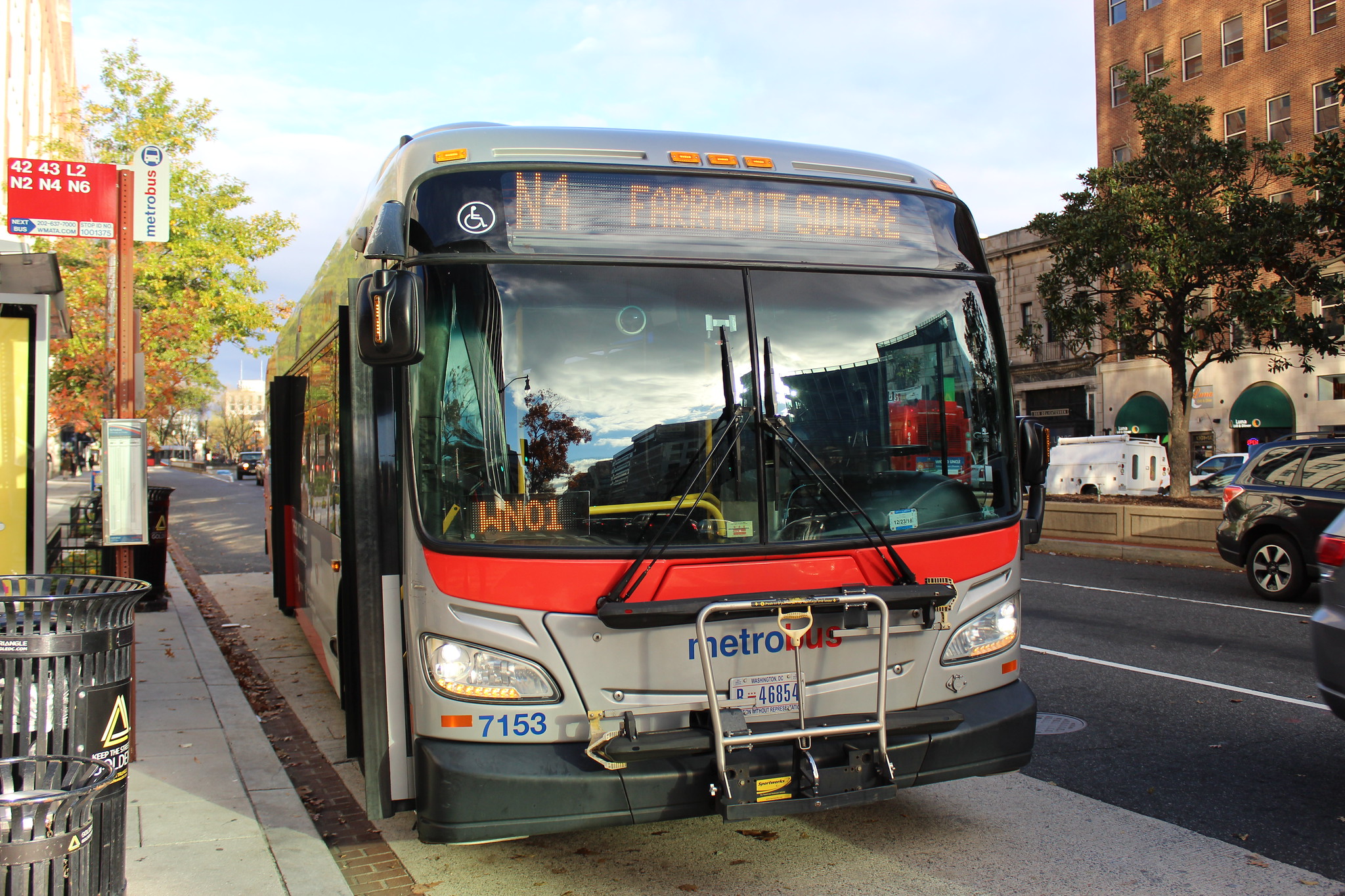
This story was updated on August 14 at 10 a.m.
Metrorail service is drastically increasing Sunday after months of reduced hours and service thanks to the pandemic.
Hours will extend to 11 p.m. instead of 9 p.m. And wait times for trains will reduce from every 20 minutes to every 8 minutes during rush hour and every 12 minutes otherwise.
The Silver Line will reopen as well as West Falls Church on the Orange Line that was under construction. The remaining Orange Line stations reopen around Labor Day.
Scheduled weekday rail trips will more than double from 511 to more than 1,200.
General Manager Paul Wiedefeld said the more frequent trains and buses should help with social distancing. Some buses were especially overcrowded.
Metrobus service is increasing service on 174 routes next Sunday. Some riders who say it’s too late.
Laura Jackson is a 75-year-old who went back to work in June. She rides the 52/54 route and says it’s been packed every day she’s taken it. She recently filed a complaint about crowding with WMATA.
“I’m a senior with an underlying health condition, so I am very, very cautious,” Jackson said. “(Bus drivers) are letting people on and stand in the aisles and so you’re subjecting me to be contaminated.
“I’m fighting. I don’t want COVID. At my age and my condition I’m not going to fair well.”
But she says she has few other options but to take the bus.
Starting August 23rd, Jackson’s route will have a bus come every six minutes instead of every 20, which she says she welcomes, but she wishes it would’ve happened sooner.
You can see the full slate of Metrobus changes here.
Original:
Metro is increasing service for Metrorail starting Aug. 16 and Metrobus starting Aug. 23. It’s part of the transit agency’s plan to ramp up service throughout the coronavirus pandemic and return to full service in spring 2021.
But so far, the number of buses and trains hasn’t caught up with demand. And it appears the bump coming next month won’t either.
Here are Metro’s plans, released Monday morning.
Metrorail
Starting Aug. 16:
- Trains will run 5 a.m. to 11 p.m. on weekdays and 7/8 a.m. to 11 p.m. on weekends.
- During peak hours, trains will run every 8 minutes and every 5 minutes for Red Line trains.
- During off-peak hours and weekends, trains will run every 15 minutes and every 12 minutes on the Red Line.
- Service is about 90% of pre-COVID levels. Metro can safely accommodate 53,000 trips a day now and the added service will allow for about 200,000 trips a day, according to its service plan. About 60,000 trips every weekday.
- Metro will resume charging for parking at lots and garages.
- Metro will expand its After-Hours Ride-hailing program with Lyft and increase the discount from $3 to $6.
Metrobus
Starting Aug 23:
- Buses will run 4 a.m. to midnight
- Weekday service will be about 73% of what the region had before the pandemic. Metro says it currently can accommodate 85,000 trips a day and will be able to carry up to 110,000 trips a day next month. But passengers are already outpacing Metro service.
- 52 lines will operate on a normal schedule, 64 lines with reduced frequency and 37 lines aren’t running.
- Saturday service will be about 87% of pre-pandemic service levels. Sunday service will be about 86%.
- Saturday: 53 lines will operate on a normal schedule, 30 lines with reduced frequency, 12 lines aren’t running.
- Sunday: 73 lines will operate on a normal schedule and four lines with reduced frequency.
- Riders will still board through the rear doors to protect operators
- No fares will be collected.
Metro expects this level of service to continue through the rest of the year. Officials expect trains and buses to return to full service when treatments or vaccines are available sometime next spring.
Much of Metro’s plans rely on having workers healthy and available. Metro has had 210 confirmed cases of COVID and no deaths — a better track record than other large transit agencies like New York. Nearly 90% of Metro workers who had the coronavirus are back at work.
The transit agency says it takes “more than two months to develop new service plans, draft daily schedules that connect buses and trains, implement the operator assignment process for 4,000 employees under the collective bargaining
agreement, modify information systems, and give employers and riders notice of service changes.”
Still, Metro’s Rider Advisory Council wrote in a monthly report to the board that they are “deeply concerned about ongoing reports of severe crowding on numerous routes — especially those serving lower-income communities in our region.”
Riders often took crowding on Metro for granted before the pandemic, but social distancing to avoid the spread of the coronavirus has changed the calculus for many of them. But essential workers without other transportation options have little choice but to ride.
“Daily bus ridership has long been well above the socially distanced capacity of 85,000 trips as specified in WMATA’s Pandemic Recovery Plan,” the RAC wrote in its report. “Even in the ‘managed re-entry’ phase expected to begin in the coming weeks, Metrobus capacity is only planned to be 110,00 trips, wholly insufficient for current ridership.”
Social distancing reduces space on buses and trains to about 25 people per railcar and 10 people per bus. “While Metro will use these guidelines to inform the timing of service increases, optimal distancing will be challenging even when
accompanied by regional efforts to stagger worker re-entry,” the agency wrote in its brief.
Metrobus has averaged around 130,000 trips almost every weekday for the past three weeks. It largely serves low-income, essential workers, according to Metro data. During the pandemic, about 70% of bus trips are work trips, Metro says.
“One important lesson of the pandemic this year is that essential workers ride the bus,” General Manager Paul Wiedefeld said at a recent board meeting. “Of those (that ride the bus), 49% identified in our survey as African American, 16% as Latino and 10% as Asian.”
Board Chair Paul Smedberg said he recently returned to Metrorail for the first time.
“I was surprised by how many people I saw,” Smedberg said. “People were respectful and they did spread out on the car I was on.”
He said he’s gotten a few comments about overcrowded buses at certain times of day, but no widespread anger at crowding. As to whether he thinks service needed to be ramped up sooner, he said, “We’ve been leaving it to (General Manager Paul Wiedefeld) to make those decisions.”
Metro says its increasing service as jurisdictions enter new phases of reopening and its monitoring school plans and whether the federal government will continue to operate with telework flexibility.
According to surveys conducted by Metro, public employees are more likely to return to work earlier than private company employees. About 34% of public organizations say they have 40% of its workforce back in the office. Only 8% of private businesses say they have 40% or more of its workforce back.
And Metro is trying to weigh consumer confidence: surveys found that only 25% who used to take the bus to work, and are teleworking currently, are planning to take the bus when they have to start commuting again. About 33% who used to take Metrorail say they will use it when they must commute again.
Metro is also planning for two large upcoming events in the region. A civil rights March on Washington is slated for Aug. 28 and Metro is starting to plan for the presidential inauguration on Jan. 20, 2021.
This story was updated to correct time references and which stations are reopening.
This story originally appeared on WAMU.