Matt Blitz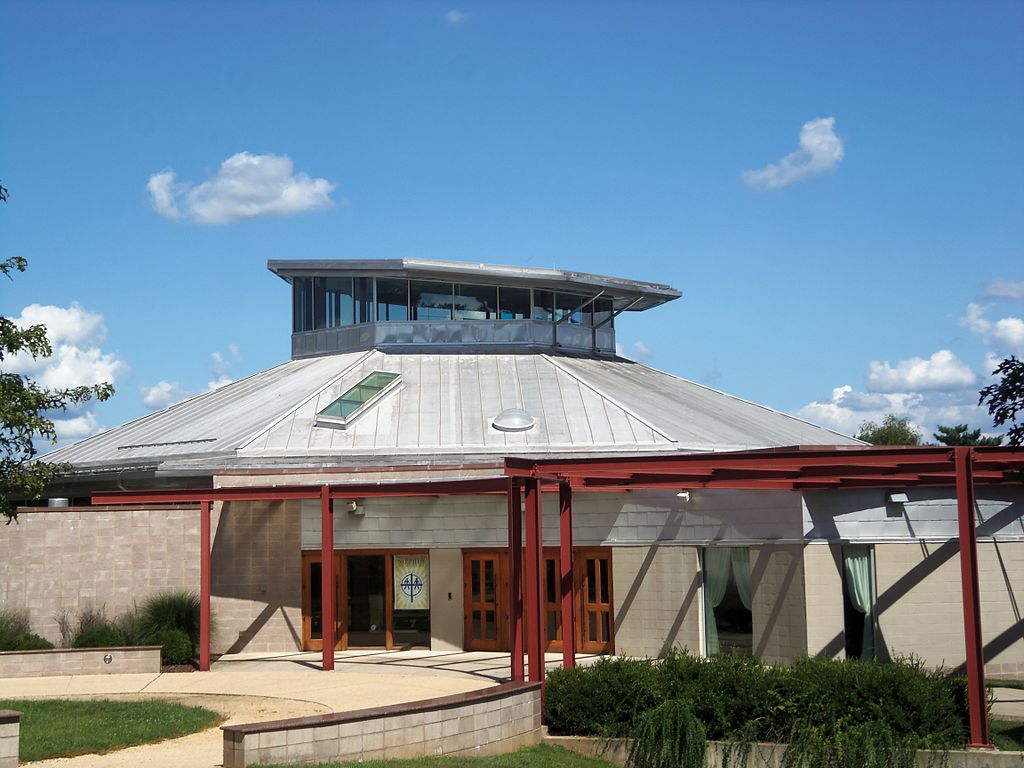
As Montgomery County looks to ramp up coronavirus testing in the hardest-hit communities, local religious institutions are offering up their properties.
Nonprofit, multi-faith social action organization Action in Montgomery, in partnership with a number of local religious institutions, announced last week a proposal that would allow Montgomery County to set up COVID-19 testing sites in their respective parking lots. The hope is that the familiarity, proximity, and trust in these faith institutions in some of the county’s most vulnerable communities, like Gaithersburg, north Silver Spring, and White Oak, would encourage more people to get tested.
“We think it makes a lot of sense to make testing available in these places of worship,” Tanushree Dutta Isaacman, the project’s leader and associate organizer for Action in Montgomery, tells DCist.
“There’s a relationship … when you have pastors who have pastored your family [or] baptized your children for years and years, you will listen to that pastor when he or she says ‘it’s very important to get tested,'” says Isaacman. “This has a totally different impact than someone who you don’t know, like a public official. Especially in communities who have a deep level of mistrust with the government.”
Issacman says the organization was inspired by New York City’s partnership with local churches to set up testing sites back in May.
In recent months, Montgomery County councilmembers, nonprofits, and community members have criticized county officials for lost test results and not setting up enough testing capacity, particularly for more at-risk residents.
According to organization leaders, the county executive and the health department have been responsive about the proposal and a meeting is scheduled on Thursday.
County Executive Marc Elrich’s office has forwarded the proposal to the health department, which will handle it, per an office spokesperson.
A county health department spokesperson told DCist that the agency is currently in conversations with several churches and is looking at a “variety of venues so that we can spread testing out in all parts of the community. We will continue to add pop up testing sites over the weeks to come. We will also be getting two trailers from the CDC that we can station at locations as well.”
Local religious leaders believe having testing sites at trusted houses of worship will go a long way toward addressing the county’s testing struggles. Ogechi Akalegbere is the co-chair of the pastoral council (an advisory group to the pastor) at St. Rose of Lima, a Catholic Church in Gaithersburg, Maryland. It is one of the religious institutions that has offered its parking lot as a potential testing site.
She says her congregation has many Spanish-speaking members (their Spanish-speaking mass is always filled to capacity, she says) where accessibility, communication, and trust are often barriers to them getting tested.
“There’s this trust with our pastor,” says Akalegbere. “They don’t have to worry about ICE being present at our testing sites, which some people have stated is a fear.” The parish, she says, is also right off of a bus line and near Lakeforest Mall, which makes it accessible and easy to find.
She also says that a language barrier can make communication with local government officials tough for her congregation. Montgomery County Councilmember Gabe Albornoz has also cited a lack of bilingual county employees as one barrier for this community when it comes to getting tested.
Akalegbere says having a testing site at a trusted place like a family’s church could lead to others who are not members coming by as well. “Those families can then share this information with other members of their communities that may not be members of the parish… so they can also come and get tested.”
And COVID-19 has hit the Latino community in Montgomery County particularly hard. Even though they account for only about 20% of the population, the community has endured more than two-thirds of recent infections.
Churches aren’t the only Montgomery County houses of worship offering their property as a potential testing site. Adileh Sharieff is on the Board of Trustees of the Islamic Center of Maryland, which is also located in Gaithersburg. She says they started doing food drives earlier in the pandemic and saw how many folks came out. “So far, we have distributed more than 19,000 pounds of food. That’s more food than I’ve ever seen in my entire life,” says Sharieff.
Testing was just the next step, Sharieff says, especially because in times of crisis, people turn to their faith. “When your faith institution is saying to get tested, it makes it more powerful,” she says.
Isaacman says local religious institutions and organizations like Action in Montgomery are better able to get the word out about public services like food drives and testing sites than government officials. She uses the example of Cider Mill Apartments in Gaithersburg, which has many low-income and Spanish-speaking residents: “We know in that complex of 860 apartments who the key leaders are and how to get the message out.”
She says it’s baffling to her that the county and state haven’t asked for more help in this regard. “It’s really, really quite bizarre, even with contact tracing,” she says. “The state has basically chosen a private firm to do contact tracing and to hire contact tracers fairly randomly … The most effective contact tracing models show [that] you need people who are trusted in the community.”
Isaacman, Akalegbere, and Sharieff all say the federal government’s current stance on immigration and harsh rhetoric about those who are undocumented have made it even more difficult for folks to trust local governments, even if they are there to help them.
However, Issacman remains optimistic. She says that several Montgomery County Councilmembers have reached out to her just in the last week, including Councilmember Gabe Albornoz.
The County Executive and the health department also has provided positive responses about the proposal, Issacman says. Still, it’s mid-July, and the pandemic has been raging for more than four months. “I am encouraged but I think this should have taken place three months ago,” she says.
Akalegbere agrees: “I don’t think it’s too late, but we are very behind.”
This story has been updated with a response from the County Executive’s office.