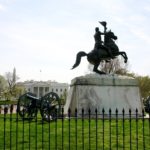
In separate congressional hearings Tuesday, U.S. Attorney General William Barr and Acting U.S. Park Police Chief Gregory Monahan denied under oath that park police officers forcefully dispersed protesters from Lafayette Square so that President Donald Trump could have a photo op holding a Bible in front of a historic church near the square June 1.
Barr told the House Judiciary Committee that federal officials had decided the night before to expand law enforcement’s perimeter around the White House, where protestors had flocked to demonstrate against police brutality and systemic racism in the wake of George Floyd’s killing at the hands of Minneapolis police officers May 25.
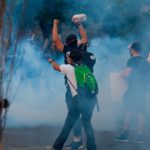
Protesters and journalists on the scene that day reported that police used tear gas, pepper spray, rubber bullets, and flash devices—without warning—to clear Lafayette Square and its surroundings around 6:30 p.m., right before Trump and his entourage walked north through the square to St. John’s Episcopal Church. (The church had seen a basement fire amid major protest activity the previous night, an incident that caught widespread attention.)
Barr also claimed that “extreme rioting” near the White House over the preceding weekend led federal officials to opt to install fencing around the federal complex and push the perimeter out as far as I Street NW. Dozens of officers had been injured amid the demonstrations, Barr added.
“This was something conceived of long before and didn’t turn on the nature of the crowd, though I would say the crowd was very unruly,” the attorney general noted, contradicting witness accounts that the protesters were demonstrating peacefully before the park police ousted them. Barr went on to compare the criticism that law enforcement cleared Lafayette Square in order for Trump to pose for photos with the idea that famed U.S. Gen. Douglas MacArthur invaded the Philippines during World War II to walk on that country’s beaches.
Barr, who was spotted in the area that evening, said he first learned sometime during the afternoon of June 1 that the president would possibly leave the White House and visit St. John’s. He repeatedly denied that the police’s dispersal of the demonstrators was linked to Trump’s public appearance. The dispersal is the subject of a lawsuit from local civil rights groups that includes Trump, Barr, and Monahan as defendants.
Monahan, the Park Police chief, made similar denials at a House Natural Resources Committee hearing also held Tuesday, saying there was “zero correlation” between his officers’ removal of the protesters and the president’s photo op soon thereafter. He also denied that officers used tear gas to disperse the crowds, a claim that multiple witness accounts dispute.
“We did not clear that park for a photo op,” Monahan stated at the hearing, according to the AP. “There is 100%, zero correlation between our operation and the president’s visit.”
At both proceedings, Democrats blasted the Trump administration’s response to recent protests, including in Portland, Or., where federal agents have been clashing with activists for weeks. In contrast, Republicans largely defended the administration on law-and-order grounds, with some yielding their speaking time to Barr and Monahan.
The denials come as the inspectors general at the Justice and Interior departments—the internal watchdogs for those agencies—undertake reviews of the police tactics at Lafayette Square. They also come as senior D.C. National Guard officer Maj. Adam DeMarco spoke out at the House Natural Resources Committee hearing Tuesday, testifying that the use of force he witnessed June 1 “was an unnecessary escalation.”
“I saw no indication that the demonstrators were cognizant of the warnings to disperse,” DeMarco said.