 Daniella Cheslow
 Martin Austermuhle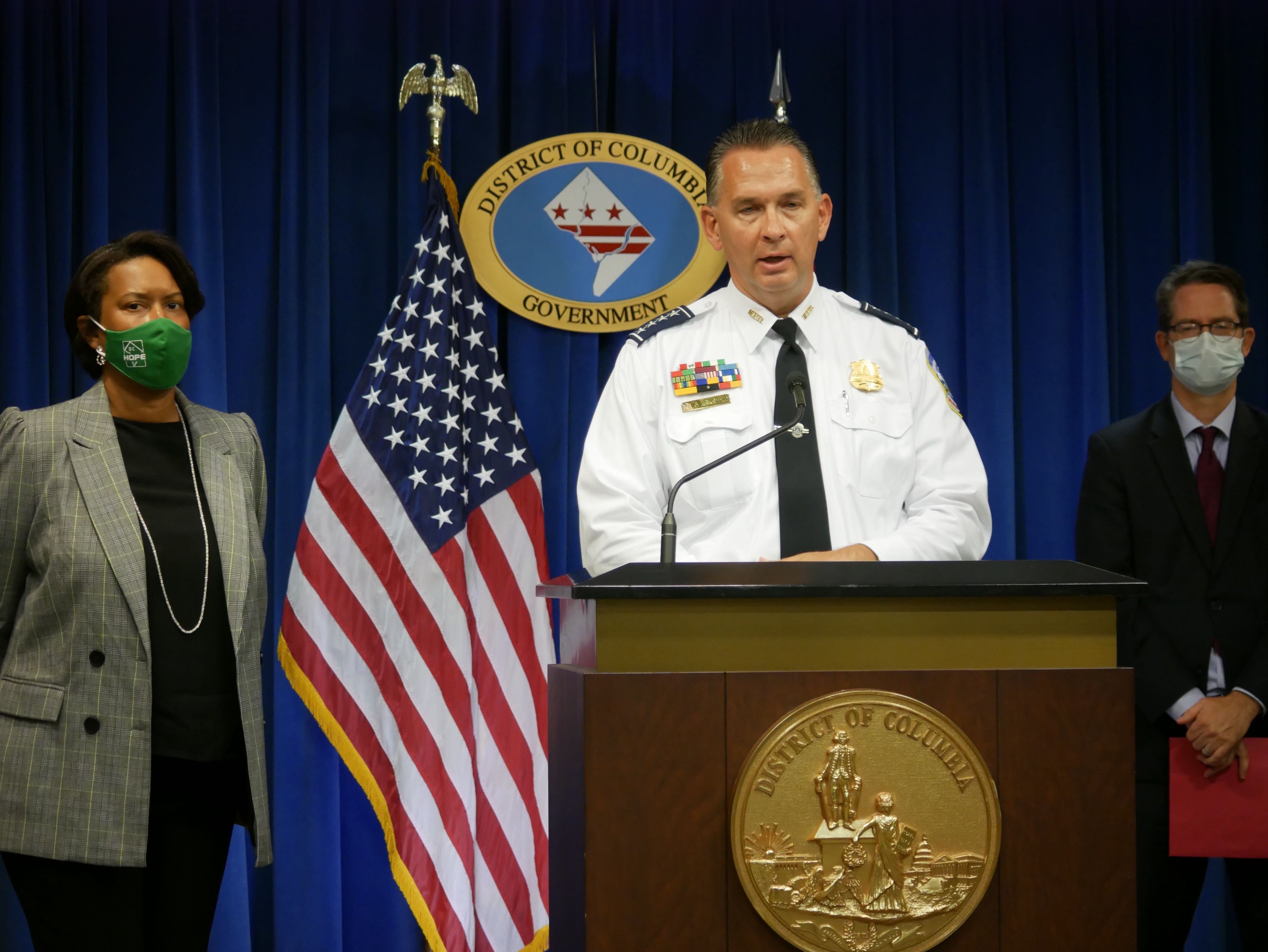
D.C. Mayor Muriel Bowser on Friday released footage from body-worn cameras linked to the high-profile killings by police of three Black men in 2018 — Marqueese Alston, D’Quan Young, and Jeffrey Price. Two of the incidents were fatal shootings.
Footage from four other fatal incidents was not released because family members asked that it not be made public. That included footage of Devonne Harris, who was hit by a police officer in their car responding to a service call last Friday; the 2017 shooting deaths of Timothy Williams and Isabelle Duval; and the fatal shooting of Eric Carter in 2019.
Since 2014, there have been 10 fatal incidents involving D.C. police officers.
“We know that any loss of life is tragic,” said Bowser at press conference. “There are families whose lives have been forever changed.”
The release of the footage comes in the wake of a new law passed by the D.C. Council earlier this summer requiring that the city make public both the footage and names of officers involved in any fatal shooting or other use of force within five days of the incident. That bill was motivated by longstanding complaints that footage from the widely used cameras is rarely made public, and fueled by the national protests against police in the wake of George Floyd’s killing by a Minneapolis police officer.
But it also drew criticism from Bowser, who said she worried about the “unintended consequences” of the law. Speaking on Friday, D.C. Police Chief Peter Newsham seemed to place distance between himself and what the law charged him with doing.
“I can’t even begin to imagine how the families feel to watch the videos. And to those families… I want to extend my condolences,” said Newsham. “The council has determined that this is the law of the land and we’re going to abide by it.”
While the initial footage released Friday included at least a minute introduction explaining the police department’s use-of–force policy and laying out how the department believes the incidents played out, city officials said they plan on releasing raw footage later in the day.
In the past, footage from body-worn cameras would only be made public under limited circumstances, though Bowser is allowed to release it if she deems it to be in the “public interest.” In early 2017, Bowser did just that, making public body-camera footage showing a police officer shooting and killing Gerald Hall as he allegedly held a knife in a doorway after a reported domestic incident. While police said it was a justified shooting, earlier this year Hall’s fiancée sued D.C. for wrongful death and negligence.
The year prior, D.C. also released footage from the fatal shooting of motorcyclist Terrence Sterling; the officer who shot him, Brian Trainer, was fired from the police department in 2018.
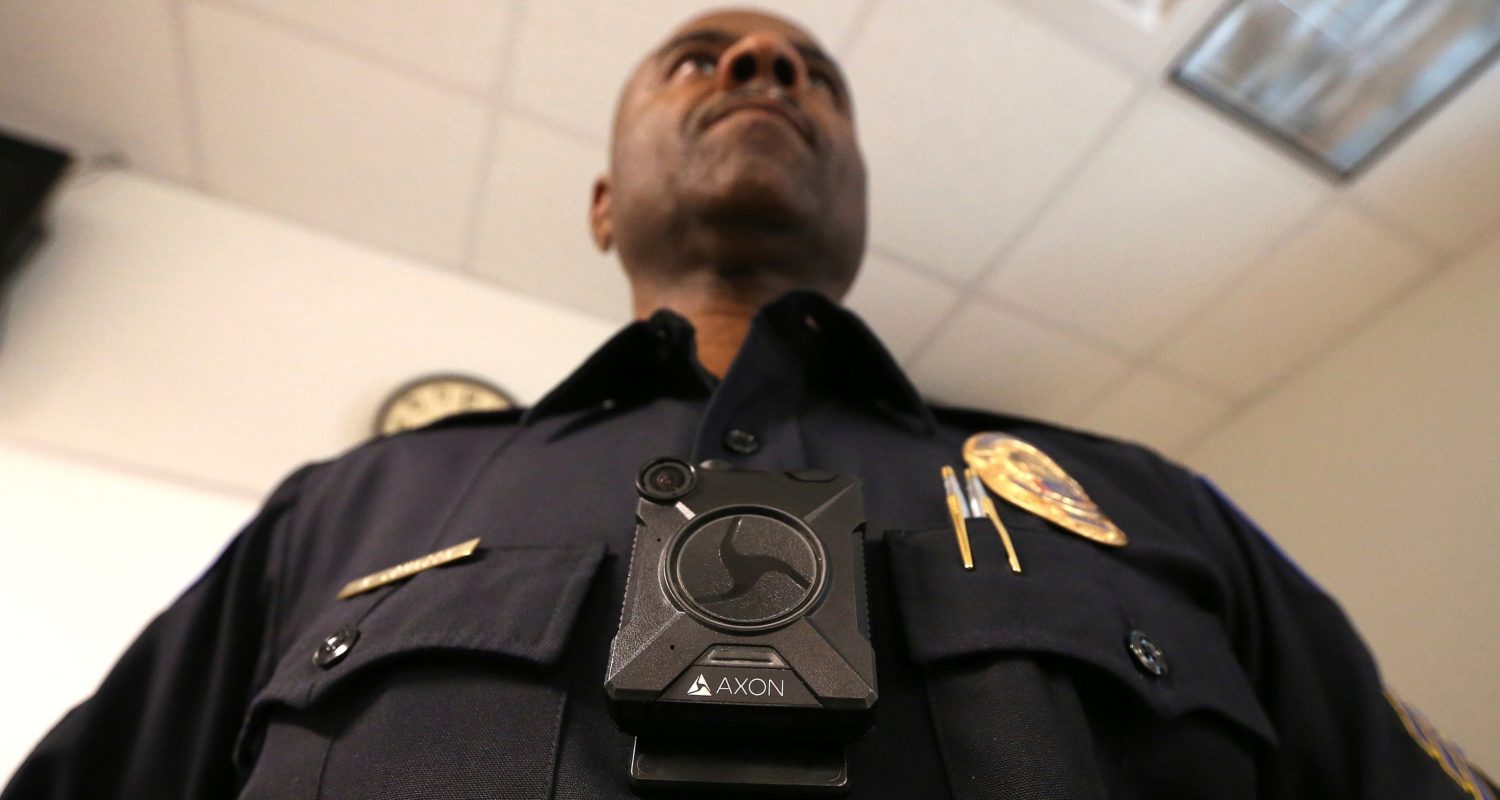
When D.C. started outfitting police officers with body-worn cameras in late 2014, city officials and police union leaders hailed them as a tool for accountability and transparency. Some 3,200 officers now use the cameras, which they have to turn on during any interaction with the public. From January to July 2019, the cameras in use collectively produced 259,634 hours of footage.
But various civil liberties and police reform groups have since said that existing law makes it too hard for body-camera footage to become public, effectively making both legal and personal accountability more difficult to come by. Other jurisdictions — including Montgomery County — make the footage public quickly after an incident as a matter of standard practice.
D.C. Black Lives Matter criticized Bowser for not releasing the footage earlier, saying she “could have released all of these videos on her own at any point if in the public interest. She did not,” in a tweet on Friday.
The three cases for which footage was released Friday have been among the highest-profile police killings in D.C. in recent years, and have become rallying cries for activists during recent Black Lives Matter protests in the city.
In May 2018, Jeffrey Price died after colliding with a D.C. police cruiser on his dirt bike on Division Avenue NE. Police say he was fleeing from officers. Price’s family has disputed those claims, and this year filed a wrongful death lawsuit against the city.
The footage that was released Friday shows the officer who is driving the vehicle, but not a clear shot the immediate impact of Price hitting him. The officer is seen tending to Price after the incident. Newsham says the officer was ultimately cited and served a suspension for violating department rules regarding the use of his vehicle in a chase.
Also in May 2018, D’Quan Young was shot and killed by an off-duty officer outside the Brentwood Recreation Center in Northeast. At the time, police said the incident was preceded by a verbal altercation, and that Young shot at the officer, something his family has disputed. Last year federal prosecutors declined to file charges against the officer, whose name was not released.
Since the officer was not on duty at the time of the shooting, the available video came from the nearby recreation center, and shows an exchange of gunfire. Three officers who responded after the shooting had their body-cameras on, and footage shows them trying to revive Young.
On June 12, 2018, police officers shot and killed Marqueese Alston, then 22, after they said he pointed a gun at them. Alston’s mother, Kenithia, was allowed to view a portion of the footage last year, and says it doesn’t back up the officers’ account. In June she filed a $100 million wrongful death lawsuit against the city over his death.
The footage released Friday showed a hectic scene of two officers chasing after Alston and then exchanging gunfire with him. In the video, a slowed-down version of one officer’s camera footage stops and zooms in on Alston holding what appears to be a gun.
Bowser said that, even while body-worn cameras are important tools for police, the footage they produce does not always resolve situations in a definitive way.
“I think sometimes people think in viewing the body-worn camera footage that it’s going to tell the whole story,” she said. “People think it’ll be like watching a TV show.”
“They resolve some questions people have and they don’t resolve others,” said Kevin Donahue, D.C.’s deputy mayor for public safety and justice.