 Mikaela Lefrak
 Matt Blitz
 Colleen Grablick
Updated 11:50 a.m. on Aug. 22
Both Mei Xiang and her newborn cub had a “really good evening” following Friday night’s birth, a spokesperson for the National Zoo says.
https://twitter.com/NationalZoo/status/1297184338073792516
Zookeepers have observed strong vocalizations from the cub via the panda cam, including cries that were heard shortly after it was born, according to Pamela Baker-Masson of the National Zoo. She says that both Mei Xiang and the cub rested, and that the cub appears to be nursing well.
And there could be another birth. Baker-Masson says if Mei Xiang was pregnant with a twin, it would come within 24 hours of the first birth, based on what the zoo’s colleagues in China have said. The baby cub was born at 6:35 p.m. Friday.
But when pandas give birth to twins, it’s rare that both survive. Five years ago today, Mei Xiang gave birth to Bei Bei and a twin, but the twin died five days later.
So zoo staff are closely watching the panda cam, monitoring mother and cub.
Mei Xiang is an experienced mother that has given birth to three surviving cubs. Baker-Masson says zookeepers will let Mei Xiang alone with her cub unless they see a reason to step in, and will continue to observe the cub’s development under its mother’s care.
Eventually, when Mei Xiang feels comfortable setting her cub down for periods of time, they will be able to access it and determine the sex.
Original post below, last updated at 8:15 p.m.
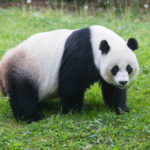
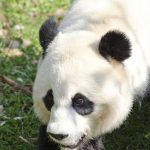
Mei Xiang, a giant panda at the National Zoo in D.C., gave birth to a healthy panda cub on Friday at 6:35 p.m, the zoo has announced.
Mama bear has already shown “positive mothering behaviors,” Zoo wrote in a tweet.
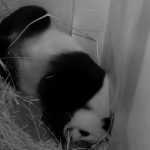
“She immediately picked up the cub and she’s cradling it,” zoo spokesperson Pamela Baker-Masson tells DCist/WAMU. “We’ve already heard the cub vocalizing and those vocalizations are a very good sign of health.”
All in all the labor lasted close to three hours, which is close to how long it took Mei Xiang to give birth back in 2013.
The zoo believes Mei Xiang, 22, is the oldest giant panda in the United States to have given birth.
While this is all great news, unfortunately, the zoo’s panda cam did crash due to “exceeding our bandwidth” leaving watchers unable to see the actual birth.
However, even if the panda cam was working, it’s unlikely watchers would have seen much anyway with the birth happening so quickly.
“It’s not a slow process… the cub is very small,” Baker-Masson said earlier Friday. “And, what we’ve seen previously is that it will sorta … shoot out.”
In the coming days, Mei Xiang and her new cub’s keepers will continue to look for other mothering behaviors, like how she cradles the cub, keeps it warm (by breathing on it), and nursing.
“We are all going to be looking for signs of nursing, listening for nursing, and looking for it on the panda cam,” says Baker-Masson.
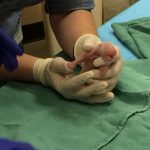
For the most part, the keepers won’t interfere with Mei Xiang’s mothering. At some point, they’ll give the cub an exam when mom steps out for a snack, but they are pretty much leaving it all up to her.
“If she just does what her natural instincts tells her to do and what she’s done to her previous cubs, she’s going to be in good shape and so will the cub,” says Baker-Masson.
The zoo is most likely doing a DNA test to determine the cub’s sex and will work with Chinese colleagues to name the baby panda in about 100 days.
It was mid-afternoon on Friday when Mei Xiang began exhibiting behaviors that indicated she was going into labor. This includes body licking, restlessness, and spending more time in her den.
“She brought more material back into the den, bamboo and hay, to build her nest. She’s also very, very sleepy,” said Baker-Masson. “She may rest for a bit … but she’s trying to get comfortable.”
Panda cubs at birth weigh about 1/900th the size of the mother, making it one of the smallest newborn mammals compared to the mother’s size. They are about the size of a stick of butter when born, and can reach up to 300 pounds as an adult.
Excitement around a potential birth began to swell last week, when veterinarians detected fetal tissue and a developing skeletal structure during an ultrasound. Both mama and cub appeared to be healthy with the zoo saying last Friday that Mei Xiang could give birth within the next few days.
And a week later, that’s exactly what happened.
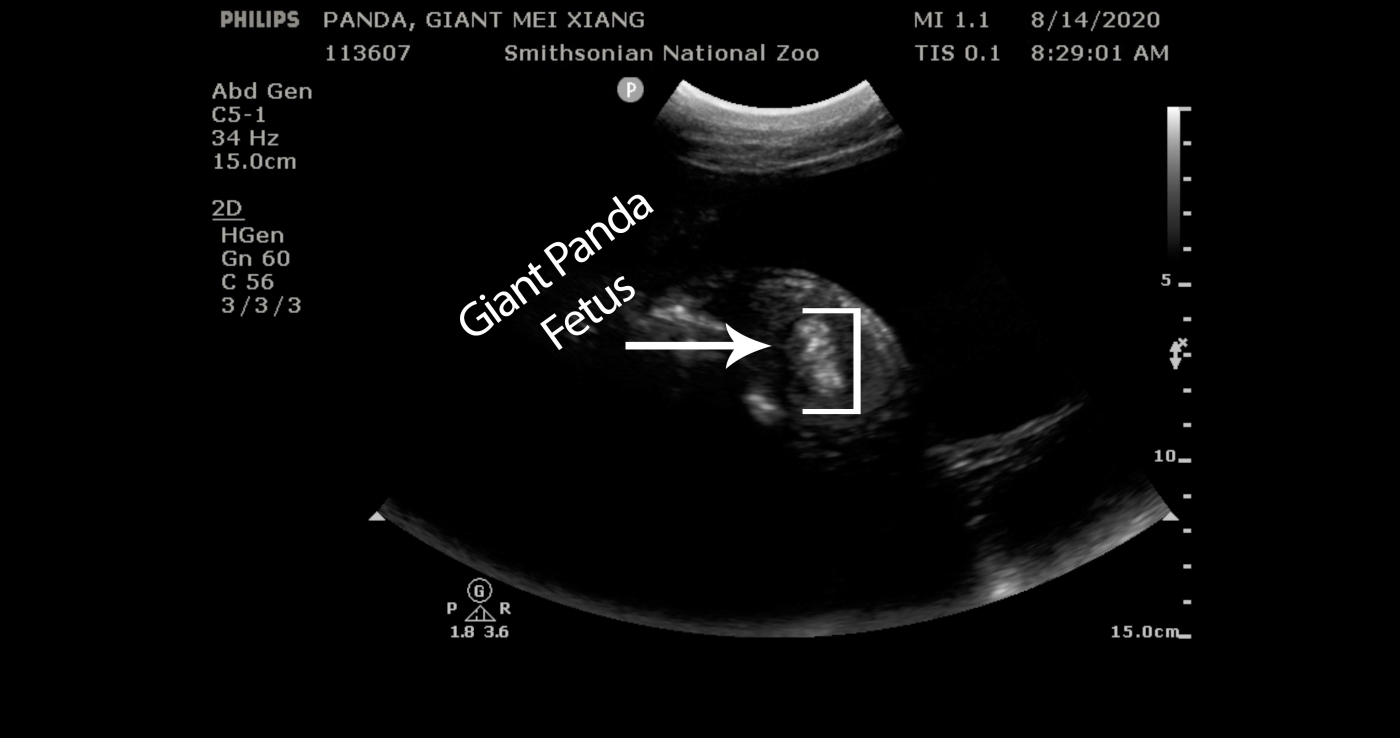
Mei Xiang’s ultrasound on August 14 detected tissue “consistent with fetal development.”
Mei Xiang was artificially inseminated on March 22 with semen from her cub daddy and fellow zoo resident, Tian Tian.
The new cub’s arrival is a cause for celebration, in part, because of how much effort it takes for a panda pregnancy to happen.
Even in the wild, pandas are surprisingly bad at making more pandas. For one, their mating period lasts only a few days a year. They also rarely seem interested in mating and often fail at the mechanics. Veterinarians with panda programs typically inseminate female pandas instead of waiting for a rare moment of natural copulation.
After insemination, pandas can undergo something called delayed implantation. The embryo floats around inside the uterus for days, weeks, or even months until it eventually attaches to the uterine wall and starts developing. Delayed implantation makes it very hard for veterinarians to predict when a panda might give birth following artificial insemination.
Then there are the fake pregnancies. Pandas, like dogs, mice and other mammals, can experience “pseudopregnancies,” in which the animal displays behavioral and physiological changes consistent with pregnancy, but is not, in fact, pregnant.
Things can still go awry once a panda does indeed become pregnant. Giant pandas are one mammalian species that can resorb fetuses during pregnancy. As late as last week, the National Zoo cautioned that Mei Xiang could still resorb or miscarry the fetus. Scientists haven’t figured out why this happens.
Mei Xiang has previously given birth to three surviving cubs — Tai Shan, Bao Bao, and Bei Bei — all of which now live in China. All cubs born at the zoo move to China when they are four years old, as part of the zoo’s cooperative breeding agreement with the China Wildlife Conservation Association.
Visitors eager to see the new cub face-to-face might have to wait a while: Though the zoo reopened to visitors in early July, the panda house is currently closed to provide a peaceful environment for Mei Xiang and her new cub.
In the meantime, you can still get a good look at Mei Xiang and her baby on the zoo’s live panda cam (if it’s not overloaded).
This story has been updated with the announcement of a baby panda and additional information.