 Christian Zapata
Updated 1:21 a.m. on Aug. 28
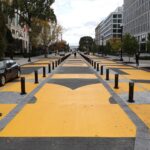
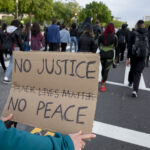
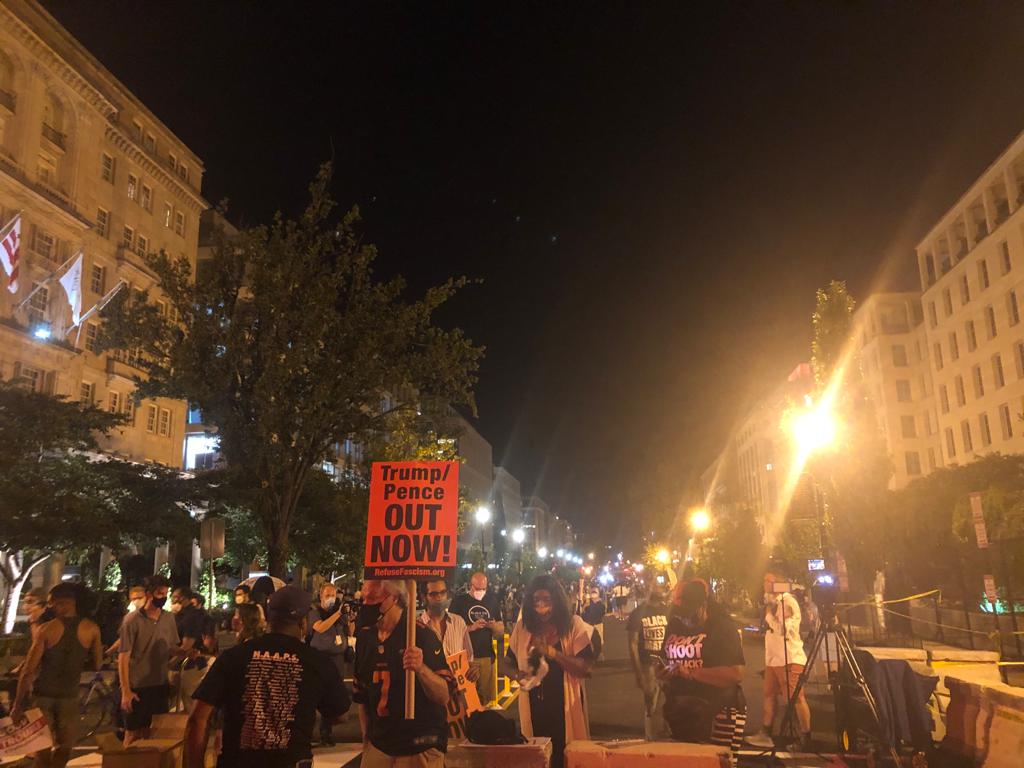
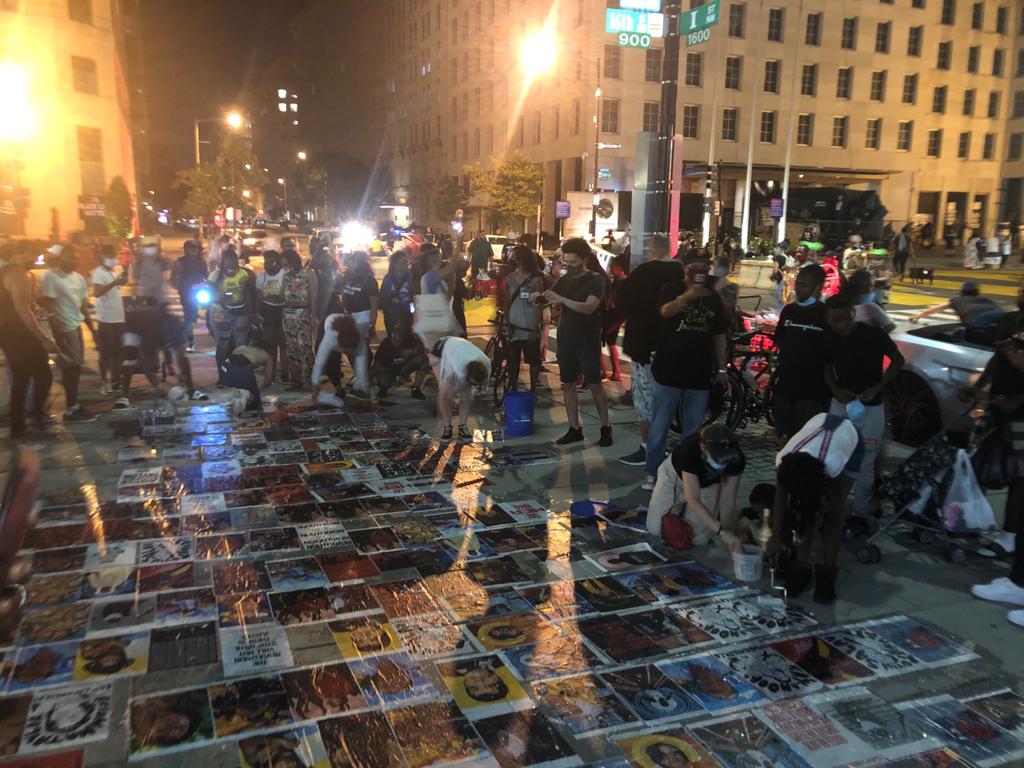
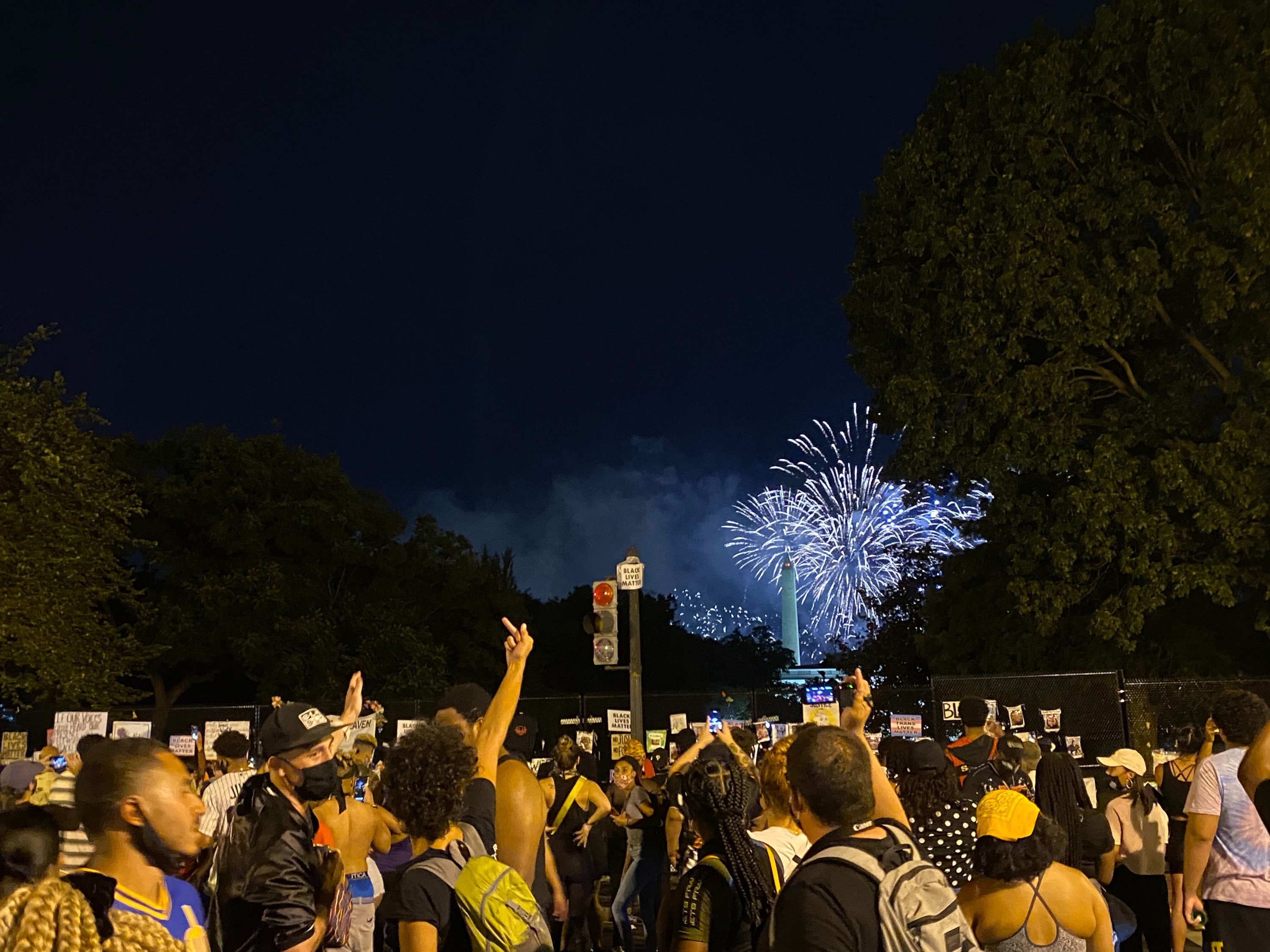
The last night of the Republican National Convention saw hundreds of people around Black Lives Matter Plaza protesting racial inequality and police brutality, booming go-go music from nearby bands and buses, and President Donald Trump’s name flashed across Washington’s skyline in fireworks.
Groups of locals and out-of-town visitors started gathering at the plaza around 6 p.m. in typical protest fashion, sporting banners and flags, beating drums, and chanting along to the rhythm (some of them even took time to meditate). At one point, police sectioned off a pair of counter-protesters who chanted “all lives matter.” One of them was identified as Jacob Wohl, a far-right conspiracy theorist.
Made my way near the White House to start what’s sure to be two days jam-packed with protests. Been a while since I’ve seen BLM Plaza bustling with activity like this. Hundreds of people, music blaring and the smell of incense in the air. pic.twitter.com/MYRyCVp0hH
— Alejandro Alvarez (@aletweetsnews) August 27, 2020
By around 8 p.m. the crowd size grew to hundreds, and confrontations between police and protesters escalated.
A fireworks display was scheduled at the conclusion of the RNC, but onlookers and viewers at home may have heard something else in the background — go-go music.
The band Long Live GoGo announced earlier this week it would stage a show in front of the White House as President Donald Trump accepts the official Republican nomination, with the goal of drowning out his speech. Around 9 p.m. a yellow school bus, or “hoop bus,” and an accompanying go-go band arrived, and the band started playing music as protests grew larger in size, and confrontations between demonstrators and police grew tense.
The GoGo band is chanting “Trump gotta go” as police let the group march down 15 towards Constitution #dcprotest pic.twitter.com/iU6kTCT47X
— Jane Recker (@janerecker) August 28, 2020
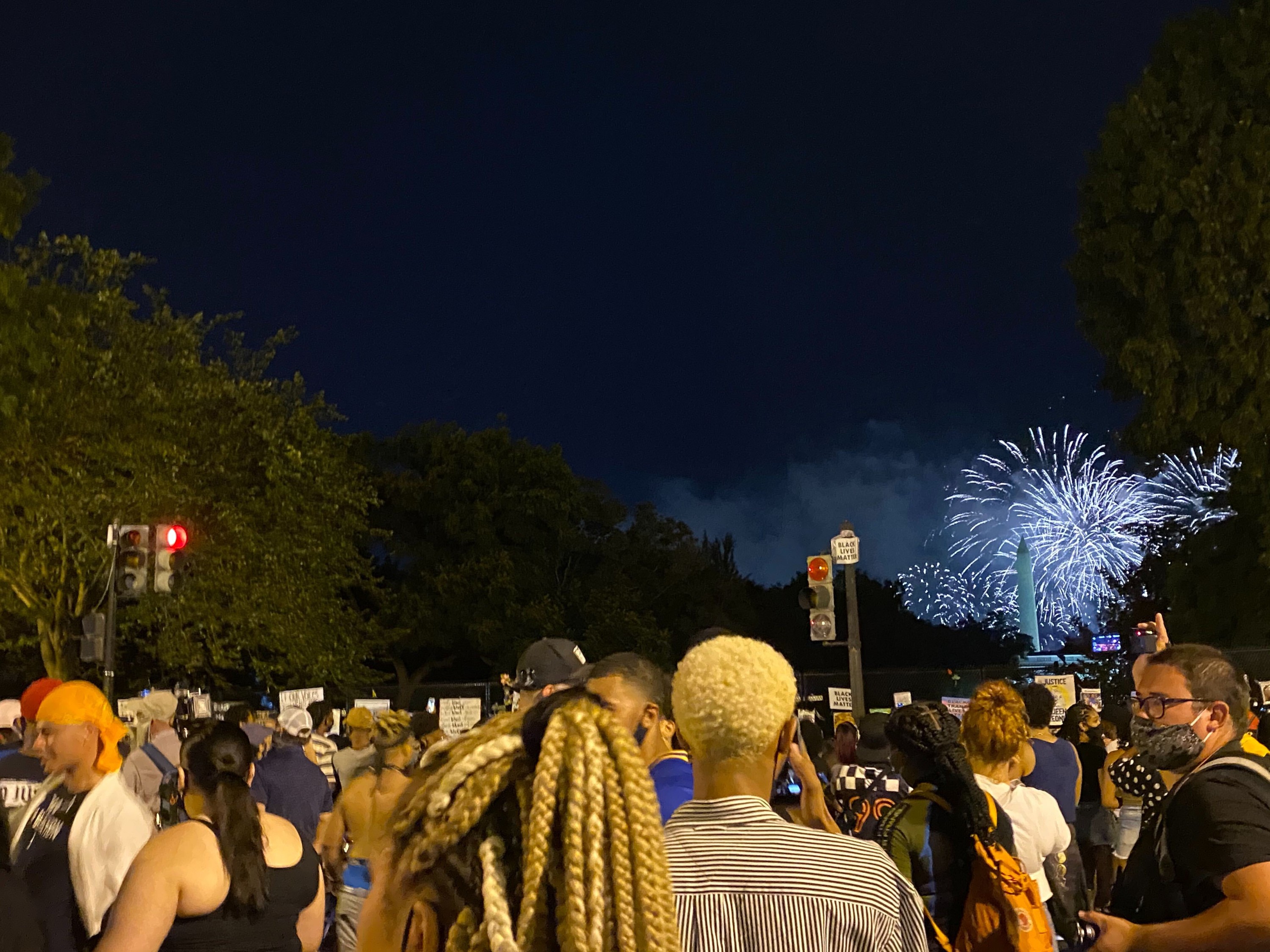
As Trump delivered his speech on one side of the White House, the other side was filled with energetic protesters. Parts of the crowd fed into the go-go bus’s rave-like atmosphere, with airhorns and the crashing sounds of pots and pans dominating the space. Ahead of the scheduled fireworks show, protesters set off a couple of their own fireworks in the street. By 11 p.m., the crowd thinned out and was generally calm and upbeat as they waited for the convention to end and the fireworks display to begin.
The fireworks spelled out Trump’s name in bright lights, followed by “2020.” Afterward, tenor Christopher Macchio performed opera highlights, “Hallelujah” and patriotic songs from the White House balcony.
At one point protesters confronted a man wearing blackface, and one of them slapped him in the face. The situation then escalated, resulting in at least two arrests.
Some people at the protests came to town to attend Friday’s March on Washington. Terri McClendon arrived in D.C. from Chicago on Thursday and said she’s attending the march because of the police brutality and injustices happening to Black people. She expects a lot of people will attend tomorrow’s event and that she’ll draw on a sense of unity.
McClendon is most excited to hear Martin Luther King III speak and hear about the experiences of families who have lost loved ones to police brutality.
She said she wants to see change come from this summer’s protests. “Change in the institutions of racism, change in the systems: the redlining, the gerrymandering, the police brutality, the voter suppression, the unconstitutional felonies they keep putting us in, the imprisonment, the mass incarceration, change, across the board change.”
Sixty-nine-year-old Alice Lewis attended the protest with McClendon. When asked what she hopes will come out of this weekend she said, “I agree with her.”
This isn’t Lewis’s first protest; she is by some accounts a “professional marcher.” She said she sang “We Shall Overcome” with the Freedom Riders — the group of civil rights activists, including the late Rep. John Lewis, who rode buses across the South to challenge segregation in public transportation — in Mississippi during the 1960s. She’s attended a handful of marches since.
“I think this is different, it’s a little more exciting,” she said.
Lewis said the current generation of activists means well, but needs stronger leadership to lead the movement, like Martin Luther King Jr. was when she was young.

Nyesha Rowland said this was her first protest of the year. She added that she found it ironic there were fireworks at the end.
“It looks like they’re celebrating the success of all they’ve done for the pandemic, but it’s like they aren’t telling the whole truth because people’s faces, people who need their voices heard are out here screaming and yelling,” she said. “But inside they’re celebrating. It’s very ironic.”
The twenty-four-year-old said it makes her reflect on the state of the country. “There’s no way they could have a full picture. It doesn’t seem there’s representation inside. It’s hurtful, and I’m just tired of all of this.”
Rowland attended Howard University and spent some time away from D.C. to pursue her career. She lives in Los Angeles and came back toward the start of the pandemic. She’s been here since and still considers the District home.
When she saw Trump deploy National Guard troops at earlier protests, it made her feel uncomfortable, like she could be targeted if they saw her walking among protesters. She attended Thursday’s demonstration, she said, to draw strength.
“I came out here to be a part of it, where I know people, where I feel like there’s more of a community for me,” she said. “I support the movement, and I hope that a lot of people on the inside can kind of see what we’re seeing and hear our voices and make the changes that need to be made.”
This story has been updated to include additional information and comments from protesters.
Jenny Gathright and Debbie Truong contributed reporting