 Victoria Chamberlin
 Jenny Gathright
 Elliot C. Williams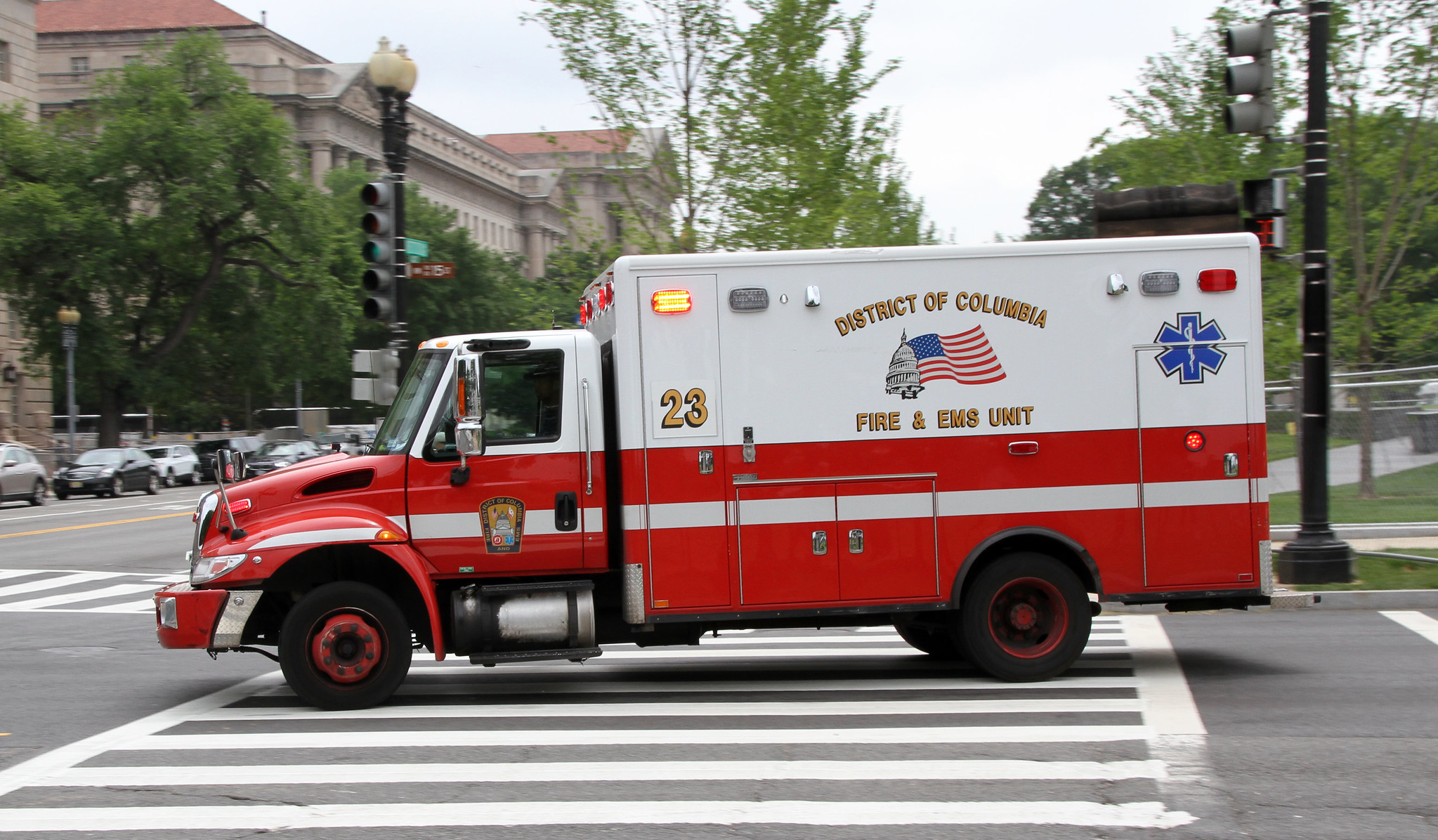
Update 09/04/2020: D.C. Mayor Muriel Bowser nominated a new chief of the D.C. Fire and Emergency Medical Services Department on Friday, following the retirement of the five-year leader of the department, Gregory Dean.
Bowser nominated John Donnelly, a former associate fire chief and a 28-year veteran of the department. From behind a facemask, Donnelly held back tears thanking his family for helping him get to this point.
“I had no clue that one day I could become Fire and EMS chief,” Donnelly said of his first day as a recruit in 1992. “I was just worried about not messing up that first day.”
Bowser also thanked Gregory Dean for his time as chief, and Dean gave an address with parting advice to Donnelly and the department as he retires: “If we take care of each other and take care of our residents, life is pretty easy,” Dean said.
Asked why he retired now, Dean cited his 50 years in total in the service, and added that he initially planned on retiring in May but decided to postpone because of the responsibilities that came during the COVID-19 pandemic.
Donnelly said his first priority as chief would be focusing on the department’s budget for the next fiscal year and making sure the city’s administrators are “comfortable with my leading style.”
“To the men and women who have worked with me over the past 38 years, from you I have learned how to be an EMT, a paramedic, a firefighter, an officer, a father, and a husband,” he said. “I hope to emulate the best of all of you as the Fire and EMS chief.”
Donnelly has to be approved by the D.C. Council before officially becoming fire chief.
Original:
Gregory Dean announced his retirement Thursday, after five years as Chief of the D.C. Fire and Emergency Medical Services Department. Dean was appointed by Mayor Muriel Bowser in 2015 to lead the 2,100-member department.
A spokesperson for D.C. Fire and EMS confirmed his retirement, and said a formal announcement is expected Friday morning.
FOX5 reporter Lindsay Watts tweeted a screenshot of what she said was an email Dean wrote to staff. “Today, as I announce that I will be retiring from DC FEMS, I am awed by what I know about you and the caring that each of you bring to the residents of the District,” the email says. “I look forward to watching proudly as you continue to be a leader in the fire service and in EMS, and especially your willingness to ensure the safety of our residents.”
Dean was tapped by Bowser to take over D.C.’s troubled department in 2015 after it faced a series of challenges. The city’s ambulances needed replacing. There were reports that first responders failed to respond to 911 calls. And response times were especially slow in the neighborhoods east of the Anacostia River, where residents are overwhelmingly Black.
In 2016, Dean wrote in an op-ed in the Washington Post describing his approach to changing the agency, which he said was struggling to respond to a sharp increase in calls for service.
“I heard loud and clear from the mayor, D.C. officials and residents that the community’s demand for emergency medical services had outpaced the department’s ability to deliver them,” Dean wrote. “EMS call volume had climbed 20 percent since 2010, but EMS resources remained stagnant. We spent our days chasing calls and trying to get our units back from the hospitals. Our firefighters and emergency medical technicians have not had adequate time to participate in regular training, and our vehicles were tapped out and breaking down.”
After Dean, now 70, assumed his role in D.C., the city began contracting with a private ambulance company, AMR, to handle less urgent 911 calls, which Dean said helped cut average response times by almost 1 minute and 20 seconds by 2017.
But calls for service continued to rise. D.C. Fire and EMS medical director Dr. Robert Holman told WAMU last year that calls had gone up by 40% since 2011, in part because of a rise in substance abuse. Holman said the District’s per-capita call volume was among the highest in the country. The agency began implementing a program that tried to reduce ambulance rides by calling more non-emergency patients rideshares and sending them to clinics.
The goal of diverting patients in this way was to connect people with long-term primary care and conserve ambulance resources for serious emergencies. As of last year, diversions were not that common, but some residents said the change eroded their faith in 911.
Dean referred to these challenges and policy changes in the email on Thursday. “I have learned how proud I am of your passion, ingenuity, and willingness to address challenges with me such as high call volume; improving our training, patient care, and apparatus; bringing in AMR; establishing Hands on Hearts and the Right Care, Right Now Nurse Triage Line; and doubling down on our emphasis on safety,” Dean wrote.
Most recently, Dean led the agency through the coronavirus pandemic. At least 140 Fire EMS personnel have tested positive for COVID-19, and more than 2,000 personnel have been in quarantine at some point because of potential exposure to the virus.
Prior to his appointment in the District, Dean served for 10 years as the Fire EMS chief in Seattle, Washington, where he began his career as a trainee in 1970. While part of the Seattle fire department, Dean served as fire marshal, assistant chief of administration, deputy chief of personnel and deputy chief of support services.