Jacob Fenston
 Jordan Pascale
Updated at 1:20 p.m.
Metro’s Rail Operations Control Center is a “toxic workplace,” filled with “racial and sexual comments, harassment, and other unprofessional behavior” which has endangered riders, according to a new audit by the Washington Metrorail Safety Commission. It finds the workers charged with keeping Metro trains running safely 24 hours a day, seven days a week across 91 stations, are doing so in an environment that “includes distractions, fear, threats and conflicting instructions.”
The audit notes that despite previous reports that have “repeatedly raised alarms” following fatal incidents in 2009 and 2015, Metro management has failed to create a culture of safety at the operations center. Rather, the center’s culture is “antithetical to safety,” according to the scathing report, creating “a variety of safety risks for everyone who depends on Metrorail.”
The WMSC is an independent safety watchdog, created in 2017 following the deadly L’Enfant Plaza smoke incident in 2015. The commission’s new audit includes 21 findings that Metro must address. This follows a report from December 2019 that found “dysfunction in the [Rail Operations Control Center] during unplanned events and emergencies that includes yelling, conflicting instructions, and the failure to use checklists.”
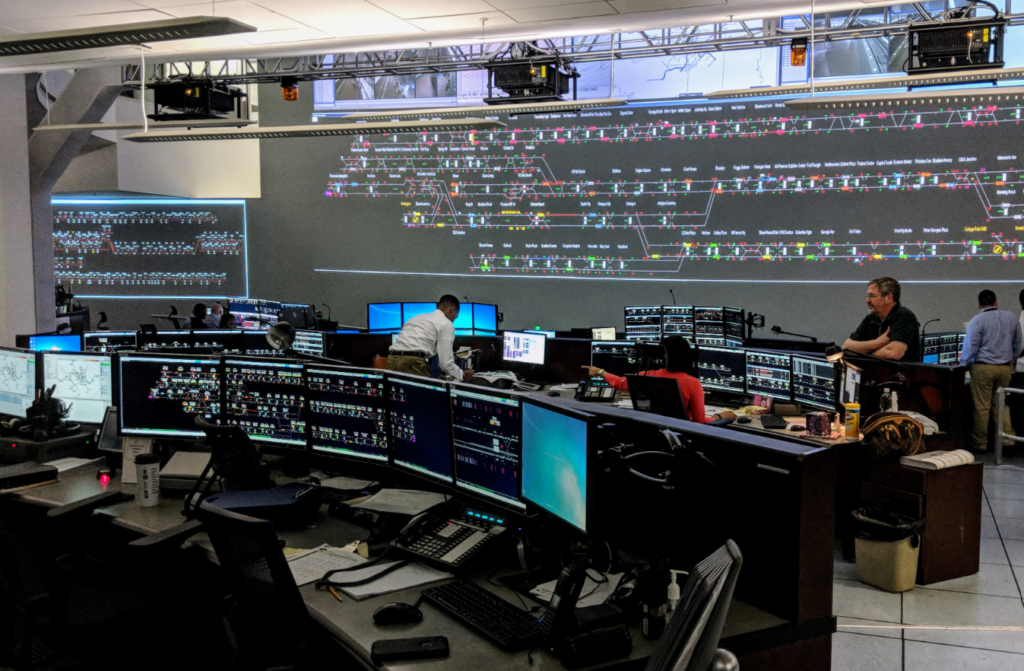
Investigators interviewed 21 of 26 rail controllers, reviewed documents and radio communications and observed operations for the audit.
David Mayer, CEO of the WMSC, says the transit industry has challenges in its control centers.
“[But] we believe there are some unique challenges to Metro’s Control Center that are cultural,” Mayer said. “They’re not technical.”
Metro did not want to comment on the report. WMATA’s board is meeting Thursday to discuss an improvement plan for the ROCC.
Mayer said he has confidence that Metro leadership understands what needs to be done to fix the issues.
“The WMSC will pay very careful and close attention in the weeks and months ahead to ensure that the problems get addressed adequately,” he said.
Metro has 45 days to respond to the audit. The transit agency must propose “specific and achievable planned action” for each of the 21 deficiencies in the report, and identify a person responsible for implementation and an estimated date of completion.
Low Morale, High Turnover
The workers interviewed described an environment of harassment, where managers used racist, sexist, and homophobic language, issued conflicting instructions, and ignored safety training.
“You don’t listen because you are nappy headed,” a controller reportedly heard a manager say. “If you don’t train this student, I will have [Vice President of Rail Transportation] come down and walk your black ass out of here.”
“I wonder if you taste as good as you look,” another controller reported hearing, directed at a female employee.
“When management comes down to the console, they talk [to] you any old way. They yell. They curse,” another controller told investigators.
Controllers reported unwanted physical contact, and said that one lower-level manager may have been intoxicated at work.
Managers also threatened retribution, investigators found, and “baselessly threatened controllers with arrest or termination for following procedures or asking questions.”
The dysfunctional environment made it hard for controllers to do their job, creating low morale and significant turnover, according to the report. There was a 27% attrition rate among controllers over the past year, according to the audit.
In June, Metro ousted Deltrin Harris, the then-director of the control center. “A strong safety culture requires constant vigilance and continuous improvement,” Metro General Manager Paul Wiedefeld wrote in a memo at the time. “The [Rail Operations Control Center] must be the backbone of that culture.”
Metro is now hiring a new director for the ROCC.
‘Tolerating Disrepair’
In addition to a toxic workplace, the audit also found numerous other ways the control center’s management is endangering riders. These include interfering with investigations, failing to act on safety problems when they’re reported, failing to establish adequate communications during emergencies, overworking fatigued rail controllers, and not providing adequate training.
Controllers described to investigators a culture of “tolerating disrepair.” When they reported safety concerns to management, the concerns were not acted upon, sometimes for years, “leading controllers to believe there is no purpose to continuing to report the problems over and over again.”
As an example, the audit cites controllers’ reports of sections of track where trains regularly lose speed commands from the control center — a dangerous problem that can make collisions more likely. Controllers reported sections of track near 16 stations where loss of speed commands occur on a regular basis. In some cases, the audit found, the same areas experienced the same problems for years with no fixes, despite controllers’ reports.
The audit also found controllers were overworked and exhausted, and the center was understaffed. Investigators reviewed schedules and found controllers regularly worked longer days and longer weeks than Metro policy allows. Controllers are not supposed to work more than six days in a row without a 24-hour break; if they must work seven days, they are supposed to get 48 hours off.
However, schedules and interviews showed controllers working more than 10 or 20 days in a row, with some stints as long as 29 consecutive days. Controllers also worked longer than Metro’s 12-hour-a-day cap, according to the audit. Management does not allow breaks during shifts, the report says, “even raising questions when controllers go to the restroom.” The report notes that these staffing practices cause fatigue, which “creates impairment and increases the risk of an accident.”
Metro has had trouble hiring and retaining employees in the highly-technical job, though it is launching a new recruiting plan to fully staff the ROCC by December 2022.
All of that plays into safety for riders, according to Max Smith, communications director for the WMSC.
“[The ROCC] is really the heart of the system as far as how it actually runs,” he said. “That’s why this is such a big focus for us.
“Each of these issues could pose a safety risk, which is why we’re raising it so that it can get fixed,” Smith continued.
‘Training Is A Joke’
The audit also raised serious concerns about how controllers are trained for the job. Controllers said their initial training was a waste of time, and that once on the job, managers told them to ignore what they’d learned, “instead directing controllers to use alternative methods to address issues like brake problems.”
“Training is a joke. It doesn’t prepare you for the job,” one controller told investigators. “You are starting over after training when you hit the floor.”
One employee called the certification process for controllers “a farce.” The same scenarios are used year after year in certification and recertifications tests and are known to those being tested, according to the audit. This allows people to prepare for the test without acquiring a broad knowledge of safety protocols. And, the report says, the bar is set low in the certification process. For example, in a fire and smoke simulation, controllers can meet requirements even if it takes 29 minutes to turn on ventilation fans.
Controllers also told investigators they did not participate in emergency drills on a regular basis. “This can make real emergencies more stressful and contribute to the chaotic environment in the ROCC,” the report reads.
Metro’s Plan
While a Metro spokesperson did not want to comment on the report, Metro has issued a five-point plan to address the ROCC issues.
The document notes a new vision for the center, which was created by ROCC managers and staff: “Our people are at the center of what we do. We are a world class, safety-driven control center and the best place to work in Metro.”
The plan has short, medium and long-term goals for leadership and performance, roles and accountability, process culture, talent management and training.
Among the recommendations are a new committee that focuses on supporting employees, new uniforms that “reinforce team mentality,” and new checklists to “equip the staff with the tools they need to safely perform their jobs.”
Metro documents show they hope to finish the whole plan by December 2022.
This story has been updated with additional information from a press conference by the Washington Metrorail Safety Commission.