 Daniella Cheslow
This story was updated at 6:30 p.m.
The Virginia Senate on Thursday passed an omnibus police reform bill on a party-line vote, encountering significant Republican opposition despite police leaders in the state saying they could live with many of the proposals. The Senate blocked an effort to end qualified immunity for police officers, ending one of the most controversial proposals to emerge in the special legislative session.
State Sen. Mamie Locke (D-Hampton) patroned the omnibus bill. Locke, who is Black, said it aimed to prevent “loss of life of people who look like me.”
“This bill is not anti-law enforcement, even though it’s been misrepresented as that and demagogued as that,” she said.
The bill would create statewide professional standards of conduct for law enforcement officers and establish a process for decertifying officers who violate those standards. Officers who are decertified would not be able to get jobs at any other law enforcement agency in the commonwealth.
It would also restrict no-knock warrants and prohibit officers from using chokeholds or firing at a moving vehicle unless either was immediately necessary to protect life. The bill would ban police departments from obtaining certain military hardware from the Department of Defense, including tracked armored vehicles, bayonets, and firearms and ammunition larger than .50 caliber.
The proposal included elements sponsored by Sen. Tommy Norment (R-Williamsburg), Sen. Barbara Favola (D-Arlington) and Sen. Joe Morrissey (D-Richmond).
Republicans claimed the bill would diminish police motivation and leave law enforcement at risk. Sen. Amanda Chase (R-Chesterfield) questioned the ability of lawmakers who never experienced the pressure police face to impose deep changes on how they do their jobs.
“It is easy for us to sit here and critique,” she said. “We are limiting the tools for our law enforcement to use, not only to protect themselves in the height of the situation, but to protect the public.”
All 19 Republicans in the Senate voted against the bill.
The Senate delayed indefinitely a bill the House passed that would end qualified immunity for police. That legal doctrine shields law enforcement officers from personal liability for some charges of misconduct.
Several African American senators said they supported the bill.
“We have had these conversations in the Black community for decades,” said state Sen. Jennifer McClellan (D-Richmond). “And qualified immunity has become a shield where we’re afraid, because if something happens there is no recourse.”
Other Democrats said it went too far. State Sen. Scott Surovell (D-Fairfax) vowed to carry a bill on ending qualified immunity in the regular session.
“The issue with this bill is just the unintended consequences,” Surovell said. “We need to stew on this and make sure we’re doing it right.”
The state Senate referred the bill to the Committee on the Judiciary, which voted 12-3 to pass it by.
The omnibus bill was one of the most popular among police amid a cascade of proposals sparked by the killing of George Floyd. Wayne Huggins, executive director of the Virginia State Police Association, said the authors of the bill had met with him “probably six or eight times” and were willing to incorporate amendments from law enforcement leaders.
“We have found them to be sensible, receptive and we can live with that particular bill,” he said at a press conference Thursday.
Other measures generated stiff resistance from law enforcement.
“The greatest threat to our profession is the proposed elimination of qualified immunity,” said Herndon police chief Maggie DeBoard, who also serves as First Vice President of the Virginia Association of Chiefs of Police.
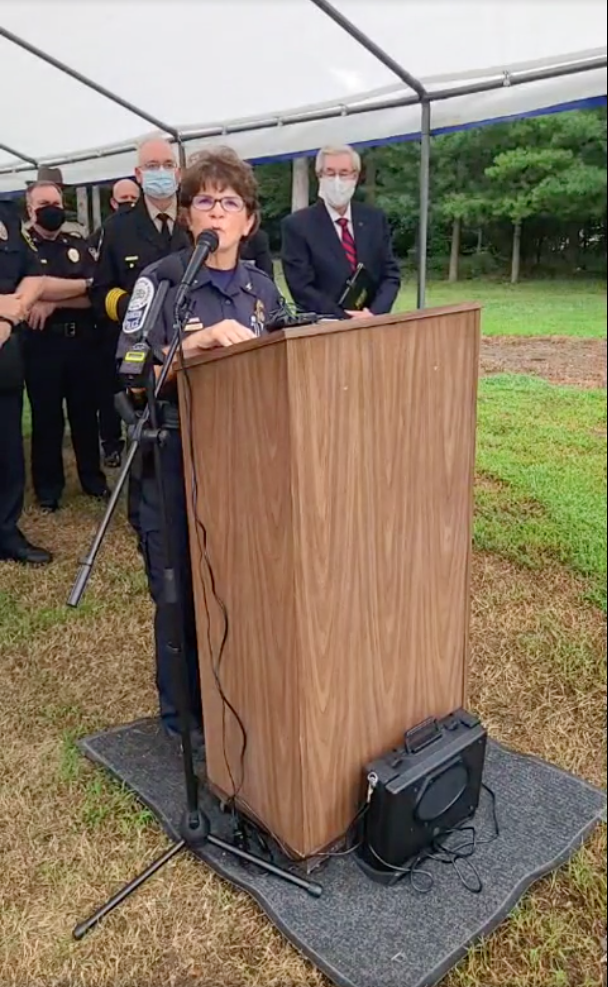
“There is a myth being perpetuated that qualified immunity protects bad cops. It does not, and it has not protected any of the bad cops that I have been a part of firing or separating in my 34 years in the job,” DeBoard told reporters.
Del. Jeff Bourne (D-Richmond) introduced the bill Thursday to the state Senate, which previously killed a similar measure in committee.
“We are really trying to give folks access to justice,” he says.
DeBoard also said she disagreed with a bill the state Senate passed to reduce the charge for assault on a police officer that don’t result in bodily injury from a felony to a misdemeanor.
“This does nothing but encourage additional attacks on our officers or our sheriffs serving on the front lines every day, and it devalues the critical role they are playing in keeping our communities safe,” she said.
Police did not wholly embrace all the elements of the omnibus bill passed Thursday. DeBoard said she disagrees with attempts to ban no-knock warrants and to require warrants be served in daytime unless a judge approves serving at night.
“Many criminal enterprises operate solely at night,” she said. “When you don’t have the ability to make an approach under cover of darkness, and in all cases, you have to first knock and announce your presence, you give violent and desperate criminals time to arm and defend themselves before you come in.”
The special session began on Aug. 18 and legislative staffers say it could last for another three weeks.
On Thursday the state Senate passed a bill to fund the costs of expungement of criminal records for people who cannot afford the fees. The Senate passed another bill to require a court, not jury, to decide on the sentence for crimes in most cases. Lawmakers in the Senate further voted to authorize the attorney general to file a civil suit or launch an inquiry in the case of suspected unlawful pattern and practice at law enforcement agencies.
This story was updated to include the Senate vote on the House bill to end qualified immunity for law enforcement officers, including comment from lawmakers.