Colleen Grablick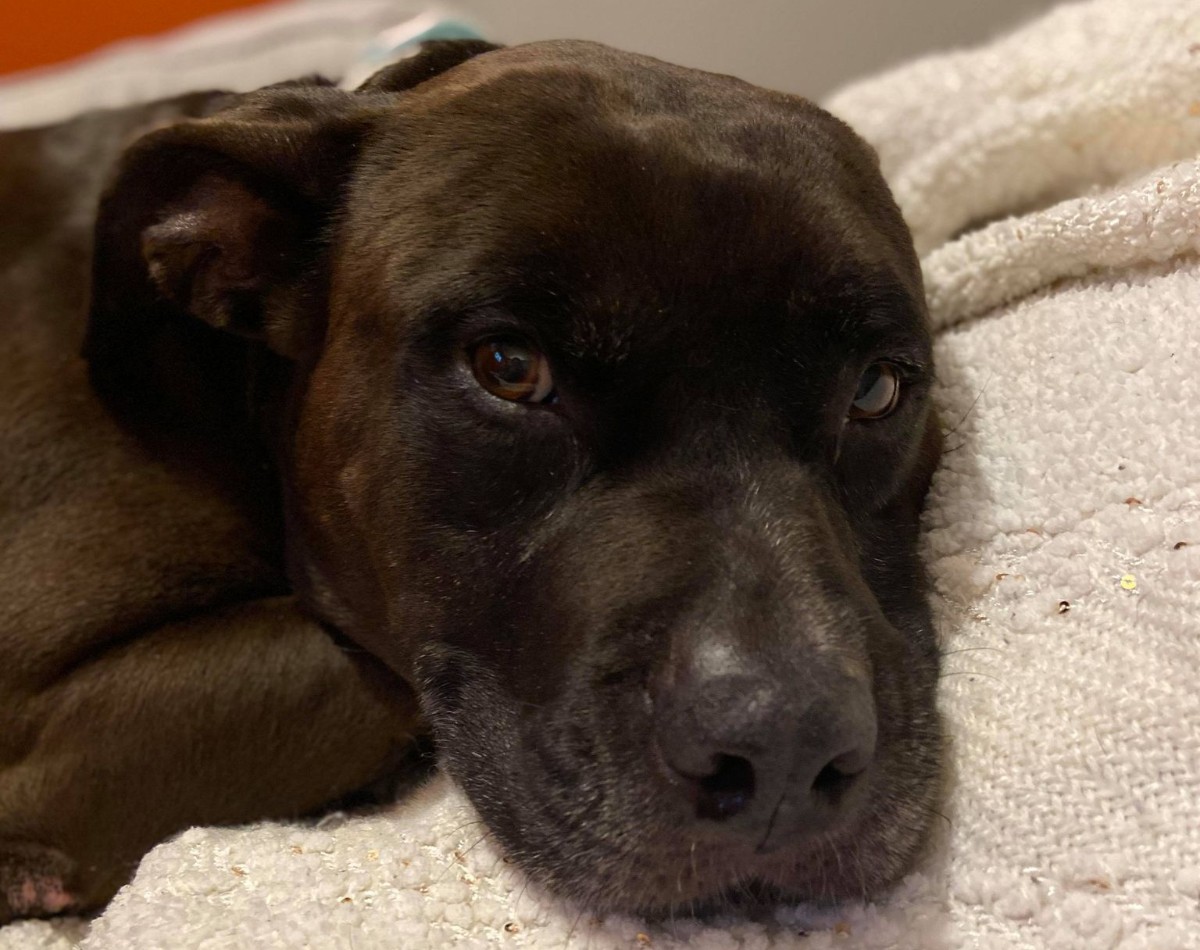
The D.C. region has been in a state of social isolation, more or less, for about six months. Through a series of stories this week, DCist/WAMU is examining life at this point in the pandemic — and what we’ve learned along the way.
Kelly Granger decided she wanted to adopt a dog in February 2020. The first American case of COVID-19 had just been diagnosed, and she was listening to “The Coronavirus Goes Global,” an episode of the New York Times podcast The Daily.
As the reporter, Donald McNeil Jr., outlined a scary future of quarantines and illnesses, Granger began to think about what might help her brace for what was coming. She and her husband discussed an idea that they’d long considered, even before their engagement.
“I got an indication about how serious this might be, and I understood that we might be inside for a long time,” says Granger, who was a fourth-year dentistry student at Columbia University in New York at the time. “So my husband and I said let’s [get a dog] now, why not?”
Weeks and country-wide shut downs later, Granger and her husband welcomed their three-year-old dog, Ruthie, into their lives. Her companionship has been a boon during the last six months of quarantines and social distancing, Granger says—and in that, Granger and her husband aren’t alone. For D.C. residents that have adopted animals during quarantine, the new pets have provided routine to otherwise aimless, amorphous days indoors, a sense of reprieve from pandemic anxieties, and a cure to loneliness during social isolation.
Granger and her husband adopted Ruthie from a local shelter in New York. She was an abused puppy-mill mother who had lived in a cage and for the majority of her life, Granger says. When they first met Ruthie, her fur was patchy, and still-healing sores were visible on her underside. She’d only been bathed once her in life — at the shelter.
“She was a total mess,” Granger says of Ruthie when they first met. “The puppies [at the shelter] went quickly, but we always wanted an older dog who just needed a little extra love.”
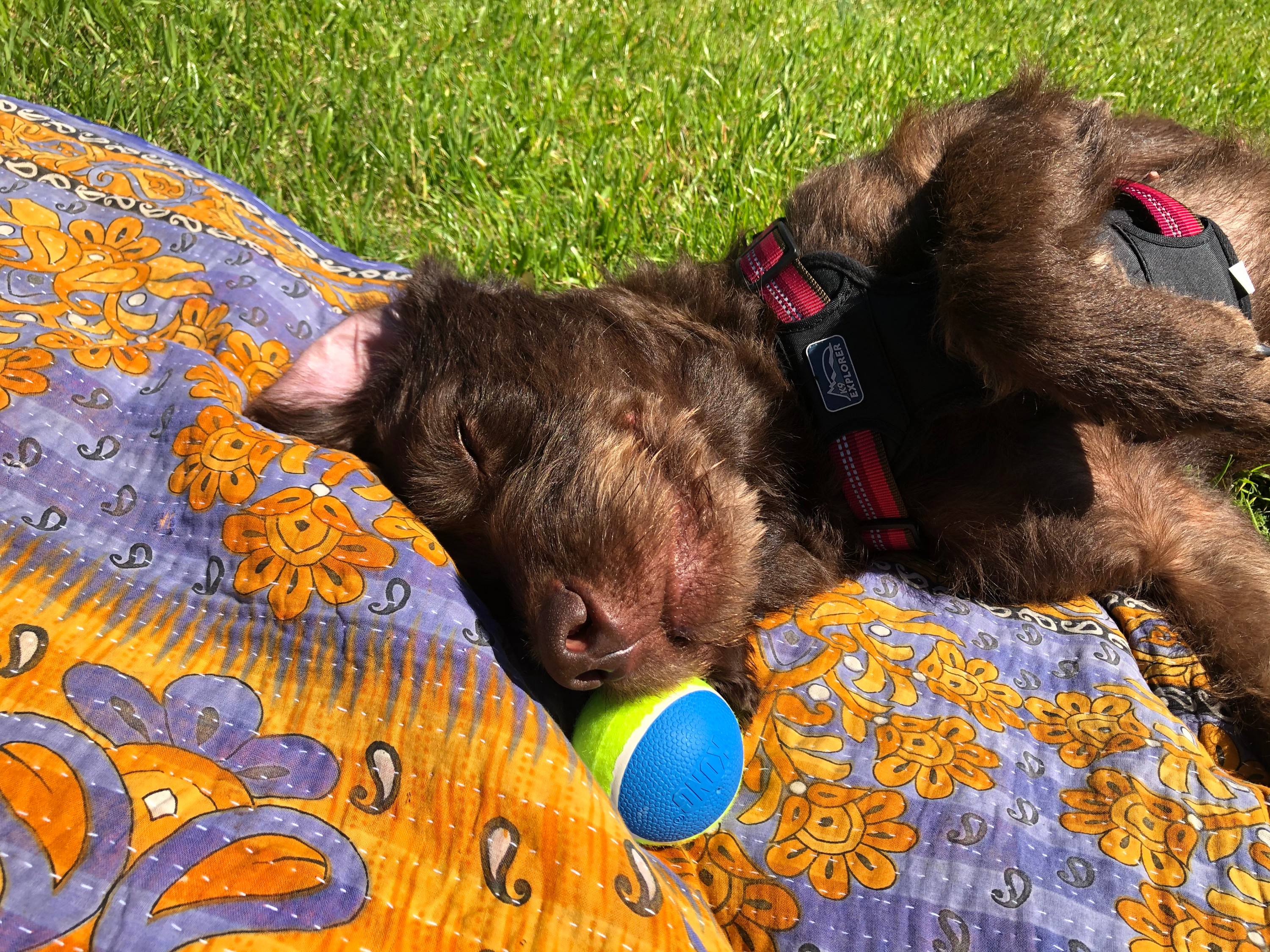
A few weeks after adopting Ruthie, Granger and her husband drove down to North Carolina to stay with her in-laws for a month. Granger says Ruthie brought them “endless joy” during the trip (even though she did get sick in every room of Granger’s mother-in-law’s home). The couple then moved to D.C. in late May, where Granger would be completing her residency at Children’s National Hospital.
Through it all, Granger says that Ruthie has been “an absolute delight,” lightening the heavy weight of the pandemic world. A daily 5 a.m. walk around Shaw (Granger describes Ruthie has her “personal alarm clock”) is now the most-treasured part of Granger’s routine.
“She’s so fun and caring, and when it’s stressful she’s always there to pet. She got us out of the house, especially on those scarier days when you thought you’d be inside forever,” Granger says. “It made quarantine less about us and our fears, and more about taking care of someone else and finding peace through that.”
Like Granger, D.C. public school teacher Lauren Scholl says her one-eyed hound-mix Teddy has added a new sense of structure and accountability to the one-bedroom apartment she shares with her husband— whether it’s needing to escape on a long mid-day walk, or taking time to read up on the best training methods.
The couple adopted Teddy from Lucky Dog Animal Rescue in Arlington, where vets told them he likely lost his eye from a birdshot injury (he also has markings from the pellets along the side of his body). While Scholl says she wouldn’t trade Teddy’s Netflix cuddle-sessions or their games of hide-the-treat-and-seek for anything, she says she faced some unexpected challenges in bringing Teddy into their family. While he is fairly mellow, he can at times be skittish with sudden movements.
“All of the fun stuff has also been balanced with a lot of responsibility. I think we’re in a good place now,” Scholl says. “I definitely wish I’d prepared more ahead of time.”
Scholl says the couple is participating in virtual training sessions to learn about about positive-reinforcement, and are mulling over ways to ease Teddy’s separation anxiety, given that their schedules return to normal at some point in the future.
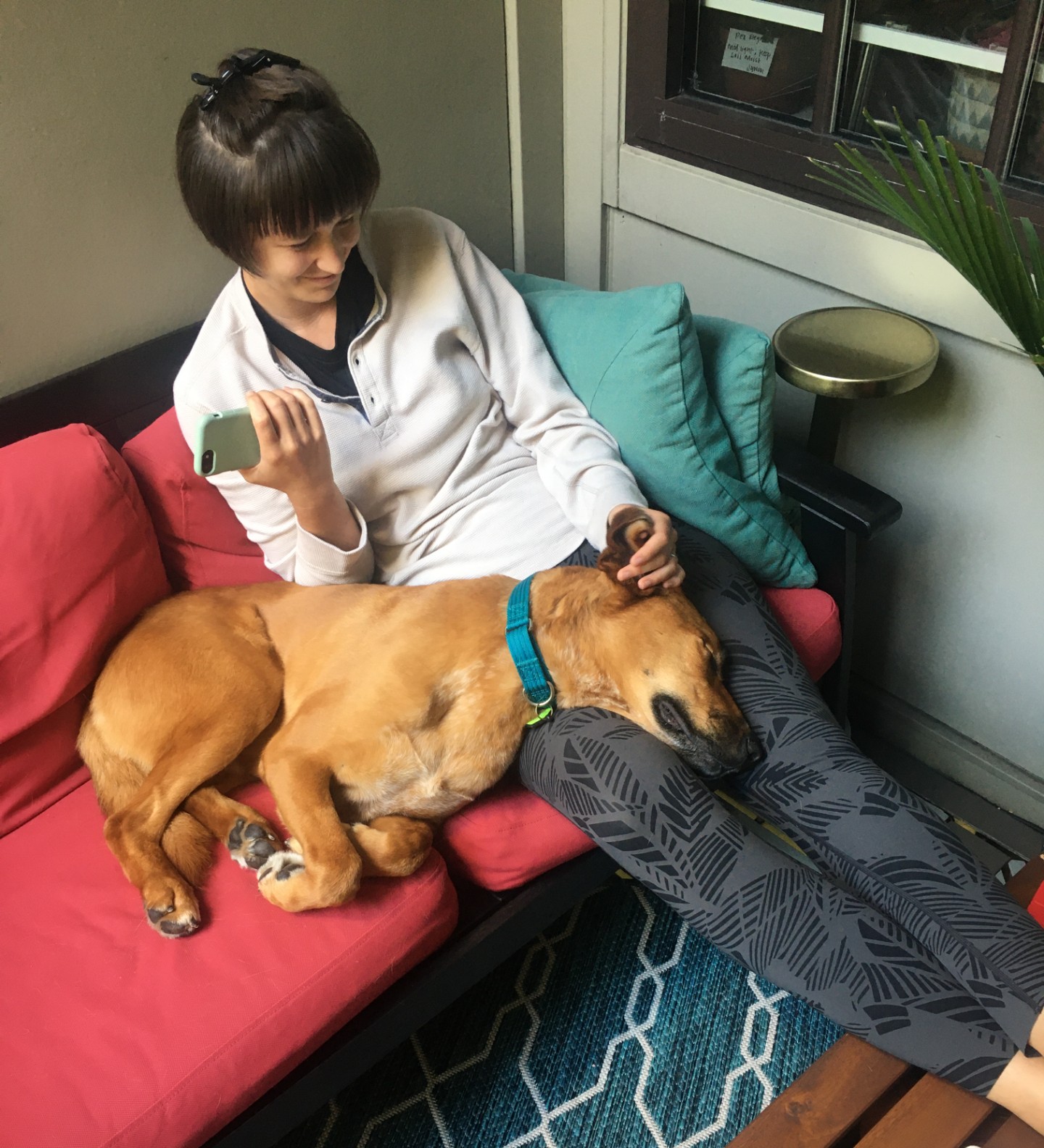
For Mount Pleasant resident Macey Schiff, living with her newly adopted pit bull mix has been fairly smooth sailing — although getting him in the first place proved difficult. In April, so many local residents were looking to welcome a new furry family member that local shelters started running out of adoptable or foster pets — an early testament to the loneliness of in the first weeks of lockdown.
When the shutdown started in March, Schiff sought out any opportunity to dog sit for a friend, or take in an animal in need. An approved foster for the Humane Rescue Alliance, Schiff says that every time she saw a dog pop up in need of fostering, she could never act quickly enough before another foster swooped in. That is, until she met Dante in August.
Schiff says she responded within five minutes of Dante’s listing, and “just fell in love” with him over the course of a long weekend together. She formally adopted him the next week.
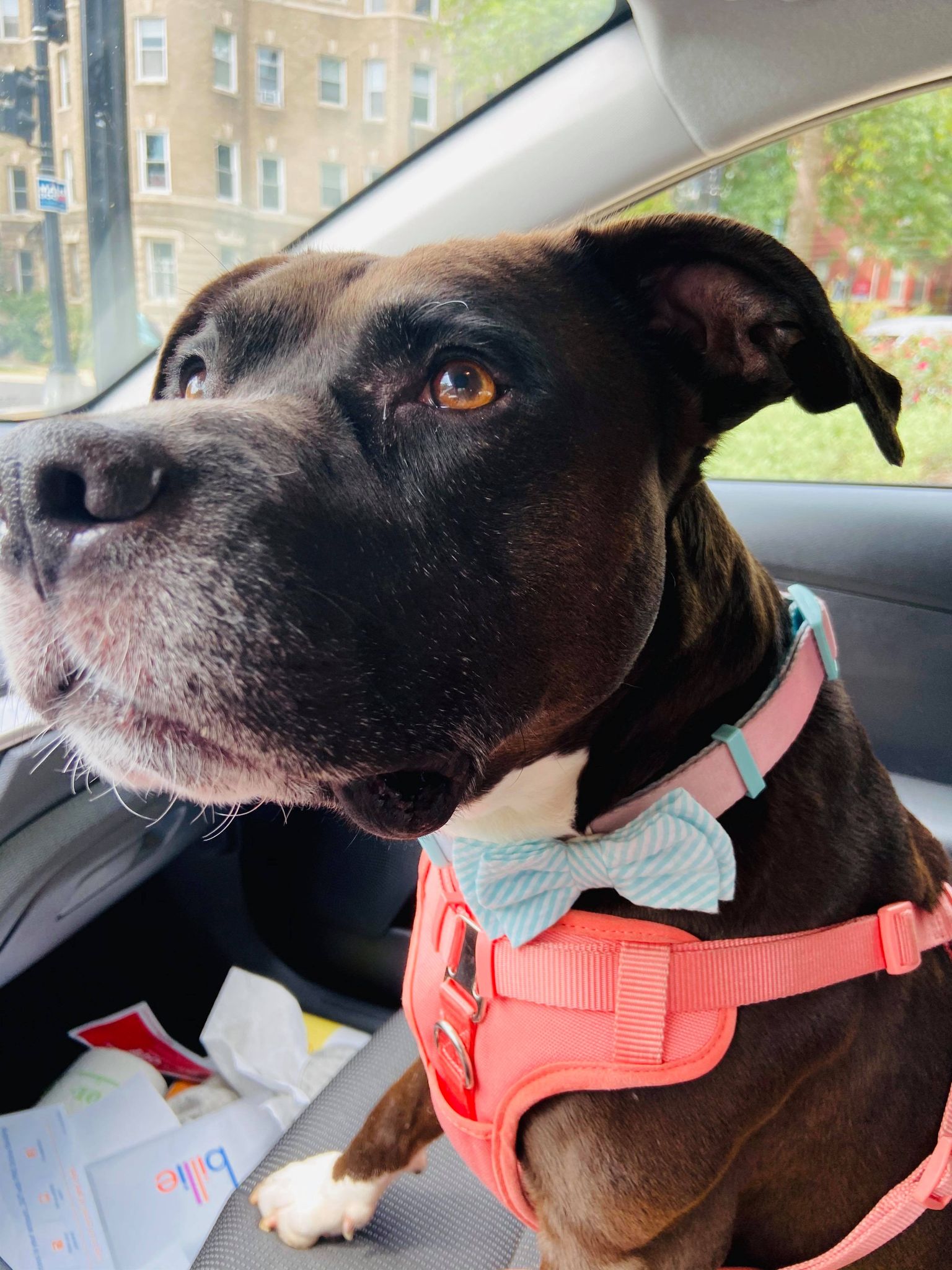
“Because I had so much experience with other people’s dogs, I knew what kind of traits that in an ideal world I’d want to have in my dog,” Schiff says. “I needed a dog that’s at least comfortable home alone, and he truly is — he just sleeps and plays with his toys.”
Schiff, who lives alone, describes Dante as a little shadow following her around “in the best way.” With the local improv theater where she teaches and performs temporarily closed, and many of her friends quarantined with their with partners, Schiff says Dante has been an invaluable antidote to her loneliness.
“I definitely don’t feel as completely alone and isolated anymore,” Schiff says. “I’m the kind of person who used to text people to see if I could borrow their dogs when I was having a hard day mentally or emotionally, but now having him around and having him always ready for cuddles, it’s made all the difference in the world.”
A pandemic, innumerable losses, and social isolation have taken a toll on Americans’ mental health over the past six months — especially those quarantined alone. Adam Carrico lives alone in Northwest D.C., and says he noticed that going days without leaving his apartment negatively impacted his mental and emotional wellbeing.
Before the pandemic, Carrico says he worried that his work schedule wouldn’t leave him with enough time to take care of a new pet. But with his job at National Geographic remaining remote for the foreseeable future and winter quickly approaching, Carrico decided to take the plunge in early August, adopting seven-year-old Chihuahua mix, Gertie.
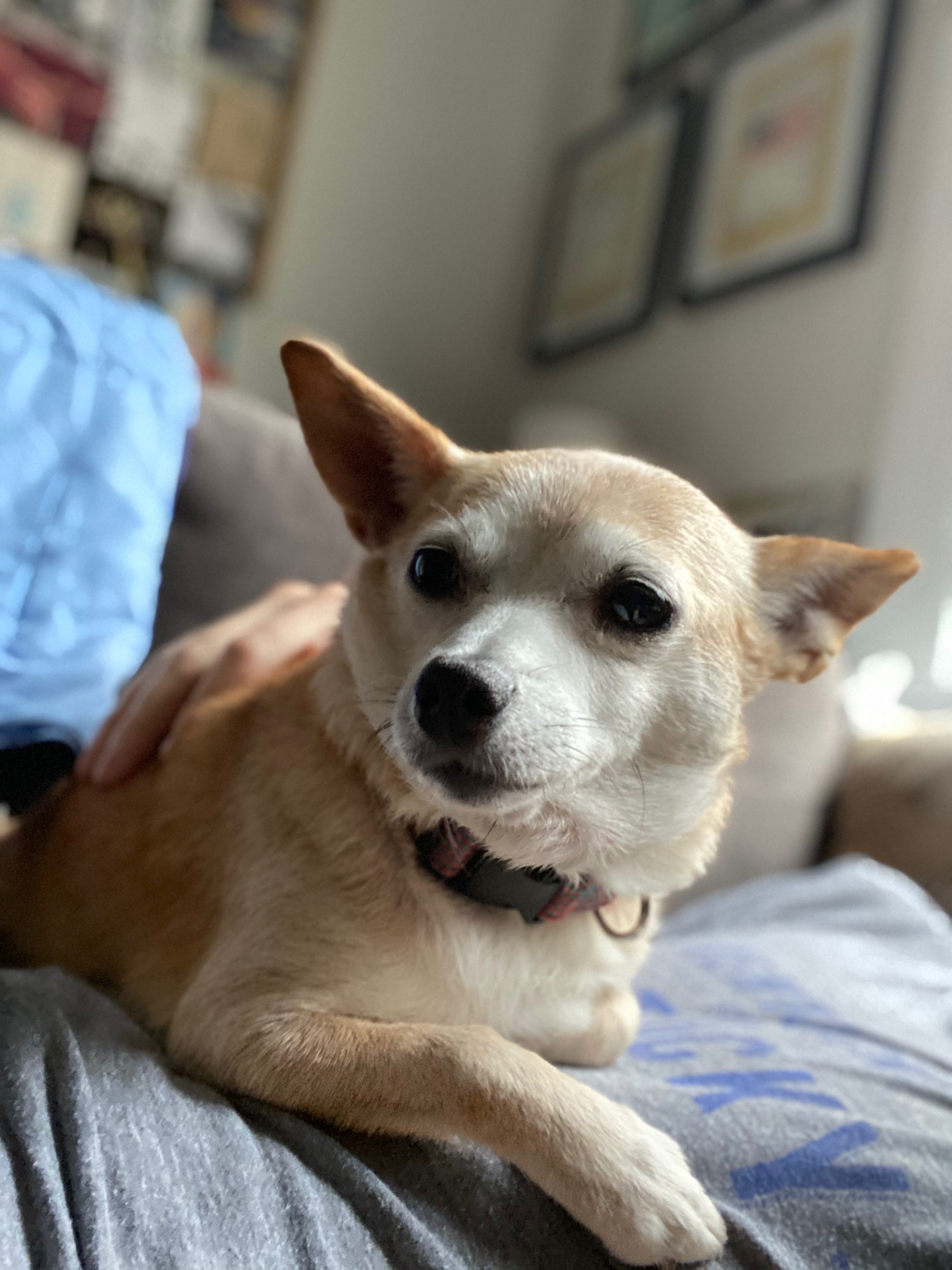
Carrico says the entire process happened in a flash, causing a bit of a last-minute panic. He had lived with dogs growing up, but had never parented a pet on his own. Reaching out to the Humane Rescue Alliance, FaceTiming Gertie’s foster parents, and eventually going to pick her up took only a few days.
“I had a freak out initially, I was like ‘oh my gosh, I just made this huge life decision, I have to take care of this dog,’” Carrico says.
Once he brought Gertie home, though, Carrico says his new role as a dog dad was much easier than anticipated. She’s house trained, rarely barks, and enjoys lounging on the couch.
Echoing the experiences of Granger and Schiff, he says that Gertie’s presence has been influential in easing the anxiety that comes with living through a pandemic. She forces him to take breaks from his screen during the day for a quick walk outside, and makes the perfect addition to his Sunday morning coffee-and-reading routine.
“Having something else to worry about that gets me up and active every single day, and just having that energy around the house is huge,” Carrico says. “The world is definitely a scary place right now, and having something pure like a little dog is just perfect. You don’t really worry about the pandemic when you’re petting a dog.”
This story has updated some of Schiff’s biographical details.