Rachel Kurzius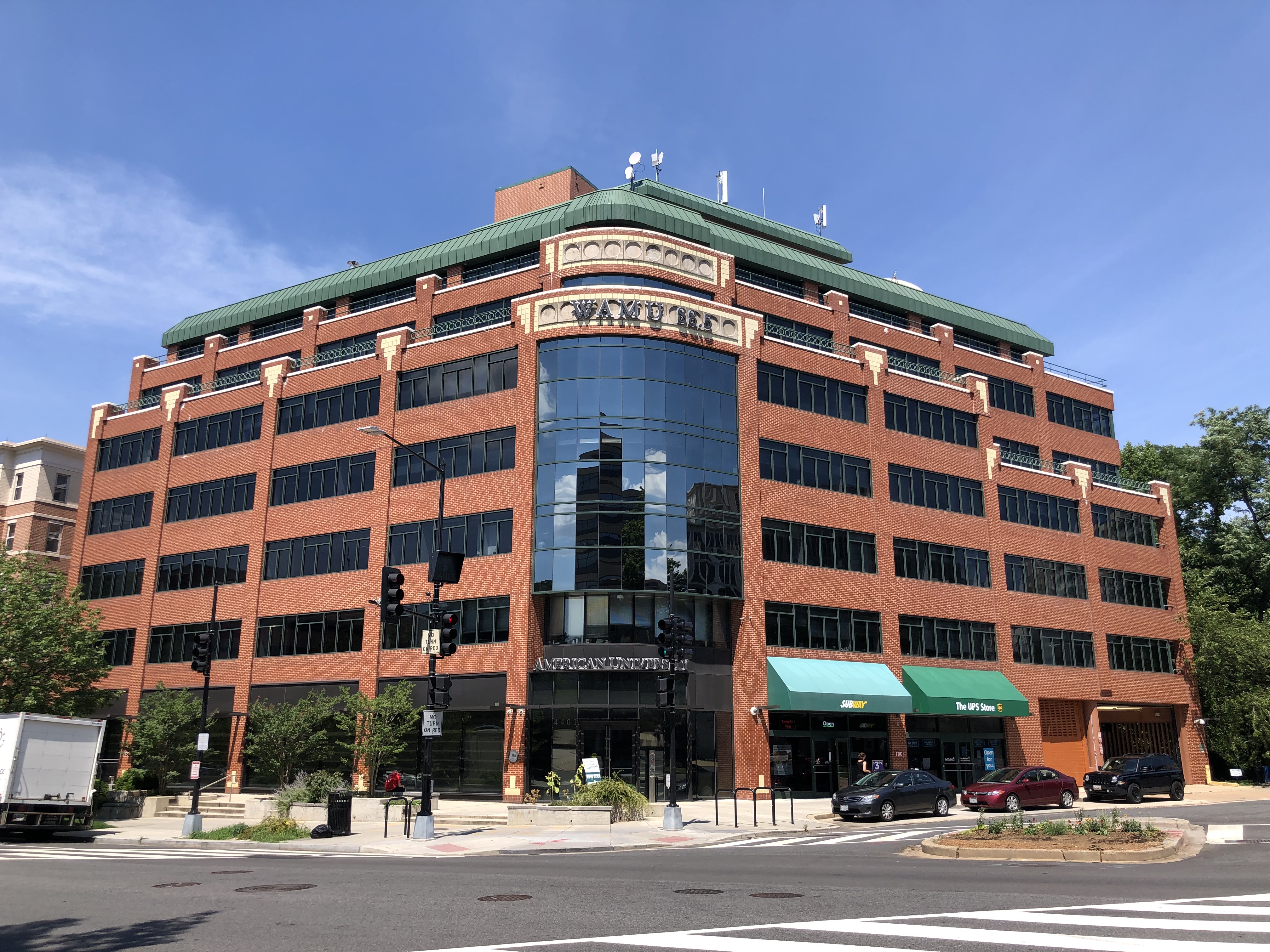
JJ Yore, then the general manager of local public radio station WAMU, faced more than 100 of his employees at a tense companywide Zoom meeting in late July. The subject was a recent DCist investigation that uncovered numerous sexual harassment allegations against former transportation reporter Martin Di Caro during his more than five years at WAMU. Memos showed that the station’s leadership, including Yore, knew about some of the accusations and repeatedly warned Di Caro, one of the station’s most prolific reporters, that any further misconduct would result in his termination. But even as WAMU received additional complaints about Di Caro, he continued to garner professional opportunities at the station until his departure at the end of 2017.
(DCist was acquired by WAMU in 2018. No senior executives reviewed this story before publication.)
At the July staff meeting, employees had pointed questions about WAMU’s handling of the situation, according to recordings obtained by DCist. (This reporter did not attend the meeting.) A summer of simmering discontent over management issues, including the departures of employees of color, came to a full boil that afternoon. Staff members wanted to know how Di Caro received more than one “final” written warning for his behavior and why he appeared to get so many chances at the station. Yore repeated again and again that there was more to the story that he couldn’t share.
“What you want most, I can’t provide — I can’t give you the answers that you want. I’m not allowed to do that,” Yore said. “I’ve spent plenty of time talking to the lawyers and the HR folks and what I can say is I followed all the procedures …. I worked with all the appropriate people at the university and at the station. And I understand that you feel like these systems and processes that were put in place to protect all of us have failed us, and have failed you.” (American University holds the station’s radio license and determines its employment policies.)
News that the station appeared to protect a reporter who was the subject of multiple sexual harassment complaints hit especially hard in light of multiple women of color leaving the station because they felt they lacked opportunities for advancement and dealt with a toxic work environment. Yore faced calls for his resignation. The only complication? WAMU leadership did, in fact, seek to oust Di Caro.
Newly obtained documents show that Yore and other station leadership tried to fire Di Caro as early as 2016, but were overruled by the university’s legal and human resources departments, which preferred to issue a second “final” written warning rather than terminate his employment.
The university contests this. “Department leadership and managers, including at WAMU, have responsibility for disciplinary actions,” said Matt Bennett, American University’s chief communications officer, in an emailed statement. The university, which declined requests for interviews, has presented the turmoil at WAMU as separate from any decisions or policies at AU.
But emails shared with DCist depict Yore and other WAMU leadership crafting their rationale for firing Di Caro, speculating about whether the university would give them the green light, and ultimately being told no.
Barred by the university from revealing this information to station employees, the explanation Yore provided at the July staff meeting did little to defuse the situation. A week after the meeting, Seth Grossman, the head of personnel at American University, announced that Yore was resigning and that the university was introducing “critical steps designed to address issues in the areas of diversity, equity, inclusion, human resources, and management, as well as how matters of misconduct are handled at WAMU.” Grossman was Yore’s direct boss and has been serving as interim general manager at the station since August.
Yore wasn’t the only member of WAMU leadership to lose a job as a result of the turmoil. In early September, WAMU’s former chief content officer Andi McDaniel withdrew from her new role as the CEO of Chicago Public Media, a post she was slated to begin in the fall. Following DCist’s Di Caro investigation, the station’s board of directors had begun looking into McDaniel’s role in the slew of controversies at WAMU.
Ultimately, Yore and McDaniel took the fall for the decision to keep Di Caro around following multiple complaints of harassment and inappropriate behavior. But that choice was not entirely in their control.
The situation is a particularly vivid example of how legal and human resources departments can be more focused on protecting their institutions from legal liability than protecting individuals from employees credibly accused of misconduct — and how policies can prevent a transparent accounting of what actually transpired.
“I may not be able to get agreement from HR/legal on this approach”
Di Caro started working part-time at WAMU in 2012. From that time, dozens of his colleagues, other journalists, and sources say they experienced inappropriate behavior from him: suggestive comments about their appearances, late-night messages, at least one direct proposition to engage in a sexual relationship, and other conduct that made them uncomfortable and made it more difficult to do their jobs. Many provided DCist with evidence like messages and emails to back up their allegations.
He broke his public silence about the allegations in a phone call with DCist in September. “American University always treated me fairly and with due process,” Di Caro said. “I regret having made people feel uncomfortable in a professional setting while I was employed there. No one deserves to feel uncomfortable at work.”
While Di Caro was aware of the investigations into his alleged misconduct, an entirely different back-and-forth was happening behind the scenes — where station management and the university ultimately disagreed on how to discipline him.
The station received at least three complaints alleging sexual harassment and unprofessional conduct from Di Caro. In each of these cases, AU HR conducted investigations into Di Caro’s conduct. The first complaint came from Metro, which said that Di Caro was sexually harassing a spokesperson for the transit agency. As a result, in October 2014 Metro banned Di Caro from the board meetings and the agency’s headquarters.
Yore, who had just become WAMU’s general manager a few months prior, issued Di Caro a “final written warning,” which said that any further violations of university policy would result in termination and required him to take a sexual harassment course. But, even though the transportation reporter was barred from attending key meetings on his beat, WAMU kept him in the role.
Metro granted Di Caro conditional approval to cover board meetings in person again in March 2015, and WAMU hired Di Caro into a full-time position at the station a month later. Hiring decisions required the signoff of both the university’s HR department and station management, including Yore.
The second complaint, which has not previously been made public, came from a news manager at another local media outlet. Less than a year after Di Caro was allowed back into Metro headquarters, the news manager called to complain that Di Caro was sexually harassing a female reporter from his newsroom at the transit agency’s board meetings. (DCist is not naming the news manager or the media outlet to protect the reporter’s privacy. She declined to comment or participate in this story.)
After investigating, Deadre Johnson, AU’s senior director of employee relations, emailed Di Caro in February 2016 that “after reviewing the information I received, I do not see the need for any further action at this time.” She asked him to “please be sure to exercise good judgment and professionalism” in his interactions with the journalist and others at Metro board meetings because “it is troubling to receive a call from an employer regarding this matter.”
Just a few months later, the station received yet another complaint, prompting a new investigation. The cause of this complaint is unclear — and the university declined to comment on it. But it is clear that senior leadership at WAMU assumed this incident would lead to Di Caro’s termination from the station.
(Di Caro told DCist in September that “the allegations about which you ask were investigated by American University and resolved to my satisfaction” and declined to elaborate on the specific details.)
While Di Caro continued to represent the station at news events and on the air, communications from some members of WAMU leadership in the spring of 2016 show that they were making plans for his departure.
“I’m sure you’ve also been thinking about how to handle our transportation coverage after Martin leaves,” Yore wrote to other leadership in a May 16, 2016 email. “I think it likely will take us all week to come to final terms … I’d like to push with the HR and legal folks on being as clear as we can that Martin did some things that required us to terminate him.”
Yore went as far as to draft a statement for the station to release upon his termination: “Martin Di Caro has engaged in a pattern of activity that threatens the integrity and reputation of WAMU and American University,” Yore emailed to other leadership. “As a result, Martin is no longer employed by WAMU/AU.” (Ultimately, the station never released this statement.)
Yore proposed providing Di Caro with “the standard one month’s notice /pay.” WAMU leadership appeared ready to give Di Caro the boot. The only holdup? They weren’t sure the university would let them.
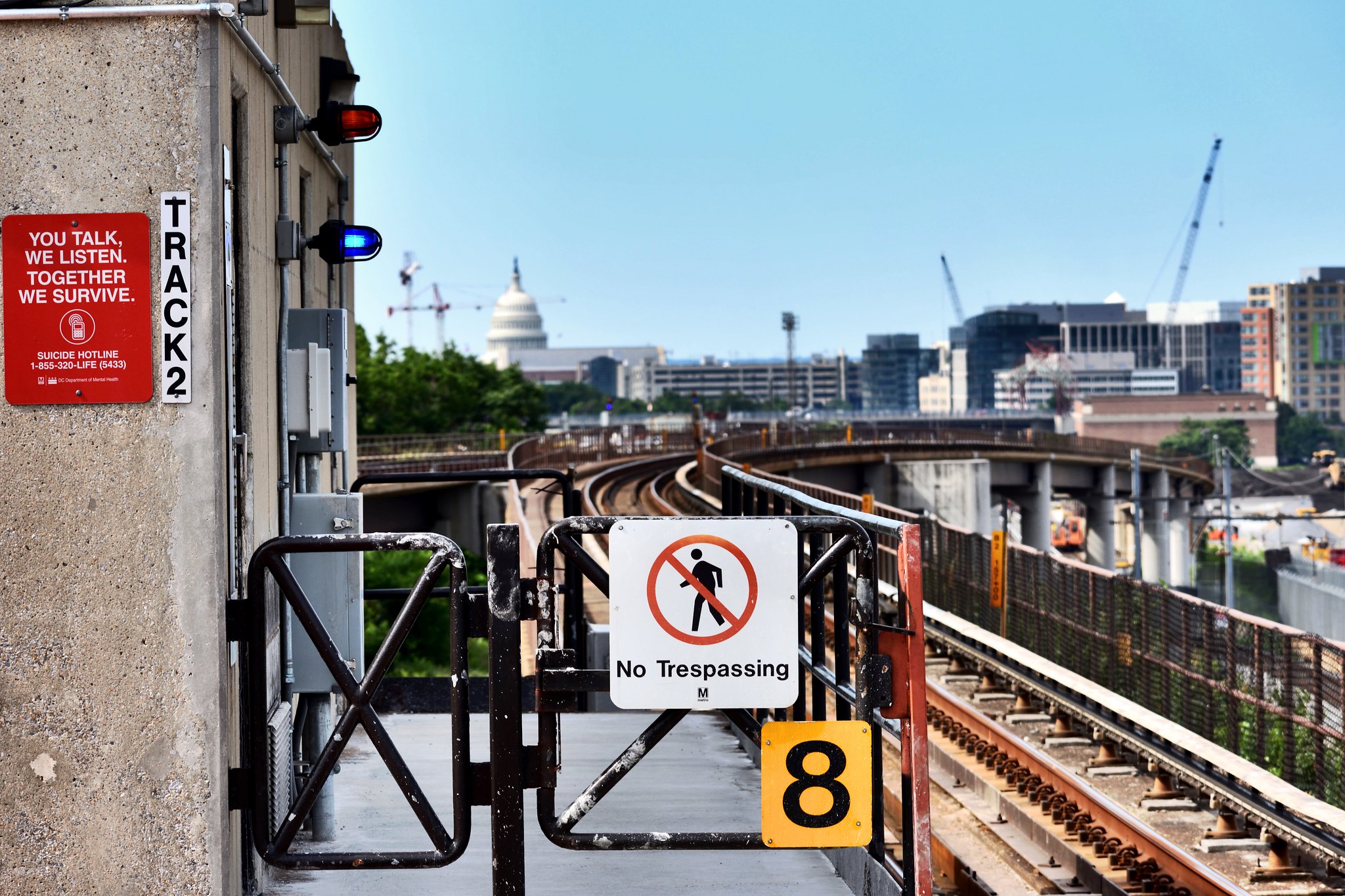
“I may not be able to get agreement from HR/legal on this approach,” Yore wrote. That hunch proved prescient.
“An empty threat”
The university’s human resources and legal departments did not agree with the notion of firing Di Caro, according to additional correspondence obtained by DCist. Yore sent another email to station leadership, in which he appeared to be drafting a reply to Johnson of AU HR. The email indicates that human resources was not on board with firing Di Caro and instead called to issue him another final written warning. Station leadership was trying to push back.
One section of the drafted email to Johnson on May 22, 2016 includes notes from McDaniel. “The issuing of a second Final Written Warning seems to undermine the very meaning of the first warning,” it says. “If we didn’t follow through on the last ‘Final Written Warning,’ which is referenced in the memo, then we are telegraphing that we will not follow up on this one — an empty threat.”
Johnson replied to Yore on May 24. “We are following advice from General Counsel to issue this final written warning,” she wrote. At the time, HR reported to the general counsel’s office. “Martin received the first documented warning in 2014 as a part time employee. Given the facts of this current case, I think it is appropriate to issue this final warning.”
In response to WAMU leadership’s concern that a second “Final Written Warning” would be an empty threat, Johnson wrote that the “thought here is to let Martin know that we ‘considered’ terminating his employment so that he understands the seriousness of the situation.”
Ultimately, the general counsel’s view won out. Di Caro received a “Level III Final Written Warning for Serious Misconduct” signed by Yore and McDaniel on June 2, 2016. (Level III represents the most serious forms of misconduct.) While the memo stated that Di Caro’s “actions and communications have caused some individuals to feel harassed, offended, insulted, and/or degraded,” he kept his job. Like the previous memo, this one ended by telling Di Caro that any additional violations of university policies would result in “the immediate termination of your employment.”
McDaniel told DCist in an emailed statement that “AU’s HR and legal departments take the lead in conducting investigations and determining whether disciplinary action is necessary. In my experience at WAMU, we did not have the discretion to issue the penalty we saw as most appropriate — if that was in conflict with what those experts advised. As for Martin Di Caro, I can’t speak to the specifics of a personnel matter. But I’m deeply disappointed to be held publicly responsible for a decision I didn’t agree with, and didn’t have the authority to make.”
(McDaniel arrived at the station in September 2015, after Di Caro had already been hired into a full-time role there. She wrote in an email to WAMU staff in early August that she “was not aware of and was not briefed on any prior complaints about Martin” when she started her new job.)
Bennett of AU placed the ultimate responsibility for discipline on department leadership, not the university’s human resources department or general counsel.
“There is a consultative process between a supervisor and Human Resources, with advice from the Office of General Counsel as needed, for employment matters in all AU offices, including WAMU,” Bennett said in a statement. “While this is a collaborative process, the supervisor has authority to determine the disciplinary action most suitable to the situation, as outlined in the American University Staff Personnel Policy Manual.”
Bennett pointed to the part of the manual stating that, in the case of the most severe misconduct, “a lesser penalty may be imposed if the supervisor thinks it more appropriate.” The manual does not, however, mention what ought to happen in a scenario like the one that appeared to play out in 2016: when a supervisor seeks a harsher penalty than what the university’s general counsel or human resources departments advise.
A complicating factor in the Di Caro case is that all of the reported complaints appear to come from outside of the organization. Peter Cappelli, director for the Center of Human Resources at the University of Pennsylvania, has observed that allegations of employee misconduct from people outside of the organization is “behavior [that] falls through the cracks a bit,” he told DCist. More broadly, he said that businesses are often “gun-shy” when it comes to legal risk, and “sometimes, they think peril comes with acting to discipline people.”
DCist spoke with four current or former WAMU employees who said they experienced inappropriate behavior from Di Caro but did not file any official complaints with the station or with the university’s human resources department. In each of the three investigations into Di Caro, HR focused squarely on the specific complaints and did not appear to broaden the inquiry.
Even though WAMU leadership team members like Yore and McDaniel advocated for Di Caro’s termination in late May 2016, they continued to give him promotions and other opportunities at the station.
A day after Johnson reiterated that Di Caro should receive another warning rather than a dismissal, WAMU released its first trailer for a new weekly podcast hosted by Di Caro. He became the voice of the station’s first experiment in the podcasting genre.
In a summer 2020 email to WAMU staff shortly after the publication of DCist’s investigation into Di Caro, McDaniel wrote that “I strived to do right by my staff, within the boundaries as I understood them. Knowing the much fuller picture of it all today, I wish I’d handled it differently. In particular, while I did not see the transportation podcast as a reward at the time, I see it differently in hindsight, and understand your outrage.”
McDaniel told DCist, “There’s a critical distinction between the official disciplinary process, which is handled through AU, and one’s work responsibilities. It could set a dangerous precedent to create a ’shadow system’ of discipline in which you use work assignments as either incentives or punishment.”
That second final written warning called on Di Caro to modify his conduct, but women told DCist that he continued behaving inappropriately toward them, including making comments that made them feel sexualized while they tried to do their jobs.
“I feel I must now step aside”
Di Caro publicly announced that he gave his two weeks’ notice at WAMU in December 2017. A few months later, Bloomberg Radio hired him as a contractor.
In the fall of 2017, the global #MeToo movement had cast office power dynamics in a new light, focusing in large part on sexual harassment and other sexual misconduct. It led to a new spotlight on how organizations handled complaints.
WAMU’s internal divisions spilled out into the open in the summer of 2020, when Morgan Givens, a Black, trans producer at the station, accused Yore of threatening to fire him over a tweet about President Donald Trump. (Yore denied that he had tried to terminate Givens.) The incident prompted a public reckoning about the station’s record of inclusivity and work environment as similar debates embroiled newsrooms across the country.
Amid a larger broadside against Yore on Twitter, one former employee tweeted that Di Caro “has engaged in behavior and made comments and that have made many young women in the journalism industry uncomfortable.” Others chimed in with their own experiences with the former transportation reporter.
The social media claims led Bloomberg to temporarily suspend Di Caro as the company investigated. By the time DCist released its own investigation, finding two dozen people alleging inappropriate behavior from Di Caro, Bloomberg had already reinstated him.
“We conducted a review and did not find any allegation or instance of wrongdoing during his time with us,” according to a Bloomberg spokesperson, who declined to provide details about how the company conducted the investigation.
Bloomberg called WAMU for details about Di Caro’s time there and the station remained mum, according to a person familiar with the investigation who was not authorized to speak to the media.
Yore, already facing criticism within WAMU throughout the summer, received even fiercer backlash as memos about the investigation into Di Caro went public. Less than two weeks later, he stepped down as general manager.
“As I have looked back on the past months, I realize that I have not led the station through recent events in a way that has earned and maintained your trust and that trust is essential to our mutual success and to the success of WAMU,” he wrote in an Aug. 7 email to staff. “I regret the sense that I have let you down which is why I feel I must now step aside.”
American University announced it was establishing a task force to investigate WAMU’s workplace culture and added a human resources consultant with a focus on employee relations to “assess past practices within WAMU and between WAMU and AU and provide recommendations on new structures.”
While Di Caro weathered Bloomberg’s investigation over the summer, as of September he is no longer a contractor there. The company declined to comment on the circumstances of his departure.
This story was reported under the guidance of editors Naomi Starobin and Natalie Delgadillo. WAMU and American University senior executives did not review this story prior to publication.