Matt Blitz
Stand outside, aim your ears up, and you might just hear thousands of little chirps, peeps, and honks tonight.
It’s estimated that tens of millions of migratory birds will be soaring through the D.C. area in the coming days, on their way to the southern hemisphere for the winter. That’s on top of the millions that’s already passed through earlier this week.
“I would expect more and more waves to come in over the next few days, says Dan Rauch (or “Dan the Bird Man,” to some), a wildlife biologist with the D.C. Department of Energy and Environment. “If you want to get out and look for migratory birds, this weekend is going to be fantastic.”
Yes, it has to do with the time of the year and the cooling weather, but the forecast should also provide easy flying for our feathery friends: no rain, clear skies, and a gentle breeze.
“We’ve got these very gentle winds coming from the north … They use the winds to, kind of, propel them through. [It’s] a little bit of a boost, helps to sustain energy,” says Rauch. “So, they will ride these northern winds [that] will help push them south.”
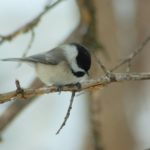
Migration begins in July and can last until November, but this is the time of year when most start their push to warmer climates. That’s when we see the major movements of some of the more common birds in the D.C. area like warblers, shorebirds, hawks, and thrushes, per Rauch.
These birds tend to migrate at night, so it can be tough to see them. However, they are very often heard.
“Listen for little peeps, little chip calls, little buzz calls,” says Scott Sillett, who is the head of the Smithsonian Migratory Bird Center. “They do call to each other as they migrate. We’re not sure what message they are sending, other than ‘I’m here.’ ”
After flying all night, many will land in local tree canopies looking for a rest and a snack, refueling on insects and berries. They could stay among the trees and forests for several days, again waiting for preferable conditions to take flight.
In fact, remnants of Tropical Depression Sally that blew through the area over the last two days probably contributed to a number of birds that arrived here on Tuesday to make a week of it.
This is why Saturday morning will be absolutely ideal conditions for birders in the D.C.-area, Rauch says. Many birds will be taking the early hours to gulp down breakfast and just chill out.
“There’s so many birds out there that the tree canopy is almost humming with activity,” says Rauch.
He recommends heading out to Rock Creek Park, Fort Totten, Lincoln Park, and anywhere along the C&O Canal for great watching. But really, any neighborhood park with trees will have birds this weekend.
“I’ve been downtown, right off the U.S. Capitol grounds and have been able to hear thousands of hermit thrushes and … wood thrushes going over,” says Rauch.
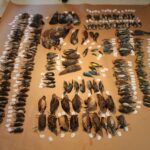
While billions are still flapping, there used to be many more birds in our skies. North America has lost 3 billion birds, or more than 20% of the continent’s population, just in the past five decades. In the D.C.-area, bird population loss is a huge concern. Overdevelopment, climate change, and massive reductions in forests are all huge factors.
One particularly stark example is the staggering decline of the wood thrush, D.C.’s official bird. According to one National Park Service study, the wood thrush could be totally gone from parts of the D.C. region by 2100.
Callie Stanley is a postdoctoral fellow at Georgetown University and research associate with the Smithsonian Migratory Bird Center. She studies how to protect migratory birds, and says that a key to helping them survive is a better understanding of how to share space.
“We often think… that cities are just for humans. But that’s, in fact, not true. And it has never been true,” says Stanley. “The city is an ecosystem and we share this space with other plants, animals, and insects.”
One way that biologists like Stanley and Rauch are doing that is by encouraging people in urban areas to turn out their lights, because birds often fly into windows.
“[Birds] can actually be confused by all the artificial lights generated in cities,” says Stanley. “And it can actually throw their migration routes off … Big buildings turning off their lights can have a huge impact.”
For those looking to be amateur birders over the weekend, Rauch has a few tips. Get out there early, he says, when they are most active. Also, listen more than look. In the fall, most don’t have the fancy breeding colors that they do in the spring, which can make it harder to see them.
But these feathery fellows are there, chirping and peeping away while waiting for the perfect time to continue their journey south.
“The District … is just jumping,” says Rauch. “If you can get out into a wooded area or a wildlife habitat, it’s going to be hard to miss them.”