 Jenny Gathright
 Christian Zapata
Updated 12:00 a.m. on Sept. 19
On the steps of the Supreme Court Building, soft cries and the low murmur of chirping crickets filled the air as hundreds of people grieved the death of Supreme Court Justice Ruth Bader Ginsburg.

Occasionally short bursts of clapping broke out before the crowd resumed its silence (at points they sang “Amazing Grace,” “America the Beautiful,” and “Imagine” by the Beatles).
Surrounded by family in her home in the District, Ginsburg died from complications related to pancreatic cancer on Friday at the age of 87. She was the second woman appointed to the Supreme Court and spent 27 years on the bench. She was a champion for gender equality and one of few remaining liberal voices on the court.
Shawn Boykins, 35, said a friend texted him about the news as soon as it happened. He was in the neighborhood and thought to visit the Supreme Court to pay his respects.
“I can’t help but think about the political implications, but I’m trying to set that aside,” Boykins said. “It just reinforces that a lot’s at stake in the election with so much happening, with the fires, climate change, and everything.”
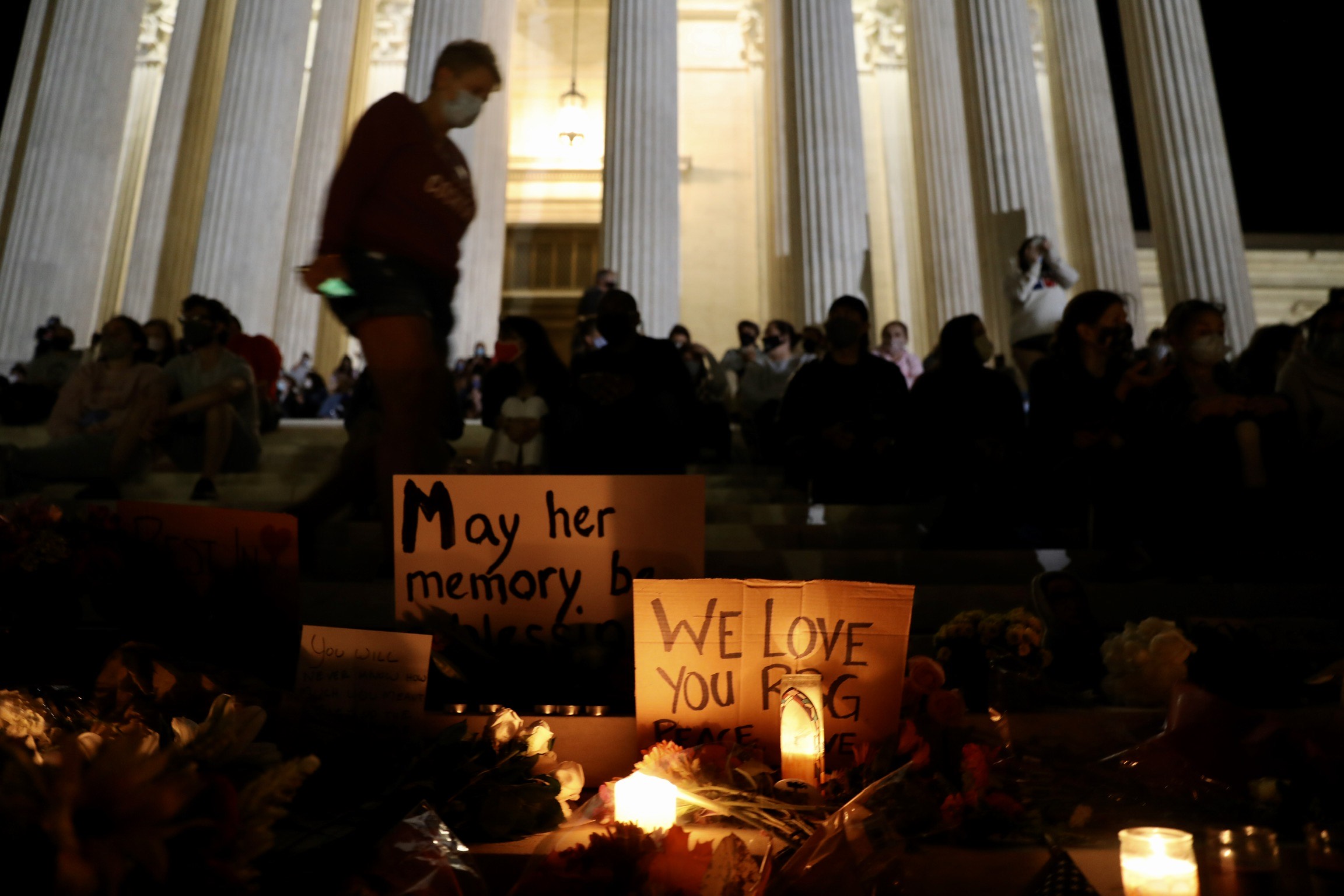
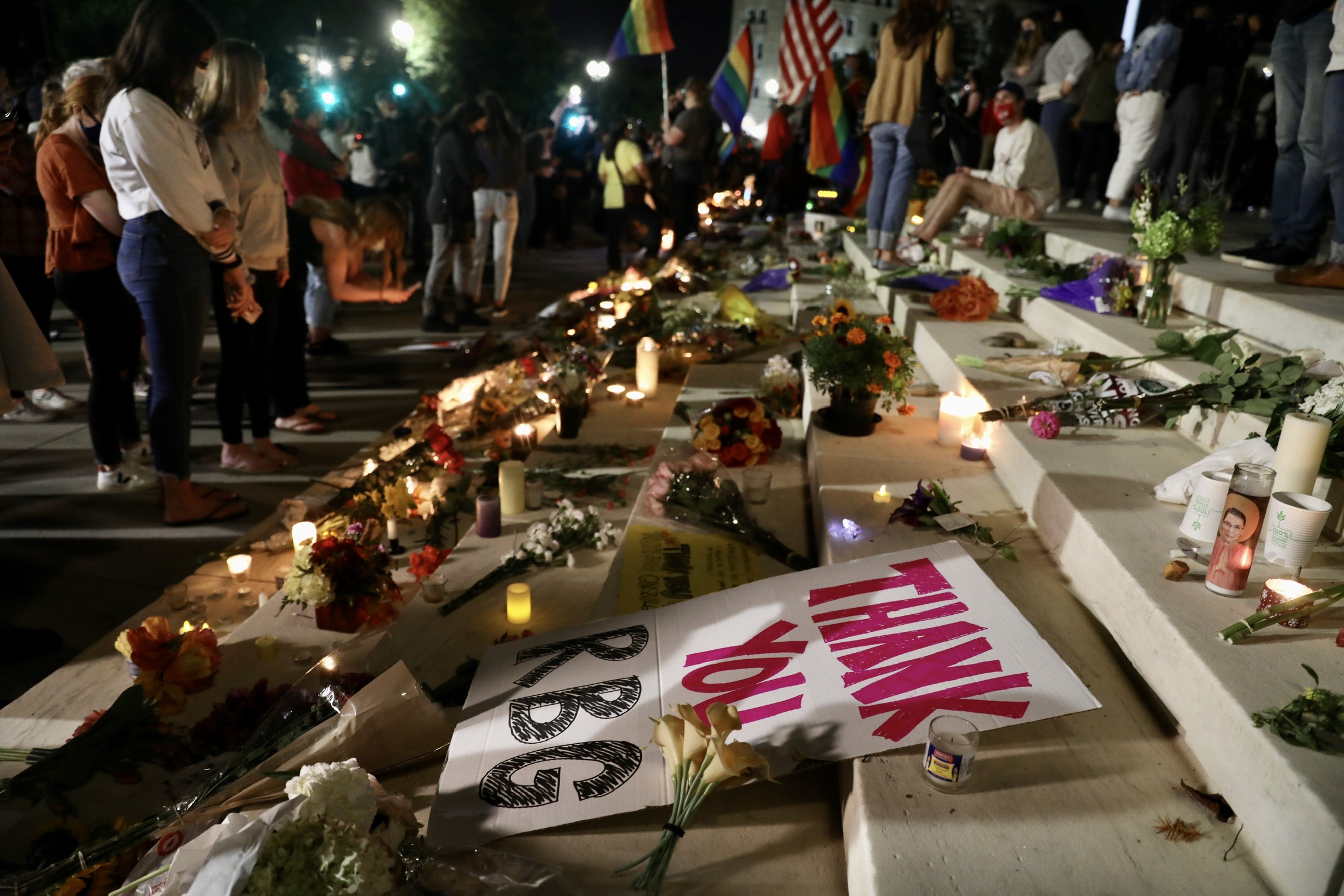
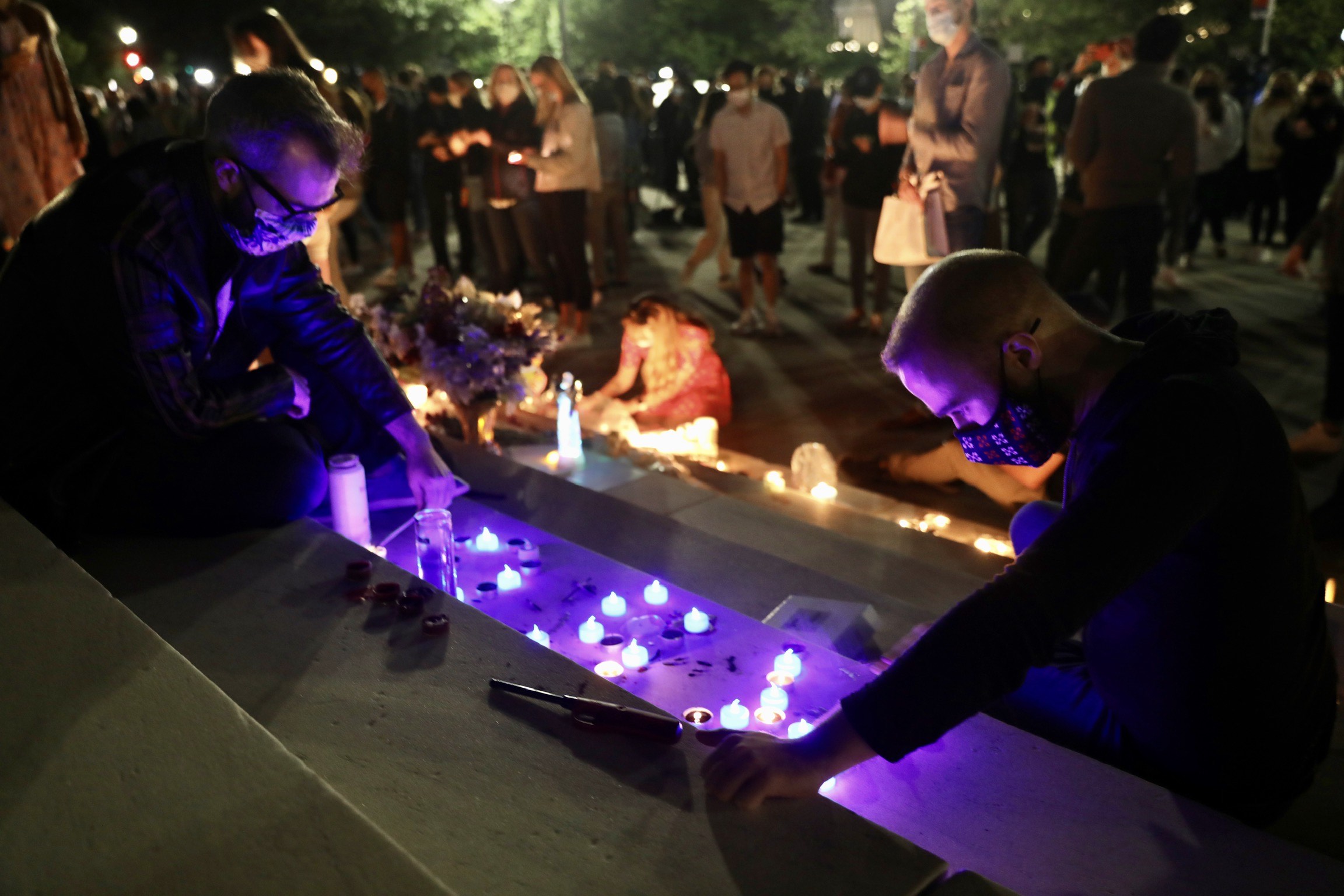
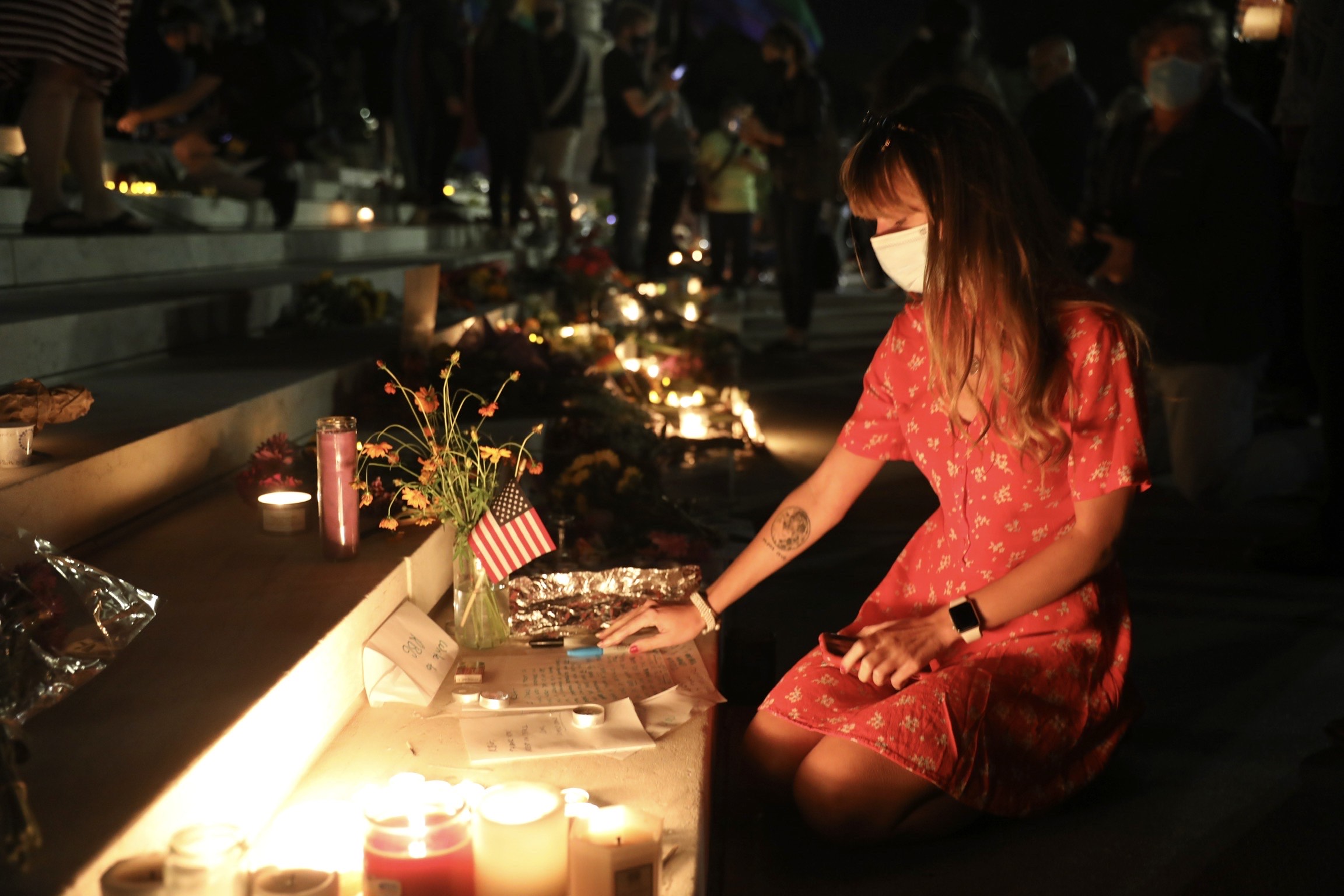
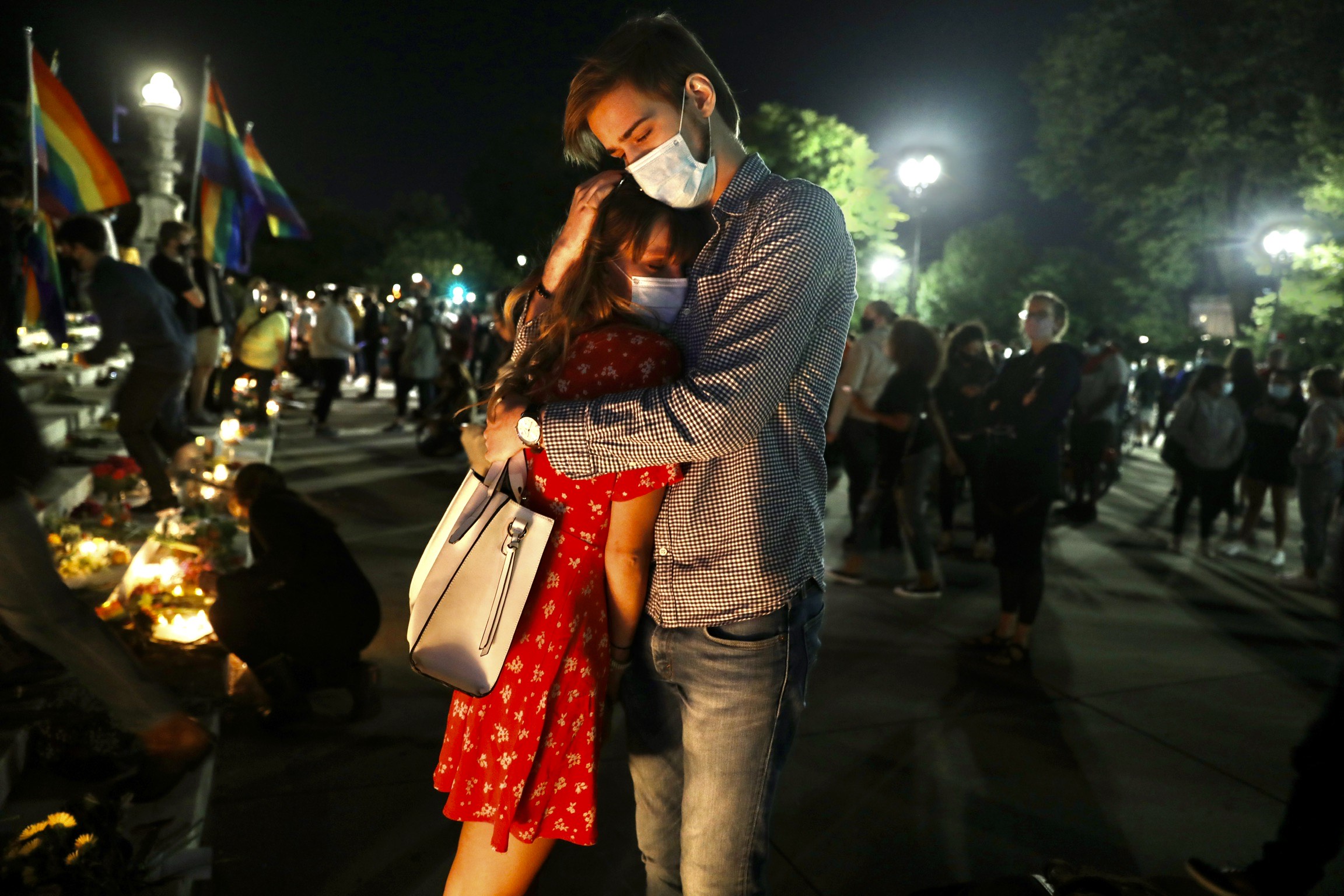

Nairika Murphy said she was one of the first people to show up at the Supreme Court Building to pay her respects. She was on a walk when her family texted her the news. Not too long after she arrived, the crowd swelled into the hundreds.
“I think she just did a lot for this country and it’s really important that people recognize that and show support and also be clear and have a visual representation we’re not going anywhere, regardless of who’s placed in her spot and who’s elected, that we’re not going to move backward to the 1950s,” she said.
Murphy added that she hopes people channel the feelings of this moment — the anger, frustration, and even hope — into civic action at the polls this November.
“I think that this country is in a really dangerous place, and I think the fact that we’re still questioning climate science, and women’s reproductive rights it’s unbelievable to me,” Murphy said.
Johanna Elsemore, 34, and Courtney Tate, 36, live a few blocks from the Supreme Court. Elsemore said she felt compelled to honor Ginsburg’s accomplishments and support of women throughout the years (the couple brought candles to honor her life and legacy).
“We were talking on the way up here and about how easy it is to get swept up in all the politics and the emotional back and forth of Supreme Court decisions and wrap that up with the grief of losing somebody as monumental,” Tate said. “But I think the better thing to do is remember RBG and rejoice in the work she did.”
Elsemore added that the two would not be where they are today had it not been for Ginsburg.
“Especially with respect to women’s rights,” Tate said.
Ginsburg’s accomplishments were particularly meaningful for Debra Long-Doyle, a lawyer who has lived in D.C. and watched Ginsburg’s work for decades.
“I’ve been down here so many times,” she said, standing across the street from the Supreme Court. “I was down here during the Kavanaugh hearings when they were trying to make a decision. I was here for RBG’s birthday and her trainer came out there and we did planks and I planked for 5 minutes for RBG … I am one of her biggest fans.”
Long-Doyle called Ginsburg’s death “monumental.” She respected Ginsburg’s legal mind—and now, she worries about the future of the Supreme Court without Ginsburg’s liberal vote.
“This is very sad on so many levels,” said Long-Doyle, a Black woman. “Going through my mind is how this could impact what happens to our country, what happens to us as people of color, what’s going to happen to my grandson who turns two next week … this is going to impact us for a really long time. Definitely through the rest of my life.”
Jennifer Green brought her 10-year-old daughter Eva to the tribute outside the Supreme Court. She said she wanted to explain to her that justices like Ruth Bader Ginsburg in particular were the reason for many of their fundamental rights.
“When we live in D.C., we live privileged, because we get to do things like this. We get to be a part of American history on a regular basis,” said Green. “As residents of this great city, I feel like it’s kind of our responsibility to show up and pay tribute.”
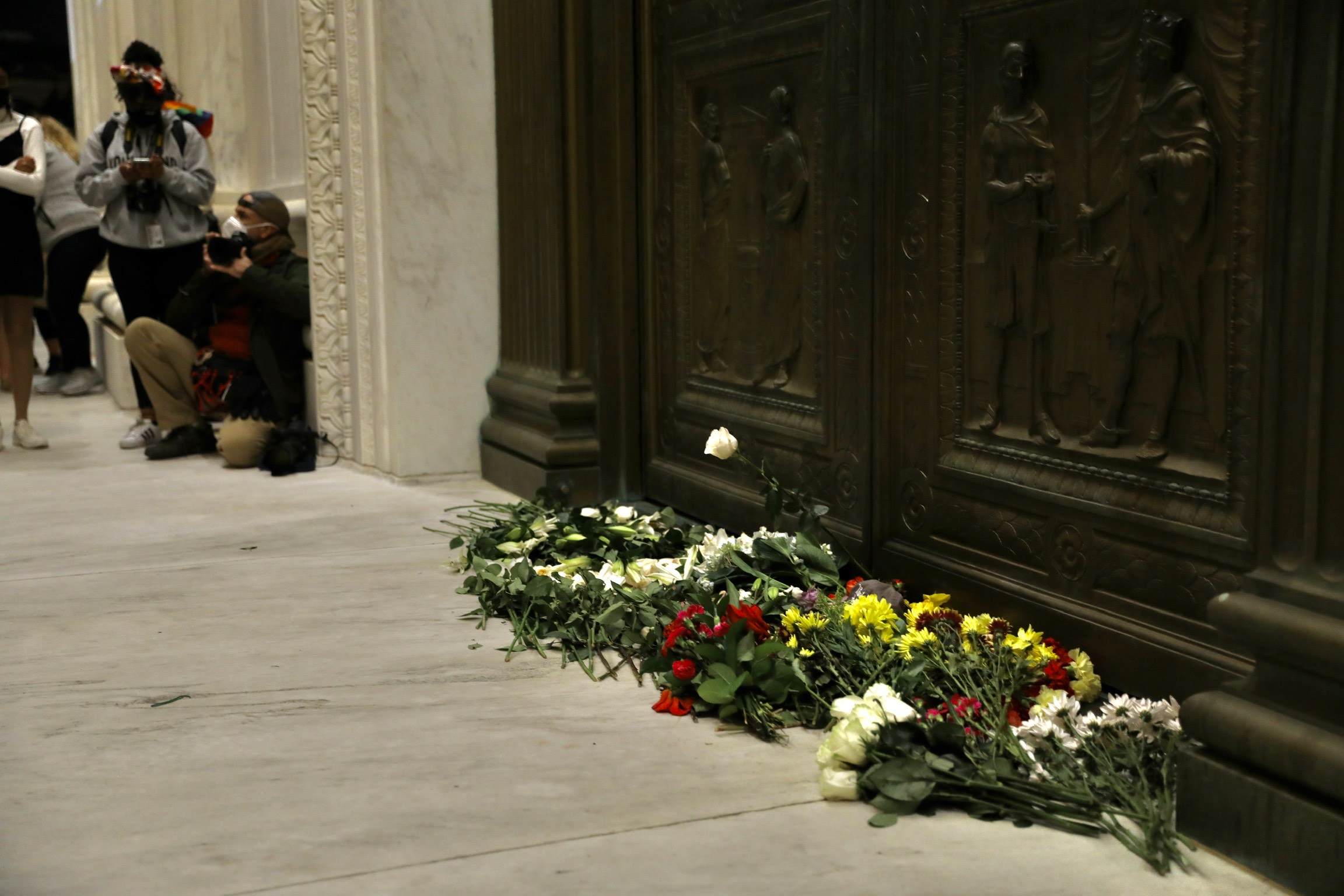
Mourners left a collection of flowers and candles on the steps of the Supreme Court. One held a sign that said “Honor Her Wish,” a likely reference to the statement Ginsburg dictated to her granddaughter days before her death, which said that her “most fervent wish is that I will not be replaced until a new president is installed.”
Ginsburg was beloved by many in the District. On Twitter, members of the community grieved her death.
Ward 3 Councilmember Mary Cheh tweeted that Ginsburg was “one of the greatest Justices of all time and a singular champion of women’s rights.” Next to a photo of the two standing together, Cheh wrote that one of the greatest honors in her life was getting to meet Ginsburg.
Together with our entire nation, I mourn the passing of one of the greatest Justices of all time and a singular champion of women’s rights. One of my life’s greatest honors was to have known Justice Ginsburg and have her swear me into office.
I am completely heartbroken. pic.twitter.com/t89FyjQ9aY
— Mary M. Cheh (@marycheh) September 19, 2020
D.C. Attorney General Karl Racine said on Twitter that Ginsburg was a crusader for justice, who “tenaciously used the law to fight for what is right and just.”
Montgomery County Executive Marc Elrich tweeted “America has lost an icon. Supreme Court Justice Ruth Bader Ginsburg was a trailblazer, and her presence on the Court will be missed. She leaves us a fairer, more just country.”
Last year, a mural of Ginsburg went up on 15th and U streets in Northwest depicting her larger-than-life persona.
Ginsburg was a member of Sixth & I’s congregation and previously participated in events hosted by the synagogue (they even designated her one of numerous celebrity cardboard cutouts during its virtual high holidays).
A private interment service for Ginsburg will be held at Arlington National Cemetery.
This story has been updated to include additional comments from people outside the Supreme Court.