 Eliza Tebo
The U.S. Department of Justice weighed in Friday on the lawsuit a D.C. church recently filed against the District, saying the city must permit outdoor worship “at least to the same extent” it allows other outdoor activity protected by the First Amendment.
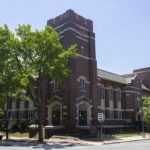
In a lawsuit filed in late September, Capitol Hill Baptist Church argued that the District was violating its First and Fifth Amendment rights by refusing to allow the church’s entire congregation, which numbers roughly 850 people, to gather for worship. Under current Phase Two guidance, places of worship in D.C. may hold services of up to 100 people or 50% of their building capacity, whichever is fewer. On Friday, DOJ filed a statement of interest in the case, (a statement of interest essentially lays out the U.S. government’s interests in ongoing litigation), saying that both the Constitution and federal law mandate that the city permits the church’s request to worship outdoors.
“One of the most foundational rights protected by the Bill of Rights is the free exercise of religion,” acting U.S. Attorney for the District of Columbia Michael Sherwin said in a press release. “The Department of Justice is committed to upholding all the civil rights protected under the First Amendment, be it peaceable assembly in protest or practicing faith.”
Matthew Martens is lead counsel for the church in the lawsuit and has been a member for roughly a decade. He has also litigated several religious liberty cases throughout the country and recently wrote an editorial for the Washington Post on the “seemingly arbitrary lines” local governments are drawing regarding public safety during the pandemic. He welcomed the DOJ’s move.
“At the end of the day, we’re not asking for anything more than to be treated fairly, and we appreciate the Justice Department recognizing that both the Constitution and federal law require that the church be treated fairly,” Martens told DCist/WAMU.
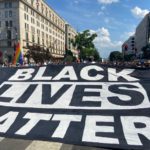
In its lawsuit, the church alleged that D.C. officials have been “discriminatory” in their use of limits toward outdoor gatherings in that they appear to show a preference for “certain expressive gatherings over others,” referring to recent citywide protests. While the church says in the suit that it supports the right to protest, it says D.C. Mayor Muriel Bowser has not acted fairly in allowing large gatherings for protests but not for religious worship.
The mayor’s office has not responded to a request for comment. Bowser is expected to respond to the church motion in writing by the end of the day Friday, Martens says.
The church says in the suit it has regularly offered services since its founding in 1878. In March, it halted services for the first time since the 1918 flu pandemic, according to senior pastor Mark Dever. The church has declined to offer virtual services, saying in the lawsuit that “there is no substitute” for weekly in-person gatherings of the full congregation.
The lawsuit also alleges that Bowser and the city were violating First and Fifth Amendment rights which, respectively, safeguard the freedoms of speech and religion, and say persons cannot be “deprived of life, liberty, or property, without due process of law.” It says in the suit that it applied for a waiver regarding large-group gatherings outdoors but was denied. The suit was the first by a religious entity to challenge the District’s COVID-19 restrictions, according to the Washington Post.
The statement of interest states the church’s claim that its Constitutional rights were violated and that the District cannot favor one form of expression over another.
“The United States’ brief explains there is no Constitutional or statutory basis for allowing protests and rallies attended by thousands of people, but silencing religious worship,” reads a press release on the DOJ statement. “The brief also explains the city bears a high burden of proof to justify its actions under the First Amendment and [Religious Freedom Restoration Act] because its actions impose a ‘substantial burden’ on religious exercise, as the church has shown here.”
The RFRA is a 1993 law that originally barred state and federal government entities from “substantially burdening a person’s exercise of religion,” and now applies only to federal laws, as well as those in D.C. and U.S. territories. More than 20 states, including Virginia, have passed their own such acts.
The statement of interest filed Friday is part of a widescale effort by the DOJ to examine government practices nationwide that may infringe on civil liberties during the pandemic.
In May, the DOJ also filed a statement of interest regarding a Virginia church that sued Gov. Ralph Northam after the church was cited for violating an executive order that then limited gatherings to no more than 10 people. In its statement, the department again argued that religious gatherings should not be held to a different standard than ones that aren’t religious.
“The Commonwealth cannot treat religious gatherings less favorably than other similar, secular gatherings,” U.S. Attorney for the Eastern District of Virginia G. Zachary Terwilliger said at the time.