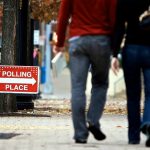
You know that feeling when you’re in the supermarket and end up in the cereal aisle, overwhelmed and unable to choose between 19 different varieties of Cheerios? Yeah, you may experience that when opening up the ballot and looking at this year’s marquee D.C. Council race.
When At-Large Councilmember David Grosso announced late last year that he wouldn’t be vying for a third term, it set off a scramble to succeed him (one further fueled by the city’s new public financing program, which offers qualifying candidates public dollars to run their campaign). A second At-Large seat, currently held by Democrat Robert White, is also up for re-election. And with 24 candidates on the ballot, the slate of contenders for the two citywide positions has never been bigger.
Per D.C.’s Home Rule Charter, only one of these seats can be held by a member of the majority party — the Democrats — while either can be occupied by an independent, Republican, Libertarian, or member of the Statehood Green Party. White enjoys the benefits of being a Democratic candidate in a largely Democratic city, but there’s no certainty he will win; you can vote for any two candidates, whether they associate with a political party or not.
With this many candidates on the ballot, truly anyone could win — `potentially with a slim margin.
And like many elections in recent years, there is something of an ideological split between the candidates: you’ve got some loud-and-proud progressive contenders like Ed Lazere and Will Merrifield squaring up against the more business-friendly alternatives like Marcus Goodwin and Chander Jayaraman. But there’s plenty of candidates in between, including hopefuls from D.C.’s smaller political parties.
To best summarize the large field of candidates, WAMU/DCist sent all 23 who remain in the race the same nine questions (one candidate, Rick Murphree, has dropped out). We’ve compiled the candidates’ full responses in a document you can see here.
Kathy Henderson, Calvin Gurley, A’Shia Howard and Keith Silver declined to participate or did not respond to multiple attempts for comment. We’ve organized the candidates below in the order they appear on the ballot.
But don’t just take our word for it. The Working Families Party has a handy guide of where candidates got their money and who endorsed them. The D.C. Office of Campaign Finance hosted a series of official debates between the candidates, and the Southwest Neighborhood Assembly also held their own round of debates; check them out here. There’s also useful coverage from the Washington City Paper and Washington Post.
Have questions on how, where and when to vote? Check out our voting guide for details on registering, voting by mail, casting a ballot on Election Day, and more.
The Candidates: Christina Henderson (I) – Vincent Orange (I) – Franklin Garcia (I) – Marya Pickering (R) – Marcus Goodwin (I) – Markus Batchelor (I) – Michangelo “DoctorMic” Scruggs (I) – Mario Cristaldo (I) – Claudia Barragan (I) – Alex Padro (I) – Robert White (D) – Jeanné Lewis (I) – Mónica Palacio (I) – Ann Wilcox (Statehood Green) – Joe Bishop-Henchman (Libertarian) – Eric Rogers (I) – Chander Jayaraman (I) – Ed Lazere (I) – Will Merrifield (I).
Christina Henderson (I)
While 33-year-old Christina Henderson is making her first run for elected office in D.C., she already has years of political experience under her belt. Henderson is on leave from her role as a legislative assistant to Democratic Sen. Chuck Schumer. She previously served as a D.C. Council staffer for Grosso, whose endorsement she secured early on.
Touting herself as a “pragmatic progressive,” Henderson says her top priorities are centered on child care: increasing access and bringing down prices, issues she believes are front of mind for Washingtonians during the pandemic. (Henderson is the mother of a small child.) She supports increasing taxes on the city’s wealthiest residents and reversing changes to the estate tax to blunt the economic fallout from the pandemic, but stops short of endorsing business and property tax hikes. Henderson also has some ambitious plans for shaking up the structure of the council, calling for an independent parliamentarian separate from the chairman, and she wants to see the body make better use of its oversight powers with regular reports and a “roadmap” of ongoing legislation to watch for when sessions turn over.
Henderson stands with most candidates in calling for police reforms — she supports a bill that includes broad changes currently set for a vote this fall — and adds that she would like to see more officers on the force who live in D.C. She says she supports expanding rent control — a hot topic of late amongst housing advocates and landlords — and bringing affordable housing to all wards.
Like many of us, she says live music halls were a favorite relaxation spot, lost to the pandemic for the time being. – Colleen Grablick
Endorsements: Councilmember David Grosso (I-At Large), The Washington Post.
Vincent Orange (I)
After 12 years on the D.C. Council (and multiple runs for mayor), Vincent Orange was defeated by Robert White in 2016. Still, the 63-year-old Ward 5 resident didn’t skip a beat — he quickly took the top job at the D.C. Chamber of Commerce, so quickly, in fact, that he got ensnared in a scandal when he tried to take that new job while still on the council. He wound up resigning before his term ended (the ethics board later said he hadn’t broken any rules in accepting the Chamber of Commerce gig). But now Orange wants back in the Wilson Building, and in a sea of candidates who tout their progressive credentials, he sells himself as one of the business-friendly contenders.
Orange says the most pressing priorities for D.C. voters are getting back to work, educating their children, and avoiding the coronavirus. If elected, he says he plans to prioritize “rebooting” the D.C. economy by bringing residents back to work, expanding tech access and protective equipment for D.C.’s online learning and return-to-classroom plans, and bolstering D.C.’s unemployment funds. His work-around for the budget shortfall doesn’t include any tax hikes, and instead he says he would revise the funding mechanism for D.C.’s new paid family leave program. (Which he strongly opposed in the past.)
On policing, Orange says he supports an “extremely comprehensive” review of MPD operations, methods, personnel, and budget; and increased oversight from the council’s Committee on Judiciary and Public Safety. To increase affordable housing, he envisions using D.C.’s Housing Protection Trust Fund to build 125 affordable housing units per ward per year — a plan he says would annually cost the city $50 million on average.
Orange says he’d bring “mature, experienced leadership” and “institutional knowledge” to a body that he believes is undergoing dramatic ideological shifts. – Colleen Grablick
Franklin Garcia (I)
Garcia, a Ward 5 resident who works in IT, has served as D.C.’s shadow representative since 2015. His top priorities include affordable housing, reviving the economy, public safety, and improving education and ensuring safe return to schools. Garcia is also the former president and founder of the D.C. Latino Caucus, and is the current president of the non-profit D.C. Latino Leadership Council.
Addressing the city’s finances, the 51-year-old emphasizes the need to get people back to work. He supports postponing capital improvements, cutting funding for the streetcar, and potentially increasing taxes — albeit temporarily — as a means to balance the budget. Garcia believes the composition of the council should change to look more like the city it serves — he would be the body’s first Latino member — and supports imposing term limits.
Garcia says he supports reimagining the police, in part by changing the working structure of MPD, increasing officer accountability, and adding more bilingual officers to the force. On the problem of affordable housing, Garcia would start by educating residents on the options available to them. “Too many people don’t know of programs available for home ownership,” he says. He’d also take other steps, he says, including helping residents get better jobs and increasing subsidies for housing. He suggests building on available stock, and both using additional federal funding “that is owed to us” and tapping into the city’s rainy day fund to pay for it.
Asked about his favorite place in the city to reflect, Garcia says he enjoys all D.C.’s neighborhoods, saying, “each one is unique.” – Nathan Diller
Marya Pickering (R)
It’s been more than a decade since a Republican served on the Council, but the 74-year-old AU Park resident believes it’s again time for “true diversity of thought and a voice for prudent management.”
Like many other candidates, Marya Pickering lists her top priorities as reviving D.C.’s economy, primarily the service sector; bettering public schools; and improving public safety. But she approaches the solutions differently, saying that D.C. needs to cuts its own public spending levels (she accuses the current Council of “misplaced priorities and poor stewardship of taxpayer dollars”), continue expanding its charter schools and use of vouchers, and continue on its current trajectory with policing. MPD, she says, “deserves our full finding and support, especially after recent threats from domestic terrorists who want to destroy our country.” On housing, she says D.C. could better use the land it owns to produce affordable units; when it comes to building more housing, she believes that the “best interests of neighborhood residents should guide decisions about future development.”
Pickering says she’ll find savings anywhere she can, and that includes the Fair Elections public financing program that many of her competitors are using to fund their campaigns. “What is ‘fair’ about candidates for public office taking taxpayer money to run their campaigns while we have homeless people in the streets during a pandemic?” she asks. – Martin Austermuhle
Marcus Goodwin (I)
30-year-old real estate developer Marcus Goodwin is a D.C. native making his second-run for a council seat (he lost to Anita Bonds in 2018), joining the ranks of the business-friendly candidates. He believes the public health and economic fallout of the coronavirus pandemic are the most pressing issues for District residents, and supports extending the eviction moratorium. If elected, he says he plans to prioritize expanding affordable homeownership opportunities, bridging the digital divide for students during virtual learning, and providing more vocational training programs for District residents.
As the city budget faces a $600 million shortfall over the next few years from the coronavirus, Goodwin tells WAMU/DCist that he would cut or delay non-essential capital improvement projects until the city’s finances stabilize. When asked what needs to change about the council, he says it “needs to get more things done.” Goodwin calls himself a “consensus maker” on a council that he sees as “ideologically divided,” notably following the victory of Janeese Lewis George in Ward 4 in the June primary.
Amid a summer of protests against police brutality and a police reform bill on the council’s docket this fall, Goodwin supports banning chokeholds and increased funding for mental health, substance abuse disorder treatment, and housing. Like many candidates, he supports Bowser’s plan to build 12,000 affordable housing units by 2025, and specifically wants to upzone large avenues and thoroughfares, which would bring public housing to more Northwest neighborhoods. – Colleen Grablick
Endorsements: The Washington Post, Councilmember Vincent Gray (D-Ward 7), more.
Markus Batchelor (I)
Even though he’s only 27, Markus Batchelor is anything but a political novice: the Congress Heights native has served as an Advisory Neighborhood Commissioner and is the current Ward 8 representative on the State Board of Education. And he says that growing up in D.C. he saw the city grow in population and wealth, “but that growth was unnecessarily uneven.”
Like Lazere and other progressive-leaning candidates, Batchelor says his biggest goals on the Council would be securing an equitable recovery after the pandemic, ending homelessness and increasing the supply of affordable housing, and bigger investments in public schools that serve at-risk and low-income students. “As the Ward 8 Representative on the Board of Education, I’ve had a front row seat to the deep and daily consequences of this broken system,” he says. And he argues that this will take higher taxes on wealthy households, while also pledging to “improve how we spend.” One of Batchelor’s distinct promises is a “guaranteed income program,” in which qualifying residents would be given direct cash payments — with no strings attached. And he says such an ambitious program could be funded by repurposing some of MPD’s half-billion-dollar budget.
While some of Batchelor’s pitches may sound similar to those of his fellow progressives, he says it’s not just what he believes that matters — but where he’s from. “The Council needs a citywide representative from east of the Anacostia River, affirming that our communities left furthest behind don’t just need a palatable voice at the table — they need power,” he says. – Martin Austermuhle
Endorsements: Washington Teachers’ Union, People For The American Way Victory Fund.
Michangelo ‘DoctorMic’ Scruggs (I)
Scruggs is a Ward 4 resident and podiatrist by trade — and it’s no wonder he lists healthcare and the coronavirus pandemic as the most pressing issues facing District residents.
If elected, Scruggs says he’d fight for comprehensive healthcare services in each of the city’s quadrants, adding a new hospital “of adequate size and scope” with a Level 1 trauma center on the current United Medical Center campus. He would also propose a 1.5% annual business tax on for-profit D.C. businesses grossing $10 million or more to pay for his initiatives.
Scruggs says the council needs more transparency and that he’d put an end to what he says is a practice of lawmakers passing legislation “under the radar.” Following an intense summer of protests over police practices, Scruggs says the city’s police department “needs a complete overhaul.” He’d push for D.C. Police Chief Peter Newsham to retire or resign, and adds that Newsham’s “irresponsible comments” in response to police violence demonstrates a “lack of character and ineptitude to do the job.” Officers need more training and stiffer penalties for excessive use of force, he says.
Scruggs is an advocate for the building of modular homes using affordable materials to help expand affordable housing. “The time is now, D.C.,” he says. “Time for change. I am that change.” – Elliot Williams
Mario Cristaldo (I)
Originally from Paraguay, the longtime Adams Morgan resident was a 2018 recipient of the D.C. Council’s Community Cornerstone Award for his leadership within the Latino community. A former board member of the D.C. Democratic State Committee, Cristaldo is not new to local politics. He has also worked in the nonprofit sector, serving as an executive director at Vida Senior Centers.
Cristaldo lists affordable housing, reforming the D.C. budget, and providing healthcare coverage for all residents among his top priorities. To pay for his goals, Cristaldo says he would help eliminate unnecessary spending, raise a “reasonable amount of taxes” for residents with salaries above $250,000, and use some of the District’s $1.4 billion rainy-day fund to alleviate any budget deficits. He suggests increasing the number of residences under rent control, amending the city’s inclusionary zoning law to require more affordable units, and setting a goal of 36,000 new affordable housing units by 2030. (Bowser’s current plan calls for 36,000 housing units by 2025, but only one-third would be considered affordable.)
Cristaldo adds that councilmembers should be full-time with term limits of no more than 12 years. (Currently, they can hold outside employment, though only one lawmakers currently does, and there are no term limits.) “Also, we need more diversity at the Council to reflect the community at large,” he says. If elected, he would work to “stop and frisk” practices by police officers, and says a portion of MPD’s budget should be reallocated to better serve residents. “COVID-19 is changing us forever as we speak,” he says. “This is the time for us to work together.” – Elliot Williams
Claudia Barragan (I)
Claudia Barragan, 43, came to the Washington region from Bolivia in 1987 and has focused on urban planning for the past 25 years she’s lived in D.C. She’s an ANC commissioner in Ward 5’s Pleasant Hill neighborhood and owns an urban planning company, Communities in Practice. Barragan served as a policy analyst for Ward 8 Councilmember Trayon White, and says community-led development is her expertise.
Barragan says she represents a significant part of the District’s population: immigrants. “Our issues are the most pressing issues for the city,” she says.
If elected, Barragan says she would work to address D.C.’s growing disparities in housing, healthcare, education, and wealth. She wants to revamp a failing assessment process that has led to inflated property values, and is against housing subsidies for high-income residents. To fund her projects, she would cut overspending and introduce “more targeted, prescriptive, and evidence-based legislation” to avoid major budget cuts.
On education, she says Grosso’s policies as chair of the council’s education committee have left Black and immigrant parents and students ill-prepared for virtual learning — and that she’s already listening to the needs of these residents. “In almost two years of working as a research and policy analyst inside the council, less than a handful of bills were introduced by residents,” she adds. Barragan says she supports appointing a new police chief, defunding MPD and reallocating major budget items, and firing officers who have a history of racial bias.
Her favorite place to relax? “One could say my family has been displaced out of our favorite places,” she says, but notes that she and her husband enjoy walking their dog at the National Arboretum and Rock Creek Park. – Elliot Williams
Alex Padro (I)
Alex Padro is the executive director of Shaw Main Streets, a non-profit focused on the revitalization and preservation of the neighborhood’s commercial corridors. The 56-year-old lives in the Ward 6 part of the neighborhood, and is also a longtime ANC commissioner.
He says his top priorities on the council would be increasing the number of affordable housing units being built with the current public investment; helping local businesses weather the pandemic; and stimulating neighborhood-based, equitable development.
Padro says the city isn’t getting enough bang for its buck on tax dollars invested in affordable housing, and says the council should ensure that deals involving District government property and financing should yield more affordable units across income levels. In addition to converting lower density developments into larger mixed-use, mixed-income ones, he says the city should create tax and financing incentives for converting office space “that dramatically reduced post-COVID-19 demand renders unleasable.”
Regarding the city’s financial situation, Padro advocates deferring expensive projects that can be delayed, like the redevelopment of the McMillan Sand Filtration Site. He also proposes a retail property tax cap during the public health emergency to provide relief for businesses that remain closed or can only partially reopen and “safeguard future commercial property and sales tax collections.” Padro argues that the council should be less reactionary and “more deliberative,” and not “unduly burden” businesses with additional unfunded mandates and taxes.
Padro supports reallocating a small portion of MPD’s budget to transfer responsibility for some types of calls for service to other responders, like social workers, drug counselors, and others; as well as increasing funding for job training programs which he says would help reduce crime.
He enjoys perusing D.C. art museums on Sunday afternoons with his partner; his favorites include the National Portrait Gallery and the Phillips Collection. – Nathan Diller
Endorsements: LGBTQ Victory Fund.
Robert White (D)
Robert White, a Democrat who lives in Ward 4 with his wife and two daughters, is running for a second term on the council. He unseated Vincent Orange in 2016 in a bruising night for allies of Mayor Muriel Bowser, and ran unopposed in the June 2 Democratic primary, tallying more than 93,000 votes.
While on the D.C. Council, White has focused his efforts on returning citizens, including a bill that passed earlier this year that allows residents serving time in prison for felony offenses the right to vote. He’s seen as a consistent progressive voice (and even possible mayoral contender in 2022), but also knows how to navigate political power — sometimes to negative reactions. In 2019, he cast a deciding vote on a sole-source contract for a sports betting operator; critics accused him of trading a vote for additional committee responsibilities.
White cites the ongoing pandemic as the most pressing issue voters care about, declaring his desire to expand rental assistance, aid for small businesses, and protect funding for schools. He says his top priorities are equity in housing, education, and employment. In July, he voted in favor of a measure to increase taxes on wealthy residents (it didn’t pass), and says the council should improve financial oversight of programs funded by taxpayers by consistently auditing their effectiveness.
White also voted in favor of police reform legislation this summer and supports removing officers from non-public safety situations, like routine traffic stops. He supports building more housing along main corridors in each ward and near transit centers; converting vacant office buildings into affordable housing; and building larger, family-sized units. This would be made possible, he says, by leveraging private investment in public-private partnerships.
As for his favorite spot in D.C. to relax and reflect, he notes a “high point” in Rock Creek Park overlooking the water, where he takes a portable chair. He won’t say exactly where, though. “I don’t want you to take it,” he says. – Nathan Diller
Endorsements: Greater Greater Washington, Washington Teachers’ Union, Councilmember Elissa Silverman (I-At Large), Councilmember Anita Bonds (D-At Large), D.C. National Organization for Women, more.
Jeanné Lewis (I)
Lewis, 40, is a D.C.-area native who lives in Ward 7’s Fort Davis neighborhood. As a vice-president at the National Committee for Responsive Philanthropy, she secures funding for nonprofit organizations nationwide that close equity gaps.
For Lewis, D.C.’s most pressing issue is the COVID-19 pandemic, which “has merely highlighted and exacerbated” the city’s existing issues. If elected, she would focus on building sustainable and affordable housing, improving access to quality education, and bolstering equitable economic development. Her plans include strengthening the city’s inclusionary zoning law and its enforcement; expanding rent control; and saving long-standing small businesses in D.C., particularly in gentrifying neighborhoods. “D.C. is our home, and as we prepare to ramp up the economy we must reject the school of thought that suggests leaving some people behind is acceptable,” she says.
To provide funding for her priorities, Lewis proposes creating a mini-bond program that would be reserved for developing co-ops and supporting long-standing D.C.-owned businesses in gentrifying neighborhoods.
On policing, Lewis supports reducing MPD’s budget and size and reinvesting that money into community resources. D.C. needs a public health approach to law enforcement that would treat violence like a curable disease, she says. Lewis proposes expanding the Cure the Streets Program and mandating violence interruption reports to measure success: “To get to zero homicides, we must fix the broken systems that lead to violence.”
Lewis says she’s voting for Robert White for the other open seat, and suggests setting term limits for councilmembers. – Elliot Williams
Mónica Palacio (I)
Former D.C. Office of Human Rights director Mónica Palacio says she’s running because she hopes to help locals who are struggling with the coronavirus pandemic and other issues. “Many are facing financial and housing instability, stress and uncertainty about the educational needs of their children, and they are fighting for social equity while greater political instability looms in the national front,” says the 52-year-old Takoma Park resident.
She points to her six years leading OHR under Mayors Muriel Bowser and Vincent Gray — and her 30 years in the District — as experience that differentiates her from the other candidates. A Latina, Palacio says the D.C. Council should reflect the city’s diversity. In terms of public health, she supports increasing funding for the Department of Behavioral Health, so that more licensed clinicians can engage with residents experiencing mental health crises and trauma, and connect them to social services. To bankroll such services, Palacio suggests implementing a “mini-bond” program like Denver has, rather than raising taxes.
She’s lived in six different neighborhoods since moving to D.C. and has a variety of favorite local pastimes. “I loved tailgating behind the old D.C. United stadium at RFK for many years and I also enjoy visiting secret treasures in D.C. like Kenilworth Aquatic Gardens and the drum circle at Malcolm X Park,” says Palacio. “Over the last six years, I also surprisingly became a soccer mom, and I love visiting fields across the city to watch my son play.” – Andrew Giambrone
Ann Wilcox (Statehood Green)
Wilcox lives in Shepherd Park in Ward 4. A practicing public interest lawyer, she also previously represented Ward 2 on the D.C. Board of Education. She counts affordable housing, health equity, and support for public education among her priorities. If elected, Wilcox says she would work to develop more affordable housing strategies and expand rent control. Her other goals include developing healthcare facilities in all parts of the city, ensuring adequate mental health resources to locals of all ages, and supporting public education.
The Statehood Green Party candidate believes the city should expand the application of rent control, explore models like social housing, and take other steps to stop the “erosion” of existing affordable housing and develop more.
Wilcox also supports first-time home ownership programs, co-ops, and the tenant purchase of buildings. On D.C.’s finances, she supports raising income taxes on those making more than $250,000, cutting public subsidies to developers, and doing away with the “wasteful” streetcar and K Street enhancements. She believes the D.C. Council is functioning “relatively well,” though she says its budget strategizing, including tax and revenue analysis, should stretch throughout the year “so that important changes are not ‘crammed’ into a few weeks, when the final budget is considered.”
Wilcox is one of the few candidates who shared that she is also supporting the candidacies of Ed Lazere and Will Merrifield. She believes D.C. and other cities “should rethink the police budget and approaches to policing,” with police learning more about de-escalation and alternative resolution techniques. Wilcox also supports using a portion of police budgets to support violence interrupters and Cure the Streets programming, eliminating no-knock warrants, and other changes.
Asked about her favorite places to relax and reflect in D.C, she cites the National Mall and memorials, and “parks like Rock Creek Park or even Dupont Circle.” – Nathan Diller
Joe Bishop-Henchman (Libertarian)
Like Pickering, Bishop-Henchman, 39, says that many of D.C.’s problems come from the Democratic dominance of the Council. “There needs to be a Libertarian voice at the table!” says the Eckington resident and current chairman of D.C.’s small Libertarian Party.
What would that voice say about key issues? In keeping with traditional Libertarian views, Bishop-Henchman says that a critical element of solving many of D.C.’s problems is more jobs, and that means “streamlining permits and regulations.” That also goes for housing; he wants to reduce “veto points” in the housing approval process, and build higher and denser — especially around mass transit.
Bishop-Henchman says the city doesn’t need more spending, but rather better oversight of the spending it’s already doing. “Rather than just continuing every program year over year, we should adopt zero-based budgeting and start with a blank sheet each budget cycle,” he says. And this year’s focus on policing plays into one standard Libertarian view: the government has too much power. “We especially need to demilitarize the police, so the clear focus is on de-escalating conflicts not escalating them,” he says.
But even if he doesn’t win this race, Bishop-Henchman says he’s focused on an existential mission for the Libertarian Party: getting enough votes every year to keep their status as a “major party,” which grants its candidates easier access to the ballot.
His favorite place in D.C. to relax and reflect? The Metropolitan Branch Trail. – Martin Austermuhle
Eric Rogers (I)
The 46-year-old Ward 7 resident knows the halls of the Wilson Building well: he served as a staffer for councilmembers Sharon Ambrose and Kevin Chavous, later rising to a senior position in the D.C. Department of Consumer and Regulatory Affairs and serving as campaign manager for Chairman Phil Mendelson’s 2018 re-election campaign.
Like many of his fellow candidates, Eric Rogers says the pandemic has thoroughly upended the lives of many D.C. residents, and the council’s job in the near future will be helping residents and businesses survive and adapt so they can spur the city’s economy. “We need continued investment in workforce development to identify, train, and connect displaced workers to local employers. Also, we need to reinvigorate our local employers,” he says. Rogers adds that he wants to focus on improving D.C. schools and addressing the high-cost of child care.
And Rogers believes that much of what he wants to accomplish can happen within what the city already spends. “There are many ways to achieve policy goals within our existing budget without having to cut existing programming,” he says. D.C. can better direct the $1 billion it already spends on purchasing to help local small businesses, child care facilities can be co-located inside public buildings to help bring down costs, and budgets can be adjusted to ensure mental health services in every school, according to Rogers.
He also says that the Council should do more aggressive oversight, the city should “rethink our current crime and punishment model of criminal justice that criminalizes poverty,” and that he would fight to squeeze more affordable housing out of existing spending.
His favorite place to relax? “Anacostia park with my 8” telescope,” he says. – Martin Austermuhle
Chander Jayaraman (I)
Hill East Advisory Neighborhood Commissioner and entrepreneur Chander Jayaraman, 50, is focused on education, small businesses, and public safety. He’s promising to push the District government to adopt a more “customer-centric” approach, including by creating incentives for city workers to make services more efficient. “City government should be a partner in residents’ success, not an impediment they have to overcome,” says Jayaraman, who runs an emergency planning company.
A Washingtonian for 25 years, Jayaraman says he’s worried that the District could be sent back under the auspices of the federal Control Board, which oversaw D.C. in the 1990s, because of current financial challenges from the COVID-19 pandemic. He proposes finding areas in agency budgets to cut, eliminating duplicate services, and converting part of the taxes charged by local Business Improvement Districts to grants or low-interest loans for small businesses.
Jayaraman also pledges to hold regular agency oversight hearings throughout the year. “Too often, no one is checking to make sure that legislation that is passed actually gets funded and implemented, or that it achieves its intended outcomes,” he says. As for public safety, he wants to increase funding for gun-buyback programs and combat the flow of illegal guns from Virginia through regional cooperation. He’s in favor of examining which functions now carried out by the Metropolitan Police Department could be reassigned to other agencies, as well as de-escalation training.
Amid the pandemic, he says one of the things he misses most is attending Washington Nationals games with his son. – Andrew Giambrone
Ed Lazere (I)
The 56-year-old Brookland resident is hardly a newcomer to politics, but Ed Lazere was often on the outside: he long served as the D.C. Fiscal Policy Institute, the liberal-leaning think tank that advocates on behalf of policies it says will best serve low-income residents. And now he wants to implement those policies from the inside. This is his second run for office, after he unsuccessfully challenged D.C. Council Chairman Phil Mendelson in 2018.
Lazere says the pandemic has only exacerbated some of the city’s deep economic and social divisions, and he’s offering an ambitious platform to close those: a push to end homelessness and strengthen rent control; more money for D.C. Public Schools, especially for at-risk students; the elimination of the tipped wage; and to implement the city’s Birth-to-Three law that promises to bring down the cost of child care. And to cover the cost of such an ambitious set of goals, Lazere — who is well-versed on the budget, which he calls a “moral document” — promises to use the city’s reserves, increase certain taxes, close tax loopholes, and redirect funding away from the police. He’d also like to create a policy research arm within the Council. “Most state legislatures have one, but D.C. does not,” he says.
When he’s not campaigning, Lazere, a father of two adult sons, says he enjoys walking around Brookland’s Franciscan Monastery; he plans on using his second vote on incumbent Robert White. – Martin Austermuhle
Endorsements: Attorney General Karl Racine, Councilmember Elissa Silverman (another former DCFPI staffer), a number of unions, Sierra Club, Metro Democratic Socialists of America, more.
Will Merrifield (I)
Tenant attorney Will Merrifield, 41, wants to end what he calls D.C.’s “pay-to-play culture” and reduce the influence of corporate money in politics, particularly real estate money. “When you get them in a closed room, they cannot help but brag about the fact that they control the D.C. Council — and by extension, housing policy in D.C.,” he says of developers. “That is why we have an affordable housing crisis that never gets solved.”
To that end, Merrifield proposes that the District build mixed-income social housing, a model seen in international cities like Vienna, Austria. With social housing, the government pays for construction costs, and renters pay 30% of their income on rent. Anyone, regardless of income, can live in this sort of housing, and all the rent payments go toward maintaining the properties or paying off construction debt. The idea is to remove the profit motive from rental housing so that housing remains affordable to all. It would be an “infrastructure investment that eventually pays for itself,” says Merrifield.
Merrifield lives in Deanwood with his wife, and formerly worked at the Washington Legal Clinic for the Homeless, where he represented tenant associations at buildings across the city. There, he says, “I saw the traumatic effect that displacement and housing instability have on children and adults.” In addition to social housing, Merrifield supports free healthcare for all, higher taxes on top earners, and investing in neighborhood public schools, especially those in Ward 7 and 8.
When he wants to relax, he doesn’t have to travel far: the Kenilworth Aquatic Gardens are a favorite, he says. – Andrew Giambrone
Rachel Kurzius contributed reporting to this story, which has been updated to reflect that Lazere worked for the D.C. Fiscal Policy Institute, not the D.C. Policy Institute.