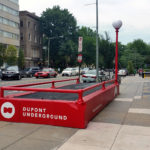
Despite public uncertainty around its lease last fall, Dupont Underground is still running, and it may be here to stay.
The nonprofit arts organization’s CEO, Robert Meins, says Dupont Underground is still having an “active discussion” with the Office of the Deputy Mayor for Planning and Economic Development, and that Dupont Underground signed a term sheet prior to the pandemic detailing what a lease extension might look like.
They are currently holdover tenants in the space. “We’ve been just talking back and forth about getting into the nitty gritty of what each of those terms would look like for a lease extension,” he says. “It’s not settled yet, but it’s headed in the right direction.”
Last November, Meins revealed that he and board members had been unsuccessfully trying to negotiate a lease extension with the city for months. At the time, Meins said that “senior-level officials” in the deputy mayor’s office had told him that the lease, which was set to expire in the spring, would not be renewed.
D.C. Council Chairman Phil Mendelson and then-Ward 2 Councilmember Jack Evans were among those who urged DMPED to grant the nonprofit group a 10-year lease and consider forgiving a $150,000 balloon payment that Dupont Underground still owed the city.
DMPED told DCist in an emailed statement this week that it is “in active negotiations with the operators of the Dupont Underground about their lease renewal. We remain committed to keeping this unique space activated as part of DC’s creative economy.”
Like many arts organizations and venues, COVID-19 had a negative impact on Dupont Underground’s revenue, but Meins says that a reorganization last year meant that the nonprofit went into the pandemic “as lean as we could.”
The team is made up almost entirely of volunteers, and he says they’ve been able to weather the health crisis by taking steps like asking for donations and receiving funds through the Small Business Association’s Economic Injury Disaster Loan program, the Paycheck Protection Program, and Commission on the Arts and Humanities, though he declined to disclose specific numbers.
Registration fees for their Re-think Dupont Circle competition have also brought in some funds, Meins says. Through the competition, the organization is seeking proposals speculating on ways to redesign the aboveground Dupont Circle “as a contemporary urban space,” and reimagining the space over the main entrance to Dupont Underground on 19th Street. They eventually expect to raise around $100,000 for the buildout, which would primarily go toward implementing changes to the entrance.
The organization is also working to install a fire suppression system, which Meins says is the “first step” toward making capital improvements.
Still, Meins says those plans are on hold until they reach an agreement with the city. “We are not going to be able to invest in the space unless we know that we have that lease extension.”
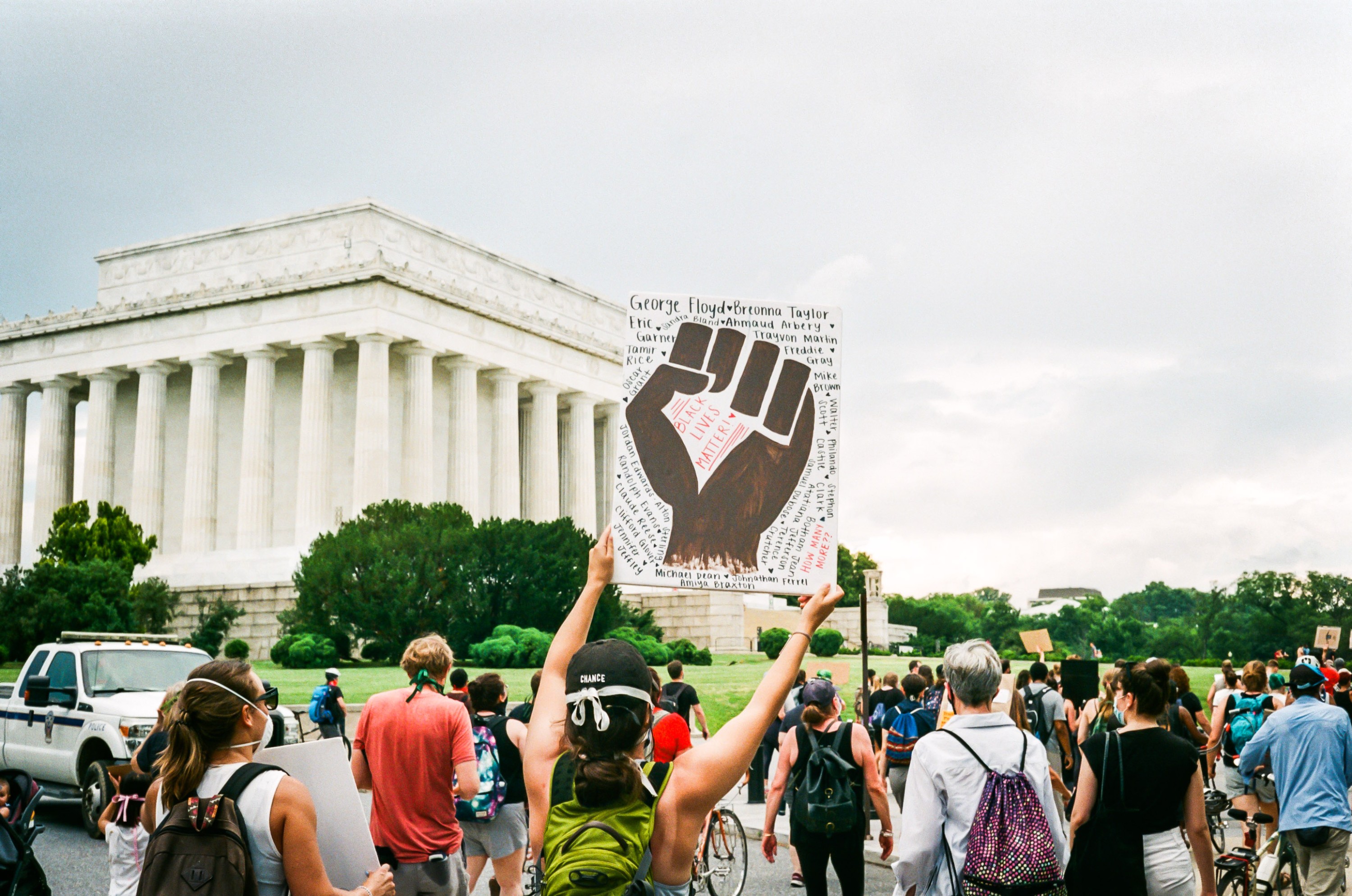
In the meantime, they are hosting new programming, including rise up., a new exhibition featuring photographs of this summer’s protests against racial inequality.
Shedrick Pelt, a photographer with Dupont Underground, attended and photographed some of the protests, and he was struck by D.C.’s role in the demonstrations happening across the country.
“Being a part of that process, I realized how important D.C. was to the movement,” he says. “We are holding a very important part of the conversation. When you turn on the nightly news, you see Seattle, you see Portland, you see New York, and you see D.C.”
The show that emerged from Pelt’s discussions with Meins documents the large-scale demonstrations that swept the District in the wake of George Floyd’s killing by a police officer in Minneapolis in May, including the “Get Off Our Necks’ Commitment March on Washington,” which drew thousands of attendees in August.
Pelt, who co-curated the show with Nora van Trotsenburg, Dupont Underground’s director of operations, says the show is a means of supporting “everyday photographers” who covered the demonstrations. The venue invited the public to submit entries, which were whittled down by a panel of jurors from more than 100 submissions to nearly 50 photos.
Pelt says the entries came from a wide range of photographers and perspective across the region, from teenagers to people in their 60s. Dupont Underground also separately selected photos from various other photographers, including Pelt. (Disclosure: DCist staff photographer Dee Dwyer is among the photographers featured).
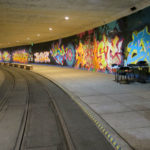
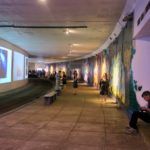
Photographs are on display at the venue, located in former trolley tunnels underneath Dupont Circle, and via a virtual gallery on the organization’s website. Capacity for the in-person show will be limited to 50 people at a time, including staff, in accordance with health and safety guidelines.
Tickets are free, with the option to make a donation. A portion of proceeds will go to Richard Wright Public Charter School for Journalism and Media Arts.
The show marks the venue’s second new exhibition since COVID-19 hit the District, relaunching last month with the Military Visual Awards exhibition.
For now, Meins says, they plan to remain in the space for the foreseeable future, and have exhibitions planned through December. They also aim to host events, in a safe manner, when the city moves into Phase 3 of its reopening plan.
With rise up., Pelt hopes to showcase aspects of the protests viewers might not have seen, and aims to start conversations. He also hopes the photos resonate with Washingtonians: “For people from the D.C. and D.M.V. area, I hope it gives them pride about the people that are out here, you know, pushing and making their voices heard.”
rise up. runs in person through November 1 and online until January 12. Hours in person are Fridays 3 p.m.-7 p.m., and Saturdays and Sundays 11 a.m.-7 p.m.