 Jordan Pascale
When Amazon decided to put its second headquarters in Crystal City in 2018 it had a few things it wanted to see changed — a busy six-lane Route 1 was one of them.
The National Landing Business Improvement District on Tuesday released concepts of what a more walkable, boulevard-like Richmond Highway could look like.
The renderings show several concepts, some with three lanes each way, some with two and a reversible lane. All have protected bike lanes, wide sidewalks, and a less highway-like feel.
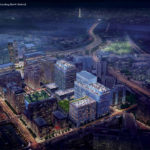
A new Route 1 is among the in-the-works changes to National Landing (née Crystal City) with the arrival of Amazon, including developing about 270,000 square feet of office space for the tech giant. In its search for the second headquarters, Amazon, which is expected to bring 25,000 jobs to the area in the next decade, said it wanted access to mass transit, an airport, and a major highway. In Seattle, Amazon’s workers are big transit users and walk and bike to work on a higher-than-average percentage.
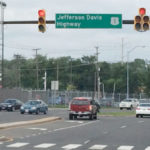
Right now, the stretch is defined by wide lanes with speeding traffic. Some areas that tie into I-395 are elevated. Other areas have other secondary distributor lanes to access business areas. Crossing the road takes a while and the long “superblocks” have an unfriendly scale for pedestrians.
The road, known as Jefferson Davis Highway until last year, when it was renamed, was originally designed to quickly move vehicles through an industrial area with warehouses, brickyards, and junkyards. Then Crystal City began to develop, still with the automobile in mind.
“The vision [for Crystal City in 1963] was for a mixed-use urban district with offices, hotels, and residential apartments without the hassle of downtown’s traffic and lack of parking,” the report says. “Thus, the development’s street grid focused on moving vehicles quickly between Route 1 and ample underground parking while providing a wholly separate pedestrian network through a series of tunnels, bridges, and open space pathways.
Today Route 1 carries 45,000 vehicles per day through the Crystal City and Pentagon City area.

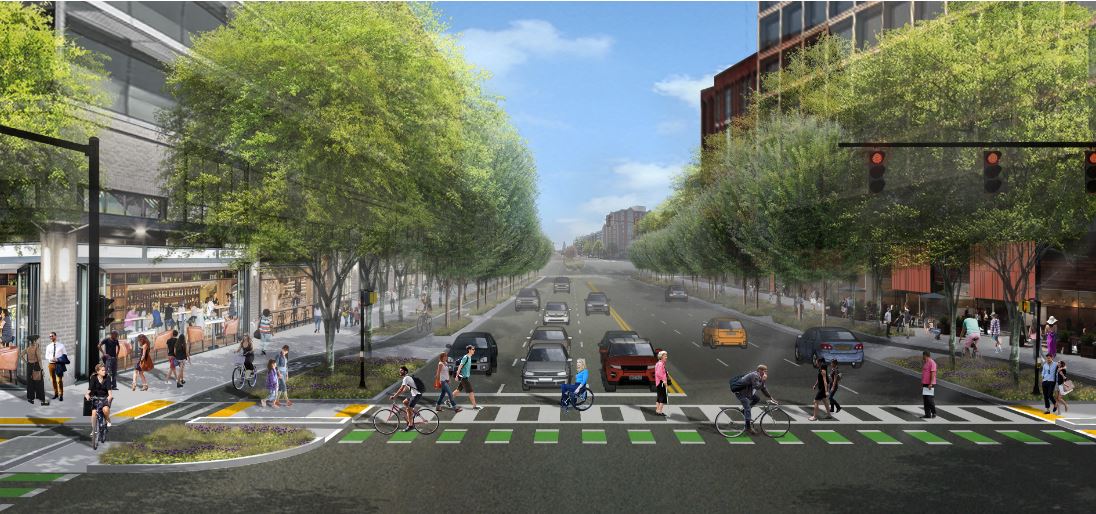
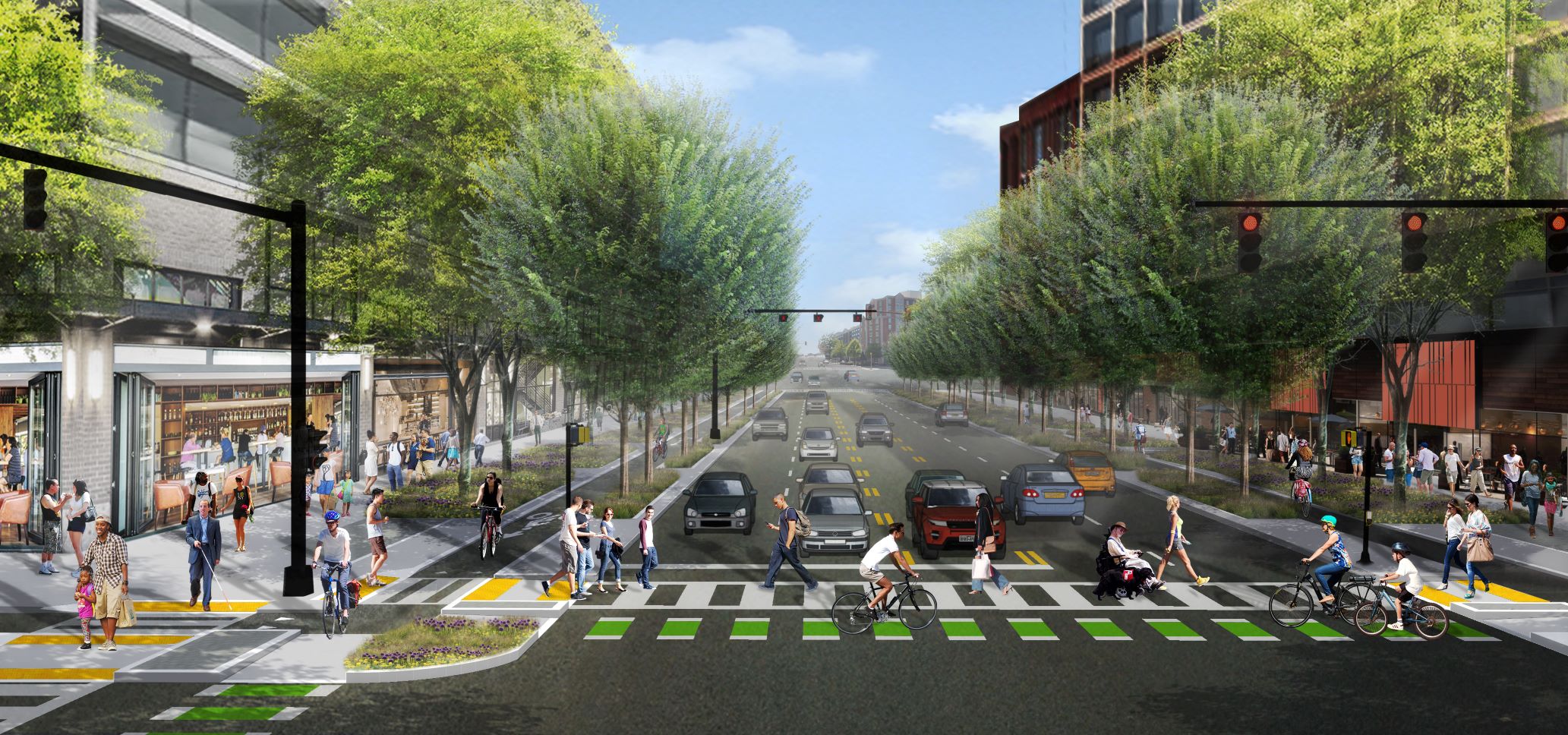
The National Landing business group worked with residents and businesses in the area to design new plans for the stretch. Their study looks at a 1.2-mile area from 15th Street to Glebe Road.
“Through smart design and a sustainable approach, we have a rare opportunity to remake Route 1 into an iconic corridor serving a thriving urban neighborhood,” BID Executive Director Tracy Sayegh Gabriel said in a statement. “If done right, Route 1 can be transformed into an inspired gateway to National Landing that prioritizes the community by putting people first.”
The three options in the report from Toole Design aim to create more comfortable crossings and promote walking, biking and bus use. It also would create more space for widened sidewalks, outdoor dining and landscaping.
The Reimagine Route 1 report is one of the first steps to changing the road, but it is separate from the official Virginia Department of Transportation study that kicks off this year.
VDOT’s study looks at a 3/4-mile stretch from 12th Street to 23rd Street. So far, no funding has been assigned for construction, so there’s no projected completion date.
It’s unclear how much the improvements will cost. The BID said they did not look at that aspect, though VDOT’s study will.
“Converting the corridor to an urban boulevard with a consistent 140-foot right of way will not only free up land for development but also increase the existing value of adjacent properties,” the study says. “Revenue from land sales and incremental property tax from both new development and existing properties will help offset and pay for the implementation of the reimagined Route 1 and can be leveraged to further enhance the quality of life in National Landing.”
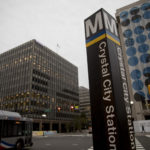
Virginia has committed to $195 million to transportation improvements for Amazon, which also includes a second entrance for the Crystal City Metro station, a pedestrian walkway to National Airport, and other projects.
Matt Gerber, general manager of the Westin Crystal City and co-chair of the BID’s Transportation Committee said in the release that the people-first approach is the right one to take with a changing neighborhood.
“Narrow lane widths, lower design speeds, and urban intersection geometries ensure that the auto-centric mistakes of the past will not be replicated in the development of the corridor’s new and distinctly community-focused identity,” he said.