 Jenny Gathright
Plans for a new men’s halfway house in D.C. could once again be stalled due to neighborhood opposition.
The city hasn’t had a facility for men finishing federal prison sentences since the previous halfway house, Hope Village, closed in April. After trying for about two years to secure a location, the company CORE DC won a federal contract in June to put a halfway house at 3701 Benning Road in Northeast D.C.
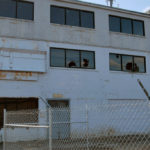
But now, ANC 7F, the commission representing the neighborhood where CORE plans to open the halfway house, has filed an application to designate the building at that address as a historic landmark. This halts CORE’s plans until the Historic Preservation Review Board can review the application, which it is scheduled to do on November 19.
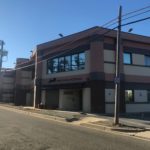
The building in question was previously the location of DC Eagle, a historic gay leather bar that moved to Benning Road from New York Avenue in 2014. It closed in May. But the application for preservation focuses on the building’s original purpose as a meat-rendering plant for the A.D. Loeffler Provisions Company, part of a larger complex of abattoirs. The application argues that “when the history of this building is understood, its significance to our heritage and to the memory of the men and women who worked there cannot be denied.”
“This isn’t about preventing the halfway house from coming to Ward 7,” said ANC 7F chair Tyrell Holcomb. However, Holcomb acknowledged that he had been vocal about his opposition to the CORE DC facility; ANC 7F published a statement in June opposing the halfway house location and circulated a petition to neighbors encouraging them to express opposition, too.
“It would appear that this application has nothing to do with historic preservation and everything do to with the preservation of economic development in the Minnesota Avenue and Benning Road corridor,” said Emily Tatro, Deputy Director for the Council for Court Excellence, which advocates for local criminal justice reform.
Advocates for returning citizens have been looking forward to the arrival of the new halfway house; They say it presents a long-awaited opportunity to offer higher-quality reentry services to people coming home to D.C. from prison.
“A position seeking to limit use of this site is taken to the detriment of the mostly Black men returning home to DC from prison, who have not had a halfway house to live in since April,” Tatro wrote in an email. “It is also taken to the detriment of public safety. We know that when people have time and stability at a halfway house to reconnect with loved ones, find work and housing, and engage in treatment, they are more likely to be successful. That keeps Ward 7 and all of DC safer.”
Holcomb said he’s open to the idea of a halfway house in Ward 7, but just does not want to see one as large as the one proposed. CORE DC’s contract with the Federal Bureau of Prisons is for a facility with a maximum of 300 beds, but Holcomb said he wants to see smaller facilities spread throughout the city instead. That would require the BOP to change its contract.
“Ward 7 is ready to welcome our returning citizens,” Holcomb said. “We just believe that it should be a shared responsibility.”
Ward 7 Councilmember Vincent Gray has also expressed that he is “unalterably opposed” to the halfway house, arguing that it would threaten plans for economic development in the neighborhood.
CORE DC was not immediately available to comment on the historic designation application or the application to raze the building. At this point, it is not clear what the company’s timeline for opening is, given the threat that the coronavirus pandemic poses to people in congregate settings.
This is the latest hurdle in what has been a long, contentious process of opening a new halfway house.
CORE DC was initially awarded the contract for a D.C. halfway house in 2018. It signed a letter of intent with D.C. developer Douglas Jemal for a property in Ward 5, near the National Arboretum. But after neighbors sued the city over zoning regulations in response to the halfway house, Jemal decided not to pursue the lease.
That decision cleared the way for Hope Village, which was also vying for the contract, to challenge the award on the basis that CORE DC did not have the right to use its proposed location.
Then, in spring, the landscape shifted suddenly. Hope Village decided to cease operations and close amid a rising chorus of criticism over its handling of the pandemic and its treatment of residents. Two men died at the facility within two days in the beginning of April. And advocates were criticizing the Bureau of Prisons for not acting quickly enough to move the men at Hope Village out of the congregate setting and into home confinement, where they would be less likely to catch the coronavirus.
The Bureau of Prisons transferred most of the men who had been staying at Hope Village to home confinement, and gave CORE DC the contract to supervise them. In June, the Bureau of Prisons announced its final decision to award the contract to CORE DC for a halfway house in Ward 7, on Benning Rd.
Reentry Action Network (RAN) co-chair Paula Thompson told DCist in June that local nonprofits looked forward to holding CORE DC accountable for quality reentry services—and saw the new halfway house as a fresh start.
“We are hopeful and we are encouraged that we actually feel like we have a partner in reentry that’s responsible for community corrections for our residents,” Thompson said.
Because the city doesn’t have a prison of its own, people serving longer sentences almost always serve their time in federal prisons. Since the Federal Bureau of Prisons only maintains one contract for a halfway house in D.C., the CORE DC facility would be the main reentry vehicle for men coming home to the city from federal prison.
“A halfway house should be … a place where returning citizens are being welcomed back into society to better themselves,” said Demetric Martin, who spent time at Hope Village in 2018, in June. Martin said he hoped the new halfway house could be a turning point. “Be more active with us. Help us to be put in a position to better ourselves.”