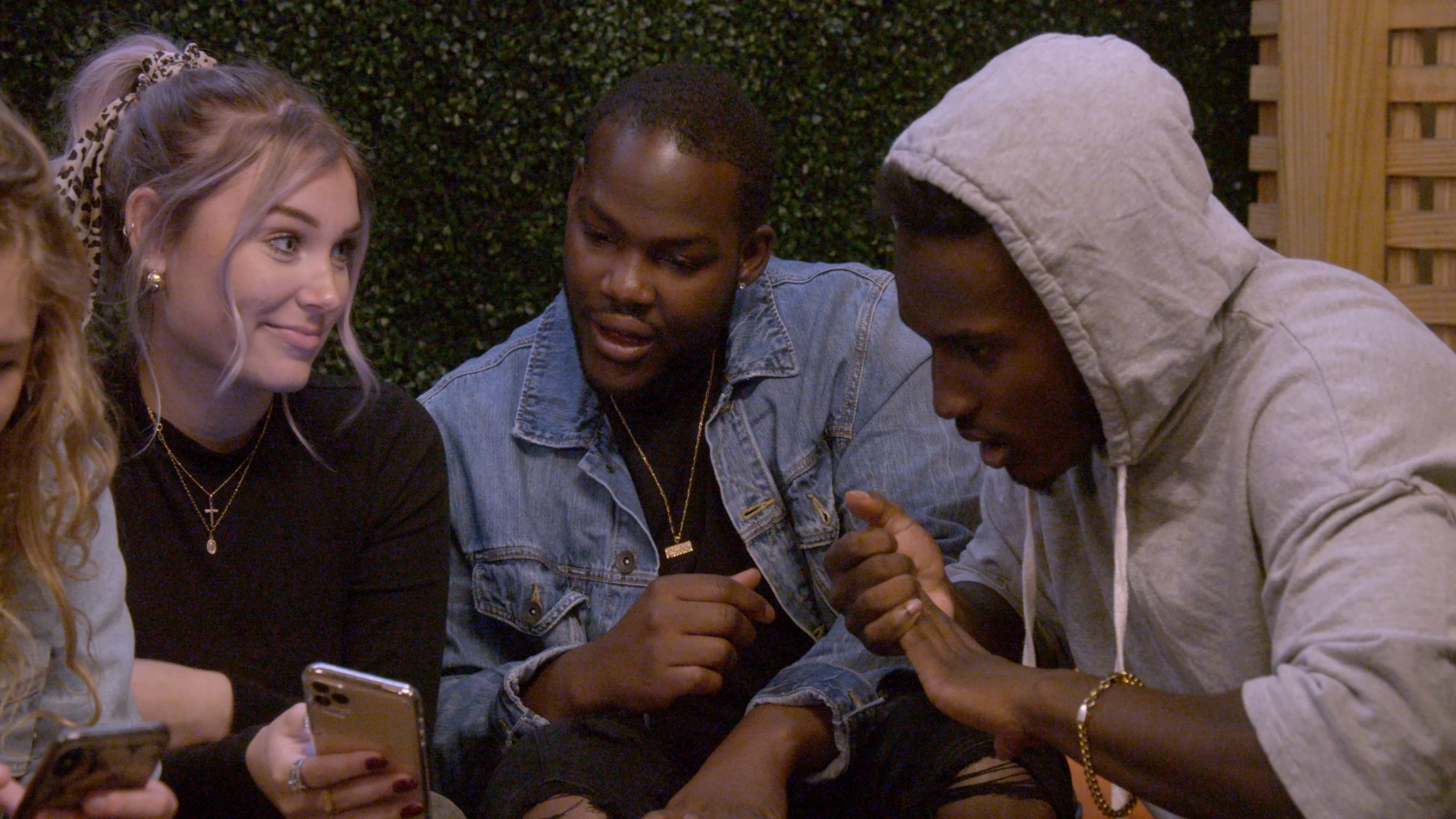
Netflix’s latest documentary series has a local setting: Gallaudet University. Deaf U follows seven students at the school for deaf and hard of hearing learners in Northeast D.C. There’s the typical messy drama of college and reality TV: the love triangles, the figuring-yourself-out part, and even the mean girls clique! And local viewers can spy plenty of D.C. spots in the show’s scenes. (Deaf U and The Real Housewives of Potomac mean that reality TV seems to be one of the few genres that explores D.C. beyond Congress and the White House.)
On the flip side, the storylines and drama of Deaf U are off to a shaky start. While there are some details here about coming of age and growing up deaf, it seems that the sex and love triangles are getting center stage. There are some real possibilities here, but the show seems to be taking the easy route with a lot of the storylines and reality tropes.
We watched the first two episodes of Deaf U’s eight-episode run. Here were our main takeaways.
Student Demographics
There’s a quick breakdown of gender at Gallaudet at the beginning of episode one that’s really helpful: Women outnumber men by a large margin on campus. And Gally is far from the only college that looks like this: Women make up 56 percent of students on university campuses nationwide. This can turn heterosexual dating into the hunger games.
Still, all of the women in the main cast are white; any women of color we see are relegated to B-roll. The Black men on the show are seen chasing after these women, while Cameron, the one Asian man we see in the first two episodes, is playing the role of “gay best friend” to student and influencer Cheyenna. With Gallaudet’s enrollment numbers shaking out the way they do (nearly half the students are non-white), it’s difficult to understand why there are no women of color — particularly Black women — on the main cast for this series.
Being A Player
Dating and sex on campus is a big theme of the show, particularly the idea of being a “player.” That dynamic is turned around for one of the best lines so far. In the second episode, teammates and best bros Rodney and Daequan talk about their separate dalliances with Alexa while on a liquor store run. She’s dated both of them, and the realization has left them shaken to their cores.
Rodney: “How she play us?”
Daequan; “She’s a psychology major!”
A psych major, indeed.
Of all the men in the cast, Rodney accepts the title of player with the most open of arms. In his introduction to the series, he explains his dating tactics, including messaging women with outrageously sexual comments or liking five Instagram posts in rapid succession in order to get attention. Here’s how we see it: Don’t try to be a player if you hate the game, Rodney! You can’t try to play the game without expecting to get played at some point.
How Much Of This Is Real?
The first two episodes show absolutely nothing about classes. And for plenty of college students, that’s a pretty realistic portrayal of senior year. You’re just trying to go to as few classes as possible and enjoy the legal drinking age before your kind and nourishing mother kicks you out into the real world. We did not come here to watch people take econ finals. WE ARE HERE FOR THE DRAMA.
That being said, it’s easy to wonder how much of that drama on Deaf U is manufactured. Even in the age of Uber, it’s hard to believe that college students in Trinidad/Union Market are going to go all the way to Malcolm X Park just to walk around, or that they’re paying for table service at Heist for a casual weekend out, both of which take place in the show. Especially when, according to pre-pandemic estimates, nearly 50 percent of deaf people are unemployed or underemployed nationally.
The incredulity extends beyond the setting. In one scene, members of the “elite” (more on that later) sit around critiquing influencer Cheyenna’s latest YouTube video. The girls are vicious, accusing her of performing for the hearing gaze. It’s also not difficult to imagine a producer setting down a laptop in front of a group of girls and telling them to be mean. Reality television makes you suspend disbelief. That’s what makes it fun!
So far, the biggest investment for the audience seems to be in the couple we saw the least of in the first two episodes: Renate and her girlfriend Tayla. They’re so sweet with one another while they get their nails done, discussing meeting parents, and navigating the world as queer women. They give the audience something to believe in.
Sex On Campus
This was the most alarming storyline in the first two episodes. Whew buddy. Alexa and Daequan go for a walk in the park, and Alexa asks him if he got her pregnant last year on purpose, a pregnancy she later terminated. We feel like this was heavier than the show treated it, especially with no content warning. It admittedly was not clear what “on purpose” meant, and it’s never clarified. Alexa asks Daequan if he tried to “trap” her, attempting to tie himself to her and her well-off family with a baby. If that is the case, what she’s accusing him of is stealthing, or tampering with the form of birth control they agreed on. That’s a form of sexual assault. If that’s not the case, it’s playing into some very dicey race and class stereotypes. This is on top of college campuses across the country not addressing or acting to stop sexual assault. One in five women on college campuses is assaulted, and only 12 percent of all students who are assaulted report it to the police.
The “Deaf Elite”
There’s a lot of talk about the “deaf elite” on the show. Those who are identified as “elite” in the series are white and come from economic privilege — and often from a long line of deaf family members. There are components of this elitism that intersect with sexism, racism, linguisticism, classism, and other -isms.
You can see it in the way Tessa and Alexa, who grew up wealthy in Frederick, Maryland — which has a thriving deaf community — interact with Daequan, who grew up without much money and never signed before he got to Gallaudet. All of that adds up to the snobby attitude of some of the cast members. It’s possible that producers are exaggerating that for a hearing audience that may have never interacted with the deaf community before.