 Jenny Gathright
 Elliot C. Williams
 Tyrone Turner
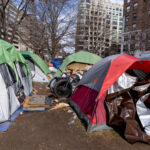
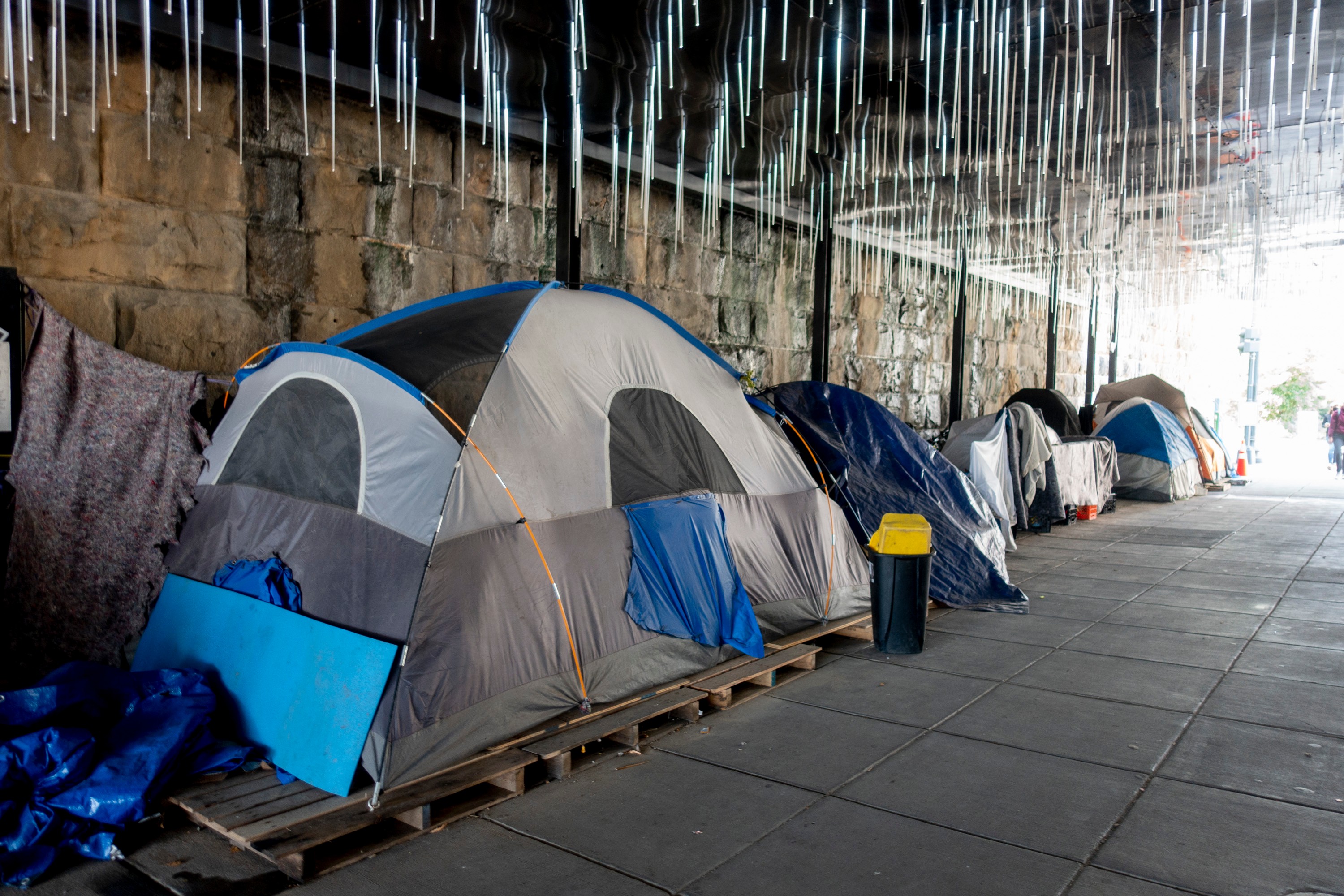
In March, when the District reported its first cases of COVID-19, the D.C. government scrambled to rent hotel rooms and secure leases for facilities where people experiencing homelessness could quarantine. There were fears about mass virus spread among an already-vulnerable population — one that has little existing access to medical care and other kinds of support.
“Just living on the street, trying to survive day to day when you’re dealing with cold weather, hot weather, food insecurity, health issues, mental illness, addictions, there’s already a range of challenges,” Joe Mettimano, president and CEO of Central Union Mission, told WAMU/DCist at the time. “When you throw something else like coronavirus in the mix, it should make us all stop and pause and say, ‘OK. What are we doing as a society to really address homelessness in a meaningful way?’”
By mid-May, Washingtonians experiencing homelessness faced disproportionate rates of infection — 269 individuals, nearly 6% of people in D.C. shelters, had tested positive for the novel coronavirus, compared to just 1% of the general population at the time. By October 8, that number had reached 349, and 21 people in the homeless service system had lost their lives due to COVID-19, according to the Department of Human Services.
The long months since the pandemic began have meant a slew of new dangers and difficult changes in the lives of unhoused people in the District, and Mettimano’s question from the spring has become more pertinent than ever. What about those who have no place to be safe from the spread of infection, no safety net when income is cut off?
So, for a day, we walked from Northeast to downtown to speak to people experiencing homelessness. We asked them how the pandemic has altered their lives and what they want people to know ahead of the winter months. Here’s what they shared, in their own words. The interviews have been condensed and lightly edited for clarity:
Name: “Momma J” (declined to give her full name)
Age: Somewhere over 50 years old (Declined to give her exact age)
Hometown/Location: Originally from Pennsylvania; Interviewed while sitting by the underpass between 1st and 2nd St NE on L Street in NoMa
What has changed for you since the start of the coronavirus pandemic?
Well, what changed for me is contributions, because the people not comin’. That’s the main thing, the lack of people.
Say like I went from, maybe $200 a week to maybe $150 a month.
They used to come here to work all over here. I don’t panhandle because God said when you serve me, you ask me, and I’ll send you what you need. And the truth is, he do. Now, I mean, I got a big cutback, but I still eat, drink. I’ve never spent the night in a shelter and I have never been to one of them places to eat. People bring the food. But then, I’m prayerful, you know.
What role do you play in your surrounding community?
I’ve been out here since 2012, so I’ve been out here when it was no one. See, the tents ain’t start coming ’til around [2016]. So for all them years, L street was mostly my street. And then people started coming, and then the construction.
Everybody come to me for everything. Not just the people who live out here, but people going back and forth to work. And they call me Momma J because, you know, everybody come to me for everything and especially words of encouragement, spiritual words of encouragement.
On why the neighborhood dogs love her
One man used to buy me chicken on Fridays. A bucket of chicken, cause it’s $4.99. So that’s how I got to feeding the dogs. When the dogs walk past, they’d pull away from the owner and pull over there to me, smelling the chicken. And I’d say, “Can I give him a little piece?” So I started feeding the dogs. They want something every time they come, so I started buying dog treats.
So for the last six, seven years, I’ve been feeding them. Sometimes, I say, “I don’t have nothing today,” because if I don’t have money, I can’t buy ‘em. But some of the owners will buy a couple bags or some of the owners will say, “Well, here’s $20, buy some more.” But you know, most of the people … their dog come four times a day. You think they’d buy one. But I ain’t doing it for them to buy it. I was doing it cause I like doing it.
How are you feeling about the upcoming winter and planning for it?
I ain’t never wanted to go like I want to go now. I’m tired of being out here, because the winter’s getting colder instead of warmer, and I’m getting older instead of younger. And I don’t have peace no more. I’ve got other people’s filth, stealing, begging, all of that. I mean, I ain’t ready to throw in the towel. But I’m praying and hoping something to come besides for one of them government apartments that you worse off in.
Why do you avoid government assistance?
When I first came out here in 2012, my first day of homelessness, the spirit told me, do not get involved with them government agencies. It’s easy to get in, but it’s hard to get out. And nothing works out right. Like, a lot of people did get a place. They stayed in them maybe three months, [and then] they back out here.
I don’t get checks. I don’t get food stamps because they government things … The hardest part was not signing up for that stimulus. $1,200 at one time and you don’t have an income? But it’s government.
What else do you do to survive as it gets cold?
I’mma tell you what started saving me: them handwarmers. Put some in your shoes, put some in your coat pocket. And I sleep in this chair — it’s a reclining chair. And put a couple under the bottom. And they’ve got the adhesive kind you can stick on. And they work. And then people bring you blankets.
And different people that I met, they’ll come back and surprise me: “It’s going to be so cold tonight. Me and my wife want to put you up.” When they first said that, I was scared to go. I don’t want to go to no hotel with no man, you know what I mean? But when he say the wife is going to come too … I had like five or six of them. So when it’s cold, I was staying in a hotel 20 nights in a row. Because they come and say, “Oh, it’s way too cold. You can’t stay out here tonight.” So God don’t put more on you than you can bear.
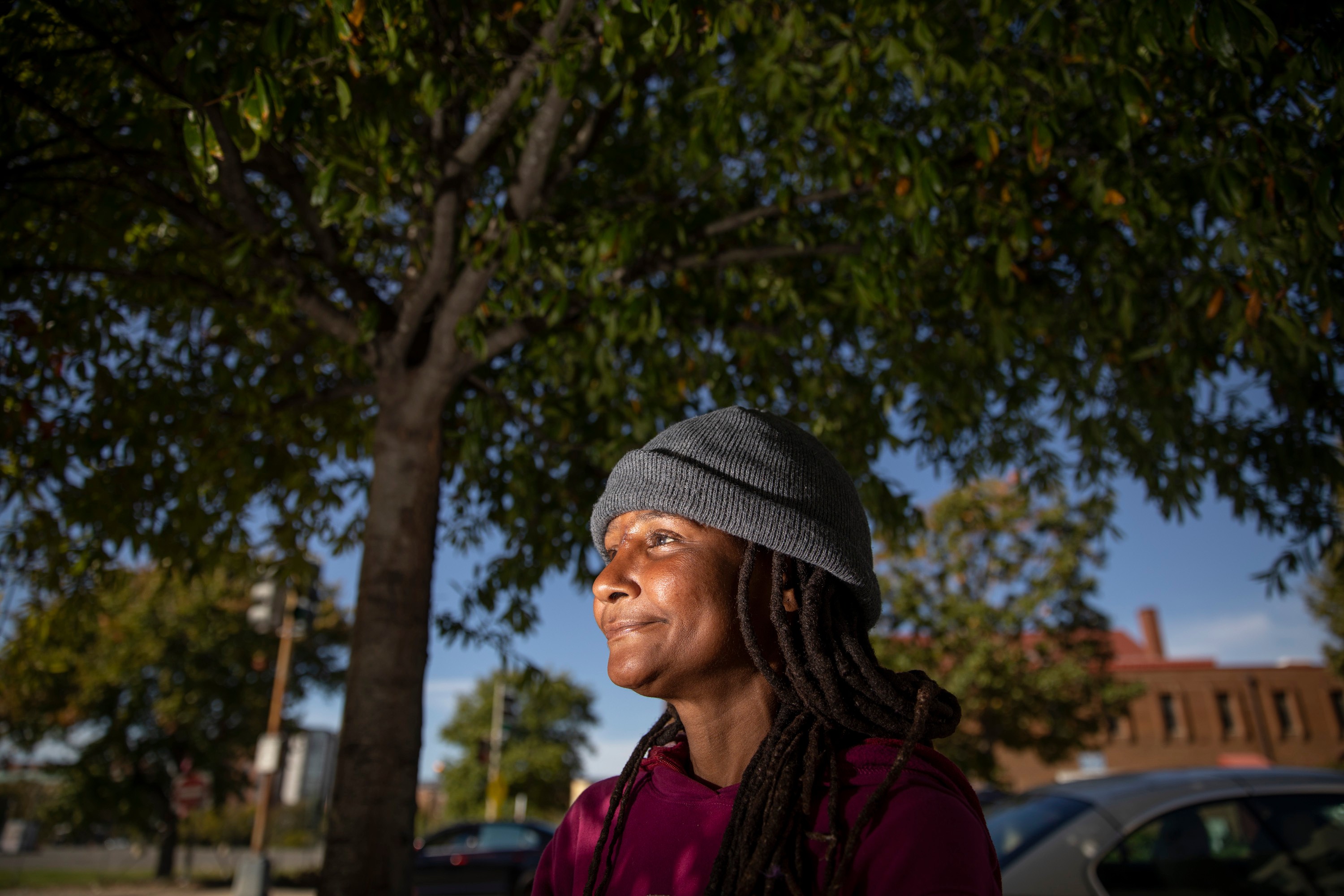
Name: Zion Hazeur
Age: 49
Hometown/Location:: Lived in New Orleans most of her life; Interviewed in NoMa at the corner of North Capitol St and L St
Content Warning: The following interview includes a story of sexual assault.
How long have you been in D.C.?
I got here 7 months ago. When I first got to D.C., I got robbed. They took my I.D., my Social Security card, everything. That’s the first day I got here. I had like $520 because I had my stimulus check. And they took that. I had treated them to some drinks and cigarettes and when I was counting my money, they grabbed it out of my hands. So I was at square one the first day I hit D.C. Ever since I’ve been in D.C., youngsters poured water on my head because I was sleeping at the park. I got hit by a car. Two weeks ago, a lady hit me with a pipe. I got raped. Every day was some kind of horrible drama. But now I keep my head up. I stay positive. I know who I am. I know there’s a future for myself.
If you’re homeless and you’re on the street, always know who you are. Don’t let no one take hope from you. You know you’ve got a future, you know what you’re living for, you keep going at it. So all they do is make me stronger and stronger and stronger.
How has it been different being homeless in a pandemic?
Oh, it’s most frustrating because I like to do things. I love to go to the library. I was in the pandemic in New Orleans, but I sensed trouble. I had to go, because it was full of [the coronavirus].
It’s upsetting to me. I feel like you can not stop life. Open the libraries, open the churches, open the schools. You’re holding us back. It’s not natural.
Where do you sleep?
On the street. It’s so laid out that people take pictures of my place. Wherever I go, I make beauty out of it. But unfortunately, people get jealous so they tear my stuff apart and stuff like that, so I had to move on. I go to another location, I beautify everything, but if I leave and come back the next day, they steal all my stuff. So here I am now. I’m here and there, because every time I establish a place, they mess that up.
On what she does to get by
People will bless me. I don’t ask for money. They just come at me—bring me some money, some clothes, stuff like that. You’ve got good people here. I love D.C., it’s a beautiful city.
All I can do right now is receive some help, try and get my birth certificate, my I.D., and stuff like that so I’ll be right back on track. So right now, I’m just enjoying D.C., sightseeing. I do positive things, so there’s always a sunny side. I’m happy. I’m happy and content with myself. I can enjoy life by myself.
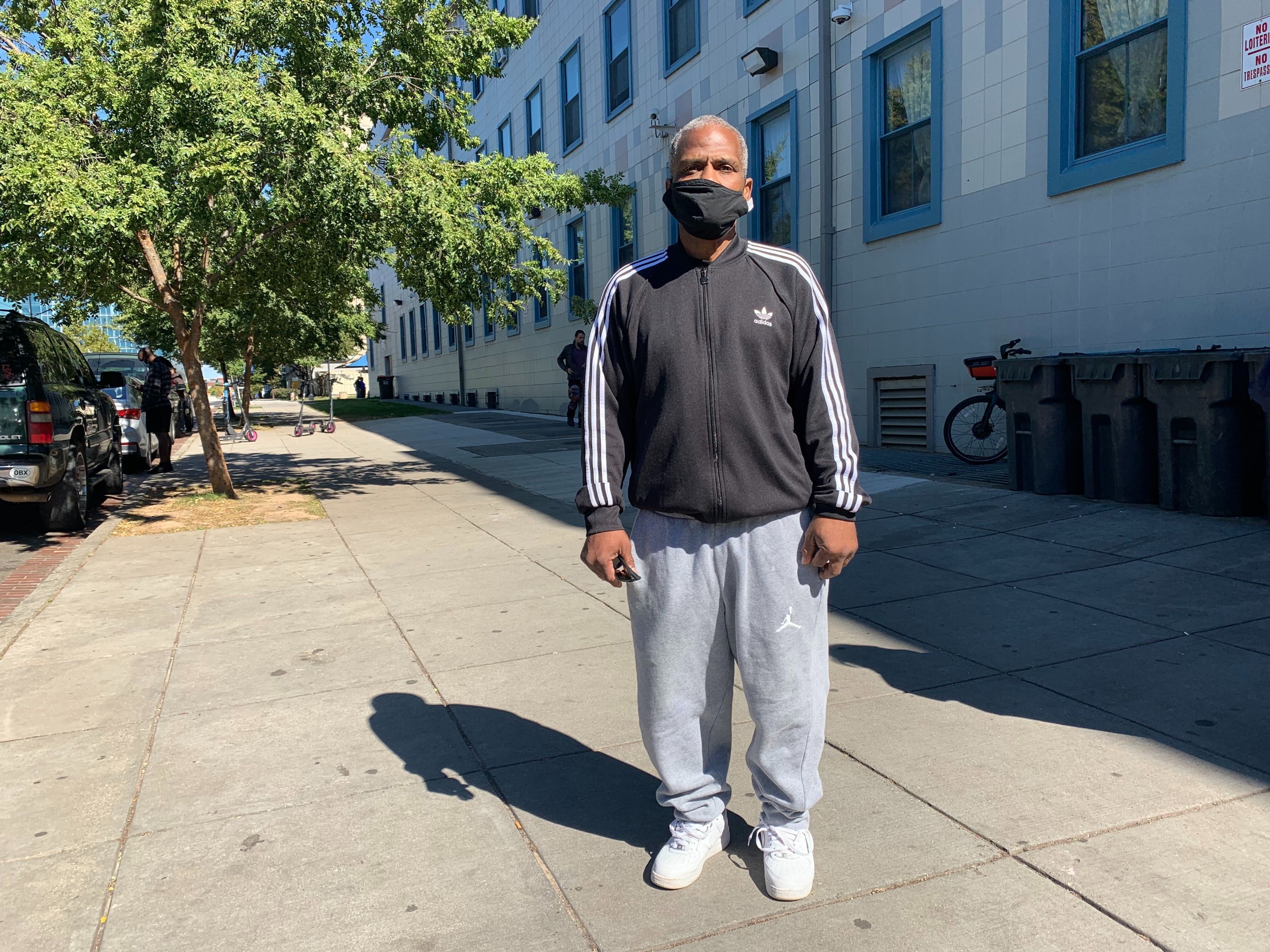
Name: Willie Byrd
Age: 57
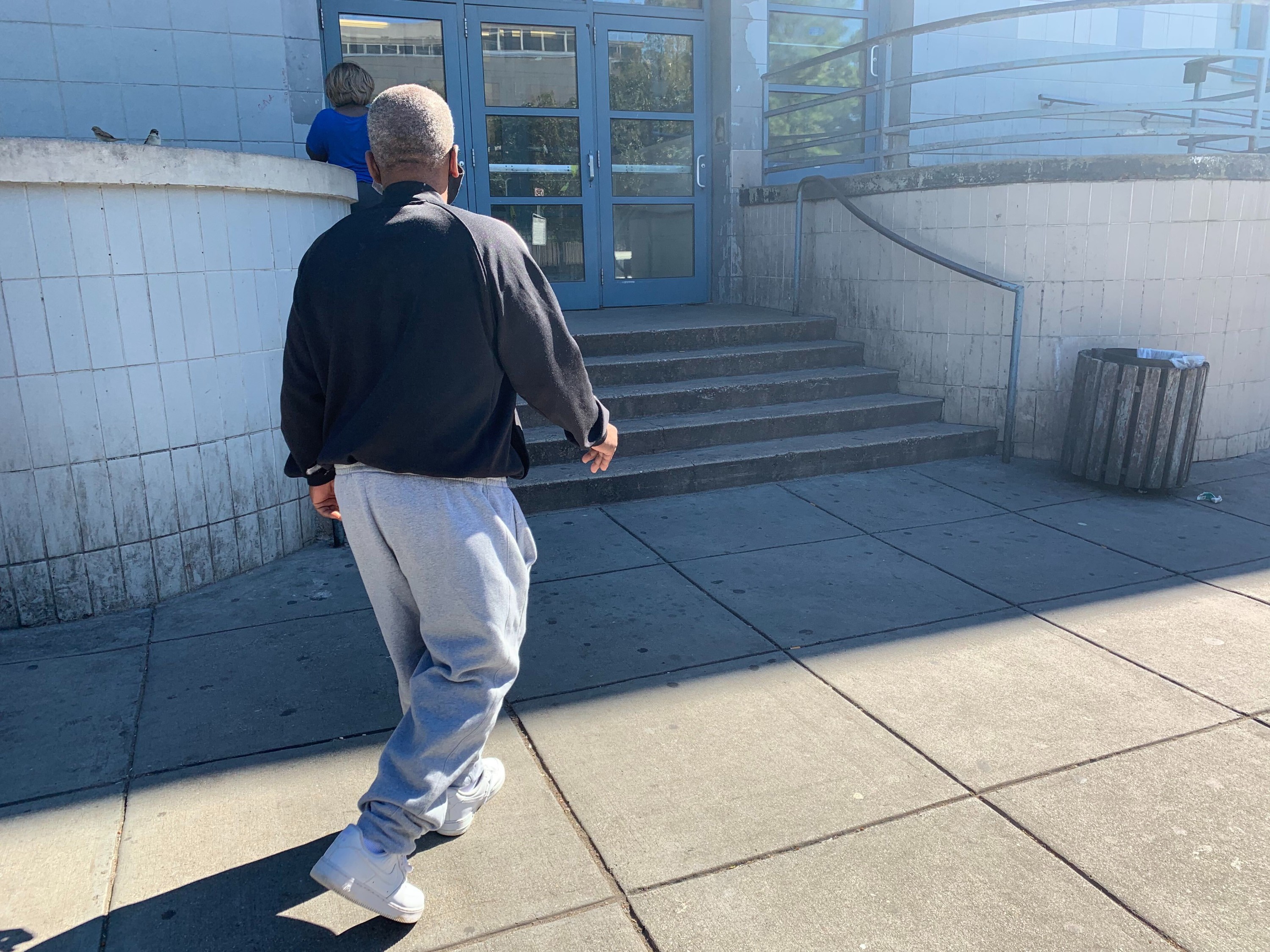
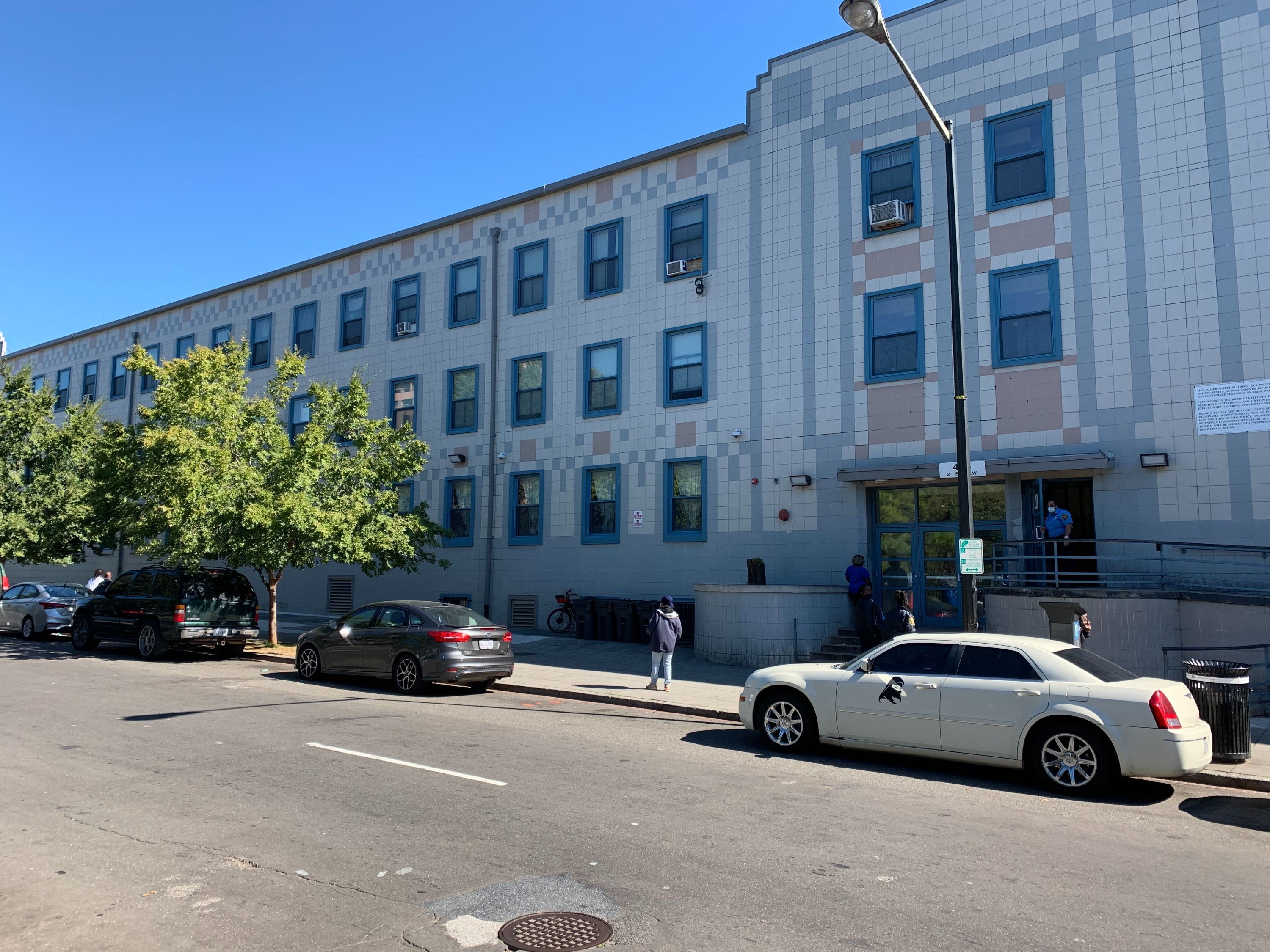
Hometown/Location: Born and raised in D.C.; Interviewed outside the Community for Creative Nonviolence shelter at 2nd and D Streets Northwest.
How long have you been staying at this shelter?
The last couple of months. I was incarcerated first, and I did reside here before I got incarcerated. Now I’m going through trying to find shelter again. It’s been a good experience and a bad experience.
Are there services that have been harder to get during the pandemic?
Those things that I need, as far as housing, income, and something to supplement my drug addiction — suboxone, or other things that they give you to not use drugs or deter you from using … It’s frustrating to wake up and not have those things in my life.
I can’t just go to a psychiatry program and say, “I need this, I need that” and not have insurance.
Do you not have insurance right now because D.C. is switching its Medicaid program?
They’re saying they switched it to another HMO. OK. What happens to this until I get that?
I went to the clinic, the gentleman said [I had insurance]. I go to CVS to fill a prescription? Nothing.
What are some of the other things you need right now?
A dollar can be got. But I need that emotional support and that mental support. Someone to talk to. There’s things I need to talk about what’s going on in my life.
And with my mental health, I don’t have my medications. I tell them I need my medicine. And I’ve been out there four, five months, and I haven’t gotten that. I take psychotic medication, sleep medication, HIV meds. I mean, I got the HIV [meds], but that was a struggle. I use illegal substances to medicate myself … for depression. I deal with all that day by day.
What do you hope will change in the coming months?
I’m asking for help. I went into a detox seven days, but getting out, like I said, I don’t have insurance. So — backslide. I’m right back where I was before I went into detox. I’m using again. What did I go to detox for? I went for help. Now coming out, I can’t get that help because of my medical insurance. So I’m stuck between a rock and a hard place.
Every day I wake up and have a positive, praying mind, but soon, I get to moving and not having things that I need — a day program or something that’ll for the hour, two hours, help my head …To be honest, y’all see what’s happening. Y’all are not dumb. The drug trade is happening as soon as I walk out the door. The devil says, “Here you go.” And I don’t want to do it, but it’s right there.
On fears of the coronavirus
This corona thing is what it is. They sugarcoat it to a degree, but it’s more subject to get right here because we don’t have the ventilation that we’re supposed to have. But it is what it is. I’d rather be in this building than out on this curb. I’m thankful to be able to have a bed, wash up, you know, every now and then get a hot meal.
I have shelter. That’s the most important thing right now. And taking care of my health. But the shelter is there. You’ve gotta have patience. That’s part of it too.
My situation is life-threatening to me. That’s why I’m standing here talking to you. I hope what I’m saying can help somebody else.
Name: Predetta Taylor
Age: 63
Hometown/Location: D.C. native; Interviewed at Downtown Day Services Center at the New York Avenue Presbyterian Church
How long have you been experiencing homelessness?
I’ve been homeless for about a year. My husband died. I lost everything. So I’m just here. I sleep right down here on 9th and Massachusetts — it’s a white church. I sleep there because there’s a canopy. But they’re getting ready to resume services. Everybody doesn’t clean up after themselves, so they no longer want us to sleep there.
What made you decide not to seek housing at a shelter?
It wasn’t a decision. They have very few shelters for women.
What have been some of the biggest obstacles you’ve faced during the pandemic?
I had a paper ID that expired back in May. You have to make appointments now. My appointment isn’t until February the 4th at the DMV to get an ID. You have to make an appointment for everything, because there’s only a certain amount of people that can go anywhere. We used to come in here, go sit down there. Now we can’t.
What’s your biggest concern?
I don’t wanna die out here on the street. It’s bad enough I’m homeless. I want my autobiography to have a different ending. I want to continue to grow old gracefully and be comfortable.
What gives you hope?
I’ve got a hobby — self-taught knitting and crocheting. If you can describe it, I can draw it, I can measure it, I can make it. I could put any logo, any name or whatever on it. And I’m relaxed, I can hold a conversation, watch a movie, and never drop a stitch.
But not out here. I have people that want me to make things for them, but I have to get stable housing. I already know where to get my yarn. I know what kind of yarn you can use for certain things. I would have to be stable, then I could start making things. Then perhaps, God-willing, I’d get a website: “Predetta’s Fine Knits.”
What resources have helped you during the pandemic?
This [Downtown Day Services Center] is the best resource center because they’ve got Pathways to Housing. They really work to help get you up off of the street, if that’s what you want. They help prepare you to do the transformation from homelessness to housing. I come everyday because I know I can get this meal. I need to eat something. [Opens lunch box.] I’m tired of turkey everyday … [laughs] Sometimes it’s roast beef, but lately, it’s been turkey.
Are you worried about getting COVID-19?
Not really. If you don’t know that God is real, you need to know. If it’s for me, then I cannot escape it. So I have to go ‘head on … We just have to learn how to live with the new world order, as it is. I don’t worry about that. God has the final say-so in all my matters. I cannot worry about a thing I cannot change. And that’s that.
Name: Joanne (declined to give last name)
Age: 62
Hometown/Location: Originally from Colorado; Interviewed in McPherson Square with her small dog
What brought you to this park in particular?
This is the only place I can go where there’s benches where you can lay on. There’s an overhang down the street. But I don’t know who owns that building. Sometimes the security comes down and you’re just settling in — ‘You have to leave. You can’t sleep here, it’s private property.’ So there’s a real problem in D.C. Union Station, I can’t sleep there. I’m batting off rats. So, I make sure my dog is warm. She’s been doing fine, with coats and everything.
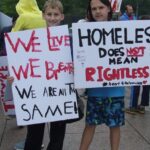
It’s a problem. They need to open a new location [another women’s shelter] so we can pee and poop and eat and relax. And get through this. We have a right to hygiene. We have a right to everything. I mean, it’s just crazy. [She points to a nearby portable toilet] This is filthy. They cleaned it out today, but I have pictures. It was overflowing.
Have you noticed a drop in foot traffic or the number of people who stop and offer help over the past few months?
No, there’s actually been quite a few really nice people who will come and give you things. But it’s like, we still need basics. Venues are not open for the homeless. You can’t even charge your phone. I have a laptop, but the library’s not available, you know?
Have you tried living at one of the shelters in D.C.?
They turned me away for the dog, at first. After that, the dog was cleared, but then my bag was too big. I had to leave it outside at night. I’m not leaving my bag outside, it would be gone. Who would do this? It’s ridiculous.
What have been your biggest concerns while out on the street?
I haven’t had a shower in quite a while, so this is a hygiene problem. We need soap and water. We want to smell good. Every day, we should be entitled to this. There’s no breakfast in the morning. People need that to look forward to … a burrito, anything.
What do you want people to know about homelessness in D.C.?
People do not recognize the grief and the vulnerability of the homeless community. It’s not being addressed because they don’t talk about it. They don’t have a spouse that died. They don’t have a sister that died. Their grief is hidden, but they’ve had loss. They’re grieving. They’ve had a lot of loss and it sets them up in a very bad position to be taken advantage of.
Do you have a plan for when the weather gets colder?
I’m feeling pressure that I might have to go to Florida or something. I don’t want to have to do that. I’m here to get Trump out of office, and I want to be here for the duration. But I have to take care of my dog, so if it takes buying a little tent and going to Florida, I’ll have to do that.
This article is part of our 2020 contribution to the DC Homeless Crisis Reporting Project, in collaboration with other local newsrooms. The collective works will be published throughout the day at DCHomelessCrisis.press. You can also join the public Facebook group or follow #DCHomelessCrisis on Twitter to discuss further