Matt Blitz
A murderous bunny under a railroad underpass. A Chinese restaurant with haunting knocks at the door. An abandoned tuberculosis hospital. A half-man, half-goat decapitating dogs in the Maryland woods.
The D.C.-area is full of ghostly, haunting, and spooky stories. Some of these tales are of course fiction, but many have a kernel of truth.
If 2020 hasn’t been frightening enough, here are the true stories behind nine local haunts that will surely spook you.

Oak Hill Cemetery — Georgetown, D.C.
In 2017, Georgetown’s Oak Hill Cemetery was immortalized in George Saunders’ best-selling novel Lincoln in the Bardo, which depicts Abraham Lincoln being watched by ghostly spirits while visiting the grave of his deceased son at the cemetery. While the book is (mostly) a work of fiction, there are Oak Hill ghost stories that have kernels of fact.
“There’s awful a lot of history here,” says Andy Seferlis, a local historian who’s a tour guide at Oak Hill. “And there are stories that I have confidence in that have both been documented and things that have been witnessed.”
Seferlis says he’s heard from visitors and staff that they’ve seen ghostly images of six hearse-pulling white horses grazing by a mausoleum; a pale, dark-haired woman in a white dress; and a cane-holding William Wilson Corcorane haunting the cemetery. Seferlis even says once he noticed the lights on in the cemetery’s chapel at a late hour. When he called to report it, he was told that no one alive had been inside for three days. However, there were dead bodies waiting for burial being stored there.
Despite the stories, Oak Hill’s superintendent Dave Jackson isn’t convinced there are ghosts in the cemetery. “I haven’t seen any,” says Jackson, who is probably the person who spends the most time in the cemetery. “We are under the impression that everyone [buried] here is happy to be here.”
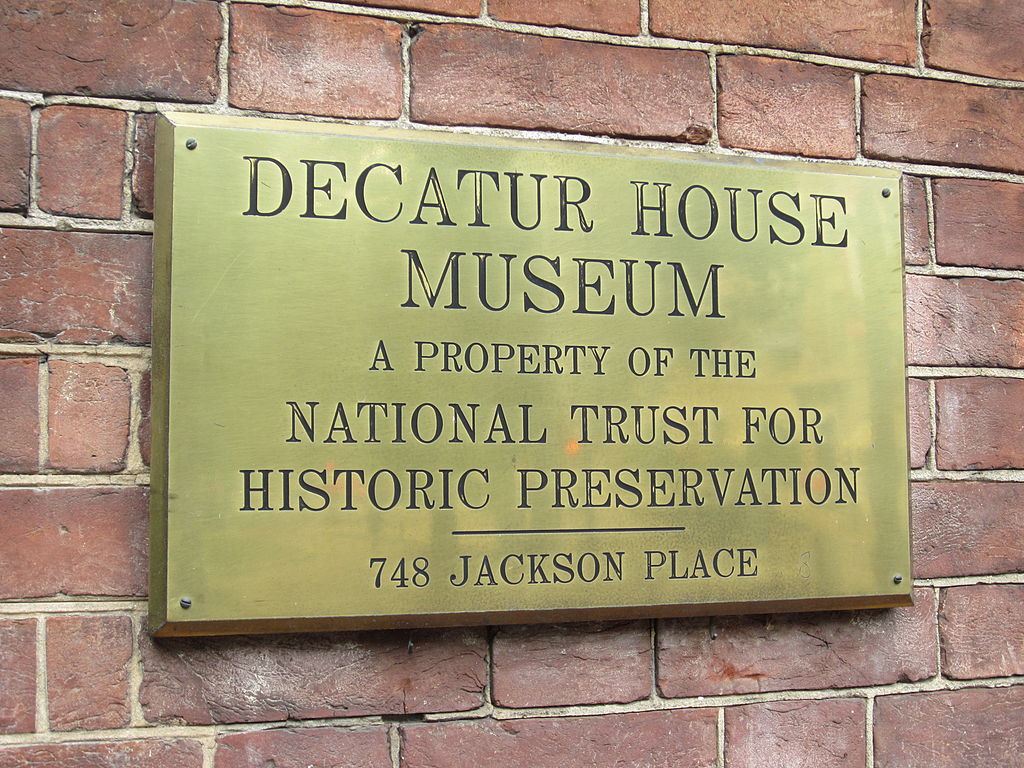
Decatur House — H Street NW, D.C.
As we’ve learned from Hamilton, duels were a somewhat common (and barbaric) way for aristocrats to settle disputes in the 18th and early 19th centuries.
This is how Commodore Stephen Decatur met his fate when a feud over slanderous statements with a fellow naval officer escalated to a face-off at Bladensburg Dueling Grounds. Decatur was shot, mortally wounded, and brought back to his house on Lafayette Square to die.
Tim Krepp is a tour guide and author of a couple of books about D.C. ghosts (he also ran for Congress against Eleanor Holmes Norton in 2014). The legend, he says, is that due to Decatur’s death being so sudden and violent, his soul is never able to find permanent rest. Therefore, he has remained in his house and could be seen looking out the window facing H Street from time to time.
“The new owners eventually bricked up the windows,” says Krepp, recounting the legend. “It became unnerving for folks to see Stephen Decatur’s ephemeral form standing at the window, staring at you.”
But, of course, history doesn’t quite line up with this ghost story. “[The house] was built with bricked-in windows,” says Krepp. “The windows were put there for symmetry because that was part of the design motif. They never were functional windows.”

Bunny Man Bridge — Clifton, Virginia
Even without the legend, this railroad underpass in the middle of the Virginia woods is creepy enough.
The haunting tale goes that more than a century ago, a bus (which looked much different back then) transporting prisoners crashed right near the bridge and many of the prisoners escaped. Authorities were able to track all but one of them down. And for years afterward, dismembered, half-eaten rabbits were found throughout the woods. Then, many years later on Halloween night, teenagers were hanging out at the bridge when they spotted a light. The next morning, officials found them dismembered, half-eaten just like those rabbits.
That story has been completely disproven, but the truth about the Bunny Man is still pretty scary.
Fairfax County archivist Brain Conley started into looking into the legend when he got tired of being asked about it by wide-eyed teenagers. His research revealed that the tale was inspired by real-life incidents.
According to the October 22, 1970 Washington Post story “Man in Bunny Suit Sought In Fairfax,” a couple sitting in a car near the bridge was attacked by a man “dressed in a white suit with long bunny ears.” The man threw a hatchet through the car’s window, but thankfully, no one was hurt. A similar occurrence happened two weeks later when “a man wearing a furry rabbit suit with two long ears” was again spotted taking an ax to a new house in the area. The perpetrator was never caught.
Today, the Bunny Man remains the subject of Halloween attractions and B-movies — and was perhaps even the inspiration for the 2001 cult classic Donnie Darko.
In the end, however, the real Bunny Man may be just as creepy as the legend, but at least a lot less murderous.
Glenn Dale Hospital — Glenn Dale, Maryland
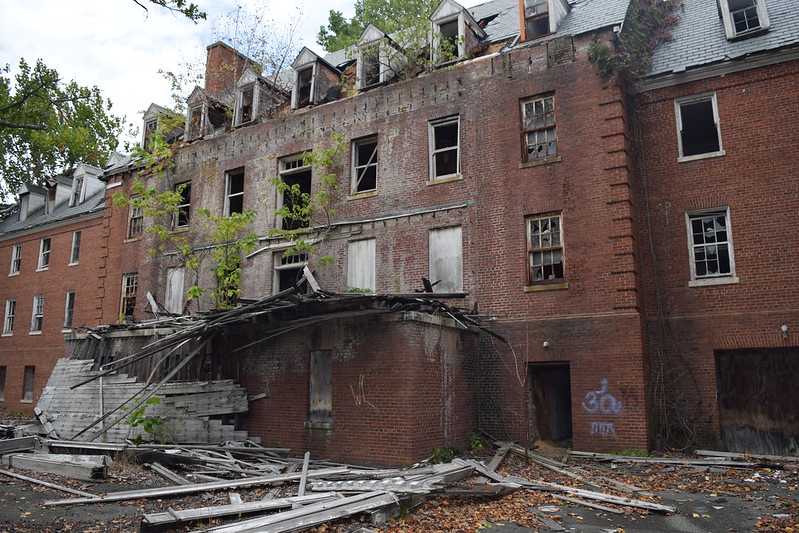
This tuberculosis sanitarium opened in 1934 as a Maryland countryside retreat for those suffering from the highly contagious, respiratory disease that was killing 71,000 people a year in the United States. Today, it sits abandoned and decrepit in what is now a D.C. suburb.
“It looks like a scene of The Walking Dead right now,” says Nicholas Redding, executive director of Preservation Maryland which is a non-profit working to save the site.
This wasn’t always the case: The 210-acre campus was specifically built to be breezy, spacious, and bucolic in hopes that a holistic treatment could help cure the disease.
When antibiotics became more widely available in the early 1960s, the site was repurposed into a nursing home. But that closed in 1981 and the site has sat unused ever since.
Local officials and advocates have continued to discuss repurposing the onetime hospital into a mixed use development, much like National Park Seminary. Redding says he’s become more optimistic about this possibility recently due to shifting legislation and developer enthusiasm.
Meanwhile, Redding says that trespassing and vandalism remain a huge problem and threaten the site. Redding also says the abandoned hospital is extremely unsafe, filled with unstable floors, standing water, and asbestos.
“As somebody who crawls through and tramples over historic buildings for a living, I wouldn’t feel comfortable doing it,” says Redding. “There’s some pretty dangerous stuff out there. People should definitely stay away.”

The Exorcist Steps — Georgetown, D.C.
Next to an abandoned gas station and three blocks from Georgetown Cupcake are perhaps the most famous set of stairs in horror movie history.
In a climatic scene in the 1973 movie The Exorcist, a priest fatally falls down these local steps. Sure, they are hardly seen and there’s a good deal of movie magic needed to ensure that the clergyman flying out of the window will land on the steep steps. But these Georgetown stairs, as a 2015 plaque commemorates, have endured as a haunting D.C. icon.
In 2019, the steps were designated a city historical landmark — though not because of the movie. It was due to the fact that the steps, the retaining wall next to them, and the Old Capitol Traction Station building on the other side made up a 19th century, three-story transit hub for D.C. streetcars.
Addressing the steps’ movie star status in the report, D.C.’s Historic Preservation Review Board wrote that being in a popular film didn’t necessarily make the steps historic. “[The Exorcist] has stood the test of time (even if its special effects now look a bit cruder to our eyes),” the report reads. “But this does not necessarily rub off on the 36th Street stairway as a participant in the ‘artistry’ of ‘creative masters’ of cinema.”
As for the famed scene itself, the board took a shot at its plausibility, saying that the filmmaker had to add a false wing to make the house appear closer to the stairs.
“It was deemed implausible for even a supernatural force to hurl a body clear over an intervening lot,” notes the report.
Today, this flight of narrow, steep stone steps remains a tourist attraction. Let’s hope no one has tried to recreate the famous tumble down the stairs.

Octagon House — New York Avenue NW, D.C.
This geometric house nearby the White House is thought to be one of the most haunted places in D.C..
Amanda Malloy, development manager at the Octagon House, knows all of the haunting tales. “There are so many,” says Malloy. “And I’m a bit of a scaredy-cat myself.”
The most famous, she says, is the one about the young daughter of a family who lived there in the early 19th century falling down the spiraling, three-story high staircase to her death. Over the years, the house museum has compiled mentions and research into this supposed accident.
“It’s so interesting because this story escalates,” says Malloy. “[First], a daughter trips down the stairs. Then, two daughters go down the stairs. A daughter trips over her cat and down the stairs. A daughter gets pushed and trips over her cat and down the stairs.”
However, Malloy says no real historical record she’s come across makes any mention of any daughter falling downstairs, much less dying in the house.
There are also stories of ever-ringing servants’ call bells, a tuxedo-wearing man who tips his hat at onlookers before disappearing, and the ghost of Dolley Madison leaving a trailing scent of lavender perfume.
Malloy says she’s never seen or experienced any of these hauntings at the Octagon House, though she’s heard stories from others. This has left her thinking that there’s a possibility of ghosts.
“It could be haunted,” says Malloy. “But I prefer to say not because I have to go in there a lot.”
The Legend of the Goatman — Fletchertown Road, Maryland
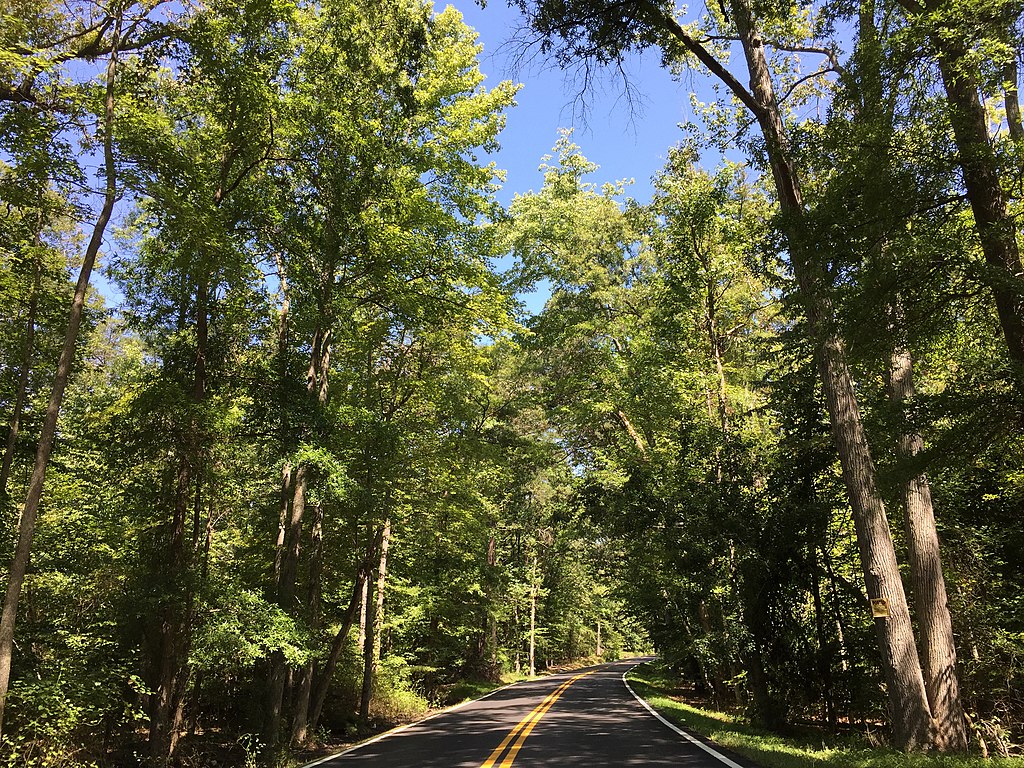
There are competing stories about the Goatman, a half-goat, half-man that supposedly haunts Fletchertown Road in northeast Prince George’s County. He could be a furious goat herder who went a rampage after finding his beloved goats dead at the hands of teenagers. He could also be a mythical creature, in a similar vein as Bigfoot or a werewolf, roaming the Maryland woods looking for a meal. Or, maybe, a result of an experiment gone wrong at Beltsville Research Agricultural Center that somehow combined a man with a goat.
Either way, the story has entranced local teenagers for decades. The first mention of the Goatman was in a local county newspaper in October 1971. A month later, he made it into the Washington Post in a story about a decapitated dog. While locals blamed the Goatman for the dog’s demise, the newspaper noted that a passing train may have been a more likely culprit.
For a 2013 Modern Farmer story, a representative for Beltsville Research Agricultural Center had to actually deny that the USDA-run facility created some sort of human-animal hybrid.
“We just think it’s stupid,” she told the outlet. “Don’t you think he would have retired by now? Is his great-grandson a goatman? Is he collecting Social Security?”
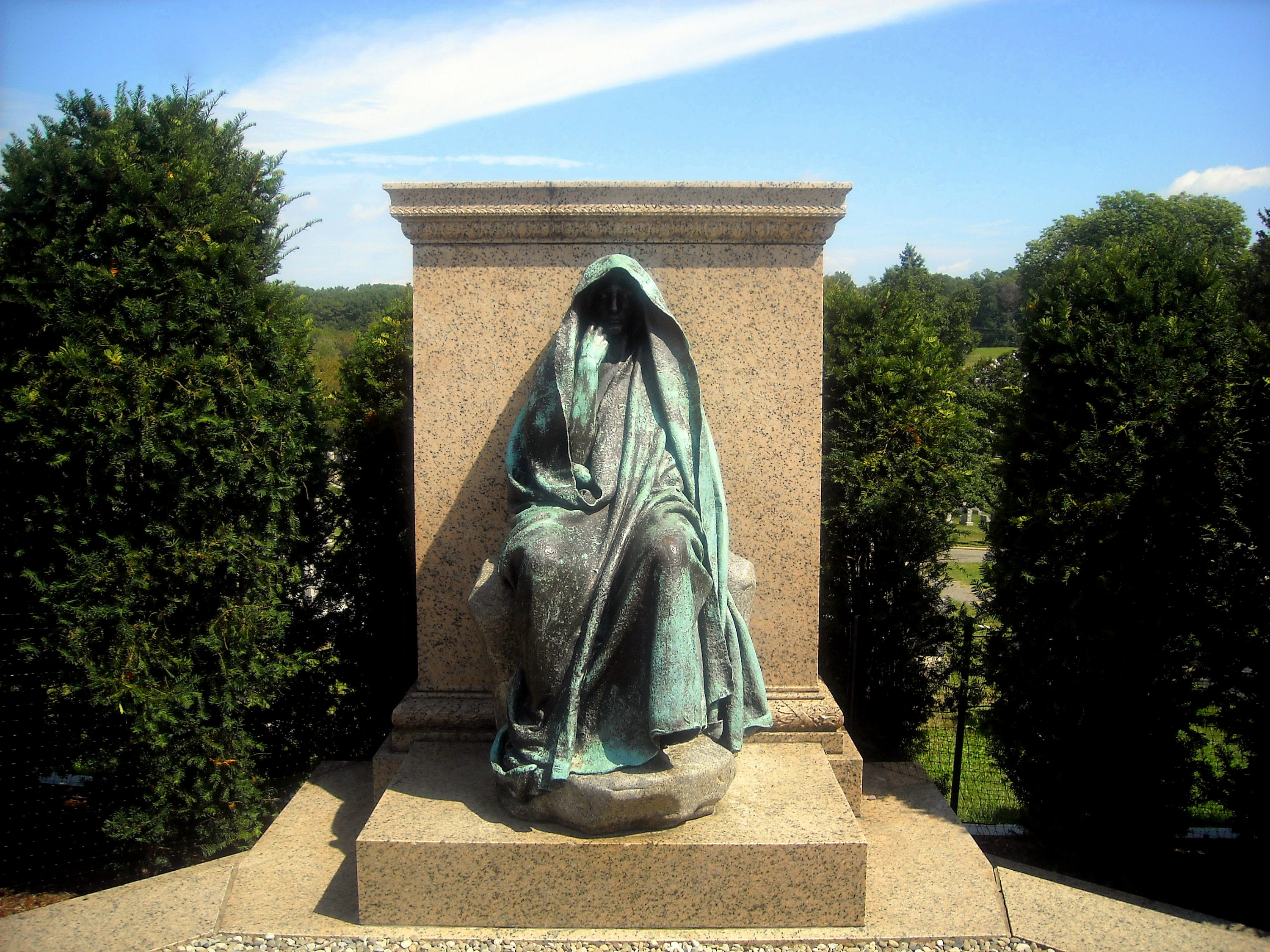
Adams Memorial — Rock Creek Cemetery, D.C.
The memorial at Rock Creek Cemetery near Fort Totten is intended to be mysterious. An expressionless figure peering out from under a heavily draped shroud. A stone bench facing the statue, neither welcoming nor discouraging.
This is a work of famed sculptor Augustus Saint-Gaudens, commissioned by Henry Adams shortly after his wife’s death by poison.
In 1872, Adams — a well-known writer and descendant of two presidents — married Marian “Clover” Hooper. By most accounts, they were a much beloved couple, hosting parties and hobnobbing with socialites. Clover was also a photographer and many consider her a pioneer of portrait photography.
At age 42, Clover died by suicide after swallowing potassium cyanide, a chemical used to develop photographs.
In her honor, Adams had the memorial built. He never named it, though it’s sometimes called “Clover” or, simply, “Grief.” For the rest of his life, Adams would visit the memorial but never talk about his wife or the intended meaning of the statute.
The notes in Saint-Gaudens’ sketchbook about the statute simply state, “Adams. Buddha. Mental Repose. Calm reflection in contrast with the violence or force in nature.”
As is the case today, the memorial attracted tourists even back when Henry Adams was still alive. Because of this, it’s said that he was unable to truly grieve and find comfort in the memorial he built to honor his late wife.
Adams died in 1918 and is buried in an unmarked grave at the foot of the statue.

Wok and Roll Restaurant — H Street NW, D.C.
This unassuming Chinese restaurant down the block from the Gallery Place-Chinatown Metro station was the home of the first woman ever executed by the United States government.
Mary Surratt ran a boarding house on H Street where the conspiracy to kidnap and assassinate President Lincoln was first hatched. To this day, historians debate her actual involvement in the crime she was hanged for.
What isn’t debated is that those that were actually involved — Lewis Powell, George Azterodt, David Herold, and John Wilkes Booth — met and spent nights at Surratt’s boarding house.
After Lincoln’s murder, clues led investigators to Surratt’s front door. The story goes, Krepp says, that as detectives were interviewing Surratt inside about what she knew (“She was spinning it and was actually somewhat successful,” says Krepp), a dirty, bloodied Powell walked up and knocked on the door. This bad timing cemented Surratt’s guilt-by-association. She was arrested and eventually hanged.
To this day, according to Krepp, diners can still sometimes hear Powell knock on the door, and upstairs, hushed voices conspiring.
This hasn’t stopped Krepp from eating at the restaurant, though. Says Krepp, “I do like the Singapore rice noodles.”