Martin Austermuhle
 Aja Beckham
 Daniella Cheslow
 Jacob Fenston
 Mikaela Lefrak
 Lori McCue
 Jordan Pascale
 Julie Strupp
 Elliot C. Williams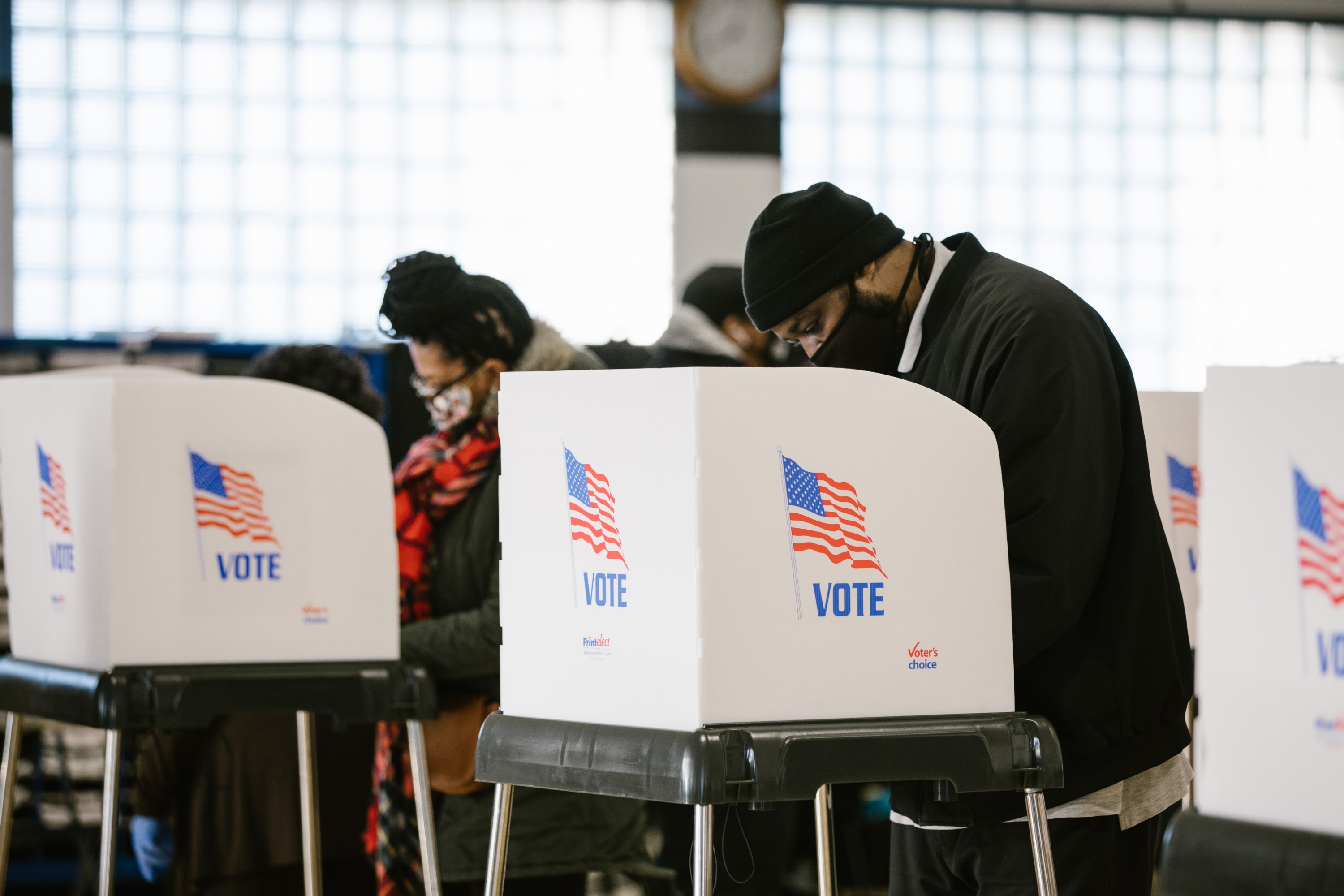
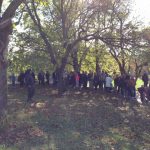
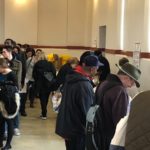
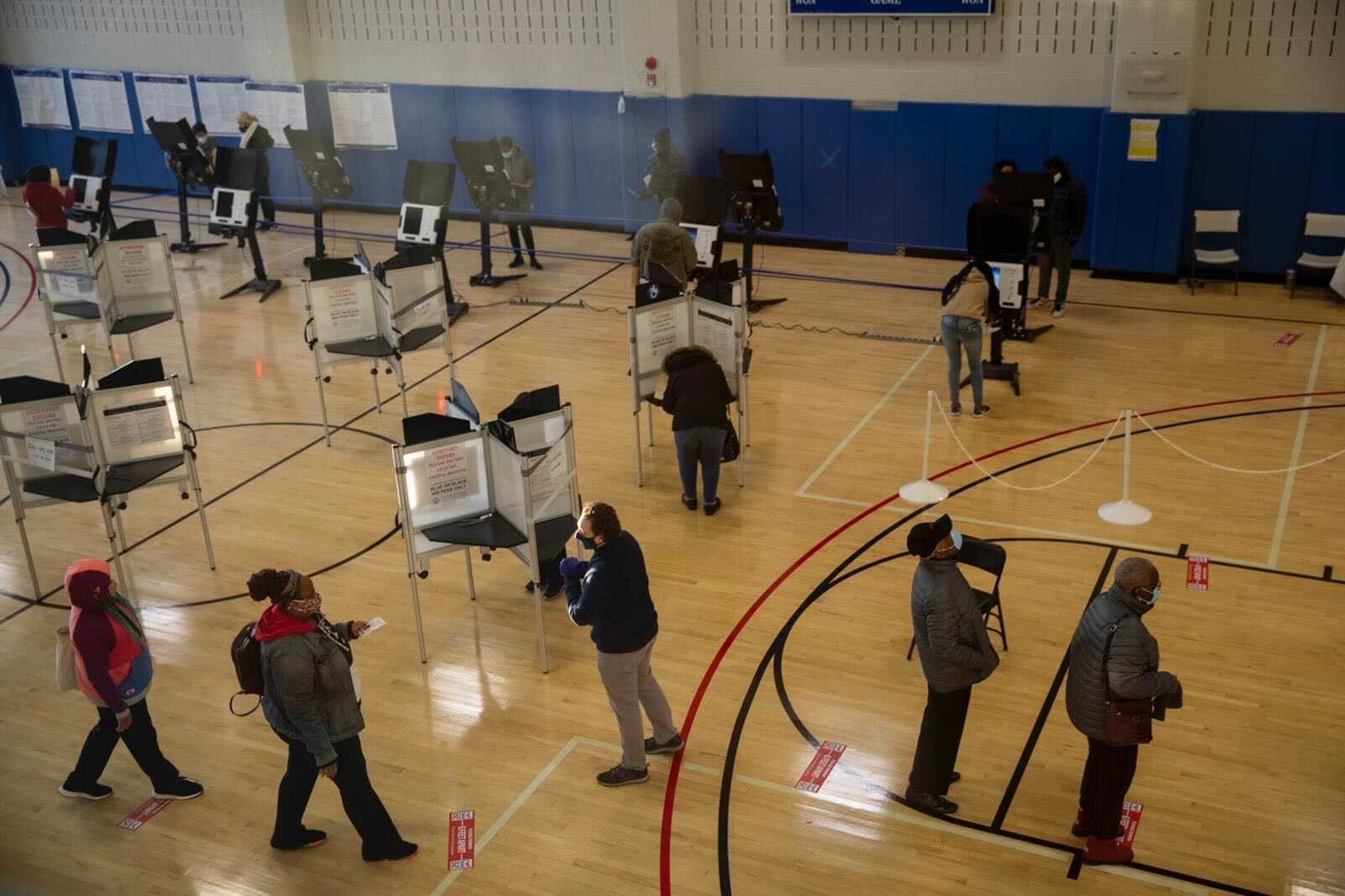
On Nov. 3, voters around the D.C. region lined up early on the chilly, sunny morning to cast their ballots.
“I need to put that guy out of the White House completely,” said Joseph Wilfred, at the Rollingcrest-Chillum Community Center in Prince George’s County, where more than 100 people were in line first thing in the morning.
Despite early queues at polling places, voters across the region have found fewer lengthy lines than anticipated.
At polling places in D.C.’s wards 4 and 5, there were no lines at all to vote early this morning. And at the Turkey Thicket polling place in Brookland, there were more poll workers than voters in attendance around 9:30 a.m.
“The energy is here now,” said René McCray, the site coordinator at Turkey Thicket. She says people were lined up to vote at 6:30 this morning, and she anticipated the biggest rush would come later this afternoon.
Some polling sites saw issues with ballots. In Prince William County there were “ballot scanning issues” at Tyler Elementary School and Battlefield High School, according to the county government. Elections officials printed new ballots and deployed new equipment to the locations, and said affected ballots would either be counted by hand or rescanned using the new equipment. “The Office of Elections is reassuring all voters that their ballots will be counted,” officials wrote in a tweet.
The coronavirus pandemic and related surge in mail-in voting means fewer polling places across the region. Prince George’s County, for example, had just 41 voting centers open today, causing some confusion among voters. Sarah Reid, who voted at the Rollingcrest-Chillum Community Center, said she just learned yesterday that her usual polling place is closed this year, due to the pandemic. She arrived at 7:30 a.m., and made her way through the line quickly.
“With all the stuff going on, I felt better voting in person, to make sure my vote counted,” said Reid. “There’s too much terrible stuff going on in the country.”
In the District, some people reported receiving confusing text messages about the At-Large race, urging them to vote for a Christina Anderson, “#2 on the ballot.” There is no one by that name on the ballot. Christina Henderson, who is running for the seat, tweeted that her campaign is not behind the text messages. “My campaign is out talking to voters at Vote Centers today,” Henderson wrote, including a screenshot of the misleading text message. “We’re not texting. If you haven’t voted yet, my name is Christina Henderson and I’m #1 on the ballot.” The D.C. Board of Elections responded by tweeting that it was looking into the situation.
The candidate who is number 2 on the ballot is Vincent Orange, who denied involvement in a text message to DCist. “No way would I engage in this activity,” Orange wrote. “Christina who is my Alpha Sister and I have a very good [rapport.]” (Henderson is a member of the Alpha Kappa Alpha Sorority; Orange is a member of the Alpha Phi Alpha Fraternity.)
The text messages come from several area-code 301 phone numbers. Calls to those numbers go to an automated robotic-sounding message stating, “You have reached the campaign voicemail.” The message does not specify which campaign.
At 10:20 a.m., the District’s Board of Elections also tweeted that the Foundry United Church Voting Center was temporarily closed due to a “minor medical situation.” A little over an hour later, the board reported that the voting center was again open.
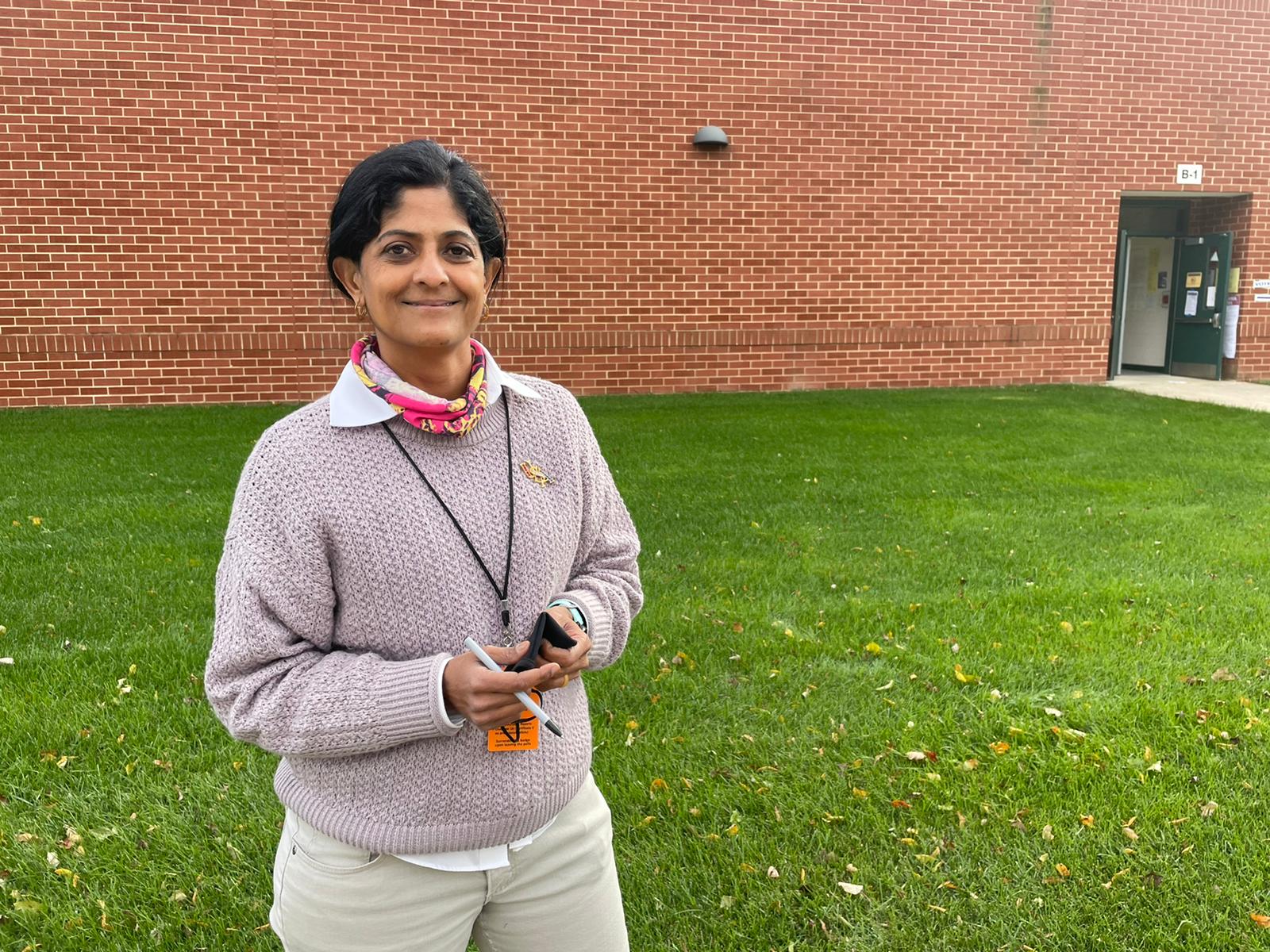
But for the most part, voting has been smooth. In Leesburg, Virginia, Uma Marques says that even the pandemic didn’t make her reconsider being a poll worker this year.
“It’s been extremely smooth,” she says. “And people apparently have early voted a lot, so we don’t have the usual that crowd that would come in for a presidential election. And people have been very compliant with wearing masks.”
Like at every November election, she says, poll workers have cheered for first-time voters.
“Voting itself is special, but having people do first time voting is even more special,” she said. “It’s very joyful.”
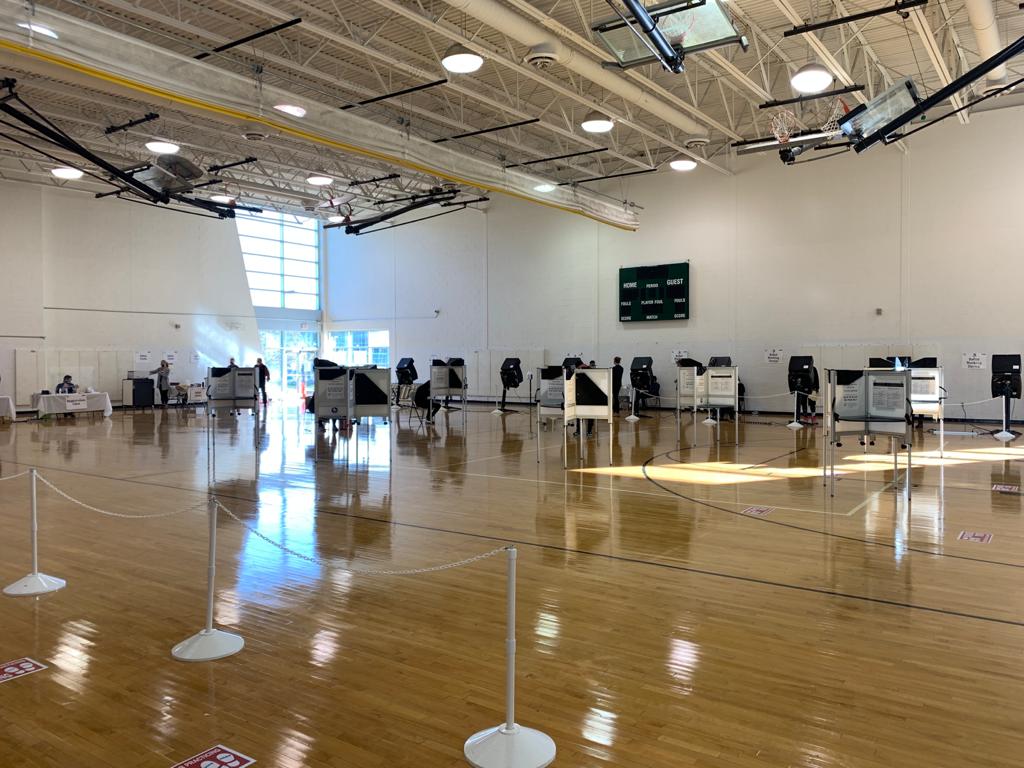
At Anacostia High School, poll worker Kelvin Glover expected to see about 500 voters today. But by mid-afternoon, he had only seen about 160.
“I’m a little shocked,” Glover said. “Where is everybody? I hope everybody’s voted early.”
The intense levels of interest in voting before Election Day — both by mail and in person — have decimated past records across the Washington region and largely reshaped a tradition-bound democratic tradition. D.C., for example, sent every registered voter a ballot in the mail, while for the first time Virginia allows anyone to vote early.
In Virginia, almost 1.8 million people voted early in person, and another 940,255 had returned mail ballots by Nov. 1. In Maryland, a combined 2.2 million people voted early — 983,306 in person, and 1.3 million by mail so far. In D.C., 80,959 votes were cast early in person, and another 201,763 have been returned by mail. (More mail ballots are still expected to be received in all three places.) Across the U.S., more than 99 million votes were cast before Election Day, representing 78% of the total turnout in 2016.
The intense levels of interest in voting before Election Day — both by mail and in person — have decimated past records across the Washington region and largely reshaped a tradition-bound democratic tradition. D.C., for example, sent every registered voter a ballot in the mail, while for the first time Virginia allows anyone to vote early.
In Virginia, almost 1.8 million people voted early in person, and another 940,255 had returned mail ballots by Nov. 1. In Maryland, a combined 2.2 million people voted early — 983,306 in person, and 1.3 million by mail so far. In D.C., 80,959 votes were cast early in person, and another 201,763 have been returned by mail. (More mail ballots are still expected to be received in all three places.) Across the U.S., more than 99 million votes were cast before Election Day, representing 78% of the total turnout in 2016.
Still, some voters made a point to turn out on Election Day. Carl Maynard, who voted at Union Market on Tuesday, calls himself “a traditionalist” when it comes to voting day-of.
“I kind of have goose bumps here thinking about it, as I said out loud,” he told DCist/WAMU outside the polling station. “For me, it was just a matter of taking part in the day that I grew up my whole life waiting to be a part of. And I just want to keep that tradition alive for myself.”
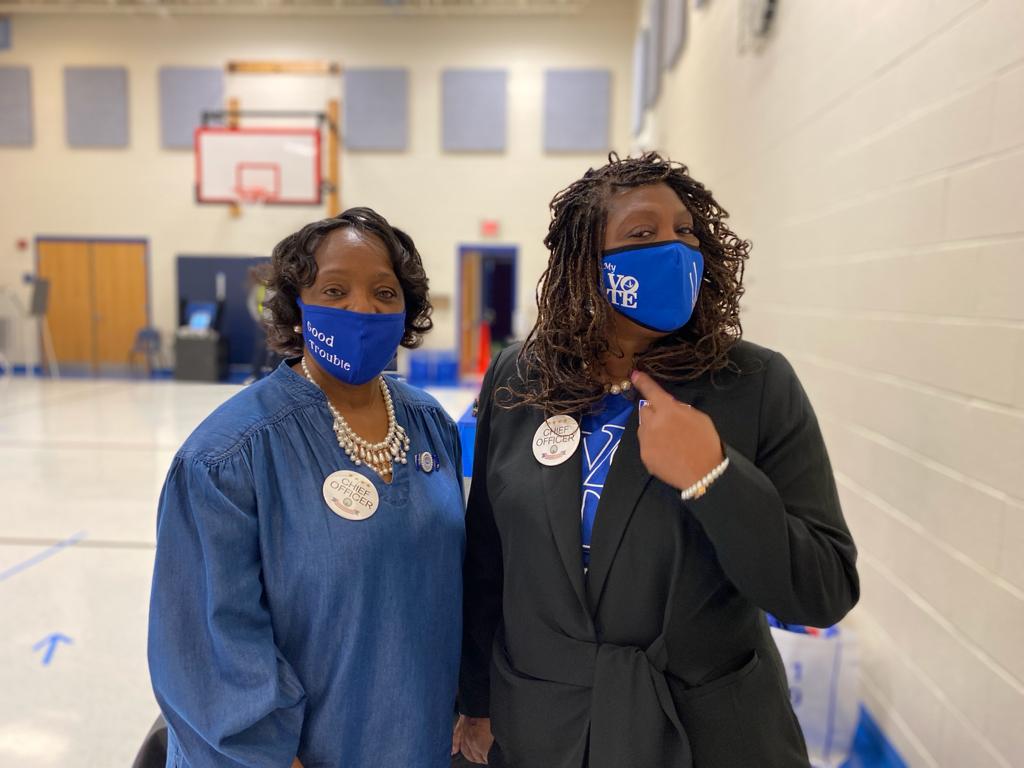
In Woodbridge, Virginia, two poll workers said they felt a special connection to Democratic vice presidential nominee Kamala Harris because of her membership in Alpha Kappa Alpha, one of the Divine Nine African American sororities and fraternities.
Laureen Henderson, 58, and Cynthia Holloway, 53, wore pins from their Zeta Phi Beta sorority, a fellow Divine Nine organization. Henderson, chief of elections for the River Oaks Elementary School precinct, said she was overjoyed to see Harris on the ballot.
“It’s wonderful,” Henderson said. “Just to have one from the Divine Nine says a lot. It says that for all our hard work, our education, our mission … [Harris] has definitely met the mission.”
Henderson graduated from Hampton University; today she works in the federal government. She said across the nation, members of the Divine Nine made phone calls, drove the elderly to the polls and held marches to get out the vote. She said her daughter was an Alpha Kappa Alpha like Harris, and that she hoped the 2020 elections would shatter preconceptions about ambitious Black women.
“We have to be careful, the way we express ourselves,” said Henderson. “The old stereotype would be that we are angry black women and that’s not always the case. We are just very expressive. Black women, we take things to the chest, we are devoted.”
Holloway, a financial controller at a nonprofit and the assistant chief of elections at River Oaks, wore a mask that read “Good Trouble,” a nod to the late John Lewis.
In Virginia, polls close at 7 p.m.; and in D.C. and Maryland they’ll close at 8 p.m. If you’re in line when polls are scheduled to close, you will still be allowed to cast a ballot.
This post has been updated throughout with news and interviews. Andrew Giambrone contributed reporting.