 Dominique Maria Bonessi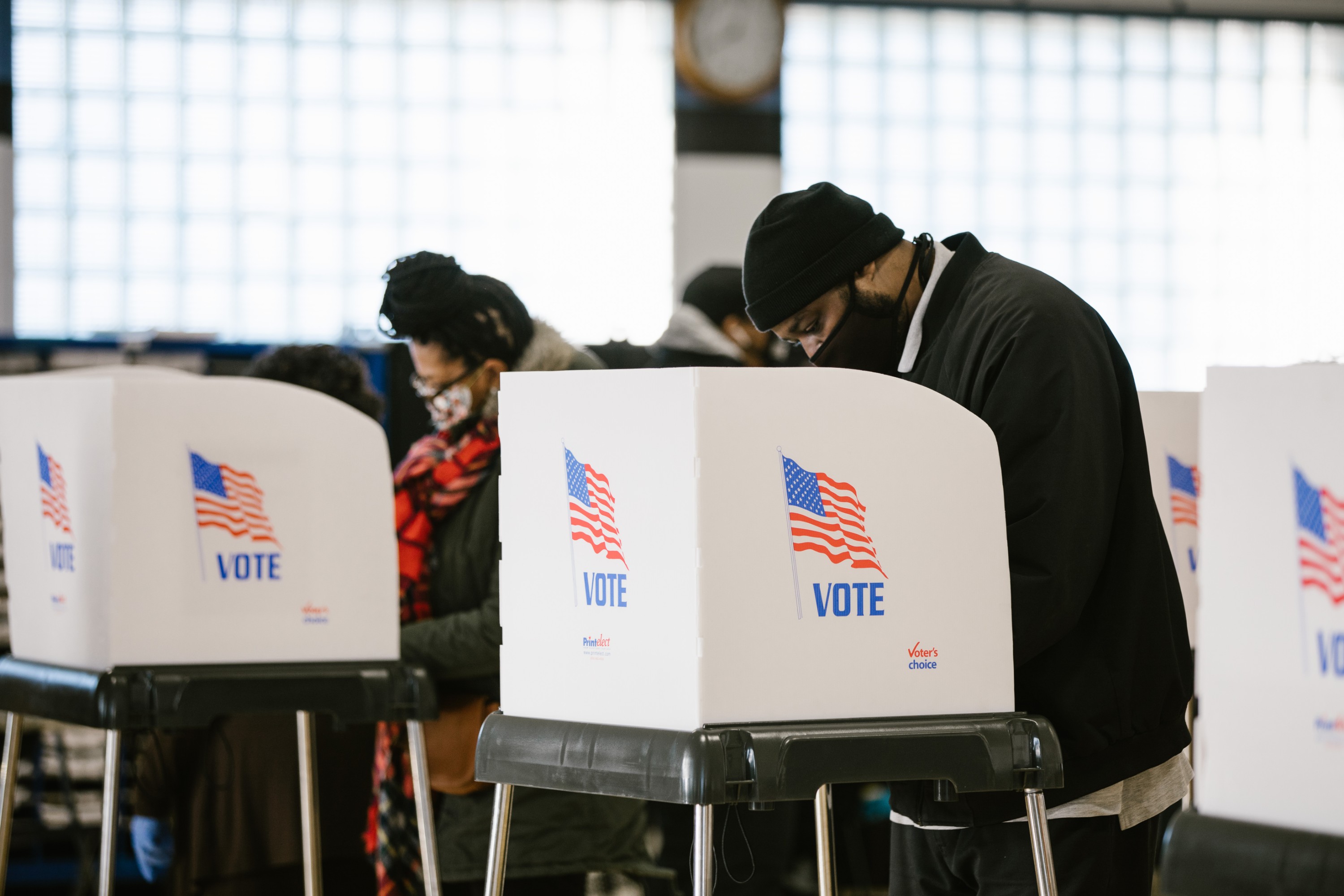
Democrats had another strong showing in Maryland on Tuesday, clinching both the presidential race and defending seven of the state’s eight U.S. House seats.
Rep. David Trone (D) led his Republican challenger State Del. Neil Parrott for the state’s 6th District. Parrott faced an uphill battle in the district, which was drawn to favor Democrats and has sharp geographical and political divides. Parrott also faced a disadvantage in funding: As of mid-October, Trone raised nearly $2.7 million in campaign contributions, while Parrott raised about $278,000, according to the Federal Elections Commission.
Rep. Steny Hoyer (D) will enter his 20th term in office serving the 5th Congressional District after winning reelection against Republican challenger Chris Palombi, according to the Associated Press.
Rep. Andy Harris, the only Republican in Maryland’s Congressional delegation, won against Democratic Challenger Mia Mason in the state’s 1st District.
Jamie Raskin (D) led Republican challenger Gregory Coll in the state’s 8th District. Rep. Anthony Brown (D) won the 4th District against Republican George McDermott. Dutch Ruppersberger (D) led Republican State Del. Johnny Ray Salling in the 2nd District. Kweisi Mfume (D) won against Republican challenger Kimberly Klacik for the late-Congressman Elijah Cummings’s seat.
Mileah Kromer, director of the Goucher College Poll, said the results of the incumbent U.S. House races weren’t a surprise because of the way the districts were drawn to favor Democrats.
“None of these races were competitive,” Kromer told DCist/WAMU. “I wouldn’t be surprised at all if Gov. Larry Hogan would press for fairer redistricting when the legislature redraws lines following the results of this year’s census.”
Biden Wins Maryland
The Associated Press called the state for Former Vice President Joe Biden, marking the eighth consecutive presidential election Democrats have won there.
Clyde Gray, 60, voted for Biden in his first time at the polls at the Wayne Curry Sports and Learning Complex in Prince George’s County. He said he’s tried to avoid politics, but President Donald Trump pushed him over the edge.
“Nothing has been going right,” Clyde said. “The words I’ve seen on the television and the news that this president has said are really not good. [Trump] has downgraded a lot of people female, Black, white, Hispanic, it don’t make a difference to him.”
Akina Allen from Takoma Park also saw the presidential election as a referendum on President Trump.
“We’re really starting to see where the fabric of our Democracy is being challenged,” Allen said after voting for Biden at the Silver Spring Civics Center. “I felt like for future generations and family legacy it’s important that I [vote].”
Other Election Day voters, like Annette Stewart who voted at the Silver Spring Civics Center, said they want the election to be over with, “but I’m rooting for Biden.”
Stewart chose to vote in-person on Election Day because she said she ordered a mail-in ballot over three weeks ago and never got it. She acknowledged that it’s been a hectic year for election officials planning the election around the coronavirus pandemic.
Kromer said anti-Trumpism in Maryland could make it harder for a Republican to win statewide in future elections, but it will all depend on who wins the White House.
“The Democrats’ willingness to vote for another Republican governor may have a lot to do with the results tonight,” Kromer said.
About 30% of the vote in Maryland was still not reported Wednesday afternoon, including many of the Election Day results in Maryland’s largest jurisdictions. The State Board of Elections said in a statement the delay was because of a time-consuming data entry process. The issue arose because Maryland used county-wide vote centers as opposed to neighborhood precincts in this election.
Voters Approve Statewide Ballot Questions
Marylanders also voted in favor of two statewide ballot questions, according to calls from the Associated Press. One will allow the General Assembly to change funds in the governor’s proposed budget, and the other will permit sports betting, with the profits going toward education.
As of Wednesday afternoon, the vote was a 3-to-1 margin in favor of legislators having more power to add, subtract, and reallocate money in the state’s budget.
Senator Jim Rosapepe (D-Prince George’s County), the sponsor of the charter amendment first ballot question, said the measure gave voters more representation.
“Maryland doesn’t have a king,” Rosapepe wrote in a statement. “Everyone’s elected representatives should have a voice in how the state spends their tax money.”
Kromer said the passage of the measure means Maryland would be on even footing with other state legislatures that already have the authority to add, subtract, and reallocate money in their state budgets.
The measure will go into effect in 2024.
Voters also approved–with about a 2-to-1 margin–the legalization of sports betting to raise money for K-12 public education.
Kromer said back in January, Marylanders were split on the issue of sports betting, “but when it was attached to a revenue generator, people were more inclined to support education at a time when the state is in need of increased funding during this recession.”
The details of how sports betting will be carried out in the state won’t be solidified until the 2021 legislative session. State lawmakers still need to determine how the sports betting industry will be implemented by conducting a “disparity study.” The study would determine if racial minorities or women face a disadvantage in participating in the gambling industry. If so, legislators need to create provisions to even the playing field.
The measure is expected to generate $20 million annually for the state at a time where Democratic lawmakers are trying to find ways to raise money for their $32 billion education reform bill.
Local Ballot Measures
Voters across Maryland also considered a number of local ballot measures in their cities and counties.
In Montgomery County, voters appear to have approved expanding the size of the county council. Vote totals include the many early votes cast there, but as of Wednesday afternoon, results were still pending in 37 of the county’s 40 Election Day vote centers.
The ballot measure will change the county charge to increase the size of the council from nine to 11 members. The county will expand its districts from the current five to seven and retain its four at-large district members. Council members and County Executive Marc Elrich say this will increase diversity on the council.
County voters appear to have rejected a separate amendment that set out a different plan for reworking the county council seats. This plan would have boosted the number of districts to nine and eliminated the four at-large seats. Proponents argued this plan would give more representation to upcounty residents. They believe having four at-large members means residents of southern, densely populated Montgomery County are overrepresented on the council.
Voters in Prince George’s approved, by wide margins, their five ballot questions, all of which asked about borrowing money and issuing bonds for public works and transportation facilities, county buildings, and community college facilities, among others.
In Anne Arundel County, voters are poised to approve a referendum that gives the county council authority to confirm the county executive’s appointments for the positions of county attorney, police chief, and fire chief. The council will also be able to block the removal of the county attorney with a majority five of seven votes. As of Wednesday afternoon, this amendment had 73% support, but not all votes have been reported from Election Day vote centers.
Around 80% of Howard County voters approved a ballot measure to update the anti-discrimination language in the county charter. One of Howard County’s most significant charter amendments, it changes language to prohibit employment discrimination by the county on the basis of a person’s disability, color, national origin, immigration status, age, occupation, marital status, sexual orientation, gender identity or express, family status or personal appearance.
Results from all the local ballot questions in these, and other localities are available on the State Board of Elections’ website.
Hannah Schuster contributed reporting.
This post has been updated with more information about Maryland’s ballot questions.