 Jenny Gathright
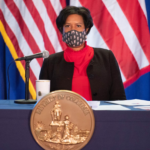
D.C. Mayor Muriel Bowser has instituted a new travel advisory that requires people who visit D.C. to get a coronavirus test 72 hours before traveling to the city. The advisory also asks that people who have been in close contact with someone who has tested positive for the coronavirus not to travel to the District.
The testing requirements apply to people who are coming from jurisdictions designated as “high risk” because of their coronavirus caseloads — a label that the District has applied to 42 states in recent weeks.
People who visit the city for more than three days are also required to get tested for the virus within three to five days of their arrival.
The new travel advisory, which goes into effect on Monday, Nov. 9, will replace the city’s current policy of requiring people to quarantine for 14 days when traveling to D.C. from high risk states.
“We want it to be very clear … that especially right now, with increased cases of COVID-19 around the country, travel should be restricted as much as possible,” said Bowser. “That said, we want people to be safe and smart if they do travel.”
Bowser said private institutions like hotels, employers, universities, and places of worship can require negative coronavirus tests from people, but there will not be any other “checkpoints” to ask people for proof of their test results.
“Nobody’s going to be asking you at the airport or on bridges or on roads or at the train station to share your papers,” said Bowser.
Bowser said the new advisory is intended to be a “tool” for private institutions to “manage travelers.”
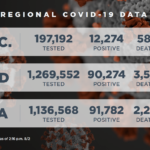
The announcement comes as the weather cools and the rate of coronavirus infections is rising in the D.C. area and across the U.S. The country reached record numbers of new infections, adding more than 104,000 new cases of the virus in a single day.
People traveling to the city for less than 24 hours are exempt from the requirement. People who are coming to the city for a family emergency or funeral are not required to get a test if it is not logistically feasible, but must limit their activities in the city to those related to the emergency or funeral. Visitors from Maryland and Virginia are also exempt. And people coming to D.C. for “essential work” are allowed to perform that work prior to receiving the results of a second coronavirus test in the District.
Bowser said the policy will also not apply to travelers from certain locations considered to be “low risk” because they have a small coronavirus caseload. The city will publicly list “low risk” locations to which the policy does not apply—though Bowser said she expects the list to be short given the large numbers of coronavirus infections across the country.
D.C. residents who are returning to the District after traveling to a place considered “high risk” (again, neighboring Maryland and Virginia are exempt), have a choice of either limiting their activity and self-monitoring for symptoms for 14 days, or limiting their activities until they get tested after 72 hours of being home. Health experts have recommended that people wait three to five days after potential exposure to the virus to get tested, because it can take time for the virus to show up on a diagnostic test.
The city is also now able to provide at-home testing kits through Labcorp. Information about how to obtain an at-home test can be found at the city’s coronavirus website.