Colleen Grablick
 Morgan Baskin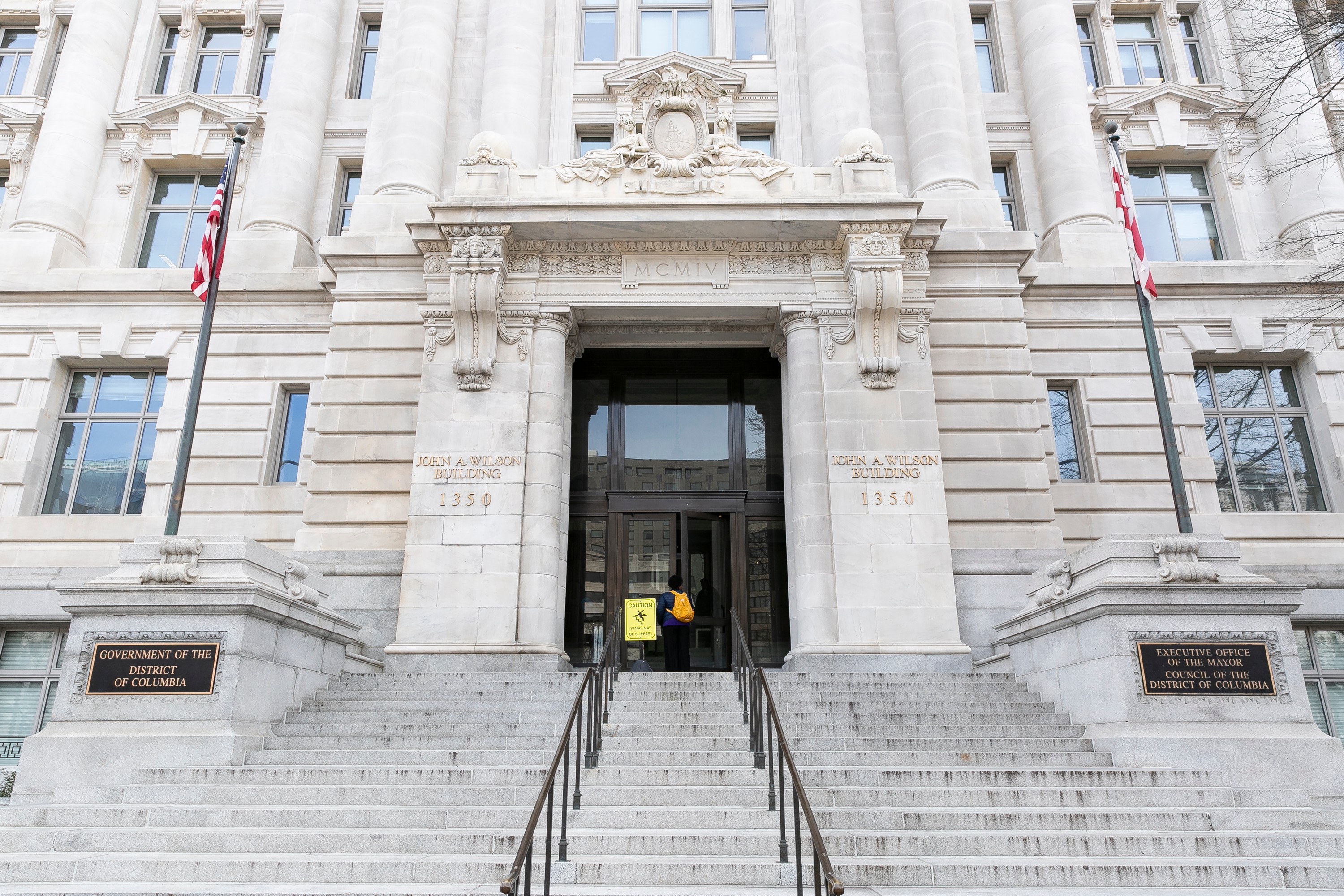
D.C.’s newest councilmembers are poised to shift the 13-member legislature further to the left next year — even if it’s not by as much as some had hoped.
Thirty-four-year-old Christina Henderson, a former aide to outgoing At-Large Councilmember David Grosso and self-described “pragmatic progressive,” declared victory in the contentious 24-person race for one of the D.C. Council’s two open at-large seats. An independent, she joins Democratic incumbent Robert White in clinching a general election victory.
With the addition of Henderson and Janeese Lewis George, a democratic socialist who will replace moderate incumbent Brandon Todd in Ward 4, the council will now likely have the votes to pass the kind of labor-friendly policy that has often been just beyond its grasp. That includes a potential push to pay for government programs, threatened by major revenue losses from the COVID-19 pandemic, by slightly increasing taxes on the city’s high earners—a proposal that Grosso, whom Henderson is replacing on the Council, voted against in July.
And after Henderson and George join the newly elected Ward 2 Councilmember Brooke Pinto on the council, the body will now also have a majority-Black and majority-female makeup. All three are under 35.
But though some of the city’s social justice advocates see Henderson’s victory as a way to push the city left, she seems reluctant to align herself with an ideological faction. “I feel like it’s important for us to kind of break this narrative of a progressive [or] liberal bloc versus a moderate bloc,” Henderson says. “I think truly the best type of policy is made when you’re looking at each individual issue, not in couching it as [part of an] agenda.”
Henderson beat three notable candidates who’d all run for or held office before: Ed Lazere, a left-wing policy wonk endorsed by the Metro DC Democratic Socialists of America; Marcus Goodwin, a real estate developer who promised to bolster the council’s business-friendly bloc; and Vincent Orange, a former councilmember with the benefit of name recognition among longtime D.C. voters.
A self-described “pragmatic progressive” –– the same label Council Chairman Phil Mendelson adopted in his successful 2018 bid for reelection against Lazere –– Henderson took a more middle-ground stance on police reform than some of the other candidates, and even some of her future council colleagues. (Henderson does not support defunding the Metropolitan Police Department in favor of funding other agencies.)

But on issues like affordable housing and environmental justice, she will likely emerge as one of the body’s more left-leaning voices, representing a departure from members who have opposed expanding rent control or moderately increasing taxes.
“We didn’t shift as far to the left as many people thought we would,” Chairman Phil Mendelson, a leader of the council’s more moderate bloc, says of the newcomers. “I think that the council, which is already left to center, is going to move a little bit further to the left.”
Following Grosso’s announcement that he wouldn’t seek a third term, 23 candidates entered the race to fill his seat. Among that crowded field, Lazere, the longtime director of a left-leaning think tank called the DC Fiscal Policy Institute, was a progressive favorite.
The same progressive backers who helped secure George’s win in the Ward 4 primary coalesced around Lazere in the general election. Both candidates received endorsements from At-Large Councilmember Elissa Silverman, the D.C. branch of the climate-focused Sunrise Movement, the Metro Democratic Socialists of America, and a slew of labor unions.
But Henderson says she’s progressive in her own right, adding that she maintains a good rapport with the organizations that supported Lazere and George.
“I think throughout this campaign there was sort of this false narrative that there was only one progressive at the table,” she says.
Some members of those leftist advocacy organizations say they see Henderson as a new ally on the council. They cite her support for D.C.’s paid family leave law and expanding child care investments as areas of common ground.
“I do think that Christina’s presumptive win is a good sign for the direction that folks want the city to be going in,” says Sarah Novick of the Jews United for Justice Campaign Fund, which endorsed Lazere. “She’s a progressive, she has the values, she has the principles, and she wants the council to move in the direction that we want.”
Kush Kharod, a Sunrise Movement organizer, says Henderson understands key issues and also wants a progressive D.C. “We’re happy to work with her, and we think she’s gonna be a great ally,” Kharod says.
But Henderson says she largely rejects pitting councilmembers against each other as “progressives” and “moderates.” Instead, she says she will work with other members on an issue-by-issue basis.
“It’s going to be literally evaluating each issue, not just on ideology, but what is in the moment, what really makes sense for D.C. at this time,” says Henderson. “The movement on certain issues that we want to see happen, that may seem ‘progressive,’ is going to require being able to build coalitions with folks [who], frankly, may not seem like a natural ally on an issue, but they can get there with work.”
Both George and Henderson favor raising taxes on residents who make more than $250,000 a year, though Henderson stops short of calling for higher business and property taxes.

While she doesn’t endorse reducing the size of the police department, she supports broad reforms of law enforcement and focused her campaign on increasing educational opportunities, reducing child care costs, and lowering D.C.’s maternal mortality rate, which is one of the highest in the nation, especially among Black women.
Still, the rising influence of leftist D.C. politicians is likely to be met with consternation by some, including current councilmembers.
Mendelson, who notes that he didn’t “follow [George’s] race that closely,” says he is “concerned about some of the promises [leftist candidates make] because it’s more than the government can deliver.” (Mendelson endorsed Todd in the primary.)
“It’s easier for candidates to make promises that are difficult to fulfill,” he says about policies like proposed tax hikes on high earners.
Although known nationally for its liberal tilt, D.C. has a history of electing business-friendly leaders. (See: former councilmember Jack Evans’ decades-long reign in Ward 2, or the city’s recent series of pro-growth mayors.) Progressive activists have sought to pull the council away from fiscally conservative policies, and the passage of D.C.’s paid leave program — despite intense pushback on and off the council — is one of their greatest successes on that front.
Some members of the city’s business community have already expressed relief about Henderson’s victory, in part because it means they won’t have to contend with a Councilmember Lazere. For his part, Evans told the Washington Business Journal that Henderson will bring a “good balance” to the council, adding that her win over Lazere represents a “more measured approach, not an extreme approach.” (Facing expulsion by his colleagues, Evans resigned from the council in January over an ethics scandal over his private consulting clients; he then lost in a primary comeback bid.)
Meanwhile, activists remain excited about the District’s political direction and the prospects for future campaigns. “In previous years, the progressive wing [of] D.C. had a tough time figuring out where to stand and who to support,” the Sunrise Movement’s Kharod says. “There’s so many things that we can accomplish when we’re together.”