Elliot C. Williams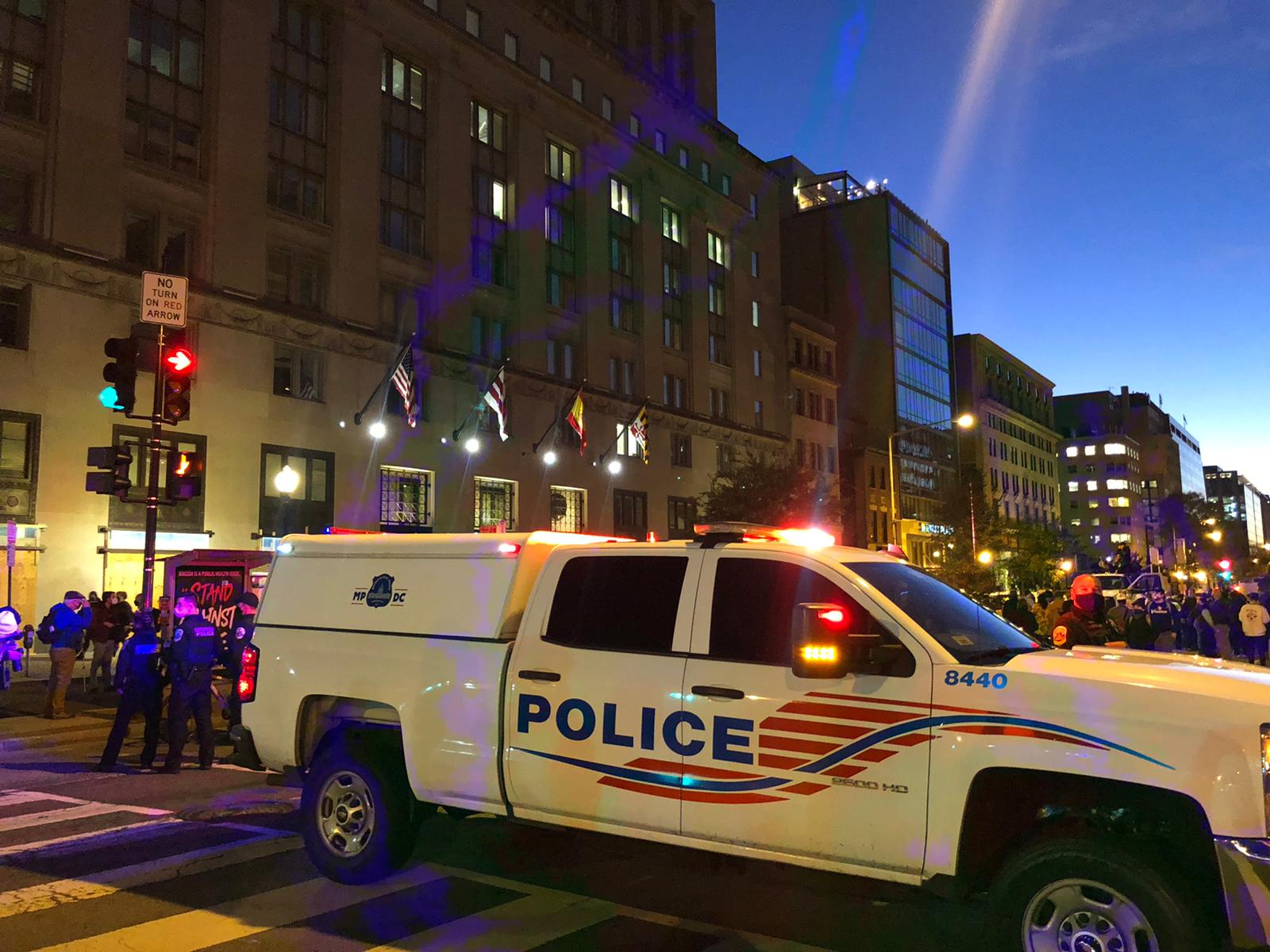
After D.C. Mayor Muriel Bowser moved last month to reallocate budget funds to cover overtime costs from the Metropolitan Police Department, three councilmembers are preparing to introduce an emergency bill to prevent MPD overspending in the future.
Called the “Metropolitan Police Department Overtime Spending Accountability Emergency Act of 2020,” the legislation would require MPD to notify the Council when it surpasses the approved overtime budget by 5%, and complete an overtime pay spending report for each month after that. Ward 6 Councilmember Charles Allen, chair of the Committee on the Judiciary and Public Safety, plans to include the temporary measure in permanent legislation in the future, tweeted Ward 1 Councilmember Brianne Nadeau on Thursday. Nadeau and Allen are co-introducing the bill with At-Large Councilmember Robert White.
A spokesperson for Nadeau says the bill will be introduced at the first legislative meeting scheduled after November 10.
Bowser’s request — made to cover the cost of MPD overtime incurred during this summer’s racial justice protests — would transfer a combined $43 million from elsewhere in the city’s budget, including $28.3 million from the Department of Health Care Finance alone.
In response, nine D.C. Councilmembers requested a full explanation, demanding information on why $28.3 million is being transferred away from the DHCF and another $2 million is coming from the Child and Family Services Agency.
“These funds should be re-invested in the District’s health care system and re-allocated to permanently modernize the D.C. Healthcare Alliance Program,” the councilmembers wrote in their Oct. 23 letter to Interim City Administrator Kevin Donahue, referencing the healthcare program that benefits some of the city’s most vulnerable residents.
“The Executive [office of the Mayor] has effectively written the MPD a blank check that the Council legally must now sign, or risk deficiency,” the councilmembers wrote. “At the very least, the magnitude and timing of this reprogramming demands a detailed explanation of the expenditures, and yet there is no such supporting information.”
The Councilmembers added that the request of funds comes at a time when MPD has faced heat for its tactics used on peaceful protestors this spring and summer — or, as the councilmembers put it, “MPD’s concerning policing tactics in response to protests and its subsequent unresponsiveness to Council inquiries.”
On Oct. 28, Donahue responded by outlining the rationale for the request in a letter, obtained by WAMU/DCist. The District racked up $61 million in costs related to the Emergency Planning Security Fund in fiscal year 2020, when it had only budgeted for $18 million, according to Donahue. The EPSF is an annual collection of federal funds used to reimburse D.C. for public safety costs during special activities like presidential motorcades, Fourth of July celebrations, and First Amendment demonstrations.
The high expenses were almost exclusively used to cover overtime payment during protests following George Floyd’s murder, per the letter.
Bowser requested more funding from Congress over the summer and fall, Donahue wrote, but has yet to receive more federal funding. Donahue said that the transfer only pulls from D.C.’s “end-of-year underspending” — the funds that weren’t spent by the end of fiscal year 2020 — and argued that the Council’s proposal to reinvest the money towards the D.C. Healthcare Alliance program “is not legally feasible.” If the transfer were blocked, the funds would be deposited into the city’s General Fund, and not go towards healthcare programs, he added.
But Donahue blaming the budget deficits on “federal inaction” didn’t do much to ease the tension, as Nadeau further denounced the mayor’s office and MPD in a series of tweets Thursday.
https://twitter.com/BrianneKNadeau/status/1324512518631555073
As Nadeau continued on Twitter, it’s essentially too late to stop this particular transfer — it was deemed approved Friday without a disapproval resolution from the Council.
Bowser’s office responded to a DCist request for comment by forwarding the letter Donahue wrote to the Council.
Nadeau said she didn’t file a resolution of disapproval because doing so wouldn’t actually reverse the payment of overtime funds, but would only prompt the Bowser administration to pull the funds from somewhere “potentially more problematic.”
“As a matter of principle, I am expressing my disapproval of this reprogramming,” Nadeau wrote. “I express my disapproval to the idea that MPD’s reckless overspending and over-policing of our communities should be prioritized above health and human services programs. Residents have been sprayed with chemicals, kettled and intimidated for exercising their first amendment rights. The Council has still not received the results of the investigation. This reprogramming is adding insult to injury, and it’s outrageous.”
She added that the emergency act would increase transparency on police spending and ensure that the mayor’s office doesn’t “write another blank check to MPD in the future.”
Newly elected Ward 4 Councilmember Janeese Lewis George expressed support for the emergency bill, tweeting, “I know the national elections are important but THIS happened in our city so I’m going to retweet this again because you need to understand this.”
Back when Bowser’s request was first announced last month, George tweeted: “Wow. Sooo we can defund health during a global pandemic but not the police? But Black Lives Matter.”
Previously:
D.C. Mayor Bowser Wants To Move $43 Million To Cover Police Overtime During Racial Justice Protests
D.C. Councilmembers Push Back Against Mayor’s Request To Redirect $43 Million To Police