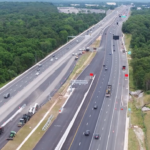
New technology is coming to Northern Virginia’s interstate highways that can catch HOV-lane violators in the act of carrying fewer passengers than they should.
The cameras monitor how many people are in a car and whether it matches the number indicated by a driver’s E-ZPass.
The first such cameras were installed along I-95 in the spring. They plan to expand, and the technology will also be installed along I-395 and I-495 “soon,” says Mike McGurk, a spokesperson for express lanes operator Transurban. He did not give a specific timeline. NBC Washington first reported the news.
“If you just imagine yourself standing on a sidewalk in a residential neighborhood and a car pulls up next to and you look into the car, that’s about the level of detail the cameras have,” McGurk says.
HOV lanes, which stands for high-occupancy vehicles, are meant to allow drivers to travel faster by either carpooling or paying a variable toll based on congestion in the regular lanes. Drivers on the roads with an E-ZPass Flex can set their pass to HOV mode and must have at least three people in the car to travel in the lanes for free.
McGurk says they are taking an “education-first approach” with the new system. Drivers who break the rules will be sent an email letting them know that cameras detected a violation. If they do so a second time, the cameras will charge their E-ZPass account for the amount of the toll owed for the trip.
Tolls for the express lanes increase when there are more cars using the lanes, so drivers who claim to be carpoolers when they are not can raise costs for other customers.
“Toll prices and traffic on the Express Lanes are correlated, so HOV violations are fundamentally unfair to customers who are paying their toll,” Emeka Moneme, vice president of corporate strategy and innovation at Transurban North America, said in a press release. “We are leveraging technology to educate customers who make mistakes while ensuring all drivers follow the rules of the road.”
Currently, Virginia State Police are tasked with enforcing the rules in express lanes. If stopped, drivers in violation can face fines up to $1,000, and demerit points from the Virginia Department of Motor Vehicles.
Virginia State Police spokesperson Corinne Geller told DCist in an email that as of November 16, officers from its Fairfax division issued 1,320 HOV citations in 2020. Last year, the Virginia State Police issued nearly 7,000 citations on I-95, I-395 and I-495.
McGurk says the system police currently use to identify drivers using HOV mode is separate from the new technology and the information the new cameras collect is kept separate.
“All the data that we collect as part of this is encrypted,” says McGurk. “It’s stored on separate secure servers.” He adds that there are limited personnel involved in the process, and after an assessment is made, there is a “permanent redaction” put over the photo to permanently blur any visible faces of individuals in the car.
Jordan Pascale contributed reporting.