Ally Schweitzer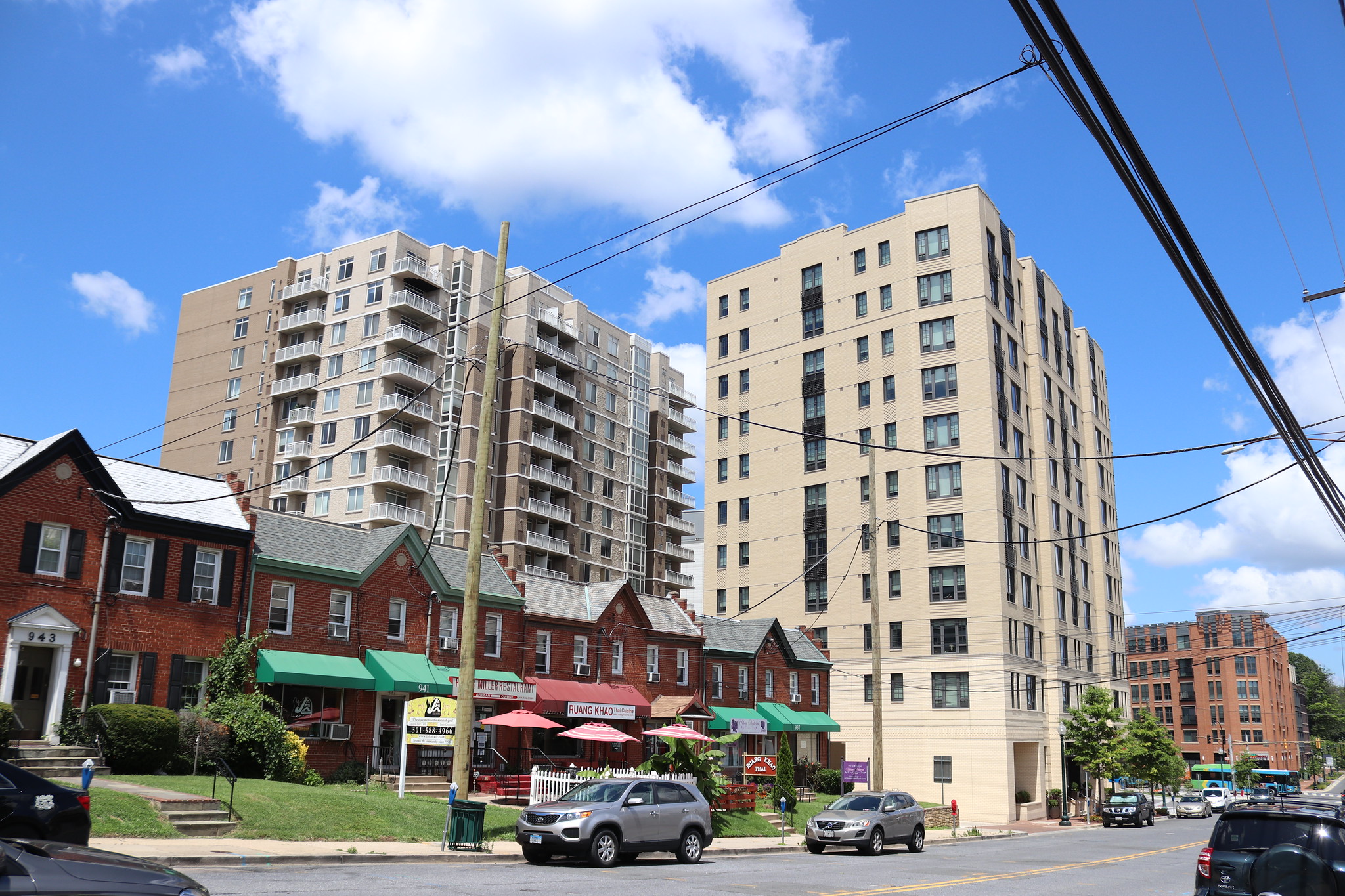
As a debate over rent control rages in D.C., elected officials in Montgomery County are considering adopting a similar law.
Legislation from Democratic Councilmember Will Jawando would restrict rent increases at properties within one mile of Metro, Purple Line and MARC stations, and within a half mile of Bus Rapid Transit stations. Under what Jawando is calling an anti-rent gouging measure, rent hikes would be capped at a rate established by the county executive based on the Consumer Price Index. That rate is 2.6% this year. The cap would apply to new construction near transit five years after it receives a rental license.
Jawando says while the pandemic has heightened the need for rent stabilization in the county, high housing costs have long posed a problem for residents, especially in areas near transportation.
“This is certainly true along the Purple Line corridor, where we’re already seeing speculation and prices go up,” Jawando said during a press briefing Tuesday before introducing the legislation.
Rent increases exceeding 2.6% are currently prohibited in the county while Maryland remains under a state of emergency due to the health crisis. The bill from Jawando — who unsuccessfully proposed halting any rent increases during the crisis — would make that maximum permanent in transit-adjacent areas, though the precise cap would be subject to change each year.
There is no permanent restriction on how much a landlord can increase the rent on about 80% of Montgomery County’s multifamily housing stock, according to a recent study commissioned by the county government. More than one quarter of that housing is considered affordable — meaning rents cost less than one third of total income — to four-person households earning no more than 65% of Area Median Income, or about $82,000 per year.
Tenant advocates in the county have expressed concerns that affordably priced housing near pending Purple Line stations could quickly become out-of-reach to anyone but wealthy residents. The county study offers some support for that; it shows that proximity to transit is a reliable driver of higher rent costs.
Jawando says most landlords aren’t raising rents to extreme rates, but renter advocates in Montgomery County say tenants are still vulnerable to eye-popping increases without a rent stabilization law in place.
“We have seen renters receive increases — and I’m not exaggerating here — over 200%,” said Montgomery County Renters Alliance Executive Director Matt Losak during the briefing.
The measure would not apply to owner-occupied group houses, religious facilities, nursing homes or accessory apartments.
As written, Jawando’s legislation is stricter than D.C.’s current rent control law, which tenant advocates and progressive activists are seeking to tighten. D.C. law applies only to larger rental buildings constructed prior to 1976 and it allows rents to increase at a higher rate. Jawando’s proposal is closer to current law in the city of Takoma Park.
The lawmaker acknowledged Tuesday that the bill is likely to prompt blowback. Trade groups representing property owners and managers have been outspoken opponents of rent control reform in the District, warning that imposing rent restrictions will discourage development amid a widespread housing shortage.
“I’m really hoping that we can move out of that age-old debate,” Jawando said.
The lawmaker introduced the anti-gouging bill alongside a zoning measure that would allow denser housing within one mile of Metro stations. This would grant property owners the right to build duplexes, townhouses and other multifamily structures on certain single-family residential lots, which make up about 6% of land in the jurisdiction, mostly downcounty, near the District. The goal, Jawando said, is to foster more “missing middle” housing in the county.
“These proposals taken together are trying to put to rest these either-or propositions that we just need more housing or we just need more renter protection and control. We need both,” Jawando said Tuesday.
The rent stabilization bill does not yet have any cosponsors. It’s not yet clear how much support it will garner on the county council, which has taken a somewhat cautious approach to tenant protections out of concern that too much regulation will discourage private investment. The council also recently approved a 15-year tax break for developers who build directly on top of Metro sites; Jawando and then-Council Vice President Tom Hucker voted against the abatement, saying it would be too costly and produce insufficient affordable housing. County Executive Marc Elrich vetoed the tax break and the Council overturned his veto.
Montgomery County has not had a rent stabilization law on the books since 1983. The county executive sets rent guidelines for housing providers each year but their parameters are voluntary.
Jawando’s rent stabilization bill is expected to move to the council’s committee on Planning, Housing and Economic Development, of which he is a member. A public hearing is scheduled for Feb. 11 at 7:30 p.m.
This story has been updated to reflect a rescheduled hearing date for Councilmember Jawando’s rent stabilization bill.