Martin Austermuhle
 Mikaela Lefrak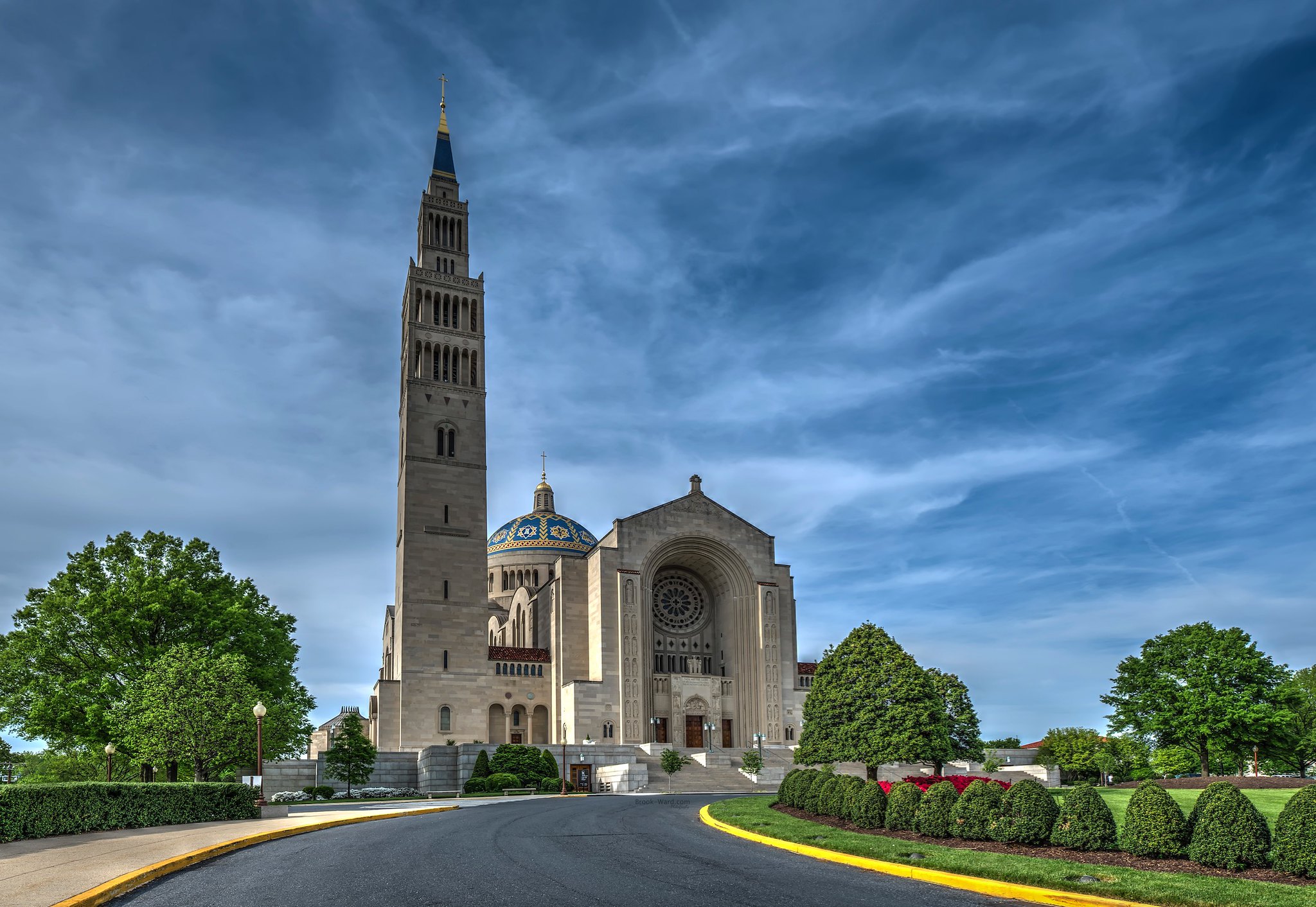
Update:
D.C. Attorney General Karl Racine announced Tuesday the city has settled a lawsuit with the Catholic Archdiocese of Washington after the District eased restrictions on religious gatherings the lawsuit was targeting.
“We are pleased that we were able to reach this agreement with the Catholic Archdiocese of Washington and that the church’s concerns were resolved by the Mayor’s latest order,” Racine said in a statement.
Last week, Mayor Muriel Bowser issued an order raising the limit on religious gatherings from 50 to 250 or 25% capacity, whichever is less.
Racine, in announcing the legal settlement, still stressed the risk associated with gathering in large groups as coronavirus cases surge. He encouraged D.C. residents to stay home when possible and avoid spending time indoors with people outside their household.
Even as Bowser loosened the restrictions, she expressed concern over large gathers in the order itself.
“The larger the gathering, the more the exposure,” the order reads. “A recent lawsuit appears to insist on a constitutional right to hold indoor worship services of even a thousand persons or more at the largest facilities, which flies in the face of all scientific and medical advice and will doubtlessly put parishioners in harm’s way.”
Original:
With less than two weeks to go until Christmas, the Archdiocese of Washington is suing D.C. Mayor Muriel Bowser over the city’s COVID-19 restrictions on in-person church services, calling them “arbitrary,” “illegal” and “unscientific” and arguing they favor businesses like restaurants over houses of worship.
The archdiocese’s lawsuit, which was filed in U.S. District Court for D.C. late last week, takes aim at the District’s cap on in-person church services, which is either 50 people or 50% of a church’s capacity, whichever is less. The archdiocese says that’s a different standard than that faced by businesses, where gathering restrictions are based solely on stated capacity.
“If the Archdiocese were to fill its churches with library books, washing machines, exercise bikes, restaurant tables, or shopping stalls instead of pews, the District would allow many more people to enter and remain for an unlimited amount of time,” argues the lawsuit. “That is because for public libraries, laundromats, retail stores, restaurants, tattoo parlors, nail salons, fitness centers, and many other establishments, the District imposes capacity-based limits, rather than hard caps. For example, there is no hard cap on the number of people who can dine indoors in restaurants, where alcohol is commonly served and patrons do not wear masks during meals.”
The lawsuit argues that D.C.’s restrictions make even less sense given the size of Catholic churches in the city, half of which can accommodate up to 500 people, and some more than twice that number. “[T]he Basilica of the National Shrine of the Immaculate Conception — the largest Catholic Church in the United States — could accommodate thousands of worshippers. Indeed, the Statue of Liberty would fit inside with room to spare. Yet under the Mayor’s orders, all of these churches are subject to the same cap of 50 people.”
The archdiocese is asking a federal judge to immediately prohibit D.C. from enforcing its gathering restrictions on churches to “allow the Archdiocese to plan and celebrate Mass in accordance with percentage-based limits rather than a 50-person cap. The Constitution, federal law, and common sense require no less,” it says.
In Maryland, churches face the same capacity restrictions as businesses — 50% — though Montgomery County Executive Marc Elrich has proposed tighter limits. Virginia has imposed no specific restrictions on religious gatherings.
The lawsuit is the second such legal challenge filed by a church against D.C. since the pandemic started. In September, a Baptist church on Capitol Hill sued the city over its limits on in-person services, attracting support from the U.S. Department of Justice and 34 Republican members of Congress. A federal judge ultimately sided with the church, which held its first mass gathering since the pandemic started in an outdoor park in late October.
The lawsuit also comes in the wake of a Supreme Court ruling late last month that overturned New York Gov. Andrew Cuomo’s COVID restrictions on church services. Justice Samuel Alito, who voted in the majority against Cuomo, also said during a speech in mid-November that the pandemic “has resulted in previously unimaginable restrictions on individual liberty” — including on churches.
Neither Bowser nor D.C. Attorney General Karl Racine had an immediate response to the archdiocese’s lawsuit, but in the earlier fight with the Capitol Hill Baptist Church they argued that the limits on church gatherings were based on the threat posed by an unprecedented pandemic.
“The public’s interest in limiting the spread of a highly contagious disease far outweighs plaintiff’s interest in holding regular services attended by hundreds of people at incalculable cost to the rest of the community,” they said in an October court filing.
As COVID-19 cases have continued to rise in D.C. and the region, Bowser has in recent weeks imposed new restrictions on businesses and gatherings. Last week, she prohibited high-contact sports; a few weeks prior, she imposed new limits on indoor exercise classes, alcohol sales and indoor gatherings. New capacity restrictions on restaurants — down to 25%, from 50% before — go into effect today.