 Dominique Maria Bonessi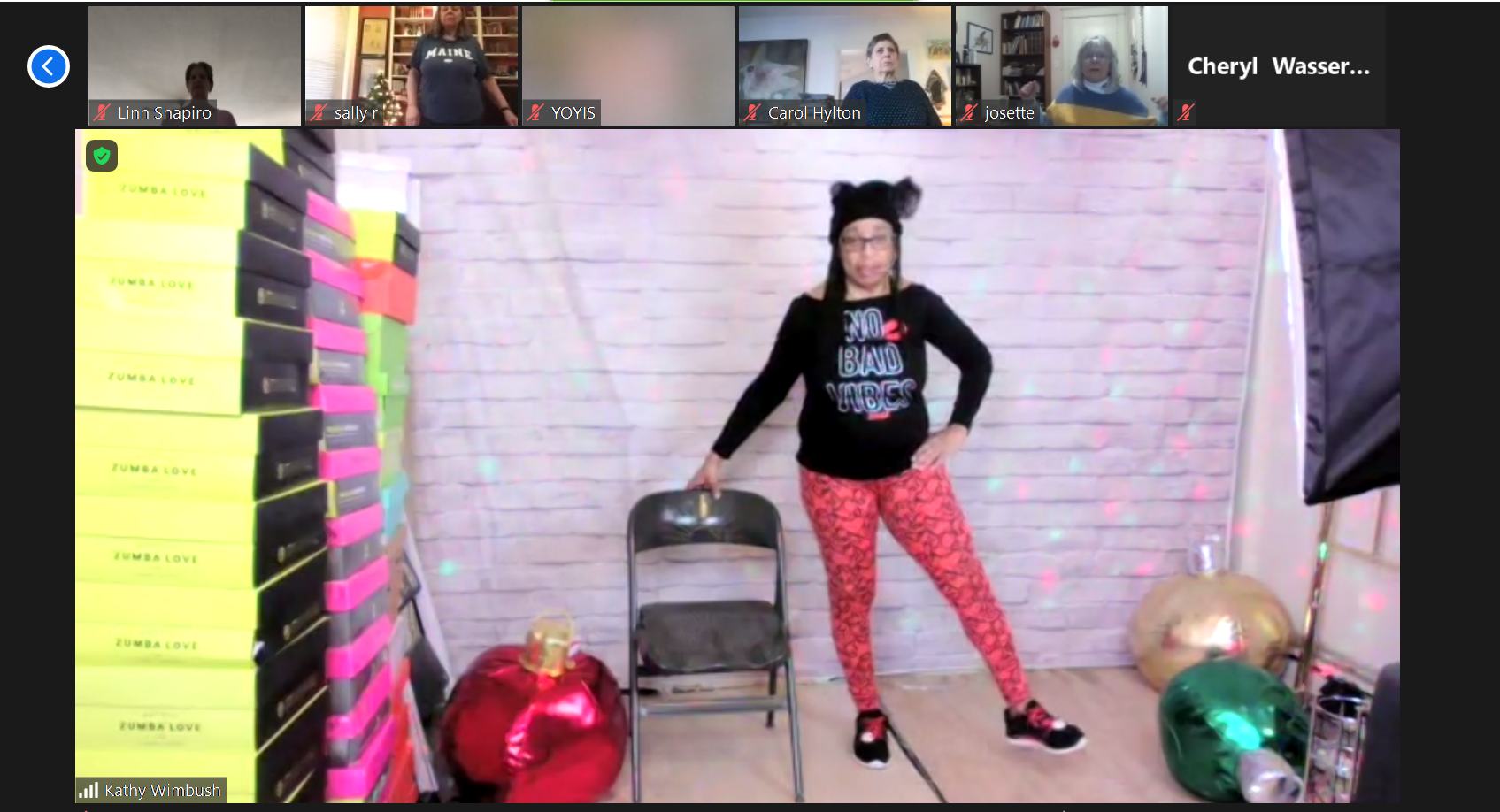
This story has been updated.
It’s traditional, as a new year approaches, for people to consider resolutions to improve their health and wellbeing — drinking more water, using the stairs, and getting eight hours of sleep a night.
But, some in the region have used this pandemic year as an opportunity to turn their health around, after witnessing how diseases like obesity, hypertension, and diabetes could be a death sentence when combined with COVID-19.
Dr. Neal Barnard with the Barnard Medical Center in Northwest says over the past decade healthy living, diet, and exercise have become more common. During the pandemic, Barnard says, that trend “took off in a dramatic way.”
“Part of this was maybe just driven by the fact that people had time, they were at home, they weren’t commuting anymore,” said Barnard. “But they were also perhaps a little bit worried because the refrigerator was just over their left shoulder.”
That was the case with 77-year-old D.C. resident Carol Rabenhorst, who says she had been attending an aqua-aerobics class at a local pool prior to the pandemic. But when stay-at-home orders were handed down the class was canceled. She says she didn’t want to become stagnant, so she made two resolutions.
“One was to clean out my closet and one was to exercise regularly,” Rabenhorst says, chuckling. “I have to say that my closets are still messy, but I’m in better shape than I’ve been in years.”
Rabenhorst now participates in online workout classes through Bodywise, which offers free virtual workout classes available to D.C. residents 60 years or older. At noon on any day of the week, Rabenhorst and a group of about 25 seniors get together with their instructor and participate in a virtual Zumba class.
For many of D.C.’s senior residents the classes are an opportunity to socialize.
“Seeing our friends…it’s a great boost in morale and keeps us from feeling isolated in our homes,” says 70-year-old Sally Rountree, one of the class participants.
Rountree lives alone and says the pandemic did take a toll on her mental health, but she says she wanted to find some way to help herself feel better.
“I spontaneously started making masks for doctors and nurses and it made us feel united,” Rountree says.
Rountree and her friends sewed 2000 masks for local hospitals. When masks were no longer in short supply, she began organizing meal deliveries for frontline workers from local restaurants.
“Selfishly, it kept me busy and sane and made me feel like I was doing something positive,” Rountree says.
And it’s not just D.C.’s senior residents resolving to improve their health and wellbeing.
‘I Biked A Little Over 500 Miles’
Brian Anleu, a 31-year-old resident of Columbia, Md., says he had been struggling with his weight for years “for a lot of reasons, having children and working late and some sports injuries. I tore my ACL [anterior cruciate ligament] a while back.”
That injury made it impossible for Anleu to run, he says. “It’s just kind of been really challenging to stay on top of my fitness.”
Last year, after his 30th birthday, he decided to start focus more on his health and fitness.
“I just started slow, just kind of cutting out sodas and a lot of junk food and things like that and kind of shed a decent amount of weight fairly quickly. But I still wasn’t doing regular fitness or anything like that,” Anleu says.
In March when the pandemic hit, gyms closed, making it harder for Anleu to start his fitness journey.
“So that’s when I asked my boss if I could borrow a bike.” Anleu says is boss at the Montgomery County Parks and Planning Department inspired him to explore the county’s biking trails.
Anleu says he didn’t expect to bike 120 miles in April, but he did.
“It’s not about how fast I can go or how many miles I can go, but it’s about where I’m going and the scenery and that sort of thing. So for me, just being outdoors is great for me and my mental health,” he says.
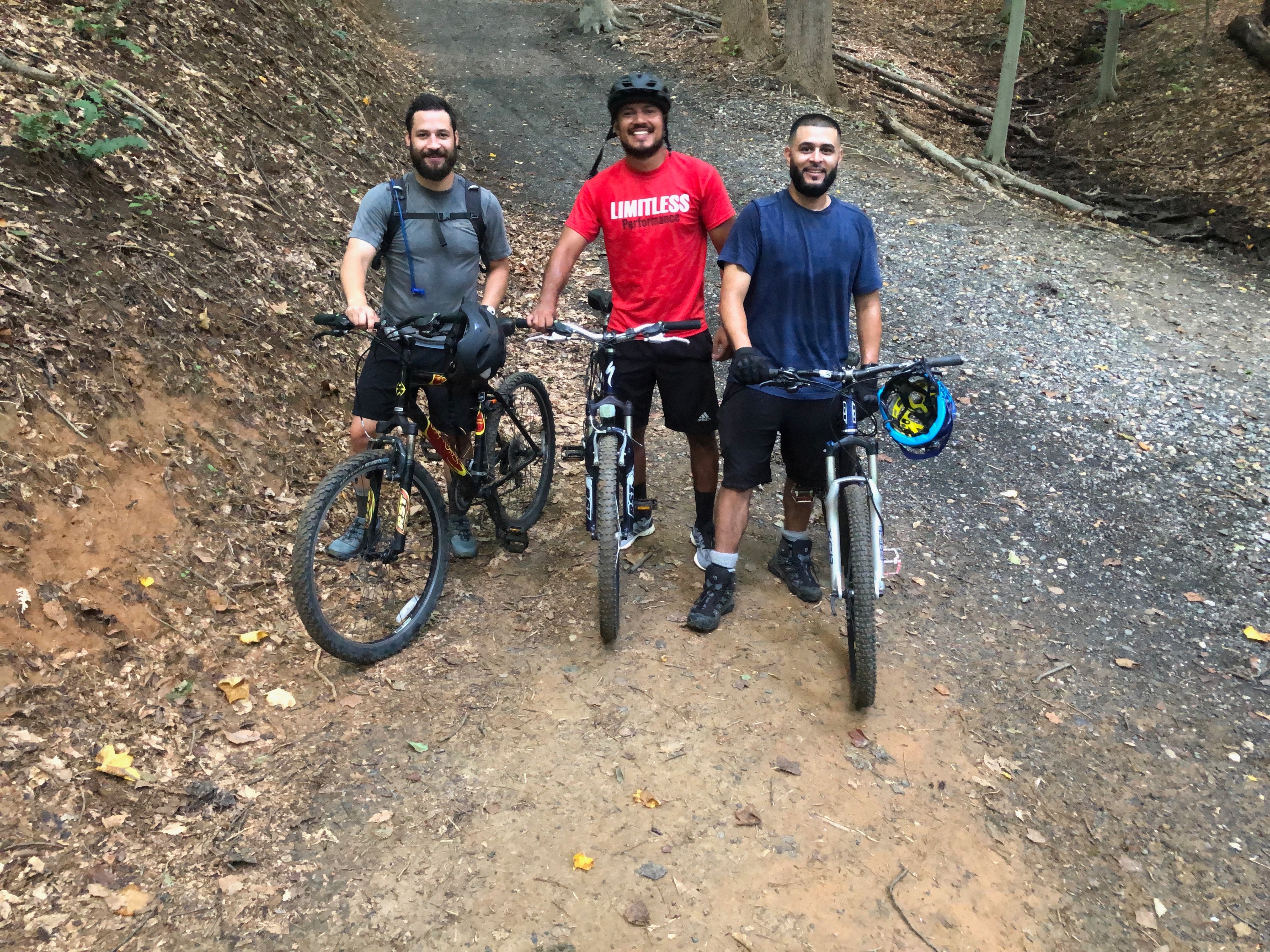
Brian Anleu, 31, [right] bikes on the Northwest Branch Trail in Silver Spring with two of his friends.
Since April, Anleu has biked a little over 500 miles and he’s set a new goal for next year: “I want to bike a thousand miles.”
Instead of biking, Alaan Savoy from Odenton, Md., says, he decided to start running because of the pandemic.
“I hate running, but I’m going to make myself run for this until the gyms open again,” Savoy told himself in March. “My only goal was to run without panting at the end and run without feeling like I’m going to die.”
In the past, Savoy had made a little progress in losing weight. He says he started at 200 pounds and then plateaued around 170 pounds before the pandemic. His goal was to get down to 150 pounds —what he weighed during his eight years in the U.S. Air Force.
So he ran to shed the weight. “I would pick a landmark and then run to that. Then I would just make it a little longer and then a little longer…next thing I knew I was running miles without stopping.”
And he got down to his goal weight “during COVID, of all times to do so,” he says.
The 35-year-old says another motivation for running was trying to improve his respiratory health. He was diagnosed with asthma — a comorbidity in COVID-19 patients — while in the military, and says he was a bit worried about how he would fare if he caught the virus.
“I just figured, ‘Okay, if I work on my respiratory health and work on my lung capacity, it would help me in [fighting off a potential virus],” Savoy says. “Even if it was just in my head.”
A Clinical Approach
For others with comorbidities, Dr. Neal Barnard says many patients he sees are looking for ways to stop relying on insulin, lose weight, and develop healthy eating habits.
Barnard says the majority of the patients that come to him already use prescription drugs to combat diabetes, heart disease, or hypertension.
“Patients are really eager to take their health into their hands, to be in control and to do what they can for themselves,” Barnard says.
Barnard’s clinical approach for his patients is to go on a vegan diet. He also asks them to do an hour a day of an aerobic exercise like walking, running, or biking.
“COVID has made all of that harder,” Barnard admits. “But we’ve encouraged people to realize that they are actually at pretty low risk when they’re out in the forest running along a trail.”
While trail running might be a bit much for some people to start off with, Barnard says this diet and exercise routine isn’t just good for physical health.
Improving Mental Health
By making changes to your gut’s microbiome and exercising, Barnard says, it ultimately feeds back to the brain.
“Physical exercise is a clear-cut antidepressant,” Barnard says.
Theo Storella from Bethesda says there were a number of factors that improved his overall mental health this year.
The 22-year-old college graduate says when the pandemic hit, he had to leave Wesleyan University in Connecticut without an in-person graduation ceremony, lost a job offer in New York City, and moved back in with his parents.
“That was tremendously discouraging and it felt like this whole future that I had had planned out had been swept out from underneath me,” Storella says.
Storella says between March and May, he gained about 20 pounds while sitting on the couch, watching TV, and feeling isolated. “I entered a pretty deep depression after I graduated. I had had issues with mental health before and so I knew to recognize the signs,” he says.
After about two-and-a-half months of that and some support from his mom, Storella managed to get active.
“My mom kept repeating to me ‘you’re in the midst of a once-in-multiple-generations crisis…and if you want to be active and not spend so many hours on the couch watching TV all day, get out there and help people that need help,’” he recalls.
Storella began volunteering. From there he found one job and then another working as a language translator —he speaks four languages — at a Montgomery County COVID-19 testing site.
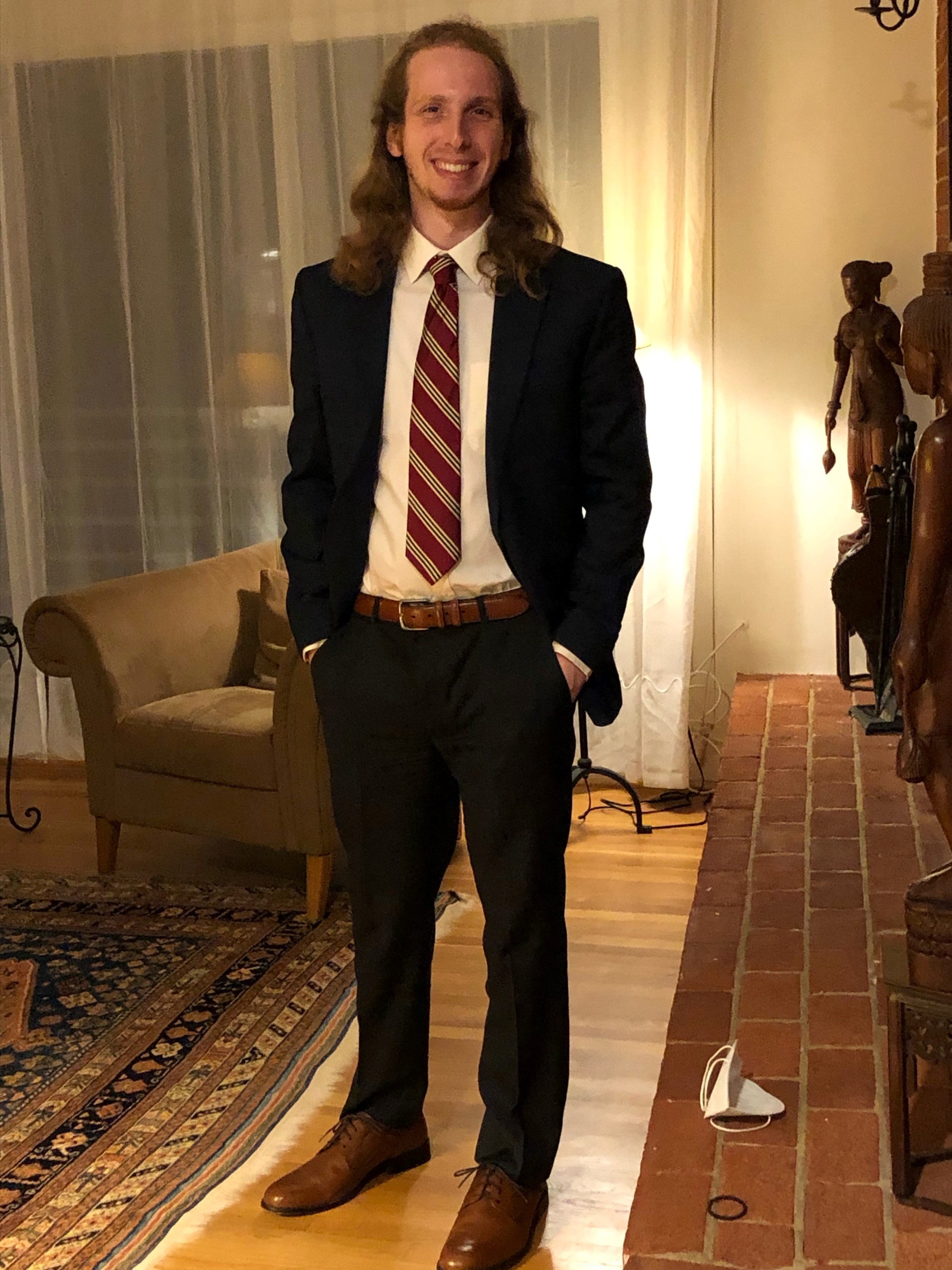
Theo Storlla, 22, of Bethesda, says he’s feel better than he was at the beginning of the pandemic
“I started to feel myself get a little bit higher spirits, and eventually I made the decision to stop, to try to quit smoking,” a habit he started when he was 13 years old. He went cold turkey.
From there, he decided to start jumping rope a little bit more each day and then — with the help of friends — got into a daily workout regime and dropped almost 30 pounds. Eventually, he says he found the tools to help him fight his depression without the assistance of medication, something he says isn’t for everyone.
“I’d spoken about this with my therapist and with my prescriber. And we had a plan. I ended up actually finding ways to maintain, I guess, a positive attitude or outlook without it.”
Taking a page from Storella’s book, the key for anyone looking to change their physical or mental health during this pandemic — or in the new year — is to get help, make a plan, and stay the course.
Or as Carol Rabenhorst says, it’s never too late in life to try something new.
This story was updated to show that Theo Storella attended Wesleyan University, not Wesleyan College in CT.
This story originally appeared on wamu.org