Jacob Fenston
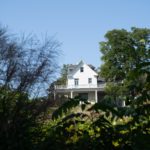
For nearly 50 years, River Farm, high on a bluff above the Potomac River, has functioned as a de facto public park, with 27 acres of gardens and native habitat open to the public. The historic farm was once owned by George Washington.
Now, the property — headquarters of the American Horticultural Society —is on the market.
AHS leadership says the group needs to sell the property to stay afloat. “Like many small nonprofits, AHS has struggled financially in recent years and the pandemic has all but stopped essential revenue streams needed to maintain our day-to-day operations,” wrote Board Chair Terry Hayes, in her statement. “The funds raised will allow our nonprofit to create an endowment that will ensure our organization and our programs can continue indefinitely.”
The property is listed for $32.9 million, nearly double the appraised value, according to county tax records. Neighbors, elected officials, and local parks authorities are racing to save the land from being developed, and to keep it open to the public.
“Setting an asking price so far above any appraised value was a mistake,” said Paul Gilbert, executive director of NOVA Parks, which is spearheading an effort to purchase the land to preserve it as a park.
“It sends the wrong message. It sends a message that, ‘We want to sell this regardless of what happens, to whoever can provide the maximum amount of money.'”
The listing touts the “unobstructed views” of the Potomac, and the “charm of the past” that envelops one upon arrival. “Once-in-a-lifetime opportunity to own 27 plus acres of riverfront property in the Washington, DC metropolitan area,” reads the listing.
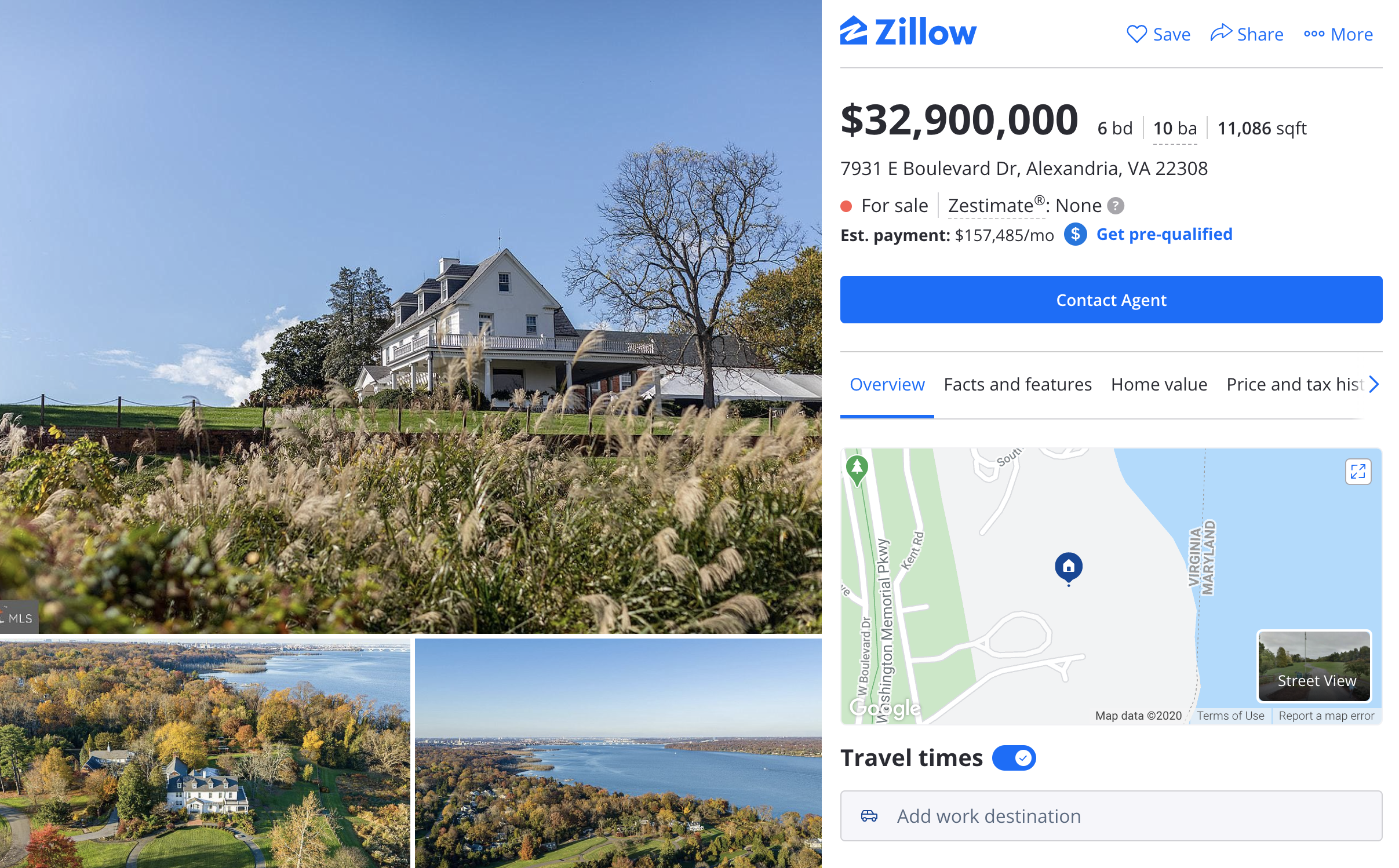
The River Farm property was one of five farms George Washington owned in Northern Virginia (the most famous, of course, being Mount Vernon). River Farm was in the Washington family for almost a century — from 1760 to 1859. In 1973, AHS purchased the land for its headquarters, thanks to a $1 million gift from philanthropist Enid Haupt. Haupt — who loved gardening — asked that the grounds be made open to the public.
In a statement released Dec. 22, AHS board chair Terry Hayes said the group preferred not to sell to a developer. “Contrary to many recent reports and statements, our desire is to not sell River Farm for future subdivision or development, but rather for it to remain a single-use property, preferably with continued opportunities for public access and enjoyment going forward.”
Hayes also wrote that AHS is not bound to maintain public access to the riverfront property. “We have found no documents that create an obligation,” wrote Hayes, of Haupt’s donation. “It was at her request, but not a requirement or condition of the donation, that the public could have free access to walk and explore the grounds of River Farm during regular operating hours.”
The listing agent for the property will be taking offers through Jan. 4, according to a spokesperson for AHS.
NOVA Parks has been working to secure state and federal grants to be able to buy the property, while the Northern Virginia Conservation Trust has launched an effort to raise private funds.
“Once it’s gone, it’s gone,” said Gilbert. “There’s no there’s no getting it back after that point.”
Meanwhile, there is an effort afoot at the county level to put a historic designation on the property that would make developing it more difficult.
“The county has the ability to identify properties that are historically important,” explained Fairfax County Supervisor Dan Storck, who represents the area where River Farm is located. In October, the Board of Supervisors took the first step to create a historic overlay district for River Farm.
“The historic overlay really doesn’t keep a property from being developed,” said Storck. “It just requires the individual to go through essentially more hoops.”
Other lawmakers have also gotten involved. State Sen. Scott Surovell has a special connection to River Farm: he got married there. This fall he launched a petition asking AHS to reconsider the sale.
Even Governor Ralph Northam weighed in, writing to AHS board members in November to express his “strong support” for preserving River Farm. “Due to its historical significance and importance as a public community heritage site in Virginia, I was disappointed to hear that the AHS Board may sell the River Farm property for a profit and eliminate the public’s access,” wrote Northam. “We hold our historic and public spaces in high esteem and need to think twice before selling them to the highest bidder.”