Ally Schweitzer
A declining population of striped bass has clouded any glimmers of environmental progress in the Chesapeake Bay, according to the latest report from the Chesapeake Bay Foundation.
For the second time in a row, the bay scored a D+ in the foundation’s report, released Tuesday. Its score was only slightly better in 2018, after cascading rains washed a devastating volume of pollutants into the bay.
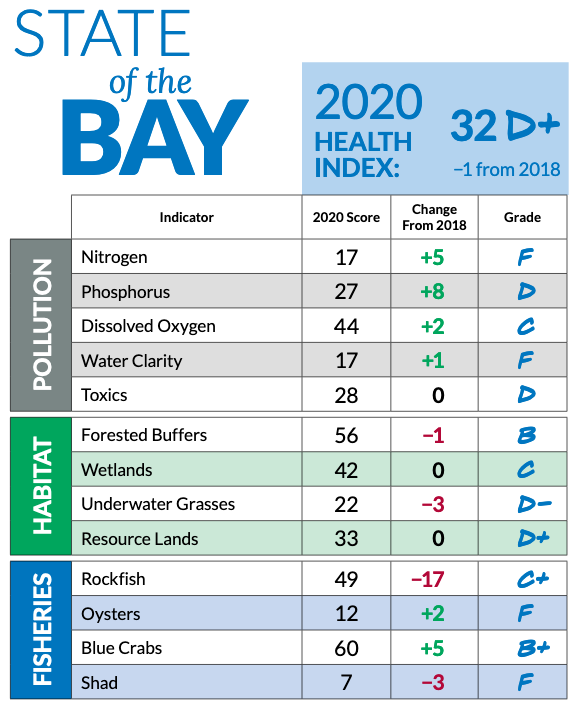
Since then, water pollution has subsided, the bay’s dead zone has shrunk and oysters are bouncing back after a dramatic nosedive, the report says. But some bay-adjacent states have failed to prop up the flagging population of striped bass, also known as rockfish, giving way to a “worrisome” trend, the report notes.
The foundation is an independent conservation organization dedicated solely to the bay’s environmental health.
Overfishing, pollution and habitat loss have harmed productivity of fish and shellfish populations in the Chesapeake, the report says. Rockfish — described in the report as an “iconic” bay species — remain at risk, partly because Maryland has taken a “piecemeal” approach to reducing overfishing, the report says.
Leaders in D.C. and the six bay states — Virginia, Maryland, Delaware, West Virginia, Pennsylvania and New York — agreed in 2010 to environmental goals aimed at removing the bay from the federal “dirty waters” list. The latest report shows that the Chesapeake Clean Water Blueprint is working, says William C. Baker, president of the Chesapeake Bay Foundation. “Still, efforts must drastically accelerate” to reach the blueprint’s goals by 2025, Baker writes in the report.
The bay’s latest score is 32, down one point from 2018. Its target score is 40, or a C, by 2025. A score of 70 or better earns an “A” grade.
Regulatory rollbacks by the Trump administration have also dealt a blow to the recovery plan, the report says. Federal officials “reversed dozens of clean air and water regulations, undermining forest and wetland protections and our ability to fight climate change, and failed to enforce the Blueprint’s terms,” Baker writes. “Already facing a challenging road to the finish line, these actions put the entire restoration effort further at risk.”
Three bay states, the District and the Chesapeake Foundation sued the Environmental Protection Agency last year in an effort to uphold enforcement of environmental goals. “We won’t back down until EPA holds all Bay states accountable for their pollution-reduction commitments,” Baker writes.
The Chesapeake Bay Foundation estimates that improving the health of the bay would produce $130 billion annually in natural resource benefits.