 Aja Beckham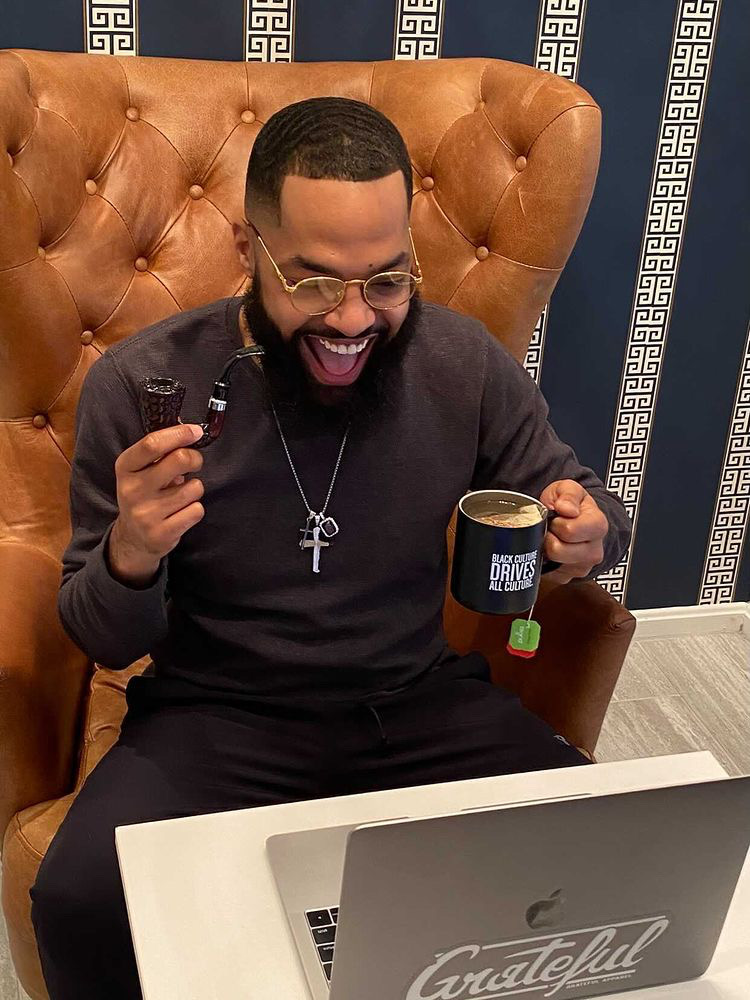
In the first episode of the Instagram Live series “D.C. A Chocolate City Story,” host Ke’Shawn “King Flexxa” Forbes opens what he calls a “historic novel” about D.C. culture, including conversations about politics, entrepreneurship, and arts.
“I wanted to take this charge to talk to native Washingtonians … that have such a big voice and such a big influence and dig [into their story],” says Forbes in the first episode.
In the seven months since it launched, the show has featured 90 guests, including Symone Sanders, former senior adviser to President-elect Joe Biden’s campaign and now spokesperson for Vice President-elect Kamala Harris; Angel Anderson, owner of Takoma shop The Spice Suite; and Anwan Glover, go-go artist and an actor on The Wire.
“Most interviewees are native Washingtonians, but some moved to the District and have contributed to D.C. culture as well,” says Forbes.
On the IG Live, Black guests discuss their experience of being raised or currently residing in D.C., and their career path — including both failures and successes.
Forbes named the show “D.C. A Chocolate City Story” to connect the past to the present.
For decades, D.C. was known as Chocolate City — it was the first major city to have a majority of Black residents, hitting more than 70% Black residents in the 1960s. Currently, about 46 percent of D.C. residents are Black, per the Census Bureau, as the District steadily loses Black residents due to gentrification and rising housing costs.
A Brooklyn native, Forbes moved to D.C. in 2009 after graduating from Morgan State University in Maryland. When he moved, several native Washingtonians embraced him and helped him network as he started his career in the radio and media industry, he says. In 2010, Forbes started Flexx Rated TV, a Youtube channel that covers red carpet events such as BET Honors and one-on-one interviews with pop culture celebrities. Currently, he’s a personality on DTLR Radio, a hip-hop and R&B music station that streams in over 250 DTLR and Villa clothing stores throughout the country.
This past summer, Forbes says he began reflecting about other platforms and stories to tell now that he had more free time during the pandemic. Forbes, like many others, saw a gap on social media and a need to tell stories that weren’t being told on platforms like Instagram.
“One story wasn’t being told well — a story about D.C.: the leaders, activists, and change agents,” says Forbes.
“It shouldn’t take someone from the outside to highlight D.C. in this way. It was a good thing though because Flexxa is a listener. With him being a listener, you can see his reaction to D.C. stories, the excitement, surprise, and suspense,” says Mohammed Hill, co-owner of The Museum, a Northeast-based art and hip-hop inspired clothing boutique. The Museum co-owners appeared on the show in June.
Tony Lewis Jr., a community activist, was his first guest in June of last year.
Lewis is “the perfect middle child of D.C. because he’s well-respected and looked up to by the younger generation and held in high regard by the people that came before him,” says Forbes. “By starting the show with him, it was like he was giving [a transplant] his blessing to tell D.C. stories.”
During the show, Lewis spoke about growing up during the 80’s when crack cocaine plagued the District and 90’s when D.C. became known as the murder capital. In his 2015 memoir, Slugg: A Boy’s Life in the Age of Mass Incarceration, he shares more about his childhood.
“What I wanted to do with Slugg was to show how it impacted Howard [University] professors, doctors, government workers that got addicted, and it changed the dynamics of not only their households, but also their community,” said Lewis during the interview. Lewis’ father was arrested in 1989 for a drug charge and is serving a life sentence.
While some featured guests discuss the history of D.C., others share about their career paths taking off in the District.
William ‘Gym Jonez’ Cole, a fitness instructor who’s lived in Ward 7 for 15 years, appeared on the show earlier this month.
Cole, who helped run Mayor Bowser’s #FITDC initiative, discussed community-based fitness, and how residents of all socioeconomic statuses can access fitness routines, despite the lack of gyms in some areas in the city.
He also shared marketing tips. “You got to run [your business] like a campaign,” Cole said. “So [think like] ‘I’m going to do as many things as possible to get people to vote for me, whether it be community workouts for free. I’m going to train the most popular people in the city, be on TV as much as possible.’”
He’s one of many guests who have lent business advice to viewers.
“We went on the podcast for three reasons. We’re close friends with Flexxa, we’re third generation Washingtonians, and we’re the most influential people in the city under 40,” co-owner of The Museum, Greg Harrison tells DCist/WAMU.
On the show, Harrison, Hill, and Forbes discussed developing innovative business ideas and the advantages of bringing a Black perspective to different industries that lack insight.
“Cultural currency is something serious. That’s what we have, we have influence and cultural currency and companies pay big money for that,” says Harrison. The Museum brick-and-mortar business made over a million dollars in net sales since opening in 2016, says Harrison.
Hill says the show is like “a red carpet for D.C. influencers.”
“It was more just about [Forbes] with open arms saying, ‘Hey, I know you’re great, because I see, you know, what you do. So here’s the platform.’”