Margaret Barthel
 Rachel Kurzius
 Dominique Maria Bonessi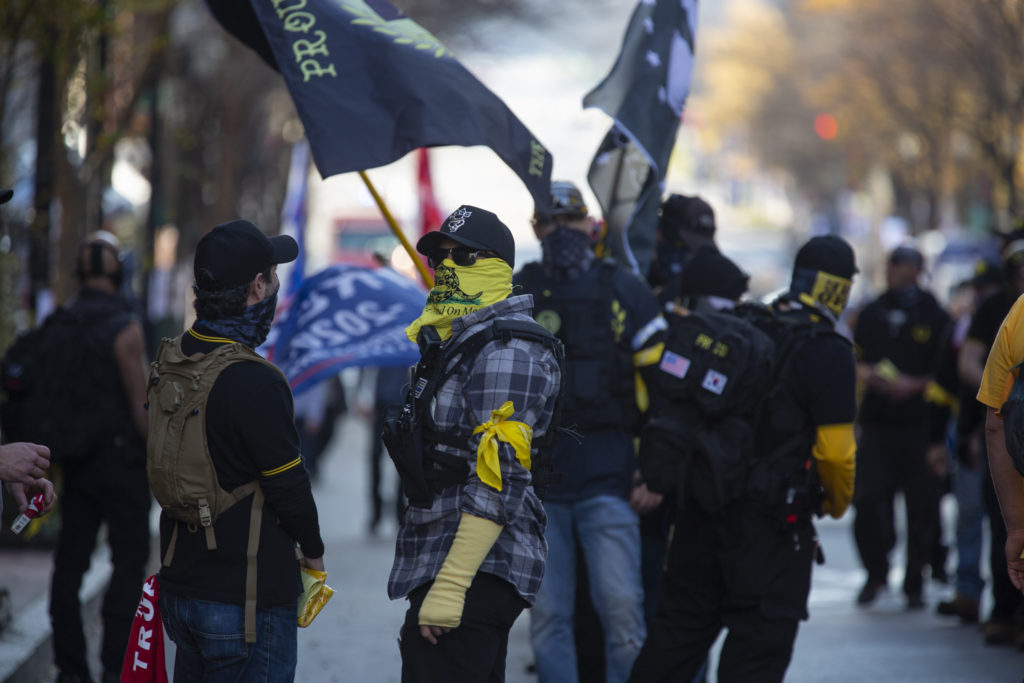
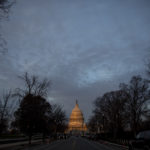
Tensions are palpable in D.C. as the city prepares for a very different kind of Inauguration Day. President-elect Joe Biden’s swearing-in on Wednesday will occur in the shadow of a surging health crisis and threats of extremist violence, following an attack on the nation’s Capitol earlier this month.
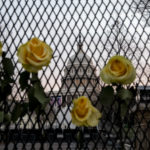
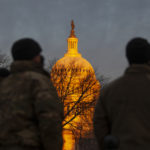
Thousands of law enforcement officers and National Guard troops have flooded into the District, putting up barricades and high fences to try to protect the transition of presidential power from attack. In the wake of the fatal insurrection at the Capitol Building on January 6, the FBI is warning of armed gatherings in D.C. and all 50 state capitals — and D.C. Mayor Muriel Bowser has begged people to stay home rather than attend the ceremony.
While the city is in a state of emergency following the Capitol siege, researchers who study domestic extremism say it’s unlikely crowds of a similar size will return to D.C. before inauguration. But that doesn’t mean that right-wing extremists intending to do harm won’t show up, or that violence won’t occur — it just might be more diffuse, less organized, and continue beyond Inauguration Day. Targets could include more residential areas, like lawmakers’ homes, and media headquarters.
“We have not observed any kind of online organizing or mobilizing that suggests a large crowd with a scale anywhere close to the one we saw on January 6 is planning to appear in D.C. in the coming week,” says Jared Holt, who monitors domestic extremism as a visiting research fellow at the Atlantic Council’s Digital Forensic Research Lab. “That said, there is still a fair amount of likelihood that smaller groups or perhaps individuals may come into the Washington area.”
Jen Golbeck, a professor of computer science at the University of Maryland who studies extremism online, says the online lead-up to inauguration week has been murky, especially compared to the planning for the Capitol siege.
“Everything is really disorganized at this point, especially compared to where it was leading up to the riots” on January 6, Golbeck told DCist/WAMU. “Before Wednesday, there was a lot of organization. They were planning caravans, ride sharing, sharing maps of how to get to D.C., how to use different technology to find your way around. There was a real coordinated effort to bring all of these groups together, and they felt like they had a specific directive from Donald Trump to do that, which was a big motivator for them.”
Many pro-Trump extremists are feeling “disheartened” after they failed to stop the certification of the presidential election results at the Capitol, Golbeck said. Tech company decisions to ban Trump mean that his supporters haven’t heard many clear messages from him.
But residents should stay aware, per Holt. “Even though we’re expecting much smaller crowds than January 6, the passions of those crowds will likely be the same if not greater,” he says.
Some extremists online suggest now is the time to stay home and prepare for violent actions — even civil war — in the future and to focus on radicalizing disappointed Trump supporters.
Holt says that he’s also seen discussion in far-right circles that the upcoming events in D.C. are so-called “false flags,” meaning that authorities or political detractors have organized them to entrap attendees.
“We’re not going to any ‘Million Militia March’ or any other fed honeypot event that’s being promoted,” wrote commenter signing himself as “Enrique” on a Proud Boys Telegram chat (Enrique Tarrio is the chairman of the Proud Boys, an extremist group with ties to white nationalism, according to the FBI.) ”We suggest none of you go to these events. We won’t sit on our hands for the next four years but we can pick and choose our battles moving forward.”
Calls for a Jan. 17 “Million Militia March” — sometimes accompanied by a graphic of crossed assault rifles between an American flag and a ‘don’t tread on me’ flag — surfaced on 4chan, according to The New York Times. The Times also reported a number of rallies organized by the far-right Boogaloo movement across the country on the 17th. (The Boogaloo movement is a militia-style movement convinced that a revolution or race war is coming.) Some of these rallies, Golbeck notes, have been planned since last month, long before the Capitol insurrection.
“What we’re seeing is there were a bunch of marches planned in the state capitals and D.C. by anti-government groups that actually weren’t Trump supporters…that were intended to be peaceful. They weren’t intended to support Donald Trump,” Golbeck said. “Those had been planned for the 17, but they were going to show up armed, which, of course, worries people, especially after the sixth.”
Now, Golbeck said, there’s a concern that smaller groups of angry pro-Trump extremists might “piggyback onto these demonstrations and actually shoot people or use those weapons in a way to express their unhappiness.”
A mixture of local and federal authorities have declared a state of public emergency in D.C., and movement around the Capitol and downtown areas is extremely limited.
The Secret Service has established a wide perimeter around the National Mall, Pennsylvania Avenue, the Capitol, and the White House. At the request of D.C. Mayor Muriel Bowser, the National Park Service is restricting public access and protest permits for those areas.
This lockdown could stymie extremists who initially came to town with the intention of disrupting the inauguration or the Capitol complex, says Holt, but the question is “whether they’ll go looking for their next target and look for something closer to the D.C. community.”
Golbeck cautioned that these scattered, smaller threats should be taken seriously. “I certainly see a threat of smaller groups showing up and trying to do some chaotic things,” she said. “So that could be a couple people with some more pipe bombs or some guns showing up and willing to shoot people.”
There are other signs of more diffuse threats over a big, centralized action. On Telegram, a messaging app preferred by the extreme right, one poster in an extremist message board suggested the march would mean “lizards homes” [sic] — the homes of people with political power — were unprotected and vulnerable to “more professional ops.” Commenters on Telegram have also suggested targeting major media organization headquarters, including the New York Times and CNN, according to The Times.
Metropolitan Police Department Chief Robert Contee said officers will be out in full force around the National Mall and throughout the city. “I want to assure the residents of the District of Columbia that MPD and our federal partners are in a posture to respond to the information that’s out there thus far,” Contee said.
Holt says he’s been advising D.C. officials on what he’s been seeing, and they “seem to be both interested and taking seriously not just the danger that extremists could pose to the government, but also to D.C. residents.”
Golbeck advised Washingtonians to approach the days leading up to Inauguration with extreme caution.
“If I were living near Capitol Hill, downtown D.C., or even a sort of accessible part [of the city] to out of towners, I’d be stocking up on groceries and trying not to leave my house for a few days around inauguration,” she said.
Holt suggests that anyone who has to leave their home, like essential workers, “stay vigilant — it’s a bit of a cliche, but keeping the city safe on a local level is going to require some degree of shared situational awareness.”
Even if D.C. doesn’t see right-wing mass gatherings in the run-up to Inauguration Day, Golbeck said the city may well remain a major focus of pro-Trump extremists in the future.
“The talk about Congress, especially Democrats in Congress — I think the most common word used is ‘traitor,’” Golbeck said. “These supporters really feel like the election was stolen from them, that there’s been corruption…so I think we’ll see these groups continuing to come to D.C. and share their displeasure.”
Washingtonians need to keep the lines of communication open with each other, says Holt. “As we grapple with multiple threats from right-wing extremists that could present themselves in D.C., it’s incumbent on D.C. residents to make sure they are remaining engaged in their communities and having conversations about these kinds of topics, so that communities and neighborhoods can protect each other in this contentious moment.”