Colleen Grablick
 Jordan Pascale
 Gabe Bullard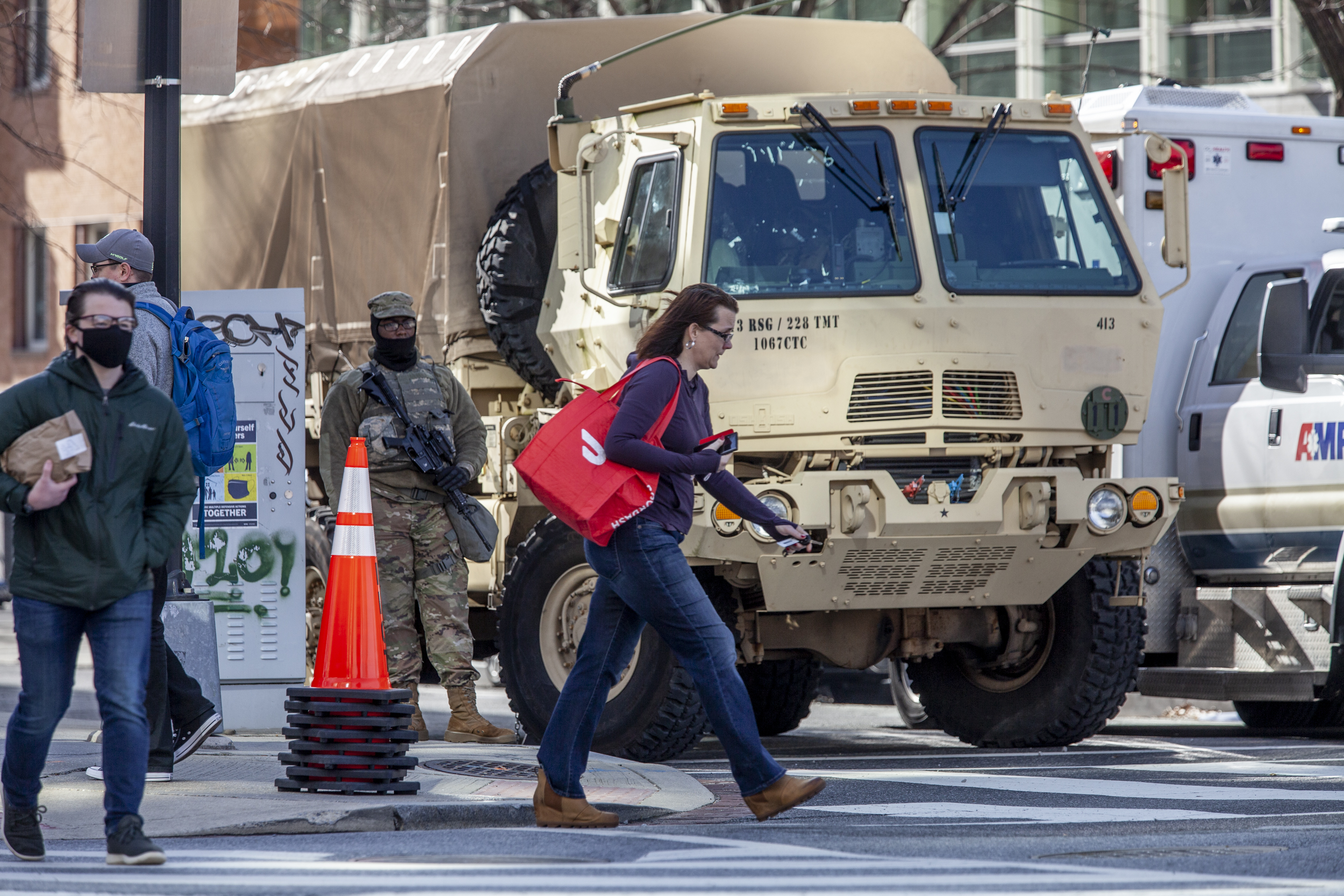
“Eerie.” “Post-apocalyptic.” “Surreal.”
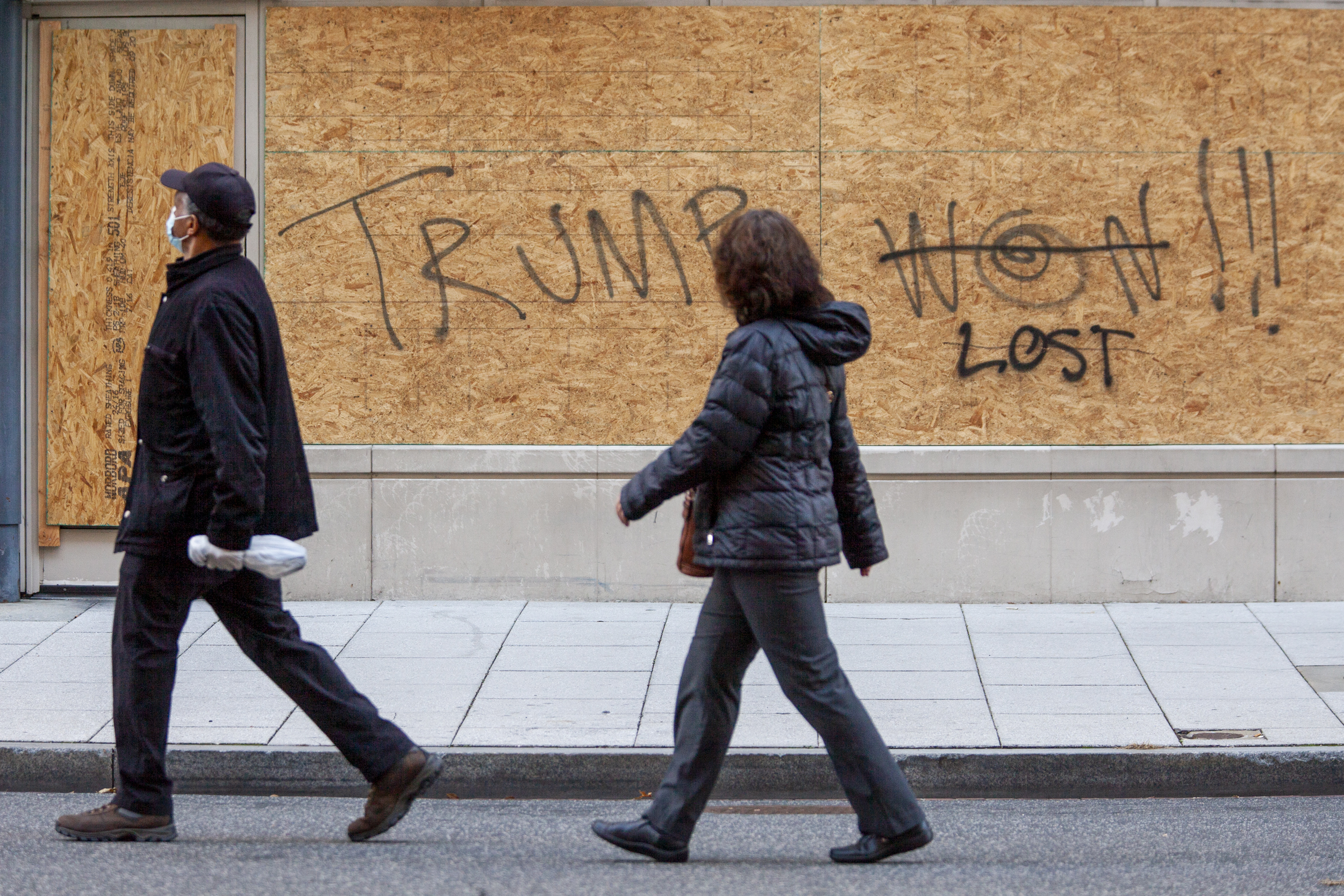
That’s how locals described life in a barricaded and boarded-up D.C. five days before an inauguration that has prompted an unprecedented security response, and ten days after a deadly insurrection at the Capitol.
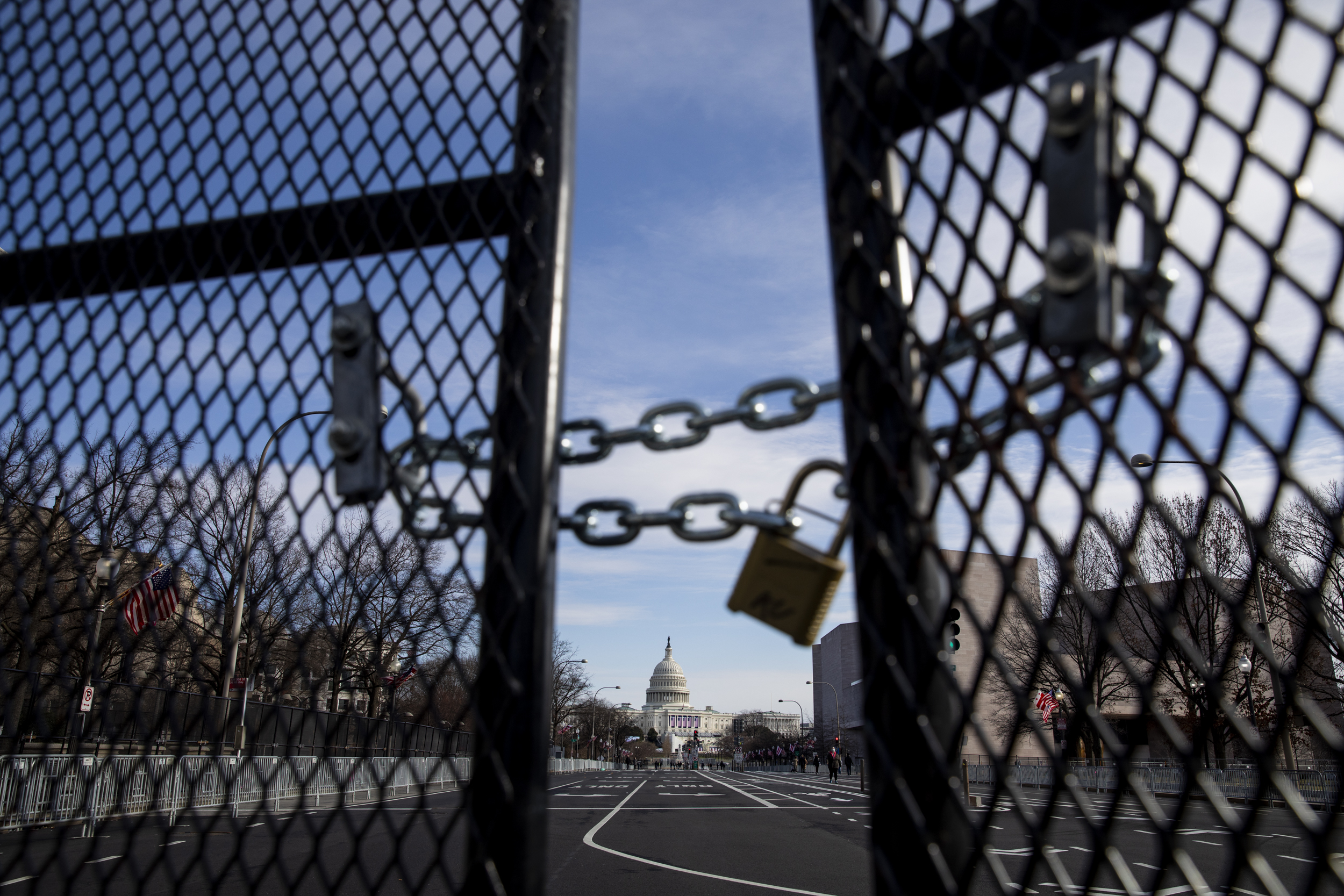
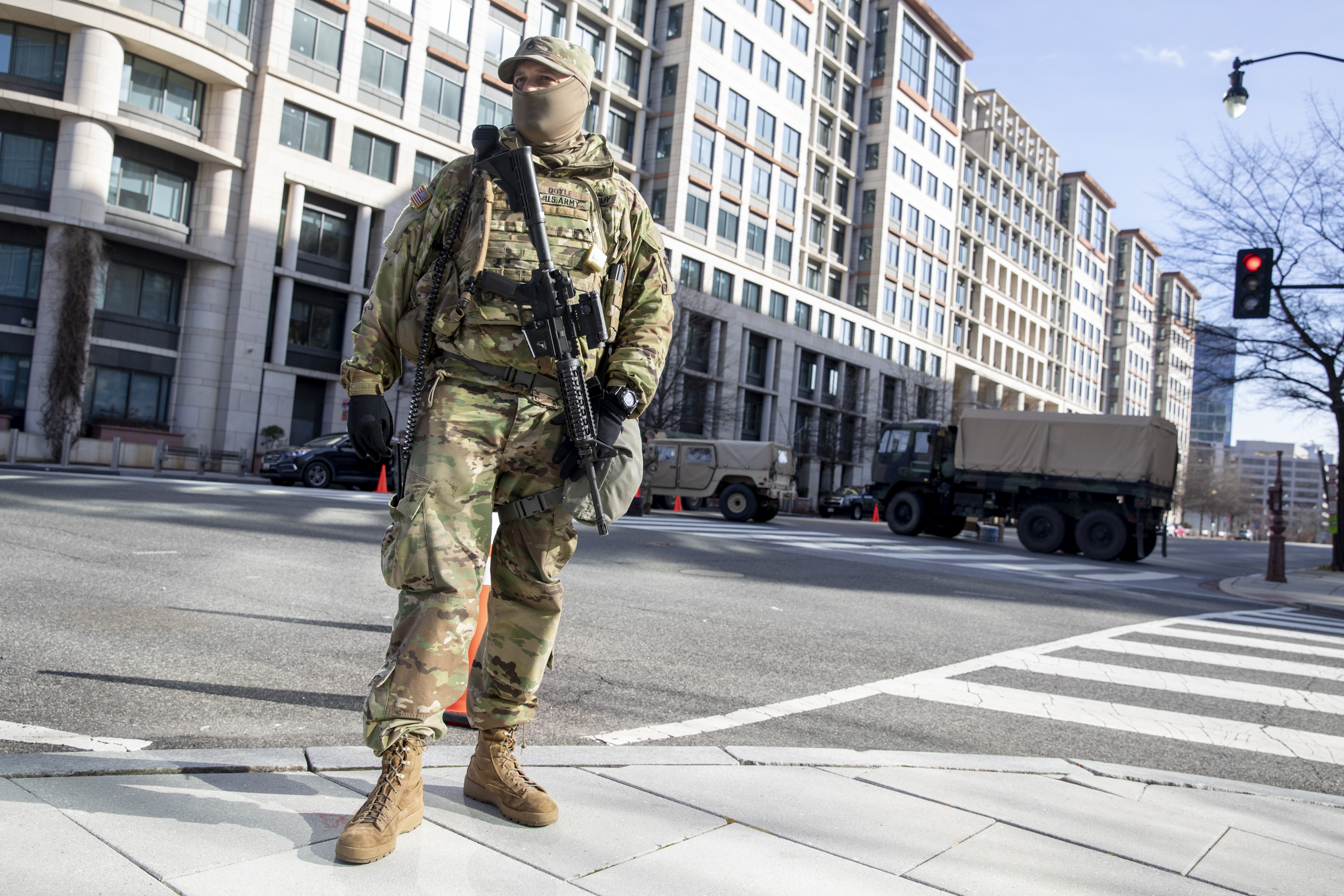
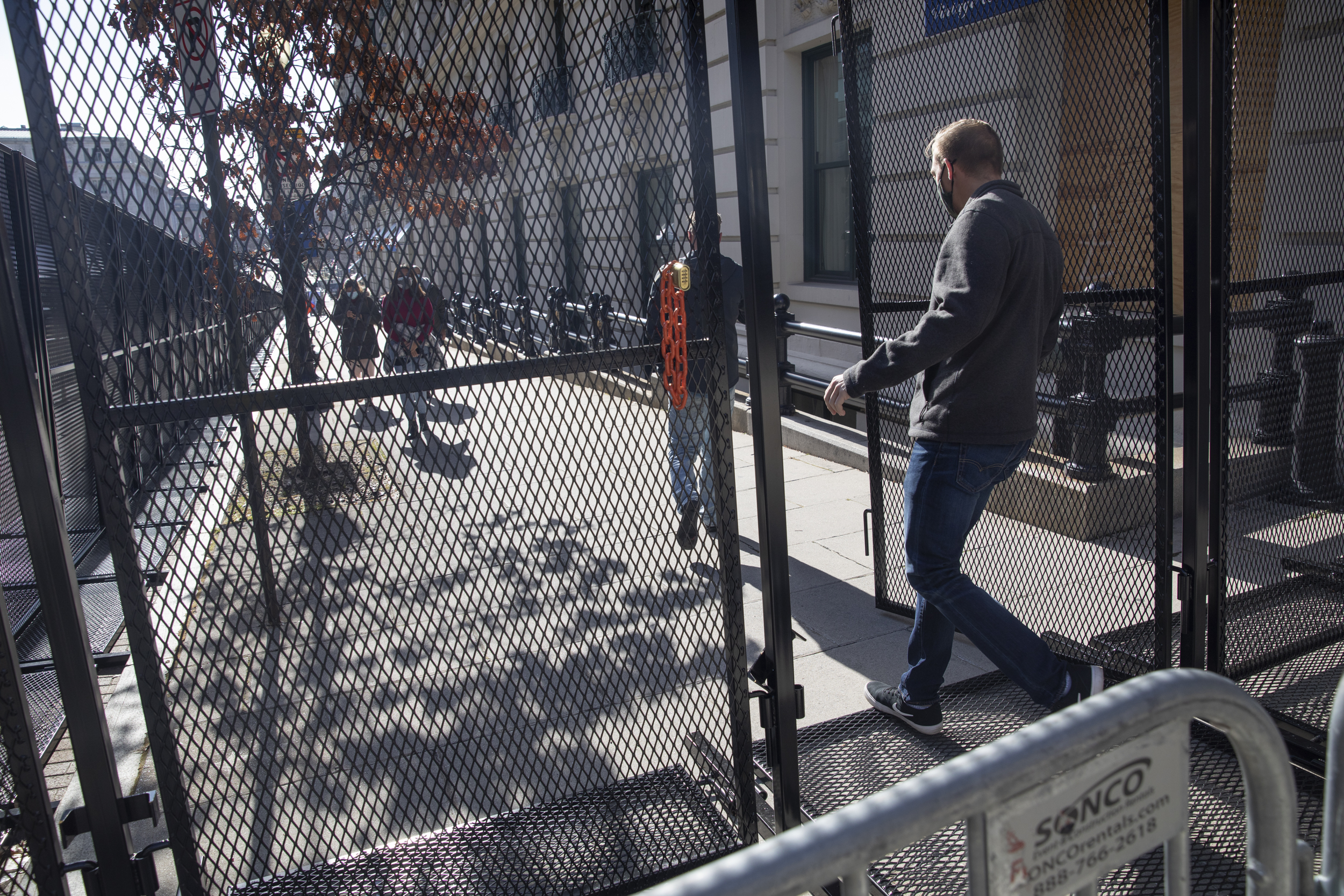
Downtown streets were lined with police officers, National Guardsmen and concrete barricades. The blocks along the National Mall were surrounded by fencing.
“There were probably more National Guard and MPD officers out there than residents walking, exercising or whatnot on the street,” said Michael Shankle, an ANC Commissioner whose jurisdiction includes Penn Quarter and Chinatown “It was probably like a five to one ratio.”
While officials asked people to stay away from the area, many did not. Most seemed driven by curiosity and the oddity of it all. At times, it almost seemed like the security show was an attraction to be witnessed.
Friend groups brought coffee and chatted. Families pushed strollers down Pennsylvania Avenue. Cyclists sped through car-less streets. Runners jogged around Jersey barriers, catching glimpses of some of the 25,000 National Guard troops, the miles of 12-foot high fencing and other measures taken in response to the violence of January 6 and the continued threats from far-right extremists. Elsewhere in the city, locals took steps to protect each other, as nonprofits and mutual aid groups worked to provide transportation, food, and shelter to residents experiencing homelessness.
While Saturday remained free of the violence the city has braced for in the past week, experts have warned that threats of right-wing extremism are still a possibility for Inauguration Day and the days leading up to it.
For people who live or work downtown, the security measures gave a feeling of safety, but presented a few challenges. Mark Lyon lives near 7th and E streets, an area now encompassed by a “Red Zone” where traffic is restricted to authorized vehicles. Lyon said the security precautions seem to “forget the people who live here.”
“You walk outside there’s troops, there’s police, there’s barricades, there’s no clear way to evacuate if anything does happen down here,” Lyons said. “It’s very concerning, and it’s unusual. For even a normal inauguration, these types of precautions happened the day before.”
Lyon tweeted a photo of a garage with a barricade in front and the caption: “hope we don’t need to use the car.” Downtown garages closed Friday. Drivers who left their vehicles inside can’t get them until the day after the Inauguration.
Hope we don’t need the car. pic.twitter.com/26CDyWicM4
— Mark Lyon (@markhlyon) January 16, 2021
Many workers’ commutes were upended by Metro closures (13 stations are closed) and security checkpoints.
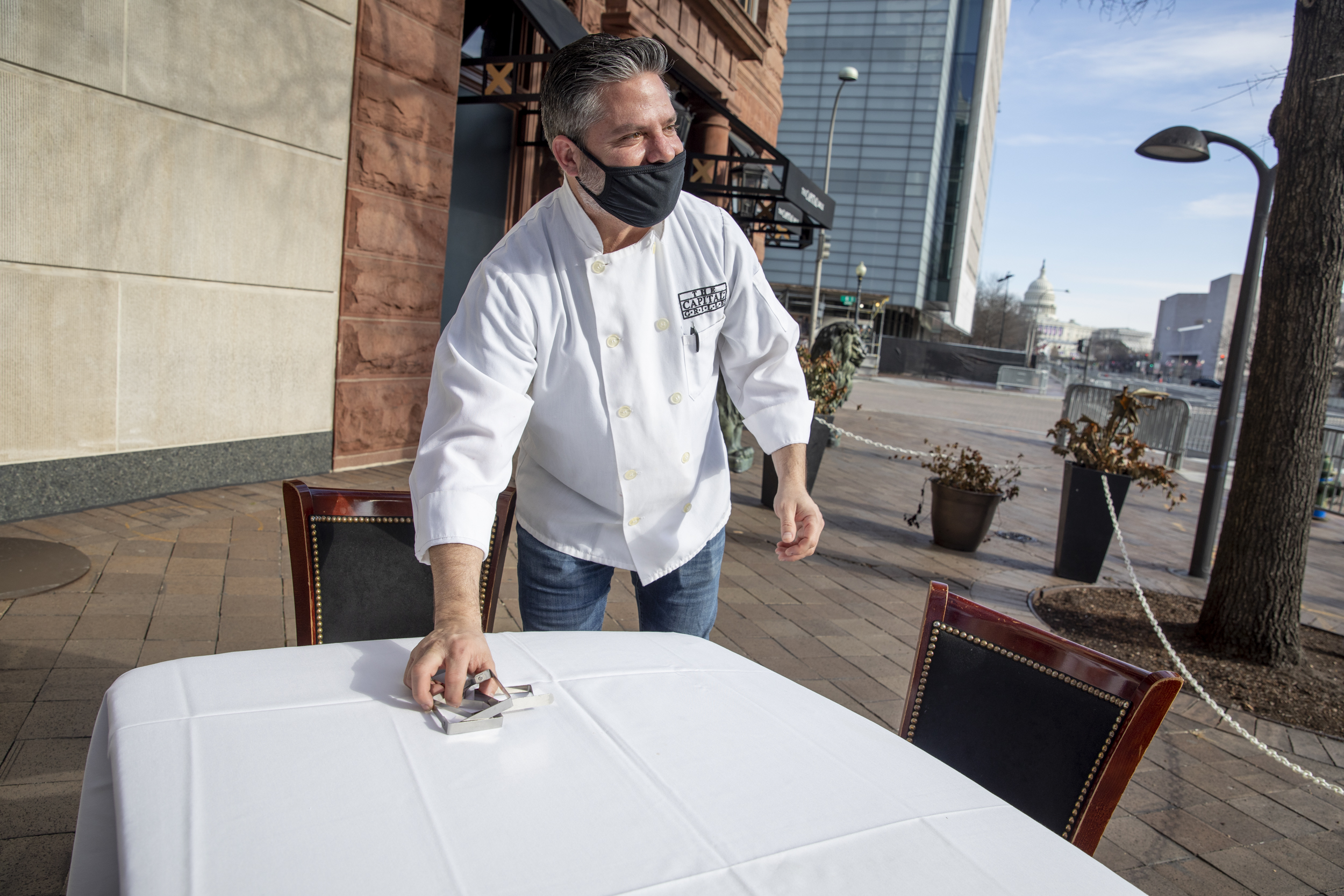
Doug Prather, a manager at Capital Grille at 6th St. and Pennsylvania Ave, was setting up outdoor dining Saturday morning with the hope that people checking out the scene would stop for lunch or a drink. It took him an hour and a half longer than usual to get from his home in Rosslyn to the restaurant.
“It’s a little tough,” Prather said. “I took the train in from Virginia. I had to go through a couple of checkpoints and walk a little bit out of the way to get here…There’s a lot of misinformation about what checkpoints you could go through and couldn’t.”
Indeed, security varied street by street. In some areas, pedestrians (and their dogs) were allowed to roam freely. In others, they had to go through metal detectors and be patted down.
Many Secret Service agents said security will get even tighter in coming days.
A security worker at a downtown hotel, who did not give his name, said the hotel put up workers in rooms for the week, because getting around is too complicated. He was using a golf cart to transport a small number of registered guests to the hotel in the secure zone.
Hotels have faced pressure to close for Inauguration week in order to deny potential agitators a place to stay in the city. Some are hosting guard troops. Airbnb has canceled bookings in the area.
The Willard Hotel in the Red Zone was decked out in American flag bunting and a banner welcoming President-Elect Joe Biden and Vice President-Elect Kamala Harris. Metal fences nearly surrounded the building.
On Pennsylvania Avenue, Cyrus Roepers, Heather Rodgers, 9-month-old Ava Roepers-Rodgers and grandmother Nadereh Roepers took photos of the Capitol behind fencing. They live nearby and have never seen downtown like this. “It’s just weird,” Cyrus said.
Nadereh said she has traveled to many places around the world that have been described as “dangerous,” but the scene downtown was new. “We’ve never seen this here in America,” she said. “As a mother, I’m concerned about them.”

While large-scale demonstrations downtown may be thwarted by the various security measures in place, extremism researchers say the violence could end up being more dispersed throughout the city, potentially diffusing into residential areas or outside of media headquarters and lawmakers’ homes.
That possibility particularly worries Ruby Corado, the executive director of Casa Ruby, a multicultural nonprofit serving LGBTQ residents experiencing homelessness. Throughout the week, homeless services agencies have been working overtime to connect with residents, hoping to move them into shelters and away from the security perimeters.
“They’re not going to get through to the Capitol, that’s for sure. They’re going to hang around the DC streets,” Corado said of possible extremists coming to the city. “And guess who they’re going to harass? The vulnerable residents that the government displaced.”
Corado spent Saturday preparing Casa Ruby’s emergency response center with cots, food, and other necessities for residents displaced by the security corridor. With the help of donations and support from mutual aid groups, the organization has been able to fund hotel rooms for some residents who sought shelter after the Capitol insurrection. But Corado said they’re preparing for an influx of clients over the following days as the security measures displace residents and increase the risk of encounters with law enforcement.
“Where do they expect people to go? Personally when I was homeless, I would feel comfortable being around federal buildings, because there’s so much protection that at least [when] you navigate those spaces, so you don’t get killed,” Corado said. “But now those people have been asked to leave, and where are they going? To places that didn’t want them already, where the gentrifiers say get these people out of here.”
Elsewhere around D.C. on Saturday, groups like Remora House D.C. distributed pre-loaded Metro cards and hot meals for unhoused residents downtown. In the afternoon, the activist collective D.C. protests organized a mutual aid fundraiser in Dupont Circle.
For Kelly Paras, who lives near Thomas Circle, the countless barricades and National Guard troops across the city only represent a continued trauma from the insurrection at the Capitol.
“The attack on the Capitol is certainly what people beyond D.C. have seen replayed over and over. But for those who live here, the city was invaded for a week,” Paras said, recounting a time last week she was yelled at by a group while walking home for wearing a mask.
A freelance photographer, Paras has been going on walks to document the state of her neighborhood — a scene she describes as eerie and somber, and opposite of what she knows D.C. to be.
“I’ve been in D.C. for almost a decade now, and I think part of what makes the city so wonderful is it has this very open sense of community,” Paras said. “It’s so much more than just the Hill and politics. It’s neighborhoods of people who come together.”