




The sushi may look like your normal roll. But the delivery system is, well, revolutionary.
Chinatown’s new Kura Sushi opened in December, bringing together the conveyor-belt-based sushi delivery system that’s hugely popular in Japan – but based on the restaurant’s propriety high-tech approach.
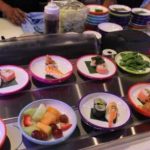
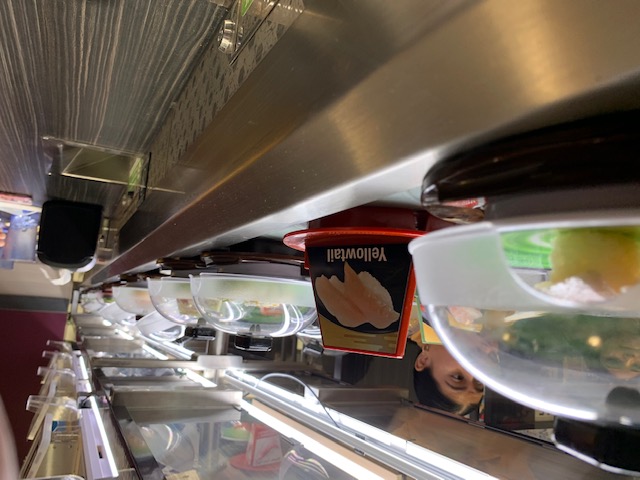
The conveyor belt system brings plate after plate of sushi, sashimi, hand rolls, and mochi to cruise by every table, each ensconced in a transparent plastic dome to ensure health and safety. But which plates pass by is based on Kura’s own algorithm that measures customer demand, popularity, and restaurant capacity, among their inputs.
Lauren Murakami, a Kura USA spokesperson, explains that the plastic domes are part of the global restaurant chain’s “Mr. Fresh” ventilated sushi cover system, which limits airborne exposure. Plate-tracking technology monitors how long each has been circulating, “ensuring the food is fresh right from conveyor belt to table” she notes.
Before seating, diners receive a primer in using the Mr. Fresh system so that they can pop out the rolls from belt to table.
Poised for greater East Coast expansion, Kura has locations across Japan; most of its U.S. spots are in California. The menu in each location is slightly different. American outposts include more meat options, for example. Kura had planned to open its D.C. iteration restaurant months earlier, but buildout was delayed because of the pandemic supply chain slowdown. Kura’s Washington D.C. location is offering indoor dining, takeout and delivery. For now, the made-to-order express conveyor belt will be in service. Due to lowered capacity at this time, the restaurant is not running the main conveyor belt.
The brightly lit, almost fast-food-style environment is akin to a karaoke room: Each booth is separated by six-foot-high plexiglass partitions as part of its safety protocols, and waitstaff only arrive to drop off drinks and collect the check. Total capacity is 64 seats; the 25% capacity cap tops out at 16. Otherwise, there is almost no interaction with other people in the restaurant.
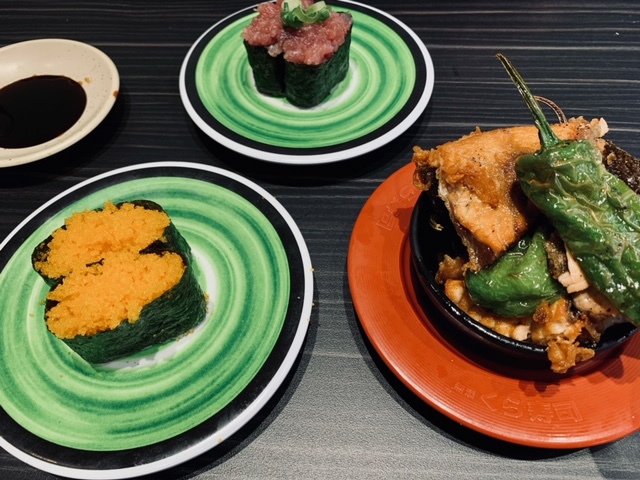
Once seated in the restaurant’s tidy booths, diners then watch as plates pass by, preceded by a marker with the name and photo of each dish. Each marker is color-coded by the kitchen: Green denotes the most popular dishes (items like tuna nigiri and dragon rolls), red brings monthly specials, and yellow represents the rest. Most dishes are priced at $2.95; diners might expect to order about five plates each. Others like the udon and curry rice hit the $4-$5 mark. Bottles of beer and sake are also available, as well as unlimited mugs of green tea.
Beyond the belt, the Kura menu is expansive and growing. While other restaurants have cut menu items to streamline kitchen operations, Kura’s menu surpasses 140 dishes and limited time items are added each month, Murakami notes. Not all are present on the belt, however, so each booth is outfitted with a touch screen with a digital menu listing everything from softshell crab tempura to udon and ramen for diners to order directly. When ready, the items shoot out straight from the kitchen on separate express beltway, coming to a dramatic halt at the table. Waitstaff interactions are sparse, mostly related to drink drop-offs and paying the check.
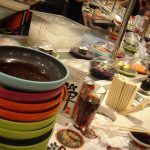
Diners are free to order or pop out as many dishes as they like; when done, they toss empty plates into a designated chute that records how many plates have been consumed. If watching endless plates of sushi flying by was not enough entertainment, there’s also a game to it. The “Bikkura-Pon” prize system awards diners per plate deposited: for every five plates, the touch screen plays an anime cartoon. Every 15 plates consumed comes with a toy.
Fewer dishes roll out of the kitchen during slower table turnover, and the most popular dishes are re-plated as soon as they exit the belt. The restaurant’s newly released app allowed users to check in on wait times.
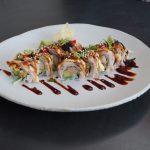
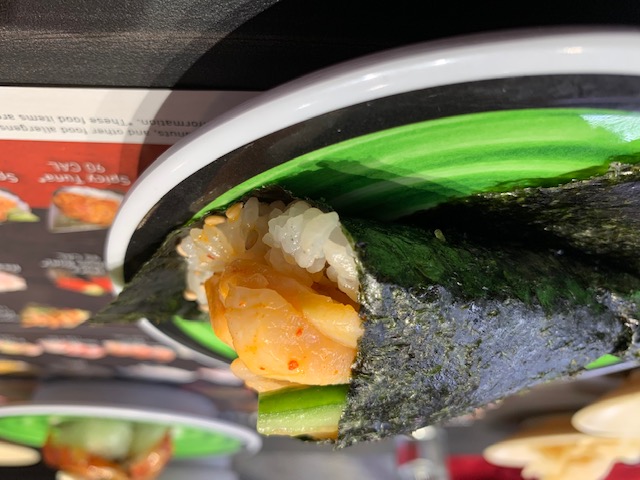
As for the dishes themselves, don’t expect platters or fanciful boats like at other Japanese spots: While there are many dishes, each is simple and stripped down to the basic rolls. The menu features a diversity of fish and meat: salmon, tuna, squid, octopus, and shrimp nigiri share space with the likes of rainbow and Philadelphia rolls. The sushi menu also includes cone-shaped hand rolls with fillings like eel and spicy yellowtail. All of the fish is sourced from Japanese vendors, as well as the ginger, soy sauce, wasabi, and dashi.
The relatively short dessert menu offers three types of mochi ice cream as well as a fist-sized piece of fried dough in the shape of a fish stuffed to the gills with sweet red-bean paste.
The restaurant does not have outdoor seating. Still, regardless of where the rolls are eaten, Kura has sushi down to a science.
Kura Sushi is located at 614 H St. NW. Open Sunday 11 a.m.-9 p.m.; Monday -Thursday 11:30 a.m.-9 p.m.; Friday 11:30 a.m.-9:30 p.m.; Saturday 11 a.m.-9:30 p.m.
This story has been corrected to note the resumption of indoor dining in D.C., and to clarify that the restaurant sources fish from Japanese vendors.