Ally Schweitzer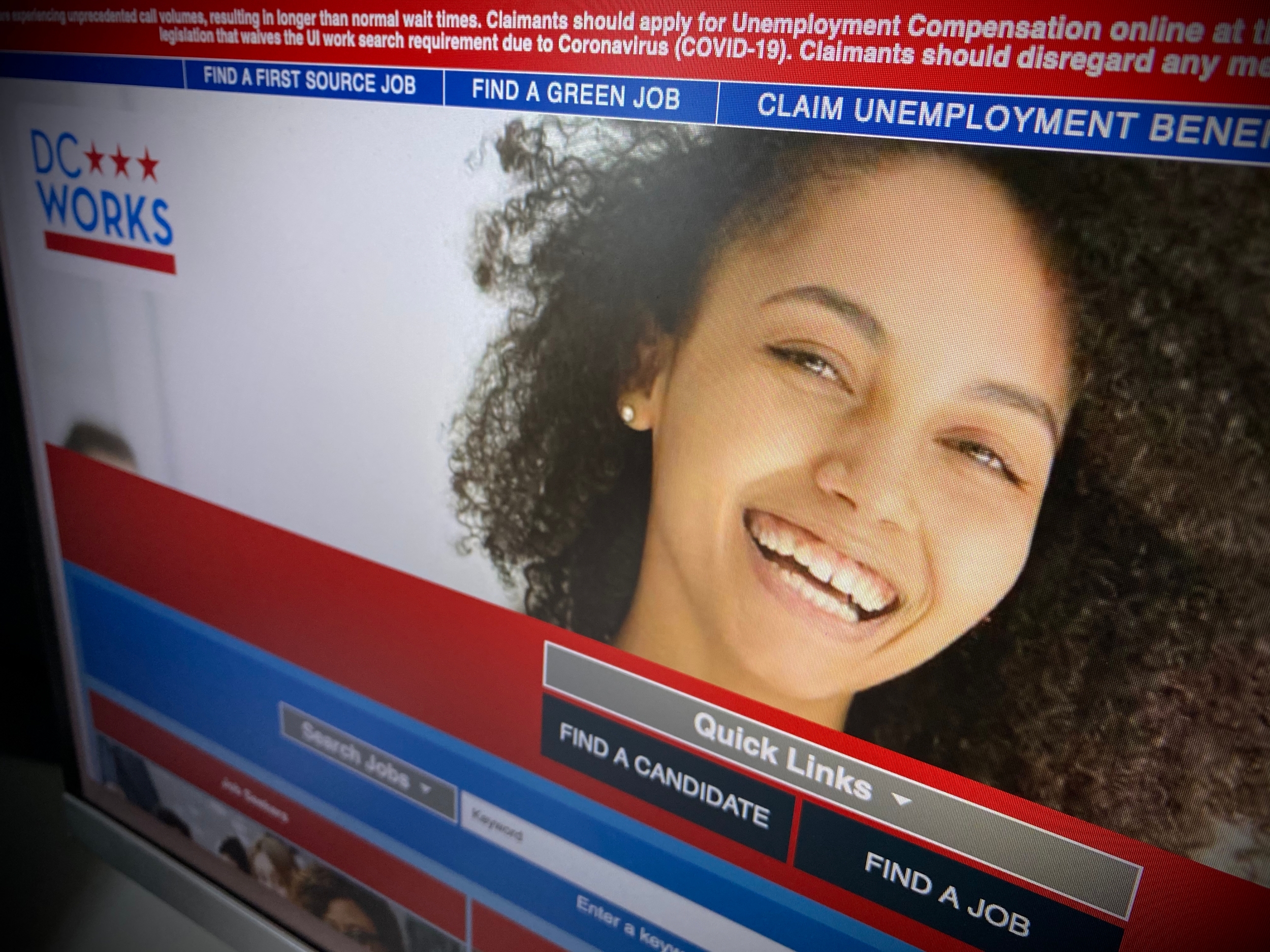
The D.C. government is investing an additional $11 million into the city’s unemployment insurance program after the coronavirus pandemic exposed massive shortcomings in its system, city officials announced Monday.
Dr. Unique Morris-Hughes, director of D.C.’s Office of Employment Services (DOES), detailed the changes during a press conference with Mayor Muriel Bowser. Hughes said the city’s unemployment benefits portal and call center will be getting several upgrades, including:
- Up to 200 additional staff members to process claims and direct claimants to assistance
- A new chat feature that allows claimants to speak more quickly to a claims examiner or call center employee
- Texting and robocall functionality to inform claimants about new benefits availability and other updates from the agency
The District has not yet laid out a timeline for these changes. As part of the changes, DOES employees will undergo training on Feb. 17 and Feb. 26 that will affect operations on those days, Morris-Hughes added.
The department also is preparing to distribute expanded unemployment benefits extended under the federal relief legislation signed on Dec. 27. Those benefits consist of:
- Pandemic Unemployment Assistance (PUA), for which claimants can begin to file weekly certifications after Feb. 10
- Pandemic Emergency Unemployment Compensation (PEUC), which will begin accepting weekly certifications after Feb. 19
- Mixed Earners Unemployment Compensation (MEUC), a new federal program, will open to applications on Feb. 15, with payments beginning Feb. 19
- Federal Pandemic Unemployment Compensation (FPUC), which contributes $300 a week to an individual’s unemployment payment, began payouts the week ending Jan. 2, according to DOES
The city previously created a stimulus fund for D.C. residents whose PUA benefits expired temporarily last year, but those $1,200 checks have already gone out and the program is now closed, Morris-Hughes said. The department estimated that as many as 20,000 residents would be eligible for the money; the actual number of recipients did not exceed 10,000, she added.
The mayor and the District’s housing director also implored residents to seek out rental assistance as the health emergency approaches the one-year mark. Funds are still available in the city’s COVID-19 Housing Assistance Program, or CHAP, said Department of Housing and Community Development Director Polly Donaldson, and landlords can now apply for help on behalf of their tenants.
A household of four can earn no more than $6,633 a month in order to qualify for CHAP. For individuals, the monthly income limit is $4,646.
D.C. residents struggling to keep up with utility bills can get help through the District’s Low Income Home Energy Assistance Program (LIHEAP), which provides between $250 and $1,800 in one-time benefits, the mayor said. More assistance is available through utility discount programs provided by the Public Service Commission of the District of Columbia.
Bowser said residents who can afford to pay bills and rent should do so, despite a citywide ban on evictions and utility shutoffs.
Those who can’t pay “should be seeking assistance for which you are eligible,” the mayor said, “because there’s a considerable amount of assistance available.”